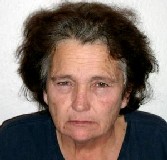
Susan DeJong
Murderer Miranda Barbour
Murderer · USA · 2013
Miranda Barbour, 19, defendant. · Elytte Barbour, 22, defendant and husband of…
100 victims
Miranda Barbour
Murderer · USA · 2013
Miranda Barbour, 19, defendant. · Elytte Barbour, 22, defendant and husband of…
100 victims
 Tiffany Hall
Murderer · USA · 2006
Tiffany Hall was 24 when she was charged in September 2006. She later entered a…
5 victims
Tiffany Hall
Murderer · USA · 2006
Tiffany Hall was 24 when she was charged in September 2006. She later entered a…
5 victims
 Banita Jacks
Murderer · USA · 2007
Banita Jacks was a Washington, DC resident convicted of murdering her four daug…
4 victims
Banita Jacks
Murderer · USA · 2007
Banita Jacks was a Washington, DC resident convicted of murdering her four daug…
4 victims
 Holly Grigsby
Murderer · USA · 2011
Holly Grigsby was sentenced to life in prison without parole on July 15, 2014.…
4 victims
Holly Grigsby
Murderer · USA · 2011
Holly Grigsby was sentenced to life in prison without parole on July 15, 2014.…
4 victims
 Jessica Tata
Murderer · USA · 2011
Jessica Tata was a Houston home day care owner who fled to Nigeria after a fire…
4 victims
Jessica Tata
Murderer · USA · 2011
Jessica Tata was a Houston home day care owner who fled to Nigeria after a fire…
4 victims
 Amanda Bennett
Murderer · USA · 2011
Amanda Bennett was an Indiana woman who shot her three children and set the fam…
3 victims
Amanda Bennett
Murderer · USA · 2011
Amanda Bennett was an Indiana woman who shot her three children and set the fam…
3 victims
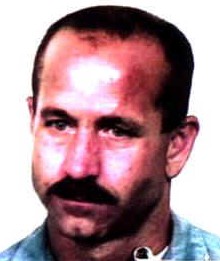 Darrell Keith Rich
Serial killer · USA · 1978
Darrell Keith Rich Darrell Keith Rich was executed by lethal injection in Calif…
4 victims
Darrell Keith Rich
Serial killer · USA · 1978
Darrell Keith Rich Darrell Keith Rich was executed by lethal injection in Calif…
4 victims
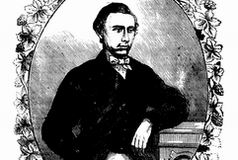 Frederick Baker
Murderer · United Kingdom · 1867
Frederick Baker was a solicitor’s clerk in Alton, Hampshire, England. On Saturd…
1 victim
Frederick Baker
Murderer · United Kingdom · 1867
Frederick Baker was a solicitor’s clerk in Alton, Hampshire, England. On Saturd…
1 victim
 Miguel Angel Flores
Murderer · USA · 1989
Miguel Angel Flores was a Mexican foreign national with no prior criminal recor…
1 victim
Miguel Angel Flores
Murderer · USA · 1989
Miguel Angel Flores was a Mexican foreign national with no prior criminal recor…
1 victim
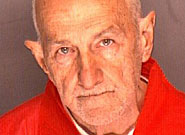 Roger Kibbe
Serial killer · USA · 1977
Roger Reece Kibbe was a middle-aged husband with a lengthy record that included…
7 victims
Roger Kibbe
Serial killer · USA · 1977
Roger Reece Kibbe was a middle-aged husband with a lengthy record that included…
7 victims
 Harpe brothers
Murderers · USA
Micajah “Big” Harpe (1748? – August 1799) and Wiley “Little” Harpe (1750? – Feb…
50 victims
Harpe brothers
Murderers · USA
Micajah “Big” Harpe (1748? – August 1799) and Wiley “Little” Harpe (1750? – Feb…
50 victims
 Eladio Martinez-Chavez
Murderer · USA · 1984
Everette Amiotte drove Martinez Chavez and Reynaldo Rondon to a place near Alar…
1 victim
Eladio Martinez-Chavez
Murderer · USA · 1984
Everette Amiotte drove Martinez Chavez and Reynaldo Rondon to a place near Alar…
1 victim
- Gender
- female
- Country
- USA
- Location
- Fairbury, Jefferson County, Nebraska, USA
- Date of birth
- 1956
- Age at first offence
- 55
- Characteristics
- parricide
- Victim profile
- Thomas DeJong, 52 (her husband)
- Method of murder
- Beating with a hammer ( blunt force trauma to his head, torso and limbs)
- Date(s) of murder
- March 11, 2011
- Years active
- 2011
- Date of arrest
- Next day
- Status
-
Life imprisonment
Sentenced to life in prison plus 50 years on May 2, 2012
Case record: Susan DeJong
Background
Susan DeJong was the wife of Thomas DeJong. Susan DeJong was convicted of first-degree murder for the death of her husband. During sentencing, District Judge Paul Korslund referred to Thomas DeJong as a quiet man and a hard worker who was well thought of by his colleagues, and said that Thomas suffered “horribly.” Korslund said the dynamics of the relationship between Thomas and Susan DeJong were hard to understand, but that Thomas provided for her and “suffered incredibly brutal treatment without justification.”
Laura DeJong, identified as Susan DeJong’s niece in the sentencing narrative, remembered Thomas DeJong as a jokester and a family man who was great with children. Laura DeJong said she had thought back to times prior to Susan DeJong when Thomas “wasn’t suffering and when he had a big smile on his face and a twinkle in his eye.”
During the trial, testimony indicated that Susan DeJong was suspected of having suspicions about an extramarital affair and blaming injuries on other people. During opening statements, Jefferson County Attorney Linda Bauer told the jury that “this is a story about a woman who became obsessed with suspicions that her husband was having a long-term extramarital affair.”
The offence
Susan DeJong was accused of beating her husband to death. The incident involved a call for emergency medical assistance on March 11, 2011.
At the time of the emergency response, Susan DeJong told dispatch that Thomas DeJong was unresponsive and not breathing and that he was cold to the touch. She described his appearance as looking like he had been through a “meat grinder.”
The prosecution’s theory described an extramarital affair narrative and portrayed Susan DeJong as having a jealous and controlling motive. Corey O’Brien of the Nebraska Attorney General’s Office told the jury that the killing was “Committed by his especially cold-hearted and controlling wife. A wife who was consumed by a jealous and obsessive fantasy that not only was her husband having an extramarital affair, but that he and his lover were actively conspiring to kill her.”
Investigation
Susan DeJong’s March 11, 2011 call to dispatch led to Thomas DeJong being transported for medical treatment. Investigators obtained a search warrant for the DeJong household the day after Thomas’ death.
Inside the house, investigators found blood spatters in multiple rooms including the living room, kitchen, bathroom, master bedroom and basement. No pools of blood were found, but Inv. Jeff Ward estimated there were at least 70 blood spatters located throughout the house. Blood spots were found on items including a tablecloth, a sword inside a sheath, bedding, several walls, the refrigerator, a door jam and a lamp shade. In the bathroom, a towel and two washcloths with an excessive amount of blood were found. In the basement, a pile of clothes was found with several items of clothing having blood spatter on it.
Investigators also found a weapon described as either a sword or bayonet during the search, and blood and hair were found on the weapon’s metal sheath. A white Dodge Pickup truck Susan DeJong drove to Lincoln on the night of March 11 was examined, and a spatter of blood was found on the hood of the truck. Inside the truck was a red duffle bag containing items including clothes, Thomas’ wallet, toiletries and two hammers; one hammer and a pair of pajamas had spatters of dry blood on them.
Gloria Gehrig, identified as the alleged mistress of Thomas DeJong, denied allegations that she caused or inflicted injuries. Corey O’Brien and Jefferson County Attorney Linda Bauer contested Susan DeJong’s theory that Thomas went to South Dakota to see Gehrig and returned with injuries.
During trial testimony, medical providers described Thomas DeJong’s condition upon arrival and that he had lacerations, cuts and bruising from head to toe, and investigators testified that injuries were severe enough that law enforcement originally suspected he had been hit by a vehicle.
Arrest
Susan DeJong was arrested the morning of March 12 on charges of first degree murder. Thomas DeJong was pronounced dead shortly before midnight on March 11 at Bryan LGH Hospital in Lincoln.
A separate narrative states that Susan DeJong was arrested Saturday on suspicion of first-degree murder of Thomas DeJong. The arrest narrative describes a call around 4 p.m. Friday from Susan DeJong to 911 from 55930 Highway 136, about nine miles west of Fairbury, and that rescue workers found DeJong badly beaten, then took Thomas to Fairbury Community Health Center and then to BryanLGH Medical Center West by ambulance, and that he died in Lincoln late Friday evening.
Trial
Susan DeJong pled not guilty in Jefferson County District Court on April 8, 2011.
A week long jury trial began Aug. 29, as set at the initial hearing, and later proceeded through a full week of evidence presented to a 12-person jury.
Charges tried
During trial, Susan DeJong was charged with:
- first degree murder
- use of a weapon to commit a felony
Evidence and witnesses
The trial included playing Susan DeJong’s March 11, 2011 call to dispatch. During that recording, Susan DeJong told dispatch that Thomas DeJong had “snuck off to be with his whore and came back all beat up,” and she said Thomas “looked like he went through a meat grinder.” She told dispatch he wasn’t breathing, had no pulse, and was cold to the touch and she began performing CPR, counting aloud 30 chest compressions several times while waiting for the ambulance.
EMT Cynthe Crawford testified that upon arrival Thomas DeJong had no pulse, wasn’t breathing and was unresponsive.
Jefferson County Attorney Linda Bauer introduced the case to the jury with the statement: “this is a story about a woman who became obsessed with suspicions that her husband was having a long-term extramarital affair.”
During testimony, several medical experts described the nature and extent of Thomas DeJong’s injuries. Douglas County pathologist Dr. Jean Thomsen conducted the autopsy and described injuries as extensive, and at the end of her testimony Corey O’Brien asked her about the manner of Thomas’ death and she stated: “This was a homicide.”
Doctor Juris Purins, a radiologist at Lincoln Radiology, testified about fractures and other findings from CT scans, including fractures in Thomas’ nose and a dislocation of the lens in his right eye, and Purins said that particular injury would only allow Thomas to see light or dark through that eye. Purins also testified that Thomas had fractures in the chest cavity, spine and scapula and a collapsed lung and a fractured hyoid bone, and he described the rarity of hyoid fracture without strangulation as “only 21 documented cases in which the hyoid bone has been fractured without strangulation.”
Purins testified that driving would have been impossible given the trauma. Purins stated: “The ability to walk and talk is severely compromised in patients with this kind of trauma,” and also said that when patients have injuries like this “they’re down on the ground in the fetal position and they’re not moving around a lot.” Purins also said: “When you see patients with injuries like this, they’re down on the ground in the fetal position and they’re not moving around a lot.”
Through cross examination, Todd Lancaster asked Purins if some fractures could have been caused by kicking; Purins said some but not all. Purins also testified that blunt force trauma throughout Thomas’ body could have been caused by a hammer but could have been made by “a numerous other instruments as well, such as a baseball bat or a club.”
The defense called Dr. Robert Bux, the chief medical examiner for the El Paso County Coroner’s Office in Colorado Springs. Bux contested various opinions and stated:
- “I don’t think those marks could have been made by a standard claw hammer,”
- “I’ve done cases in which people have been murdered by hammers and this just doesn’t look like it was done by a hammer.” Bux also stated: “I didn’t see a sufficient amount of blood to indicate the assault took place in the house,” and “It would have had to take place somewhere else.” Bux said based on injuries the assault would have had to take place 24 to 48 hours prior to Thomas going into cardiac arrest, and “This guy was really beaten.” Bux testified about brain swelling and resuscitation effects and stated: “That’s what’s bizarre,” and “When people try to kill somebody, they’re going for an area that will be lethal like the head or neck. These injuries are mainly soft tissue and muscle injuries to the lower extremities, back and abdominal area.”
Bux testified that trace alcohol was found in Thomas’ body and his opinion that “12 hours prior at about 7:30 a.m. on March 11, his blood alcohol level would have been .15.”
Trial testimony described Susan DeJong’s biological son Alex Smart. Smart said he “considered him my dad and we were pretty close.” Smart stated: “I considered him my dad and we were pretty close,” and also testified: “The only silver lining,” if applicable to Laura’s quote, and Smart stated: “She was heartbroken,” and “She couldn’t believe the man she dearly loved would do that to her. She couldn’t believe it.” Smart also testified: “I just always let her know that she had a place to go,” and “If things are really that bad, stop making yourself suffer and get a divorce.” Smart said he never observed physical altercations between Susan and Thomas.
Evidence presented included instant message conversation Susan DeJong had with her son in which she said: “I’m looking at getting rid of Tom, I can’t take it anymore, I’m going insane.”
O’Brien held up a hammer for the jury to see and referred to it as the “smoking gun” and said: “You’ve heard the tragic story of a senseless and excruciatingly painful killing of a middle-aged man,” and said it was committed by Susan DeJong as described earlier. O’Brien said: “We heard wild stories, many excuses and lots of blaming others,” and he stated: “You’ve heard the tragic story of a senseless and excruciatingly painful killing of a middle-aged man,” and “Committed by his especially cold-hearted and controlling wife.
O’Brien further argued: “They want you to focus on single pieces of evidence and say this isn’t possible,” and “Don’t fall into the trap that they’re asking you to fall into. (Susan DeJong) tried to kill (Thomas) and she needs to be held accountable.”
The defense attorney James Mowbray told the jury during closing that: “But we don’t know where he went,” and “The state speculates that he was at home, but the state has done nothing to prove that. Maybe he slept in his blazer for two days, or maybe he registered at a motel. (Investigators) were so convinced and focused to rush to judgment that this was first degree murder, that nobody looked into that.” Mowbray also argued: “But we don’t know where he went,” and said: “The state will have you believe that she literally beat him up this extensively and (Thomas) didn’t run or fight back,” and “He just took it. Using common sense and reason, there’s no way any human being is going to be subjected to that without fighting back or getting out of there.” Regarding the hammers, Mowbray said: “I believed that the hammers were previously in the bag and Susan DeJong threw her clothes on top of them before she left for Lincoln that night.” Mowbray also said: “But we don’t know where he went.”
During the trial, cell phone records were offered to the jury indicating Thomas DeJong made several phone calls in the Fairbury/Hebron area in the days leading up to his death, corresponding to Susan DeJong’s allegations that he was in South Dakota. Testimony indicated Thomas used his cell phone in the Fairbury area on the days Susan DeJong alleged he was in South Dakota. Doctors also testified that it would be impossible for Thomas to drive with the injuries he sustained.
A law enforcement officer from Jackson, Minn. testified about a fight he responded to at a truck stop in Jackson on May 31, 2010. The officer said he made contact with Thomas and Susan DeJong in a semi and observed Thomas to have a black eye with a fresh cut inside that black eye and blood coming out of his left ear, and that Susan DeJong indicated those were old wounds but that she had been arguing with her husband because of his alleged affair.
Verdict
After about five hours of deliberation, a 12-person jury found Susan DeJong guilty of:
- first degree murder
Sentencing
Sentencing occurred on May 2, 2012, with District Judge Paul Korslund imposing a mandatory life sentence for first-degree murder.
At sentencing, Susan DeJong was given a chance to speak before sentence was handed down. She wept and quietly said: “You're all wrong.”
Korslund stated that he referred to Thomas DeJong as a suffering servant and said: “He suffered horribly,” and “Thomas DeJong was basically a suffering servant. He did not deserve the brutal assault that was inflicted on him over a period of days. And Ms. DeJong, you did nothing -- until it was too late -- to obtain medical treatment for him.” Korslund also said: “He paid for staying with you with his life,” and described Susan DeJong as doing nothing to obtain medical treatment until it was too late.
Corey O’Brien of the Nebraska Attorney General’s Office argued for the maximum sentence on the weapon charge. O’Brien told the court: “We do believe that the use of weapons in this case is so substantial and so severe,” and “and the result showed an indignity to human life that is incomprehensible. It is something that is deserving of a maximum sentence to be added to her life term.”
Susan DeJong’s attorney, James Mowbray, did not speak during sentencing.
Susan DeJong received an additional 50 years for use of a deadly weapon, which was described as the maximum sentence for that charge. The legal outcome therefore was life in prison plus 50 years.
Outcome
Susan DeJong was convicted of first degree murder and use of a weapon to commit a felony, and she was sentenced to life in prison plus 50 years on May 2, 2012.
Other details
- The trial narrative reported that 23 witnesses were called and more than 200 exhibits were presented.
- The jury viewed detailed photos of Thomas DeJong’s injuries, and the autopsy was conducted by Dr. Jean Thomsen on March 12, 2011.
- At least one testimony described Thomas DeJong as having a small speech impediment in which he occasionally stuttered.
- Testimony described Thomas DeJong’s employer Brian Bauer, who said Thomas worked at a farm for Brian Bauer and helped with chores. Bauer described Thomas as sore and having trouble getting around, and that Thomas took time off due to feeling unwell and did not return.
- Emergency response testimony described that Thomas’ heart began to pump again after being transported and had a bleak outlook for survival, and he was eventually transported to Bryan LGH in Lincoln where he died from his injuries.
- The emergency call narrative described Susan DeJong as allowed to wear civilian clothing for her trial.
- In the trial narrative, it was stated that DeJong gave doctors permission to take Thomas off life support after they determined he wasn’t going to survive.
Spotted an error, or have more information about this case?