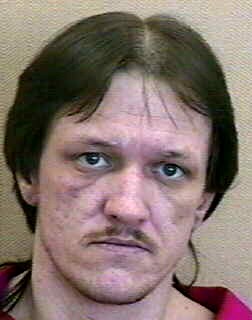
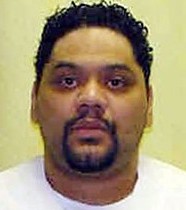
Joseph Timothy Keel
Murderer Brian Kevin Rosenfeld
Murderer · USA · 1985
Brian Kevin Rosenfeld Brian Kevin Rosenfeld was sentenced to three concurrent l…
23 victims
Brian Kevin Rosenfeld
Murderer · USA · 1985
Brian Kevin Rosenfeld Brian Kevin Rosenfeld was sentenced to three concurrent l…
23 victims
 Yahweh ben Yahweh
Murderer · USA · 1980
Yahweh ben Yahweh was born and legally named Hulon Mitchell Jr. (October 27, 19…
23 victims
Yahweh ben Yahweh
Murderer · USA · 1980
Yahweh ben Yahweh was born and legally named Hulon Mitchell Jr. (October 27, 19…
23 victims
 Russell Ellwood
Murderer · USA · 1991
Russell Ellwood was a former taxi driver. Authorities suspected him of killing…
20 victims
Russell Ellwood
Murderer · USA · 1991
Russell Ellwood was a former taxi driver. Authorities suspected him of killing…
20 victims
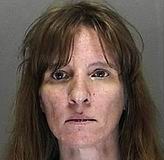 Angela Stoldt
Murderer · USA · 2013
Angela Stoldt was a Florida woman who killed her neighbor, James Sheaffer. The…
1 victim
Angela Stoldt
Murderer · USA · 2013
Angela Stoldt was a Florida woman who killed her neighbor, James Sheaffer. The…
1 victim
 Kathryn Schoch
Mass murderer · USA · 1934
Kathryn Schoch was a trained nurse who killed members of the Dempsey family in…
6 victims
Kathryn Schoch
Mass murderer · USA · 1934
Kathryn Schoch was a trained nurse who killed members of the Dempsey family in…
6 victims
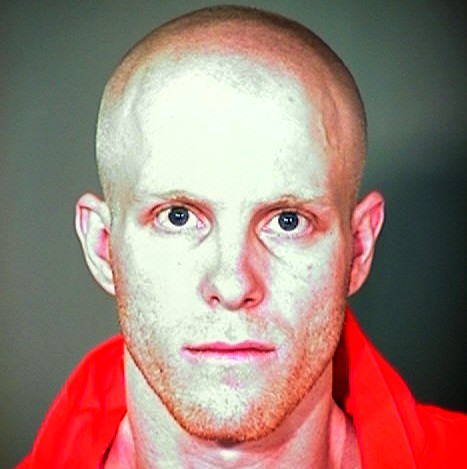 Shawn Grell
Murderer · USA · 1999
Shawn Grell was the father of Kristen Grell. · Kristen Grell was the 2-year-old…
1 victim
Shawn Grell
Murderer · USA · 1999
Shawn Grell was the father of Kristen Grell. · Kristen Grell was the 2-year-old…
1 victim
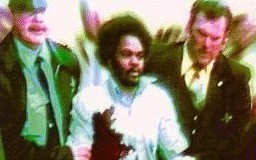 Raymond Lee Stewart
Spree killer · USA · 1981
Raymond Lee Stewart was a serial killer convicted and sentenced to death in two…
6 victims
Raymond Lee Stewart
Spree killer · USA · 1981
Raymond Lee Stewart was a serial killer convicted and sentenced to death in two…
6 victims
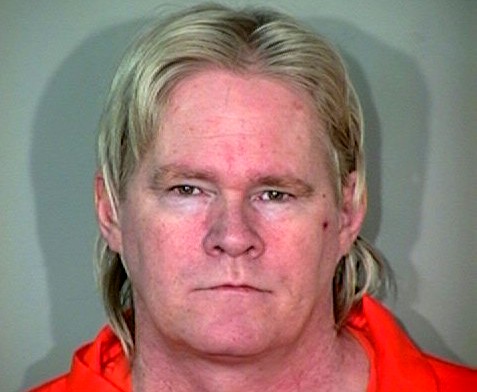 George Kayer
Murderer · USA · 1994
Defendant: George Kayer · Defendant race: Caucasian · Victim: Delbert L. Haas ·…
1 victim
George Kayer
Murderer · USA · 1994
Defendant: George Kayer · Defendant race: Caucasian · Victim: Delbert L. Haas ·…
1 victim
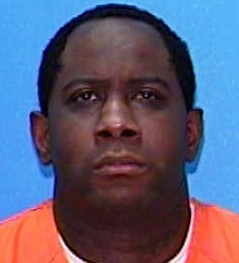 Steven Maurice Evans
Murderer · USA · 1996
Steven Maurice Evans was born on 07/31/67. The case was in the Ninth Judicial C…
1 victim
Steven Maurice Evans
Murderer · USA · 1996
Steven Maurice Evans was born on 07/31/67. The case was in the Ninth Judicial C…
1 victim
- Gender
- male
- Country
- USA
- Location
- Edgecombe County, North Carolina, USA
- Date of birth
- J uly 6, 1964
- Age at first offence
- 22
- Characteristics
- parricide
- Victim profile
- His infant son / John Simmons, 42 ( his father-in-law )
- Method of murder
- Beating / Shooting (.22 rifle)
- Date(s) of murder
- 1986 / 1990
- Years active
- 1986–1990
- Date of arrest
- J uly 10, 1990
- Status
-
Executed
Executed by lethal injection in North Carolina on November 7, 2003
Case details
Joseph Timothy Keel was convicted in Edgecombe County Superior Court in the shooting death of his father-in-law, John Simmons.
Status and sentence
Keel received the death penalty for the murder of his father-in-law, John Simmons, and was executed by lethal injection in North Carolina on November 7, 2003. He was pronounced dead at 2:18 a.m.
Keel had been sentenced to death twice, with the death sentences following two capital trials.
Timeline
- July 10, 1990 — John Simmons was murdered on a hog farm where Keel worked.
- June 26, 1986 — Victor Matthew Keel was examined at the emergency room at Heritage Hospital; later autopsy findings attributed a skull fracture to the child’s death.
- March 20, 1987 — Keel was convicted for involuntary manslaughter in the beating death of his infant son.
- July 13, 1990 — Lieutenant Jerry Wiggs interviewed Keel three days after the shooting.
- August 20, 1990 — The Edgecombe County Grand Jury returned a true bill of indictment charging Keel with one count of first degree murder.
- August 12, 1991 — Keel was capitally tried at the August 12, 1991 Criminal Session of the Superior Court, Edgecombe County, for murder in the first degree and sentenced to death.
- 1992 — The North Carolina Supreme Court reversed and required a new trial; State v. Keel, 423 S.E.2d 458 (N.C. 1992).
- March 5, 1993 — Keel was again tried capitally during the March 5, 1993 Criminal Session for murder in the first degree.
- March 30, 1993 — The trial court entered judgment sentencing Keel to death.
- 1994 — The North Carolina Supreme Court affirmed; State v. Keel, 447 S.E.2d 748 (N.C. 1994).
- February 27, 1995 — Keel’s petition to the United States Supreme Court was denied; Keel v. North Carolina, 513 U.S. 1198.
- September 29, 1999 — The North Carolina Supreme Court issued a stay halting the execution scheduled for October 29, 1999.
- September 9, 1999 — Keel was granted another stay for the scheduled Oct. 29, 1999 execution.
- August 3, 1999 — A stay halting the execution scheduled for Aug. 6, 1999 was issued by the North Carolina Supreme Court.
- July 28, 1999 — An execution date was set for August 6, 1999.
- July 30, 1999 — Witnesses were selected for the August 6 execution of Joseph Timothy Keel.
- August 12, 1991 — Keel was capitally tried and sentenced to death after conviction for first-degree murder.
- October 29, 1999 — An execution was scheduled and then stayed for Joseph Timothy Keel.
- August 1999 — The execution scheduled for August 6, 1999 was stayed.
- December 7, 1998 — The U.S. Court of Appeals, 4th Circuit affirmed the dismissal of Keel’s habeas corpus petition; Joseph Timothy Keel v. James B. French.
- October 31, 2003 — Defense attorneys questioned the legality of the previous conviction used to seek the death penalty.
- November 6, 2003 — Keel was scheduled to be executed the next day.
- November 7, 2003 — Keel was executed by lethal injection in North Carolina.
People involved
- Joseph Timothy Keel — defendant; son-in-law of victim John Simmons; death row inmate; convicted of first-degree murder of John Simmons and sentenced to death.
- John Simmons — victim; Keel’s father-in-law; shot on a hog farm.
- Victor Matthew Keel — Keel’s infant son; died after a skull fracture; Keel was later convicted for involuntary manslaughter.
- Lieutenant Jerry Wiggs — Edgecombe County Sheriff’s Department lieutenant; interviewed Keel and obtained a signed statement.
- Sergeant Donnie Lynn — Edgecombe County Sheriff’s Department sergeant; interviewed Keel.
- Dr. Louis Levy — medical examiner for Nash and Edgecombe Counties; testified about the victim’s gunshot wounds.
- Dr. George C. Hemingway — pediatrician and Medical Examiner for Edgecombe County; examined the infant Victor Matthew Keel at the emergency room.
- Dr. Jonathan Weiner — expert in forensic psychiatry; diagnosed dependence on alcohol and marijuana and other mental conditions.
- Dr. Robert L. Conder, Jr. — expert in neuro-psychology; administered tests and diagnosed organic personality syndrome; testified to IQ of 78.
- Lane B. Simpson — pastor; testified that he met Keel when Keel’s child died and that Keel accepted the Lord while in jail.
- John College — supervisor at Shell Bank Farm for approximately six months.
- Mack Daniel Simmons, Jr. — official witness selected for the August 6 execution.
- Linda Jean S. Moore — official witness selected for the August 6 execution.
- Jennifer Simmons Becknell — official witness selected for the August 6 execution.
- Bobby Dale Smith — official witness selected for the August 6 execution.
- Lt. Jerry Wiggs — media witness from the Edgecombe County Sheriff’s Department selected for the August 6 execution.
- Sgt. Donald Lynn — media witness from the Edgecombe County Sheriff’s Department selected for the August 6 execution.
- Connie Rhem — media witness from The Wilson Daily Times in Wilson selected for the August 6 execution.
- Thomas McDonald — media witness from The Daily Southerner in Tarboro selected for the August 6 execution.
- Mark Roberts — media witness from WRAL-TV in Raleigh selected for the August 6 execution.
- Steve Adams — media witness from WEEB Radio in Southern Pines selected for the August 6 execution.
- Estes Thompson — media witness from the Associated Press selected for the August 6 execution.
- Gov. Mike Easley — governor who denied a clemency petition.
- Theodis Beck — Correction Secretary who set an execution date for Nov. 7, 2003.
- Jay Ferguson — lead defense lawyer who argued for clemency and raised mental-retardation and other issues in legal proceedings.
- Assistant District Attorney Steve Graham — prosecutor quoted regarding anticipated defense actions.
- District Attorney Howard Boney — assistant noted in connection with an affidavit about recall of alternate juror participation.
- Frank R. Brown, J. — trial judge referenced in direct appeal case discussion.
- Mitchell, Justice — North Carolina Supreme Court justice referenced in direct appeal discussions.
- Murnaghan, Williams, and Motz — U.S. Court of Appeals judges referenced in the 4th Circuit decision.
- James B. French — warden named as respondent in the U.S. Court of Appeals, 4th Circuit habeas corpus decision.
The offence
Keel murdered his father-in-law, John Simmons, on the evening of July 10, 1990, at about 10 p.m. Keel knocked on the door of Aubrey Thurman’s mobile home and told him that John Simmons had been shot and that it had been a drive-by shooting.
At trial, Keel introduced evidence that he and Simmons had argued and fought earlier. The evidence presented during the capital trial described a fist fight and injuries that Simmons allegedly sustained during the fight, after which Simmons picked up a knife and pushed Keel to the floor. Keel then fired a pistol one time, hitting Simmons and knocking him down.
Keel later confessed that he fired a shot with a .22 rifle at Simmons while Simmons was in his truck on the hog farm. After Simmons got out holding a knife, Keel shot him again. Keel helped the wounded Simmons back inside Simmons’ truck and then fired another shot into the truck, hitting Simmons in the head.
The exact reason for the murder was not clear. Before killing Simmons, Keel told lawmen that he and Simmons had had a fistfight. Keel also told lawmen that he and Simmons had had a fistfight, and Keel claimed that he set him up to kill because he was a “wife-beater.”
Investigation
Lieutenant Jerry Wiggs interviewed Keel and wrote down Keel’s statement; Keel signed it. Sergeant Donnie Lynn also interviewed Keel on the night of the shooting.
In Keel’s statement, he admitted that he had shot Simmons on the hog farm on July 10, 1990. Keel stated that he had asked Simmons for a ride to the farm, picked up the farm truck on arrival, drove ahead of Simmons to the farm building, and then fired a shot into the cab of Simmons’ truck. Keel stated that Simmons got out saying he had been hit, and Keel told him to sit down. Keel stated that he shot Simmons again because Simmons had a knife and was coming after him, and that Simmons fell but got up again before Keel helped him into the truck.
Keel stated that he then drove to Baker’s Park to get help, threw the rifle into a field in the hog pen, and said he did not know why he had shot Simmons in the first place.
Crime scene evidence described at trial included blood spatters on walls and floors, a jumpsuit with blood, a bloody mop, a hole in the farm office window screen, a .22 caliber shell casing nearby, .22 caliber bullets in a drawer in the office, and loose shells in a drawer in the office.
Dr. Louis Levy testified that the victim suffered two gunshot wounds fired from a distance from opposite sides of the victim’s head, that the victim died of shock as a result of the gunshot wounds, and that the configuration was inconsistent with a drive-by shooting. On cross-examination, Dr. Levy testified that the wounds were consistent with a .22 caliber bullet and that the victim was alive at the time both wounds were inflicted.
Arrest / charge
On August 20, 1990, the Edgecombe County Grand Jury returned a true bill of indictment charging Keel with one count of first degree murder.
Keel entered a plea of not guilty.
Trial
First capital trial (August 12, 1991)
Keel was capitally tried at the August 12, 1991 Criminal Session of the Superior Court, Edgecombe County, for murder in the first degree and sentenced to death.
Direct appeal after first trial
The North Carolina Supreme Court held that the trial court had committed prejudicial error based on an erroneous jury instruction regarding the intent element for first-degree murder and required a new trial; State v. Keel, 423 S.E.2d 458 (N.C. 1992).
Second capital trial (March 5, 1993)
Keel was again tried capitally during the March 5, 1993 Criminal Session for murder in the first degree. The jury returned a guilty verdict.
The separate capital sentencing proceeding was conducted pursuant to North Carolina General Statutes § 15A-2000 (Supp. 1994). At sentencing:
- The jury recommended Keel be sentenced to death.
- The jury found that Keel had previously been convicted of a felony involving the use of violence to the person, a statutory aggravating factor.
- The jury found eight mitigating circumstances, but nonetheless recommended death.
On March 30, 1993, the trial court entered judgment sentencing Keel to death.
Direct appeal after second trial
The North Carolina Supreme Court affirmed the verdict and death sentence; State v. Keel, 447 S.E.2d 748 (N.C. 1994). No error was found in the second appeal.
Sentencing
Keel received the death penalty because of a 1987 conviction for Involuntary Manslaughter in the beating death of his infant son. In the sentencing proceeding, the State introduced a certified record of a conviction on 20 March 1987 for involuntary manslaughter.
Dr. George C. Hemingway testified that he examined an eleven-month-old infant named Victor Matthew Keel at the emergency room at Heritage Hospital at approximately 5:00 a.m. on 26 June 1986, observed bruises about the child’s head, face, legs and arms, and stated that the bruises were relatively recent, six to eight hours old.
Dr. Louis Levy testified about the autopsy performed on Victor Keel on 26 June 1986 and found a three-inch fracture of the skull located on the right side of the head, stating that injury caused the child’s death.
During the capital sentencing proceeding, Keel also presented evidence about his background and mental health, including testimony from Dr. Jonathan Weiner and Dr. Robert L. Conder, Jr., and statements about alcohol use and mental impairments, including borderline personality disorder and organic personality syndrome, and evidence described as raising questions about Keel’s mental capacity.
Keel testified in the sentencing proceeding that he did not intentionally kill his eleven-month-old son, and that the son had injured himself by falling down the front steps and also had received a bruise on his forehead when he hit a door at his grandmother’s house on the date of his death. Keel testified that he attempted to get help when his son had breathing trouble and tried to revive him when his son again stopped breathing.
Keel acknowledged that he was an alcoholic and had blacked out in the past. Keel’s mother testified that he had sought treatment for alcohol abuse and had lost interest in school when he had been taken off the wrestling team.
Appeals
U.S. Supreme Court petition
Keel filed a petition for writ of certiorari to the United States Supreme Court. This petition was denied on February 27, 1995.
Federal habeas corpus proceedings
Keel appealed from the dismissal of his petition for habeas corpus relief in the U.S. Court of Appeals for the 4th Circuit (Joseph Timothy Keel v. James B. French, Warden, Central Prison, Raleigh, North Carolina). On December 7, 1998, the court affirmed the dismissal, concluding it found Keel’s arguments were not procedurally barred but also lacked merit. The court described that Keel murdered his father-in-law, John Simmons, on the evening of July 10, 1990, and discussed the statement given after the shooting, and also discussed trial and sentencing history including the two capital trials.
Clemeny / execution scheduling
On September 25, 2003, Correction Secretary Theodis Beck set an execution date of Nov. 7, 2003 for Joseph Timothy Keel.
Keel’s execution date had previously been stayed multiple times:
- The North Carolina Supreme Court issued a stay halting an execution scheduled for Aug. 6, 1999.
- The North Carolina Supreme Court issued a stay halting the execution scheduled for Oct. 29, 1999.
Witnesses for the August 6 execution were selected, including official and media witnesses.
Gov. Mike Easley denied Keel’s petition to change the death sentence to life in prison after the U.S. Supreme Court turned down Keel’s last appeal. Easley said:
"Having carefully reviewed the clemency petition, I find no compelling reasons to invalidate the sentence recommended by two juries and affirmed by the courts,"
Final meal / final words
Keel’s final meal was: Chicken, a biscuit, rice, a Diet Coke and a T-bone steak without the bone and with mushrooms and onions.
Keel’s final words were none.
Other details
Keel was described as a Pitt County native.
Keel was 39 at the time of the execution.
At the hog farm, investigators found evidence including a .22 caliber shell casing, blood spatters, a jumpsuit with blood, a bloody mop, .22 caliber bullets in a drawer, and a hole in the window screen of the farm office.
A neighbor testified about Keel’s statement before the murder:
"I'm going to kill that bald-headed, mother-f---ing son-of-a-bitch if he doesn't leave me alone."
Keel’s lawyers and defense experts argued that Keel was mentally retarded and mentally ill, and that head injuries affected his brain. Prosecutors argued Keel’s IQ was 87 and that he had shown no mental problems in prison, where he earned a GED certificate and took religion courses.
Prosecutors relied on Keel’s involuntary manslaughter conviction to justify the death sentence as an aggravating factor.
In addition to the sentencing record evidence, Keel’s defense presented testimony that he had been involved in prison activities, had helped organize functions, participated in a wood drive, started a choir, completed his high school education, obtained an associate degree from Heritage Bible College, and completed drug and alcohol abuse classes.
Witnesses selected for the August 6 execution included individuals nominated by the District Attorney’s office in the Seventh Prosecutorial District, and media witnesses from the Edgecombe County Sheriff’s Department and several named media organizations.
Keel’s family visited him and had arrangements for a private funeral if clemency did not prevail. Keel requested to be cremated.
Spotted an error, or have more information about this case?