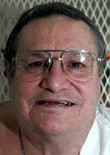
Alvin Andrew Kelly
Murderer Brian Kevin Rosenfeld
Murderer · USA · 1985
Brian Kevin Rosenfeld Brian Kevin Rosenfeld was sentenced to three concurrent l…
23 victims
Brian Kevin Rosenfeld
Murderer · USA · 1985
Brian Kevin Rosenfeld Brian Kevin Rosenfeld was sentenced to three concurrent l…
23 victims
 Marvin Gray
Murderer · USA · 1975
Marvin Gray was convicted killer who claimed responsibility for 23 slayings and…
23 victims
Marvin Gray
Murderer · USA · 1975
Marvin Gray was convicted killer who claimed responsibility for 23 slayings and…
23 victims
 Yahweh ben Yahweh
Murderer · USA · 1980
Yahweh ben Yahweh was born and legally named Hulon Mitchell Jr. (October 27, 19…
23 victims
Yahweh ben Yahweh
Murderer · USA · 1980
Yahweh ben Yahweh was born and legally named Hulon Mitchell Jr. (October 27, 19…
23 victims
 Russell Ellwood
Murderer · USA · 1991
Russell Ellwood was a former taxi driver. Authorities suspected him of killing…
20 victims
Russell Ellwood
Murderer · USA · 1991
Russell Ellwood was a former taxi driver. Authorities suspected him of killing…
20 victims
 John Allen Muhammad
Spree killer · USA · 2002
John Allen Muhammad carried out the 2002 D.C. sniper attacks with his 17-year-o…
10 victims
John Allen Muhammad
Spree killer · USA · 2002
John Allen Muhammad carried out the 2002 D.C. sniper attacks with his 17-year-o…
10 victims
 John Joseph Romano
Murderer · USA · 1985
John Joseph Romano was convicted of killing jeweler Roger Joel Sarfaty during t…
2 victims
John Joseph Romano
Murderer · USA · 1985
John Joseph Romano was convicted of killing jeweler Roger Joel Sarfaty during t…
2 victims
 James Crittenton Lucas
Murderer · USA · 1938
James Crittenton Lucas was an American criminal known as James “Texas Bank Robb…
1 victim
James Crittenton Lucas
Murderer · USA · 1938
James Crittenton Lucas was an American criminal known as James “Texas Bank Robb…
1 victim
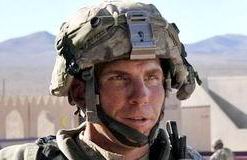 Robert Bales
Spree killer · Afghanistan · 2012
Robert Bales (born June 30, 1973) was a United States Army soldier. He murdered…
16 victims
Robert Bales
Spree killer · Afghanistan · 2012
Robert Bales (born June 30, 1973) was a United States Army soldier. He murdered…
16 victims
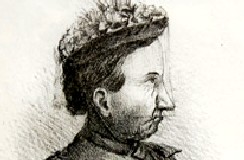 Williamina Dean
Murderer · New Zealand · 1889
Williamina Dean Williamina Dean was executed by hanging at Invercargill Prison…
3 victims
Williamina Dean
Murderer · New Zealand · 1889
Williamina Dean Williamina Dean was executed by hanging at Invercargill Prison…
3 victims
- Gender
- male
- Country
- USA
- Location
- Gregg County, Texas, USA
- Date of birth
- March 14, 1951
- Age at first offence
- 33
- Characteristics
- robbery, revenge
- Victim profile
- Jerry Morgan, 30, his wife, Brenda, 25, and their 22-month-old son, Devin / John Ford
- Method of murder
- Shooting (.22-caliber pistol)
- Date(s) of murder
- April 30, 1984 / 1990
- Years active
- 1984–1990
- Date of arrest
- 1990
- Status
-
Executed
Executed by lethal injection in Texas on October 14, 2008
Case overview
Alvin Andrew Kelly was convicted of capital murder for the killing of Devin Morgan during the course of the robbery of Jerry Morgan. The murders were discovered in their home and involved the deaths of Jerry Morgan, Brenda Morgan, and their 22-month-old son, Devin Morgan.
The case remained unsolved for six years. In 1990, a man named Chris Vickery called the Gregg County Sheriff’s Office and indicated that Cynthia May Kelly Cummings, Kelly’s former wife, had information for the authorities. At that time, Cynthia lived in Michigan, and Kelly was serving a 30-year sentence in Texas for the murder of John Ford. Kelly pleaded guilty to the unrelated murder of John Ford, which occurred after the Morgan murders.
The authorities contacted Cynthia, and ultimately obtained an indictment charging Kelly with the capital murder of Devin during the course of the robbery of Jerry.
People
- Alvin Andrew Kelly — defendant; capital murder conviction and death sentence
- Cynthia May Cummings (Cynthia Kelly) — Kelly’s former wife; testified against him
- Steven Kelly — Kelly’s younger brother; testified
- Ron Wilson — fellow drug trafficker; testified against/involved as described in testimony; convicted separately (sentenced to 66 years)
- Walter Shannon (also known as W.W. Shannon) — Kelly’s source of drugs/main man, in testimony
- Devin Morgan — victim (22 months old); child murdered
- Jerry Morgan — victim; Brenda’s husband; City Marshal Reserve Officer
- Brenda Morgan — victim; Jerry’s wife; City Marshal Reserve Officer
- Violet Brownfield — witness; testified that Kelly “bragged” about killing a family, including a child
- Danny Moore — witness; testified that Kelly said he collected “debts at a forty-sixty split” for Walter Shannon and made statements about “that job”
- Betty McGrede — Brenda and Jerry Morgan’s mother/grandmother figure; gave statements about the case and aftermath
- Lori Kubecka — niece/grandchild of the victims; represented her family witnessing execution; was 10 when the killings occurred
- Chris Vickery — caller who indicated Cynthia had information; contacted Gregg County Sheriff’s Office
- Elizabeth Fulton — co-counsel for Kelly’s lead attorney; prepared a motion to transfer venue that was never filed (in later habeas discussion)
- Harry Heard — lead attorney for Kelly (in later habeas discussion)
- Alvin Khoury — Gregg County District Judge who set the execution date
- Benavides, Circuit Judge — appellate judge in the later federal habeas COA decision
- Rebecca Simpson — assistant district attorney referenced in habeas discussion
- Russell Potts — district attorney’s office investigator referenced in habeas discussion
- Chuck Willeford — sheriff’s investigator referenced in habeas discussion
- Timothy Fallon — Trace Evidence Analyst referenced in habeas discussion
- Jonny Waller — referenced in habeas discussion (alleged alibi witness attempt)
- Scott Smith (T. Scott Smith of Sherman) — Kelly’s attorney referenced in habeas-related discussion about the necklace
- Mark Breding — attorney referenced in habeas-related discussion
- Ken? / Other named persons in narrative — other relatives and witnesses were included as named in the record text (e.g., family members identifying necklace; jurors not named)
Timeline
- April 30, 1984 — Jerry, Brenda, and 22-month-old Devin Morgan were murdered in their home in Gregg County, Texas.
- May 1, 1984 — The Morgan family bodies were discovered in their home; the Morgans’ car was found about thirty miles away in Tyler, Texas.
- June 5, 1984 — A burning truck was found north of the Judson community.
- A few days later (after June 5, 1984) — The body of John T. Ford was located on a road near Lake Cherokee.
- By 1982 or 1983 (stated as “sometime in 1982 or 1983”) — Cynthia met Alvin Kelly; they began living together in Tyler, Texas.
- September 5, 1985 — Cynthia and Kelly were married after the Morgan murders.
- By 1987 (stated as “By 1987”) — Cynthia had moved from East Texas to Michigan; Kelly and Cynthia separated.
- October 1991 (stated as “In October of 1991”) — A Gregg County jury found Kelly guilty of capital murder.
- December 1991 and later described — Punishment phase and death sentence were imposed following the guilty verdict (trial and sentencing described without a separate exact date in the narrative portion).
- March 24, 1997 — The Supreme Court denied Kelly’s petition for certiorari.
- April 8, 1998 — The Court of Criminal Appeals denied state habeas relief without written order.
- October 5, 1998 — The Supreme Court denied certiorari.
- September 13, 2000 — Texas Court of Criminal Appeals dismissed a second application for state post-conviction relief as an abuse of the writ.
- June 26, 1996 — Texas Court of Criminal Appeals affirmed the conviction and sentence.
- October 14, 2008 — Kelly was executed by lethal injection in Texas.
Background
On April 30, 1984, Jerry Morgan, Brenda Morgan, and their 18- to 22-month-old son, Devin Morgan, were murdered in their home in Gregg County, Texas.
According to the narrative, Jerry was shot four times, Brenda was shot once, and Devin was shot twice. The motive for the murders was never determined.
The house was not described as having missing “anything of any value” in one part of the narrative, but the federal habeas discussion described multiple missing items taken from the victims’ home, including the 1977 Pontiac Catalina, a .22 caliber revolver, a .380 semi-automatic pistol, a 7-millimeter rifle, a Remington 870 pump action shotgun, a .38 caliber derringer, a television set, a video recorder, a stereo, decorative brass butterflies, and a coffee maker. Another section of the narrative said the only missing items appear to have been handguns and rifles from a gun case, some small electronics and housewares, and a heart-shaped necklace of Brenda Morgan.
The Morgans’ car was taken and found the next morning in Tyler, Texas. The federal habeas discussion stated that these murders remained unsolved for six years and that no murder weapon was found and no suspect fingerprints were found at the scene or in the car (as described in the narrative portion).
Investigation
In 1990, a man named Chris Vickery called the Gregg County Sheriff’s Office and indicated that Cynthia May Kelly Cummings had information for the authorities. Cynthia lived in Michigan, and Kelly was serving a 30-year sentence in Texas for the murder of John Ford.
The authorities contacted Cynthia and obtained an indictment charging Kelly with the capital murder of Devin during the course of the robbery of Jerry.
Evidence introduced at trial was described as including corroboration of Cynthia’s testimony, including the location of gunshot wounds, the caliber of the murder weapon, the location and position of bodies in the home, the towel that was found under Brenda’s head, and the location of the victims’ car, which was described as devoid of fingerprints.
The federal habeas discussion also described additional evidentiary points supporting the defense theory and the state’s response, including:
- hairs with Negroid characteristics were found in vacuum sweepings from the Morgans’ home,
- a pick-up truck was stolen from a parking lot near the victims’ abandoned car,
- two black males were apprehended for the theft of that truck,
- a necklace was recovered which two of the victims’ family members initially identified as belonging to Brenda Morgan.
Arrest / pre-trial matters
Kelly had previously pleaded guilty to the unrelated murder of John Ford, which occurred after the Morgan murders, and was serving a 30-year sentence at the time authorities contacted Cynthia.
The authorities obtained an indictment charging Kelly with capital murder of Devin during the course of the robbery of Jerry.
Trial
A Gregg County jury found Kelly guilty of capital murder in October 1991.
At trial, Steven Kelly, Kelly’s younger brother, testified that Kelly and he were in the business of selling drugs. Kelly’s source of drugs was Walter Shannon.
Steven testified that several days prior to the murders he drove with Kelly and Ron Wilson to the Morgans’ home. Kelly instructed Steven to remain in the vehicle. Steven disregarded the instruction after hearing an argument and observed Kelly pointing a gun at Jerry Morgan while threatening: “I want you to know that I can kill you at any time.” Kelly noticed Steven and angrily ordered him back to the vehicle. As the three men drove away, Wilson said to Kelly: “I told you not to bring him [Steven] because . . . we’re supposed to take care of some business, and . . . we didn’t take care of it, . . . we’re supposed to prove a point, and now, that they’re going to be upset with us.” Kelly responded: “We can always come back later and take care of it . . . there’s no problem there.”
Steven further testified that on the night of April 30, 1984, after Steven and his wife went to bed, Kelly, Wilson, and Cynthia arrived at his house. Kelly appeared nervous and in a hurry and said he was in serious trouble and needed money. Kelly confessed that he had killed the family Steven had seen him threaten, and that the child was “involved.” Kelly opened a briefcase, handed Steven a pistol, and asked for “five hundred dollars to get out of town.” Steven gave Kelly five hundred dollars and Kelly left with Cynthia and Wilson. Steven testified that Kelly was wearing a pistol when he entered Steven’s house but did not give that gun to Steven.
Cynthia testified that she met Kelly in 1982 or 1983, they began living together in Tyler, Texas, and that she became addicted to methamphetamine. She testified that she frequently accompanied Kelly while he sold drugs, and that Kelly carried a firearm and had Cynthia carry a pistol to “watch his back.”
On the evening of April 30, 1984, after drinking beer and injecting methamphetamine, Cynthia, Kelly, and Wilson drove to the victims’ home. Kelly ordered Cynthia to remain in the vehicle. Cynthia heard gunfire and a baby crying, entered the home, and saw that Kelly had Brenda Morgan pinned against the wall and that Devin Morgan was crying. Cynthia picked up the child and shielded him from the sight of his mother struggling with Kelly.
Cynthia testified that Kelly shot Brenda in the back of the neck and dragged her to a bedroom. She put the baby in a chair and followed Kelly to the bedroom. She testified that Jerry had already been shot and that Kelly placed Brenda next to him. Cynthia retrieved a towel and placed it under Brenda’s head while Brenda begged for help. Cynthia returned to the living room and attempted to comfort the crying baby. Kelly grabbed the crying infant from Cynthia and shot him in the head. Kelly aimed his gun at Cynthia and ordered her to return to the vehicle. As she exited the home, Cynthia heard Kelly again fire a shot.
Cynthia testified that Kelly used the same gun, described as a .22 caliber pistol, to shoot both Brenda and the baby. She further testified that Kelly and Wilson took several items from the victims’ home, including guns, decorative brass butterflies, and a coffee maker.
Cynthia testified that Kelly, with Wilson as a passenger, drove the victims’ car and ordered Cynthia to follow him in their vehicle. She testified that Wilson and Cynthia assisted Kelly in wiping the victims’ car to destroy any fingerprints evidence and that they abandoned the car in a hospital parking lot in Tyler, Texas.
Cynthia testified that subsequently, while driving, Kelly and Wilson discussed needing money, and the three “ended up at” Steven’s home. She testified that her memory became “blurry” after that point, but she did remember Kelly and Steven retreating to the pool room to have a conversation, which she did not hear.
The State corroborated multiple points of Cynthia’s testimony, including gunshot wound locations, weapon caliber, body positions, the towel found under Brenda’s head, and that the victims’ car was devoid of fingerprints. The State also introduced evidence that Jerry and Brenda Morgan had been City Marshal Reserve Officers and argued that Kelly killed the Morgans because they were providing information to law enforcement.
Cynthia’s sister Violet Brownfield testified that Kelly “bragg[ed]” about killing a family, including a child.
Danny Moore testified that Kelly said he collected “debts at a forty-sixty split” for Walter Shannon and that Kelly said he had “taken care of that job . . . and need[ed] to go see the man about some money.” Moore testified that Kelly explained: “that man, his old lady, and the kid . . . they’re not coming back.” Kelly became angry and said: “I warned them, they had a chance. [T]hey wouldn’t do nothing.” Kelly warned: “There’s going to be a lot more people end up like this if they don’t pay up.”
Kelly’s defense theory was that the victims were killed by an unidentified black assailant. The defense relied on:
- hairs with Negroid characteristics found in vacuum sweepings from the Morgans’ home,
- a pick-up truck stolen from a parking lot near the victims’ abandoned car,
- two black males apprehended for the theft of that truck,
- a necklace recovered that two of the victims’ family members initially identified as belonging to Brenda Morgan.
The defense theory was that Cynthia had a relationship with a black man and fabricated her story to protect that man and/or attempt revenge against Kelly.
The State introduced evidence through Timothy Fallon, a Trace Evidence Analyst, that the hairs with Negroid characteristics did not match either of the two black men who were apprehended for theft of the truck. Fallon explained that hair with Negroid characteristics did not necessarily come from a black individual and could come from a Caucasian individual.
Sentencing
At the punishment phase of the trial, the State introduced evidence that Kelly had a bad reputation for violence and a record of criminal convictions. The record of convictions included burglary, unlawful weapon possession, controlled substance delivery and possession, aggravated sexual assault, and murder.
The jury affirmatively answered the special issues set forth in Article 37.071(b) of the Texas Code of Criminal Procedure. The trial court sentenced Kelly to death.
Appeals / post-conviction
The Texas Court of Criminal Appeals affirmed the conviction and sentence on June 26, 1996. The Supreme Court denied certiorari on March 24, 1997.
Kelly filed state habeas proceedings. The Court of Criminal Appeals denied relief without written order on April 8, 1998. The Supreme Court denied certiorari on October 5, 1998.
After an initial federal habeas petition was dismissed as unexhausted, Kelly filed a second application for state post-conviction relief, which the Texas Court of Criminal Appeals dismissed as an abuse of the writ on September 13, 2000.
In later federal habeas proceedings, Kelly sought a certificate of appealability (COA). The Court of Appeals decision described issues considered for the COA, including claims of due process based on alleged actual innocence, prosecutorial argument, and ineffective assistance of counsel, and it denied a COA with respect to seven issues.
The later decision described that:
- the district court concluded actual innocence by itself was not a claim for which relief could be granted in federal habeas proceedings under Herrera,
- the prosecutor’s closing argument about whether Cynthia was an accomplice was considered a fair comment on the evidence,
- ineffective assistance claims were denied in the COA context, including claims related to cross-examination of Cynthia about any agreement and about her role in John Ford.
The decision also referenced that the Supreme Court declined to review the case in October 2008 (within the narrative portion), and that an execution date had been set earlier by Gregg County District Judge Alvin Khoury.
Outcome / execution
Kelly’s conviction and death sentence remained in effect through the conclusion of appeals.
Alvin Andrew Kelly was executed by lethal injection in Texas on October 14, 2008.
Before the execution, Kelly stated: “I pray this gives you some peace,” Kelly said from the death chamber gurney, looking at four relatives of the slain family. “I know you believe that you're going to have closure tonight. As I stand before God today, the true judge, I had nothing to do with the death of your family.” “I had nothing to do with the death of your family.”
Kelly thanked God, expressed love to friends and relatives, and denied committing the murder that led to his execution.
Kelly also said: “I pray to God I can go through with it,” “I’m getting communion,” “I don’t want no worldly food. I filled out the paperwork, and I’m going to have the Lord’s Supper for my last meal.” “I’m fasting from Sunday to Tuesday, so when I go, I’ll be purified.”
During the drugs being administered, Kelly began singing a hymn praising God. Kelly’s hymn line was: “I thank you Lord Jesus for remembering me ... ,”
He was pronounced dead twelve minutes later at 6:30 p.m. CDT.
Lori Kubecka, who was 10 when her aunt, uncle and nephew were killed, represented her family witnessing the execution. Lori Kubecka said: “When it comes to what he did to our family, I think he deserves it.” “But it’s been so long. He has sat behind bars for so long now.”
Other details
Prior unrelated conviction and incarceration
Kelly was serving a 30-year sentence in Texas for the murder of John Ford at the time of authorities’ contacts about the Morgan murders. The narrative also stated that Kelly acknowledged killing another man for whom he was serving time when he was charged in the death of 22-month-old Devin Morgan.
Drugs, alcohol, and firearms (as described in testimony and narrative)
Cynthia testified that she and Kelly drank beer and injected methamphetamine on the evening of April 30, 1984. Cynthia also testified to drug dealing involvement and that Kelly carried a firearm and had her carry a pistol to “watch his back.”
Steven testified that Kelly confessed to killing the family Steven had seen Kelly threaten and that Kelly asked for “five hundred dollars to get out of town.” The federal habeas summary stated that Kelly was wearing a pistol when he entered Steven’s house but did not give that gun to Steven.
Victim family details and aftereffects (as described in narrative)
The narrative included statements from multiple relatives describing the Morgan family, including:
- Jerry Morgan, described by Lori Kubecka as “the kindest man,” and that she called him a clown because he “cut up with everybody.”
- Brenda Morgan, described by Lori Kubecka as her role model, and that she “loved her family” and was a “devoted mom.”
- Devin Morgan, described by Lori Kubecka as “an angel” and recalling “the butterfly kisses I used to get” and “he’d just squeeze as hard as he could.”
The narrative also included a description of Betty McGrede’s “rocky horse” for Devin, and her statements about time since the murders and that the case went unsolved for about five years until Cynthia implicated Kelly.
Additional procedural notes from narrative
The narrative stated that a U.S. Supreme Court decision to decline review occurred and that it “all but ended an appeals process that began soon after Kelly’s conviction in 1991.”
The narrative also included discussion that Kelly’s defense theory involved an unidentified black assailant, that hairs with Negroid characteristics were found in vacuum sweepings, that a pick-up truck theft led to apprehension of two black males, and that a heart-shaped necklace identification was disputed through later testimony changes.
The narrative included discussion that a Gregg County jury reached a guilty verdict in 1991 and that the jury sentencing followed a day later, and that Kelly was never tried for the deaths of Jerry or Brenda Morgan.
Other incarceration-related statement
The narrative included an extended statement attributed to Kelly about life on death row and isolation conditions, including: “I write this article to reflect what I as a Christian have learned in my stay back here at F-pod.” He described constraints on property, exercise, visitation, and disciplinary history, including that he pleaded guilty to a disciplinary charge for possession of craft supplies and received “15 days cell restriction,” and he described the atmosphere in the disciplinary pod.
He also included a pen-pal and mail notice: “Feb. 19 2002 Alvin Kelly would appreciate pen pals and mail. Please forward your mail to him directly at the following address: Mr. Alvin Kelly , #999012 Polunsky Unit DR. 3872 FM 350 South Livingston Texas 77351 USA.”
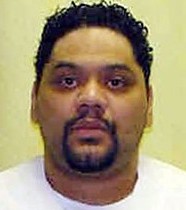
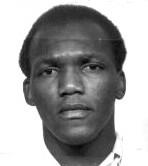
Spotted an error, or have more information about this case?