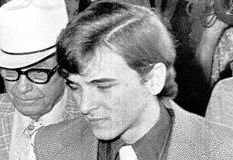
Elmer Henley
Serial killer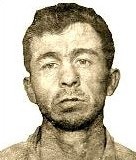 Donald Henry Gaskins
Serial killer · USA · 1969
Donald Henry Gaskins, also known as Donald “Pee Wee” Gaskins, was a serial kill…
200 victims
Donald Henry Gaskins
Serial killer · USA · 1969
Donald Henry Gaskins, also known as Donald “Pee Wee” Gaskins, was a serial kill…
200 victims
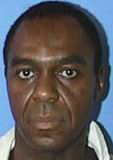 Carl Eugene Watts
Serial killer · USA · 1974
Carl Eugene Watts (born November 7, 1953; died September 21, 2007), also known…
100 victims
Carl Eugene Watts
Serial killer · USA · 1974
Carl Eugene Watts (born November 7, 1953; died September 21, 2007), also known…
100 victims
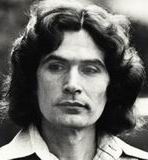 Rodney Alcala
Serial killer · USA · 1977
Rodney James Alcala (born August 23, 1943) was also known as Rodrigo Jacques Al…
100 victims
Rodney Alcala
Serial killer · USA · 1977
Rodney James Alcala (born August 23, 1943) was also known as Rodrigo Jacques Al…
100 victims
 Donald Harvey
Serial killer · USA · 1970
Donald Harvey was known as an American serial killer and a self-professed “Ange…
87 victims
Donald Harvey
Serial killer · USA · 1970
Donald Harvey was known as an American serial killer and a self-professed “Ange…
87 victims
 Donald Leroy Evans
Serial killer · USA · 1975
Donald Leroy Evans (born July 5, 1957) was an American serial killer who murder…
60 victims
Donald Leroy Evans
Serial killer · USA · 1975
Donald Leroy Evans (born July 5, 1957) was an American serial killer who murder…
60 victims
 Michael Swango
Serial killer · USA · 1981
Michael Swango (Joseph Michael Swango) was a physician and American serial kill…
60 victims
Michael Swango
Serial killer · USA · 1981
Michael Swango (Joseph Michael Swango) was a physician and American serial kill…
60 victims
 Russell Eugene Weston
Homicide · USA · 1998
Russell Eugene Weston Jr. was born December 28, 1956 and used the nickname “Rus…
2 victims
Russell Eugene Weston
Homicide · USA · 1998
Russell Eugene Weston Jr. was born December 28, 1956 and used the nickname “Rus…
2 victims
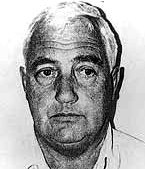 John Wayne Glover
Serial killer · Australia · 1989
John Wayne Glover (26 November 1932 – 9 September 2005) was a British-born Aust…
6 victims
John Wayne Glover
Serial killer · Australia · 1989
John Wayne Glover (26 November 1932 – 9 September 2005) was a British-born Aust…
6 victims
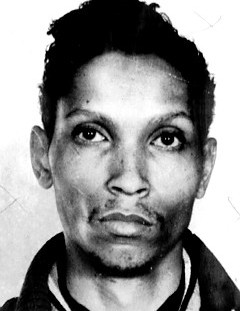 Winston Moseley
Murderer · USA · 1963
Winston Moseley was convicted in the murder of Catherine “Kitty” Genovese and w…
3 victims
Winston Moseley
Murderer · USA · 1963
Winston Moseley was convicted in the murder of Catherine “Kitty” Genovese and w…
3 victims
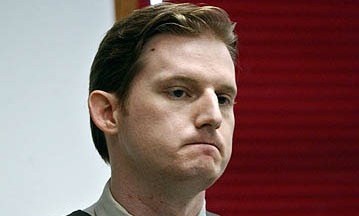 Christian Longo
Mass murderer · USA · 2001
Christian Longo was born on 1/23/74. He was a fugitive wanted on a Lincoln Coun…
4 victims
Christian Longo
Mass murderer · USA · 2001
Christian Longo was born on 1/23/74. He was a fugitive wanted on a Lincoln Coun…
4 victims
 Kim de Gelder
Murderer · Belgium · 2009
Kim de Gelder was a Belgian aged 20 from Sinaai. He was described as a silent b…
4 victims
Kim de Gelder
Murderer · Belgium · 2009
Kim de Gelder was a Belgian aged 20 from Sinaai. He was described as a silent b…
4 victims
- Gender
- male
- Country
- USA
- Location
- Houston, Harris County, Texas, USA
- Date of birth
- May 9, 1956
- Age at first offence
- 16
- Characteristics
- juvenile (17), homosexual rapist, mutilation
- Victim profile
- Frank Aguirre, 18 / Johnny Delone, 16 / Billy Ray Larence, 15 / Homer Garcia, 15 / Charles Cobble, 17 / Marty Ray Jones, 18 / Dean Arnold Corll, 33
- Method of murder
- Strangulation / Shooting
- Date(s) of murder
- 1972 - 1973
- Years active
- 1972–1973
- Date of arrest
- August 8, 1973 (surrenders)
- Status
-
Life imprisonment
Sentenced to six consecutive life sentences on July 16, 1974
Case record: Elmer Henley
Identity
Elmer Wayne Henley, Jr. was born May 9, 1956. He was convicted and incarcerated in the Texas Department of Criminal Justice (TDCJ) system. He was assigned TDCJ #00241618 and was incarcerated in the Mark W. Michael Unit prison, in Anderson County.
Timeline
- 1970 — Henley became acquainted with David Brooks, one year his senior.
- 1970 — Henley’s parents divorced when he was aged fifteen; Henley’s mother retained custody of her four sons.
- May 29, 1971 — David Hilligeist and Malley Winkle disappeared on their way to a local swimming pool.
- Winter of 1971 — Henley was taken by David Brooks to meet Dean Corll again.
- 1972 — Henley helped con a youth into donning handcuffs at Corll’s address and left the youth alone with Corll; the youth’s identity was not known.
- February 1, 1973 — Dean Corll abducted and killed Joseph Lyles, apparently without the assistance of Henley.
- August 8, 1973 — Henley brought Timothy Kerley to Corll’s home upon the promise of a party, later called the Pasadena Police after shooting Dean Corll, and then confessed to his role in the Houston Mass Murders.
- August 13, 1973 — Henley and David Brooks accompanied police to High Island Beach, where four more bodies were found.
- August 9, 1973 — Police accompanied Henley to Lake Sam Rayburn in San Augustine County and additional bodies were found.
- September 8, 1973 — A total of 27 boys between the ages of 13 and 20 were found buried at the three locations Henley (and later, Brooks) had stated they and Corll had buried the victims.
- December 20, 1978 — Henley’s conviction was overturned and he was awarded a new trial.
- June 27, 1979 — Henley was convicted again of 6 murders and sentenced to six consecutive life terms.
- July 16, 1974 — Henley was found guilty and sentenced to six consecutive life terms.
- July 8, 1980 — Henley first became eligible for parole; since this date, he had consistently been denied parole.
- 2011 — Both Henley and Brooks were still serving life sentences.
- 1994 — Henley began to paint as a hobby.
- 1997 — The Hyde Park Gallery in Houston hosted Henley’s first art show.
- 1999 — The city of Houston expressed interest in building a monument to victims of violent crime, which Henley said he would be willing to help pay for with part of the proceeds from a second art show.
- 2010 — Henley stated in an interview that he could not leave Corll because he knew Corll would go after one of his little brothers.
- 2010 — DNA analysis confirmed that an unidentified victim known as ML73-3378 was Michael Baulch.
- March 2011 — DNA analysis confirmed that the victim known as ML73-3355 had been misidentified.
- April 2011 — The victim was identified as Steven Sickman.
- 2013 — A body identification in August of 1983 was identified as Joseph Allen Lyles (identified November 11, 2009 through DNA analysis).
Background
Henley grew up in Houston, Texas. His father was an alcoholic and a wife-beater who physically assaulted his sons. His mother, Mary Henley (née Weed), was strict and religious, but she was protective of her children and strove to ensure her children received a good education and refrained from trouble. Henley took menial, part-time jobs to help his mother with household finances after his parents’ divorce and his grades dropped sharply. Henley dropped out of high school at age fifteen.
Henley became acquainted with a youth one year his senior named David Brooks. The two youths became friends and often played truant together. Through Brooks, Henley became aware Brooks spent much of his free time with an older man, Dean Corll. Henley later stated that despite admiration for Corll because he worked hard, he suspected Corll was homosexual and concluded Brooks was “hustling himself a queer.” Henley eventually began spending his free time in Corll’s company.
Corll initially informed Henley that he was involved in organized theft, and Henley, Brooks and Corll burglarized several addresses, with Henley being paid small sums of money. Henley participated in petty theft during this period. On one occasion Corll asked Henley if he would be willing to kill if required, and Henley replied “Yes.”
Henley became aware of an disappearances in his neighborhood, beginning since the previous December: a total of eight teenage boys aged between 13 and 17 had disappeared. Two youths, David Hilligeist and Malley Winkle, disappeared on May 29, 1971 while on their way to a local swimming pool. Henley had close friends with them and he actively participated in the search for the two boys before Brooks took Henley to meet Corll again in winter 1971.
In the spring of 1973, Henley attempted to enlist in the U.S. Navy, but his application was rejected because he had dropped out of high school and possessed limited education. In a 2010 interview, Henley stated: “I couldn’t leave anyway. If I did go, I knew Dean would go after one of my little brothers, who he always liked a little too much.”
In 1994, at the suggestion of a Louisiana art dealer, Henley began to paint as a hobby, in part as a means of generating income for himself and his mother. Henley refused to paint or draw any images of a violent or exploitative nature. Many works depicted serene imagery such as landscapes, buildings and flowers and the majority were created using acrylics and graphite. Henley stated he suffered from a severe color deficiency in his eyesight that made it impossible for him to clearly distinguish between reds and greens. To compensate, any portraits Henley drew of humans were in black and white; other works were usually drawn or painted in color. A pen pal with whom Henley corresponded organized several exhibitions of his artwork. In 1997, the Hyde Park Gallery in Houston’s Neartown area hosted Henley’s first art show, which drew outrage from some victims’ relatives. In 1999, the city of Houston expressed interest in building a monument to victims of violent crime; Henley said he would be willing to help pay for with part of the proceeds from a second art show.
The offence
Henley played a role in a series of murders in Houston, Texas, in which teenage boys were abducted, raped and murdered by Dean Corll between 1970 and 1973. The narrative described that many victims were lured to Corll’s home by Henley or by Corll’s other teenage accomplice, David Brooks.
Henley was involved in luring victims to Corll’s home and in later assisting in abductions and murders of youths. The account described Corll’s use of handcuffs, tape, and a torture board, along with sexual assaults, torture and killings by strangulation and/or shooting with a .22 caliber pistol. It also described burial of victims at different locations, including a boatshed in Southwest Houston, Lake Sam Rayburn and High Island Beach.
Henley was convicted of killing six teenage boys whom he lured to Corll’s apartment between March 1972 and July 1973.
Investigation and confession
On August 8, 1973, Henley brought Timothy Kerley to Corll’s home upon the promise of a party. Before Corll was able to manacle Kerley to a torture board, Henley and Corll left to purchase sandwiches. When they returned, they were accompanied by Rhonda Williams, a 15-year-old girl. Corll was furious a female had been brought to his house, telling Henley in private he had “ruined everything.”
The account described that Corll waited until Henley and Kerley and Williams were unconscious from drinking and smoking marijuana before binding and gagging them. Henley woke to find Corll placing handcuffs upon his wrists; Kerley and Williams were each bound and gagged and lay alongside Henley on the floor. Corll dragged Henley into the kitchen and placed a .22 caliber pistol against his stomach, threatening to shoot him. Henley pled for his life, promising to participate in the torture and murder of the other youths if Corll released him. Corll agreed and untied Henley.
Corll carried Kerley and Williams into his bedroom and tied them to opposite sides of his plywood torture board, with Kerley on his stomach and Williams on her back. Corll ordered Henley to cut away Williams’ clothes with a long hunting knife and insisted Corll would rape and kill the youth as Henley would do likewise to Rhonda Williams.
As Corll began to assault and torture Tim Kerley, Henley began cutting away Williams’ clothes. Williams lifted her head and asked Henley “Is this for real?” Henley replied in the affirmative and Williams then asked Henley whether he was to “do anything about it,” upon which Henley grabbed the pistol Corll had lain on a bedside table and ordered Corll to stop, shouting: “You've gone far enough, Dean!”
Even with a weapon pointed at him, Corll walked towards Henley, shouting “Kill me, Wayne! You won't do it!” Henley fired and hit Corll in the forehead. As Corll continued to advance, Henley shot him further two times in the shoulder. Corll staggered out of the room. Henley fired a further three rounds into the rear of Corll’s right shoulder and lower back, killing him. Henley then released Kerley and Williams, phoned the Pasadena police and subsequently confessed.
That evening, August 8, Henley confessed to police. He said that for almost three years, he and David Brooks helped procure teenage boys for Dean Corll. He stated that since the winter of 1971 he had actively participated in the abductions and later the murders of the victims. Henley stated Brooks was also an active accomplice. Henley told police Corll paid Henley and Brooks $200 for each victim they were able to lure to Corll’s apartment. Henley informed police Corll had buried most victims in a boatshed in Southwest Houston and others at Lake Sam Rayburn and High Island Beach. Henley agreed to accompany police to each burial site to assist in recovery of the victims.
Police found 27 boys between the ages of 13 and 20 buried at the three locations between August 8 and August 13, with an additional victim discovered in 1983.
The record included a disputed forensic identification at Henley’s trial in 1974: the body of 17-year-old John Manning Sellars, who vanished on July 12, 1973, was disputed as being a victim of Corll by a forensic pathologist who examined his remains. The pathologist found Sellars died of four gunshot wounds fired from a rifle, whereas each other victim of the Houston Mass Murders had been either strangled or killed by the .22 caliber pistol used by Henley to kill Corll. The record stated that Henley and Brooks led police to Sellars’ body on August 13, 1973 and the body was found bound hand and foot and buried in a manner similar to Corll’s other known victims.
Arrest and custody
On August 8, 1973, Henley called Pasadena Police and reported he had killed a man. In the account, Henley blurted to the operator: “Y'all better come here right now! I just killed a man!” The call gave the address as 2020 Lamar Drive, Pasadena. After police arrived and Corll’s body was found inside the hallway, Henley was read his Miranda rights. Henley responded by shouting: “ I don’t care who knows about it. I have to get it off my chest!”
Trial
Henley was brought to trial in San Antonio in June 1974, charged with the murders of six teenage boys whom he himself lured to Corll’s apartment between March 1972 and July 1973. He was found guilty on July 16, 1974 and sentenced to six consecutive life terms.
Henley and his attorneys filed an appeal on July 25, contending that Henley had been denied an evidentiary hearing, that the jury had not been sequestered, that a motion to move the initial trial away from San Antonio had been denied, and that the presence of news media in the courtroom prejudiced his trial.
Victims
Henley was convicted of killing six teenage boys:
- Frank Aguirre (18) — March 24, 1972
- Johnny Delone (16) — May 21, 1972
- Billy Ray Lawrence (15) — June 4, 1973
- Homer Garcia (15) — July 7, 1973
- Charles Cobble (17) — July 25, 1973
- Marty Ray Jones (18) — July 25, 1973
Appeals and retrial
Henley’s appeal was upheld and his conviction was overturned on December 20, 1978. He was awarded a new trial in December 1978.
Henley was tried again in June 1979. On June 27, he was again convicted of 6 murders and again sentenced to six consecutive life terms.
Sentence and parole
The record stated that Henley was sentenced to six consecutive life sentences on July 16, 1974. Henley was again sentenced to six consecutive life terms on June 27, 1979. Henley first became eligible for parole on July 8, 1980, and he had consistently been denied parole since that date.
Other details
Eligibility and contemporaneous status
The record stated that as of 2011, both Henley and Brooks were still serving life sentences.
Number of victims and burial findings
Between August 8 and August 13, police recovered 27 boys between the ages of 13 and 20 from the burial sites Henley and Brooks described, with an additional victim discovered in 1983.
The record described that 17 were found buried in the boat shed, 4 were found at Lake Sam Rayburn, 6 bodies were found buried at High Island Beach, and a body of a seventh victim buried at High Island still lay undiscovered at that location at the time of the record. It also described a 29th victim’s body found at Jefferson County Beach in August 1983.
Autopsy findings described in the record
The record stated that many victims had been sexually tortured in addition to being sexually assaulted. It stated that autopsies revealed each victim had been killed by either strangulation, shooting or a combination of both. It also included detailed descriptions of sexual torture methods and burial circumstances.
Art-related statements
The record described Henley’s refusal to paint violent or exploitative images and his explanation of color deficiency affecting portraits, along with the fact that a pen pal organized exhibitions and that his first art show drew outrage from some victims’ relatives.
Spotted an error, or have more information about this case?