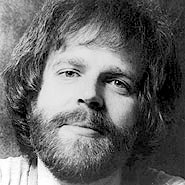
Jerry Harvey
Murderer Brian Kevin Rosenfeld
Murderer · USA · 1985
Brian Kevin Rosenfeld Brian Kevin Rosenfeld was sentenced to three concurrent l…
23 victims
Brian Kevin Rosenfeld
Murderer · USA · 1985
Brian Kevin Rosenfeld Brian Kevin Rosenfeld was sentenced to three concurrent l…
23 victims
 Yahweh ben Yahweh
Murderer · USA · 1980
Yahweh ben Yahweh was born and legally named Hulon Mitchell Jr. (October 27, 19…
23 victims
Yahweh ben Yahweh
Murderer · USA · 1980
Yahweh ben Yahweh was born and legally named Hulon Mitchell Jr. (October 27, 19…
23 victims
 Russell Ellwood
Murderer · USA · 1991
Russell Ellwood was a former taxi driver. Authorities suspected him of killing…
20 victims
Russell Ellwood
Murderer · USA · 1991
Russell Ellwood was a former taxi driver. Authorities suspected him of killing…
20 victims
 Robert Martines Perez
Murderer · USA · 1994
Name: Robert Martines Perez · Other name used in proceedings: Robert Martinez P…
15 victims
Robert Martines Perez
Murderer · USA · 1994
Name: Robert Martines Perez · Other name used in proceedings: Robert Martinez P…
15 victims
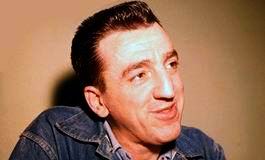 Caryl Chessman
R obber and rapist · USA · 1947
Caryl Whittier Chessman (May 27, 1921 in St. Joseph, Michigan – May 2, 1960 at…
0 victims
Caryl Chessman
R obber and rapist · USA · 1947
Caryl Whittier Chessman (May 27, 1921 in St. Joseph, Michigan – May 2, 1960 at…
0 victims
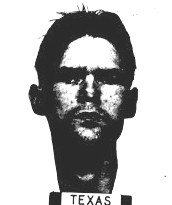 John Russell Thompson
Murderer · USA · 1977
July 3, 1987 — United States Court of Appeals, Fifth Circuit decided John Russe…
1 victim
John Russell Thompson
Murderer · USA · 1977
July 3, 1987 — United States Court of Appeals, Fifth Circuit decided John Russe…
1 victim
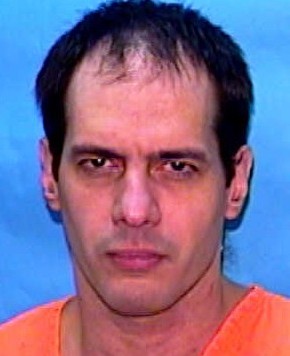 Juan Carlos Chavez
Murderer · USA · 1995
Juan Carlos Chavez was sentenced to death for the kidnapping, sexual assault, a…
1 victim
Juan Carlos Chavez
Murderer · USA · 1995
Juan Carlos Chavez was sentenced to death for the kidnapping, sexual assault, a…
1 victim
 Karl Bluestone
Murderer · United Kingdom · 2001
Karl Bluestone was a Gravesend police officer. · 28 August 2001 — Karl Blueston…
3 victims
Karl Bluestone
Murderer · United Kingdom · 2001
Karl Bluestone was a Gravesend police officer. · 28 August 2001 — Karl Blueston…
3 victims
 William Keith Abbott
Homicide · New Zealand · 2000
Name: William Keith Abbott William Keith Abbott is described as a New Zealand p…
1 victim
William Keith Abbott
Homicide · New Zealand · 2000
Name: William Keith Abbott William Keith Abbott is described as a New Zealand p…
1 victim
 Carla Hughes
Murderer · USA · 2006
Name: Carla Hughes Other names: Carla Ann Hughes Date of birth: June 12, 1981 A…
2 victims
Carla Hughes
Murderer · USA · 2006
Name: Carla Hughes Other names: Carla Ann Hughes Date of birth: June 12, 1981 A…
2 victims
- Gender
- male
- Country
- USA
- Location
- Los Angeles, California, USA
- Date of birth
- October 28, 1949
- Age at first offence
- 39
- Characteristics
- parricide, alcohol, history of mental illness
- Victim profile
- Deri Rudulph, 38 (his second wife)
- Method of murder
- Shooting
- Date(s) of murder
- April 9, 1988
- Years active
- 1988
- Date of arrest
- —
- Status
-
Died in custody
Committed suicide by shooting himself the same day Jerry Harvey (1949 – 1988) was a California filmmaker and programmer, best known for his work on Z Channel, a pioneering cable station in the Hollywood Hills.
Overview
Jerry Harvey (October 28, 1949 – April 9, 1988) was an American screenwriter and film programmer, best known for his work on Z Channel, a pioneering cable station in Los Angeles from 1974 to 1989.
Background
Harvey was born in Bakersfield, California, in 1949. He was a graduate of the University of California, Los Angeles (UCLA).
Harvey’s early upbringing was not a happy one. His father, a judge in Bakersfield, Kern County, had sent the most people to death row than any previous judge in his county. His eldest sister Mary disappeared before he was a teenager, and his next-eldest sister Ann died in a very theatrical suicide.
As a child, Harvey became obsessed with movies. The first film he ever saw, Jubilee Trail, inspired him to eventually make and "midwife" films.
Harvey’s passion for film won him friendships with maverick filmmakers and master directors, including Robert Altman, James B. Harris, Monte Hellman, and actors including Peter O’Toole.
Filmmaking
While attending UCLA in the 1970s, Harvey developed a fast friendship with Douglas Venturelli. The pair cowrote a number of screenplays. Monte Hellman directed their script, a western, called If China 9, Liberty 37. The western was a genre Harvey loved. The film never received American distribution.
Programming
Harvey began programming at the Beverly Canon (a local cinema). There, he developed a reputation for programming offbeat films by well-respected directors, such as Altman’s The Long Goodbye.
He was best known for screening the director’s cut of Sam Peckinpah’s The Wild Bunch, for which Peckinpah personally brought in the print.
Harvey first established himself within the film community by programming the director’s cut of Sam Peckinpah’s The Wild Bunch at the Beverly Canon Theater in 1974. Peckinpah himself was in attendance, and the film played that day to a sellout crowd. The very concept of “the director’s cut” had no commercial viability until Harvey demonstrated it with this screening. After, as longer versions of such films as Touch of Evil by Orson Welles began surfacing from studio vaults, “director’s cuts” became a staple of the Revival House theater-circuit. In the 1960s and ’70s, before the rise of Home Video, “Revival Houses” were the only way to see films as their makers intended.
Z Channel
Z Channel was launched in 1974 as one of the first Pay TV services in the U.S. Because it served Los Angeles, filmmakers constituted most of its subscribers. The channel enjoyed popularity and influence even before Harvey took charge of its programming in 1981.
There was a story that after hearing him yell at the TV one time, his wife Vera suggested that he write to the head of programming at the cable network SelecTV to complain. The letter impressed the heads of SelecTV, and they invited Harvey to program a few films. His choices included a Laura Antonelli soft-core flick and a documentary about political uprising in Greece.
About six months after he started work at SelecTV, the main programmer took ill and Harvey stepped into his shoes. He took over programming in 1980. During his tenure, he pioneered both the director’s cut and the cable “special event” trends by screening the three and a half-hour director’s cut of Michael Cimino’s rarely seen western Heaven’s Gate. This led to a close friendship between Cimino and Harvey that lasted his entire life.
Harvey became known for programming foreign and independent feature films by up-and-coming directors.
His first significant coup came in 1982, when studio executive David Chasman alerted him that the director’s cut of Heaven’s Gate (film), written and directed by Michael Cimino, was lying fallow in a British vault. Few had seen this version since its one week run in Manhattan in November 1980. Because the film had been attacked, it was generally believed, even by studio insiders, that Cimino’s original version had ceased to exist altogether. Harvey retrieved this one remaining print and gave it a highly publicized "world premiere" on December 24, 1982. The success of this airing was consequential. Cimino’s version was shortly released on home video, where it is now the only version available.
Producer Charles Joffe told filmmaker Xan Cassavetes that the primary strategic reason Woody Allen’s Annie Hall won the Academy Award in 1977 is because it had played so frequently on Z Channel during the weeks the awards were being voted on.
Although Z kept commercial pace with rivals Home Box Office, Showtime and The Movie Channel by always showing the latest box office hits, Z’s primary appeal to viewers lay in its devotion to films that were passionate and personal.
Harvey became director of programming in 1981. The films whose director’s cuts Harvey championed, using Z as a showcase, included:
- Michael Cimino’s Heaven’s Gate
- The Ruling Class with Peter O’Toole
- Sergio Leone’s Once Upon a Time in America
- Karel Reisz’s The Loves of Isadora
- John Ford’s Up the River
- Bernardo Bertolucci’s 1900
- Sam Peckinpah’s The Wild Bunch
- Pat Garrett & Billy the Kid
Personal life and women-related history
The film also chronicles a tragic history with women. Harvey’s two older sisters, Mary and Ann, committed suicide in 1975 and 1978 respectively. These deaths, and the despairs that triggered them, haunted and afflicted Harvey, destroying two longtime love-relationships.
His first longtime love-relationship was with Doreen Ringer-Ross, who lived with Harvey from 1973 to 1978.
His second longtime love-relationship was with photographer-filmmaker Vera Anderson, who married Harvey shortly after Ann’s suicide in ’78 and divorced him in 1984.
Harvey’s second wife, Deri Rudulph (born December 21, 1949), married him in February, 1986. They remained together until April 9, 1988.
Death
On April 9, 1988, Harvey killed Rudulph with a pistol before turning the gun on himself. The same day, his death occurred.
Documentary and influence
A 2004 documentary directed by Xan Cassavetes, Z Channel: A Magnificent Obsession, detailed Harvey’s life and accomplishments.
Altman and Harris attested to Harvey’s great sympathy and inspirational value as a champion of film.
Younger filmmakers such as Quentin Tarantino and Jim Jarmusch acknowledged the influence of Z on their own work.
Other details
Harvey had a close friendship with Cimino that lasted his entire life.
Spotted an error, or have more information about this case?