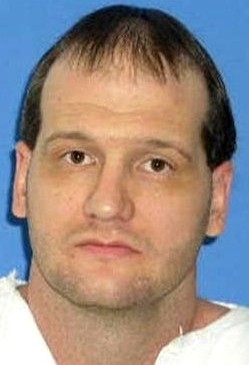
Clifford Kimmel
Murderer Russell Ellwood
Murderer · USA · 1991
Russell Ellwood was a former taxi driver. Authorities suspected him of killing…
20 victims
Russell Ellwood
Murderer · USA · 1991
Russell Ellwood was a former taxi driver. Authorities suspected him of killing…
20 victims
 Robert Martines Perez
Murderer · USA · 1994
Name: Robert Martines Perez · Other name used in proceedings: Robert Martinez P…
15 victims
Robert Martines Perez
Murderer · USA · 1994
Name: Robert Martines Perez · Other name used in proceedings: Robert Martinez P…
15 victims
 Billy Frank Vickers
Murderer · USA · 1993
Billy Frank Vickers Vickers was executed by lethal injection in Texas on Januar…
14 victims
Billy Frank Vickers
Murderer · USA · 1993
Billy Frank Vickers Vickers was executed by lethal injection in Texas on Januar…
14 victims
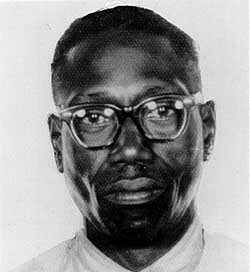 Monroe Hickson
Spree killer · USA · 1946
Monroe Hickson was a native of South Carolina. He was nicknamed "Blue Boy". He…
4 victims
Monroe Hickson
Spree killer · USA · 1946
Monroe Hickson was a native of South Carolina. He was nicknamed "Blue Boy". He…
4 victims
 George Cordova
Murderer · USA · 1979
George “Spiderman” Cordova was executed by lethal injection in Texas on Februar…
1 victim
George Cordova
Murderer · USA · 1979
George “Spiderman” Cordova was executed by lethal injection in Texas on Februar…
1 victim
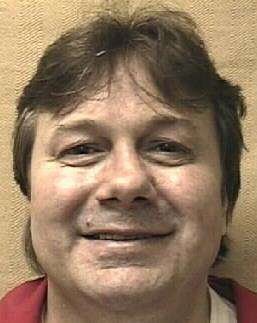 Ronald Wayne Frye
Murderer · USA · 1993
Ronald Wayne Frye was convicted on November 15, 1993 of first-degree murder and…
1 victim
Ronald Wayne Frye
Murderer · USA · 1993
Ronald Wayne Frye was convicted on November 15, 1993 of first-degree murder and…
1 victim
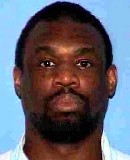 Geoffrey Griffin
Serial killer · USA · 2000
Geoffrey Griffin (also referred to as Geoffrey T. Griffin) was convicted of kil…
7 victims
Geoffrey Griffin
Serial killer · USA · 2000
Geoffrey Griffin (also referred to as Geoffrey T. Griffin) was convicted of kil…
7 victims
 Jason Todd Ready
Mass murderer · USA · 2012
Jason Todd “J.T.” Ready (February 17, 1973 – May 2, 2012) was an American Marin…
4 victims
Jason Todd Ready
Mass murderer · USA · 2012
Jason Todd “J.T.” Ready (February 17, 1973 – May 2, 2012) was an American Marin…
4 victims
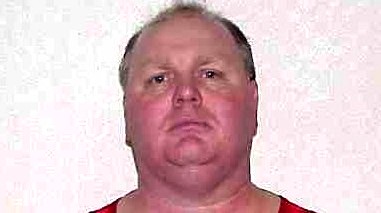 Michael Dale St. Clair
Serial killer · USA · 1990
Michael Dale St. Clair was born on 1-15-57. St. Clair called himself the “$5 mi…
6 victims
Michael Dale St. Clair
Serial killer · USA · 1990
Michael Dale St. Clair was born on 1-15-57. St. Clair called himself the “$5 mi…
6 victims
- Gender
- male
- Country
- USA
- Location
- Bexar County, Texas, USA
- Date of birth
- J uly 18, 1975
- Age at first offence
- 24
- Characteristics
- armed robbery, murder for hire, robbery, drug addict, history of mental illness
- Victim profile
- Rachel White, 22, Susan Halverstadt, 22, and Brent Roe, 29
- Method of murder
- St abbing with knife
- Date(s) of murder
- April 9, 1999
- Years active
- 1999
- Date of arrest
- May 18, 1999
- Status
-
Executed
Executed by lethal injection in Texas on September 20, 2007
Background
Clifford Allan Kimmel was an 8-years educated laborer in Bexar County, Texas. He was a white male born with brown hair and brown eyes. He stood 05' 11" and weighed 194 lb.
The Texas Attorney General Greg Abbott announced that Clifford Kimmel was scheduled to be executed after 6 p.m. Thursday, September 20, 2007.
The offence
On the evening of April 9, 1999, Kimmel and accomplice Derrick Murphy went to the apartment of their acquaintance, Rachel White, and asked to use the phone. Murphy entered the apartment and pointed a gun at White and two guests, Susan Halverstadt and Brett Roe. After tying up the victims’ hands with rope, Murphy took White into the bathroom and demanded to know where she kept her money.
When White resisted, Kimmel injected her in the arm with a syringe containing cleaning fluid. Murphy smothered White with a pillow until she stopped thrashing, and then he cut her neck. Kimmel thereafter injected Roe with cleaning fluid.
When Roe attempted to run for the front door, Kimmel and Murphy tackled him. Kimmel stabbed him in the chest. Murphy took the knife from Kimmel, cut Roe’s throat, and stabbed him multiple times while Kimmel held his legs. Murphy then stabbed Halverstadt. Kimmel and Murphy then returned to the bathroom where White was still alive on the floor gasping for air, carried her from the bathroom into the bedroom, and Murphy sat on White’s chest and stabbed her in the chest and throat.
During the killings, Kimmel described that White pleaded with him: “[h]elp me, Clifford, I’m dying. Why are you doing this?” Kimmel only responded, “I don’t know what to tell you, because I don’t know why.”
Kimmel and Murphy took several items from White’s apartment, including a stereo, a VCR, White’s purse, Roe’s wallet, a wooden jewelry box, a bong, a silver letter opener, and a collection of CDs. They later sold much of the stolen property. They used White’s credit card at gasoline stations and at a hotel, where the duo had a party the next night. All three victims died as a result of the injuries they sustained that night.
Kimmel pleaded guilty to the charges contained in the indictment.
Kimmel was convicted of capital murder for the murders of three persons committed while in the course of robbing each victim. Kimmel was indicted on six counts of capital murder. Counts one, two, and three charged Kimmel with having intentionally killed Rachel White, Susan Halverstadt, and Brett Roe by stabbing and cutting each of them with a knife while in the course of robbing each of these victims. Counts four, five, and six charged Kimmel with having intentionally killed White, Halverstadt, and Roe by cutting and stabbing each of them with a knife all in the same criminal transaction.
Investigation
Kimmel and accomplice Derrick Murphy were arrested about six weeks later after detectives tracked purchases made with a credit card stolen from one of the victims.
Kimmel was arrested on May 18, 1999, on a parole revocation warrant. Initially he denied any role in the murders. Two days later, Kimmel admitted to participating in the killings and gave a written statement to police.
The Texas Attorney General provided additional context: the evidence presented at trial included Kimmel’s own confession, and evidence presented at the punishment phase of trial showed prior criminal conduct and other aggravating information.
Arrest
On May 18, 1999, Kimmel was arrested on a parole revocation warrant. He initially denied any personal involvement in the murders, but after Murphy implicated him, Kimmel gave a second written statement in which he admitted to participating in the murders.
Trial
Procedural history
- August 11, 1999 — A Bexar County grand jury indicted Clifford Kimmel for capital murder.
- February 14, 2000 — Kimmel pled guilty to the charges contained in the indictment.
- February 18, 2000 — Following a separate punishment hearing, the jury sentenced Kimmel to death.
Punishment phase findings and verdict
On February 18, 2000, the jury returned its verdict, finding separately with regard to each murder victim:
- Kimmel posed a future danger;
- he actually caused the death of the decedent or intended to kill the deceased, or anticipated that a human life would be taken; and
- there were insufficient mitigating circumstances to warrant a sentence of life imprisonment rather than a death sentence.
Accordingly, Kimmel was sentenced to death.
Prior criminal history evidence presented at the punishment phase
During the punishment phase of trial, the State presented evidence showing that Kimmel:
- participated in the armed robbery of a fast-food restaurant with Murphy and two others a few days before the triple homicide;
- was arrested twice as a juvenile in Bexar County for burglary and shoplifting and received probated sentences;
- was again arrested as a juvenile and adjudicated guilty on a charge of indecency with a child and received another probated sentence;
- was arrested as an adult in February 1993 for burglary of a habitation in Guadalupe County and received another probated sentence;
- had a motion to revoke his probation filed against him in July 1993 for carrying a loaded handgun and being arrested for criminal trespass;
- had a motion to revoke his probation filed against him in August 1994 for testing positive for marijuana use, failing to report multiple times to his probation officer, and for failing to fulfill other requirements of his probation;
- attempted to break into his parents’ home in March 1995 and was later arrested for absconding from probation;
- was placed in the Bastrop County Restitution Center in August 1995 but constantly misbehaved, then disappeared from that facility in July 1996 after officials found evidence that he had committed a burglary;
- had another motion to revoke his probation filed against him in November 1996 and was arrested the following month;
- had his probation revoked in April 1997 and was sentenced to serve six years in prison;
- was released on parole in November 1998, but disappeared from the halfway house less than two months later after testing positive in a urinalysis test for cocaine and marijuana;
- was arrested on a parole revocation warrant in May 1999; and
- threatened to assault a Bexar County Adult Detention Center officer on September 8, 1999, after contraband was found in his cell.
Representation, age at time of confession, and mental health testimony
A defense psychiatrist testified that Kimmel was a heavy user of methamphetamines since he was 13 or 14. The testimony included that he dropped out of school in the 11th grade and had numerous arrests as a juvenile. Another account described that a psychiatrist testified Kimmel, then 24, had been using heavy drugs since he was about 13 and that the slayings likely were fueled by Kimmel’s addiction to speed. A psychiatrist testified at the trial and Kimmel’s confession included statements to the families of the victims in one account, where Kimmel apologized to families of the victims and said the murders would haunt him forever.
Quotes and last statement
At execution, Kimmel had nothing to say when asked by a warden if he had a final statement. “No sir,” he replied.
In one account, Kimmel offered no final statement. Moments before closing his eyes, Kimmel turned to look at relatives of White and Halverstadt. Asked if he wished to say something, he replied, “No, sir.”
Appeals
State
- November 7, 2001 — The Texas Court of Criminal Appeals affirmed Kimmel’s conviction and sentence.
- November 15, 2001 — Kimmel filed an application for writ of habeas corpus with the state trial court.
- May 20, 2002 — An evidentiary hearing was held in the state trial court.
- October 15, 2003 — The Texas Court of Criminal Appeals adopted the trial court’s recommendation and denied Kimmel’s state habeas application.
Federal and federal circuit
- September 15, 2004 — Kimmel filed a federal petition for writ of habeas corpus in a San Antonio federal district court.
- August 16, 2005 — The federal district court denied Kimmel the relief requested in his federal habeas petition, and denied Kimmel a certificate of appealability on each claim.
- November 22, 2005 — Kimmel filed an application for certificate of appealability with the 5th U.S. Circuit Court of Appeals.
- August 29, 2006 — The 5th Circuit Court denied Kimmel’s request for COA.
The United States Court of Appeals decision in Kimmel v. Quarterman, 199 Fed.Appx. 338 (5th Cir. 2006) denied the application for certificate of appealability.
The appeal involved four grounds:
- the right to have a fair cross section of the community on panels from which grand juries are chosen was violated because Hispanics were disproportionately excluded from the pool of eligible persons to serve on grand juries in Bexar County, Texas;
- the confession was obtained in violation of the Fifth, Sixth, and Fourteenth Amendments;
- due process rights were violated when the State suppressed exculpatory and impeachment evidence; and
- due process rights were violated when the State knowingly presented perjured testimony.
The court described Kimmel’s arguments regarding tattoos and expert testimony. It discussed notes taken by prosecutor Juanita Vasquez-Gardner during conversations with experts about the significance of Kimmel’s tattoos. The tattoos included an “A” with a circle around it above the word “Chaos” on Kimmel’s shoulder; the word “White” on one of his forearms; and the word “Pride” on the other forearm.
Kimmel argued that the prosecution failed to disclose that the experts did not know the meaning of the tattoos and that the prosecution suggested to a defense witness that the tattoos signified something other than what the experts had suggested. During the punishment phase, the defense called Dr. Edward Gripon, a psychiatrist, who opined that it was unlikely Kimmel would commit criminal acts of violence that would constitute a continuing threat to society. On cross-examination, the prosecutor questioned Dr. Gripon regarding whether the circled A tattoo signified anarchy.
Outside the presence of the jury, the prosecutor asked Dr. Gripon whether Kimmel had informed Dr. Gripon that the symbol signified anarchy or whether Dr. Gripon knew of that meaning; Dr. Gripon answered “No.” In the presence of the jury, she asked Dr. Gripon whether Kimmel had tattoos that indicated anarchy and Dr. Gripon answered “Yes. That's what I think is supposed to be the meaning of them, yes.”
The prosecutor referenced an incident during which Kimmel referred to a prison guard by a racial epithet and then questioned Dr. Gripon regarding Kimmel’s “white pride” tattoos. The court record reflected Dr. Gripon responded that this was a possible interpretation, but that one must be careful in interpreting tattoos because they are often an expression of extremism, not necessarily a clear indicator of what a person believes.
The appellate decision ultimately concluded that Kimmel failed to show that jurists of reason could debate the district court’s resolution of his habeas petition, and it denied Kimmel’s application for a COA.
Supreme Court
- January 25, 2007 — Kimmel petitioned the U.S. Supreme Court for a writ of certiorari.
- April 16, 2007 — The Supreme Court denied Kimmel’s petition for certiorari.
Execution date setting and clemency
- April 30, 2007 — The trial court issued an order setting Kimmel’s execution date for September 20, 2007. The Texas Board of Pardons and Paroles voted unanimously against his commutation request.
Outcome
Kimmel was executed by lethal injection in Texas on September 20, 2007.
At execution, the execution chamber time was described as:
- He was pronounced dead nine minutes later at 6:18 p.m. CDT.
- Another account described that the drugs began flowing at 6:09 p.m. and that he was pronounced dead nine minutes later.
Derek Murphy received a life prison sentence for his role in the slayings.
Aftermath
For his last meal, Kimmel requested a bacon cheeseburger with jalapenos, french fries, two slices of apple pie with vanilla ice cream and sweetened iced tea.
The Texas Attorney General announced that Clifford Kimmel was scheduled to be executed after 6 p.m. on September 20, 2007, for the Feb. 2000 capital murders of three people in a San Antonio apartment.
The Texas Attorney General’s media advisory also noted that Kimmel’s lethal injection was scheduled and provided a summary of evidence presented at trial.
Spotted an error, or have more information about this case?