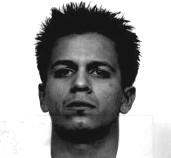
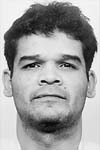
George Cordova
Murderer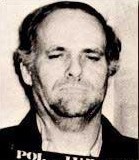 Ervil LeBaron
Murderer · USA · 1972
Ervil Morrell LeBaron (1925 to August 16, 1981) was the leader of a polygamous…
35 victims
Ervil LeBaron
Murderer · USA · 1972
Ervil Morrell LeBaron (1925 to August 16, 1981) was the leader of a polygamous…
35 victims
 Brian Kevin Rosenfeld
Murderer · USA · 1985
Brian Kevin Rosenfeld Brian Kevin Rosenfeld was sentenced to three concurrent l…
23 victims
Brian Kevin Rosenfeld
Murderer · USA · 1985
Brian Kevin Rosenfeld Brian Kevin Rosenfeld was sentenced to three concurrent l…
23 victims
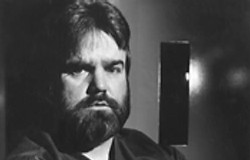 Marvin Gray
Murderer · USA · 1975
Marvin Gray was convicted killer who claimed responsibility for 23 slayings and…
23 victims
Marvin Gray
Murderer · USA · 1975
Marvin Gray was convicted killer who claimed responsibility for 23 slayings and…
23 victims
 Yahweh ben Yahweh
Murderer · USA · 1980
Yahweh ben Yahweh was born and legally named Hulon Mitchell Jr. (October 27, 19…
23 victims
Yahweh ben Yahweh
Murderer · USA · 1980
Yahweh ben Yahweh was born and legally named Hulon Mitchell Jr. (October 27, 19…
23 victims
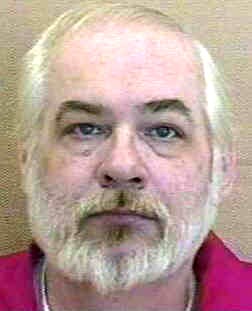 John Thomas Noland
Murderer · USA · 1982
John Thomas Noland was executed in North Carolina by lethal injection on Novemb…
2 victims
John Thomas Noland
Murderer · USA · 1982
John Thomas Noland was executed in North Carolina by lethal injection on Novemb…
2 victims
 Christie Scott
Murderer · USA · 2008
Defendant: Christie Michelle Scott (also referred to as Christie Michelle Bray…
1 victim
Christie Scott
Murderer · USA · 2008
Defendant: Christie Michelle Scott (also referred to as Christie Michelle Bray…
1 victim
 Rebecca Bryan
Murderer · USA · 2011
Rebecca Bryan was convicted of first-degree murder for fatally shooting her hus…
1 victim
Rebecca Bryan
Murderer · USA · 2011
Rebecca Bryan was convicted of first-degree murder for fatally shooting her hus…
1 victim
 Nicholas Ncama
Serial killer · South Africa
Nicholas Lungisa Ncama was a South African serial killer who was convicted in 1…
Nicholas Ncama
Serial killer · South Africa
Nicholas Lungisa Ncama was a South African serial killer who was convicted in 1…
 Russell Maurice Johnson
Serial killer · Canada · 1973
Russell Maurice Johnson (born 1947) was confined to maximum security at the Oak…
7 victims
Russell Maurice Johnson
Serial killer · Canada · 1973
Russell Maurice Johnson (born 1947) was confined to maximum security at the Oak…
7 victims
- Gender
- male
- Country
- USA
- Location
- Bexar County, Texas, USA
- Date of birth
- February 26, 1959
- Age at first offence
- 20
- Characteristics
- robbery, rape
- Victim profile
- Jose "Joey" Hernandez (male, 19)
- Method of murder
- Beating with a tire iron / St abbing with a pocketknife
- Date(s) of murder
- August 4, 1979
- Years active
- 1979
- Date of arrest
- —
- Status
-
Executed
Executed by lethal injection in Texas on February 16, 1999
Case record: George Cordova
Background
George “Spiderman” Cordova was executed by lethal injection in Texas on February 16, 1999. He was also described as a convicted killer known as “Spiderman” because he once was able to slither through jail bars and escape to freedom.
George Cordova was convicted of the August 4, 1979 robbery and murder of Joey Hernandez, 19, in San Antonio, Texas. Joey and his date were at Espada Park, sitting in his car, when they were approached by Cordova and three other men. Cordova asked Joey to take him to a gas station, but Joey refused because he noticed one of the other men had a knife.
Cordova was described as already having a long criminal record at nineteen, and he was described as a continuing danger while awaiting trial on capital murder and committing a sexual assault.
Cordova completed the 6th grade and worked as a laborer. He had other convictions for burglary, robbery, illegal weapons possession and sexual battery. His first arrest came at age 11 for tormenting a police dog.
The offence
The murder occurred on Aug. 5, 1979 in the early morning. In the federal appellate court’s account, Jose (Joey) Hernandez and Cynthia West were in the early morning hours of August 4, 1979, parked in a small parking lot in Espada Park in San Antonio, Texas.
While Hernandez and West talked in the car, George Cordova approached and asked for oil. Hernandez replied that he did not have any and Cordova left. At around 2 a.m., Cordova returned with Manuel Villanueva and two other men. When Hernandez reached to start the car, he was struck in the face by one of the men. The car door was opened and Cordova and Villanueva started beating Hernandez.
West saw Cordova strike Hernandez with a tire iron and Villanueva attack him with a knife. Cordova took West’s wrist and forced her to run into a wooded area of the park. Along the way, Cordova threatened to do to her what he did to Hernandez. West was then forced to the ground face down and Cordova stuck the tire iron next to her face and again threatened her. Cordova made West stand up and run further into the woods, where he undressed her, taking her watch and a necklace. West was raped by Cordova, Villanueva, and a third man.
After the attackers departed, West dressed and ran back to the parking lot. There she discovered that the car was gone and Hernandez was lying dead in a pool of blood. When Villanueva was arrested shortly after the crime, he had a bloodied knife in his possession.
A separate account stated that Cordova pulled Joey from his car and Joey was savagely beaten with a tire iron by Cordova and stabbed repeatedly by the other man. Joey’s girlfriend was pulled from her car and forced into the woods where she was beaten and repeatedly raped but survived and testified in Cordova’s trial. Cordova and his accomplice then stole Joey’s car.
In the federal appellate court’s account, a medical evidence statement was that Hernandez had wounds on his face that could have been caused by a tire iron, but the cause of death was a stab wound to the back of the neck.
Cordova and his attorneys asserted that an accomplice, Manuel Villanueva, actually committed the murder by stabbing Hernandez in the neck, severing his spinal cord, and that Cordova was identified as beating the victim with a tire iron.
Investigation
Leon Springs testified that Villanueva returned home on August 4 with a bloody shirt. Springs turned over to police some 8-track tapes which belonged to Hernandez, together with Hernandez’s watch and empty wallet. Springs testified that Villanueva had given him the property.
Two cassette boxes, identified as belonging to Hernandez, were recovered from Villanueva’s sister who had received them from Villanueva. West’s watch was also recovered from Villanueva’s house. Hernandez’s car was discovered on a street about 2 1/2 blocks from Villanueva’s house, and approximately the same distance from the house where Cordova lived.
The federal appellate court’s account stated there was no physical evidence linking Cordova to the crime and no stolen property was found on Cordova or in his house.
Arrest
Cordova was indicted for capital murder and was tried in San Antonio.
Villanueva was arrested shortly after the crime.
Cordova was brought back to stand trial in Texas after being arrested in Florida for aggravated sexual assault and sexual battery.
Trial
Cordova was indicted for capital murder. Specifically, he was charged with intentionally causing the death of Hernandez by stabbing him with a knife while in the course of committing and attempting to commit a robbery of Hernandez. The governing Texas statute cited in the federal appellate court’s discussion was Tex.Penal Code Ann. Sec. 19.03(a)(2) (Vernon 1974).
The testimony at trial consisted mainly of West’s account of the events of August 4. She positively identified Cordova and Villanueva. Other testimony established where the car and other property was found. Besides West’s identification, the only other evidence connecting Cordova to the criminal activity was Leon Springs’ testimony that he was at the Villanueva house on the evening of August 3 when he saw Cordova come and pick up Villanueva and Villanueva’s sister’s testimony that she saw Cordova with Villanueva on August 6.
After the close of the evidence, Cordova’s counsel objected to the failure to include an instruction on the lesser included offense of murder, and the trial court overruled the objection.
The jury found Cordova guilty of capital murder. After presentation of evidence at the punishment stage, the jury answered “yes” to both special issues submitted to it. Cordova was then sentenced to death.
The Texas Court of Criminal Appeals affirmed Cordova’s conviction and sentence. Cordova v. State, 698 S.W.2d 107, 110-11 (Tex.Crim.App.1985), cert. denied, 476 U.S. 1101, 106 S.Ct. 1942, 90 L.Ed.2d 352 (1986).
The federal appellate court included the Texas Court of Criminal Appeals statement regarding lesser included offense instructions:
In determining whether a defendant is entitled to a charge on the lesser included offense we will consider all the evidence presented at trial. [In doing so], this Court [applies a] two-prong test.... The first prong requires that the lesser included offense must be included within the proof necessary to establish the offense charged. Secondly, there must be some evidence in the record that if the defendant is guilty, he is guilty of only the lesser offense. The defendant did not testify nor did he offer any testimony which might reasonably raise any lesser included offenses. The fact that the State in proving capital murder may also have proved a lesser offense does not entitle a defendant to a charge on the lesser offense. There is no evidence in the record that the appellant was guilty of only a lesser included offense. Id. at 113 (citations omitted).
Cordova appealed and was denied, then appealed again and received a retrial, and was convicted again in the second trial. Cordova tried several more appeals but they were all denied.
Cordova’s attorneys insisted that Manuel Villanueva, who was 18 at the time of the killing, actually committed the murder by stabbing Hernandez in the neck, severing his spinal cord. Villanueva pleaded guilty to a lesser charge of murder and received a life prison term. Two others believed involved in the crime never were charged. Those two persons were described as Cordova’s brothers whose names were not mentioned because they were juveniles.
A quote was provided from Cordova’s attorney in his first trial, Richard Langlois:
“Everything Cordova did including the escape had an influence on the jury’s decision, but the testimony of Cynthia West was the most influential,” Langlois said.
A separate quote was also provided from Langlois:
“Hernandez was just in the wrong place at the wrong time.”
And another Langlois quote was also provided:
“As the defense, we were afraid that the prosecution might call them to testify but they never did,” Langlois said.
A quote was provided from Mary Kay Delavan:
“He's a continuing danger, obviously, if you're awaiting trial on capital murder and have the guts to commit a sexual assault,” Mary Kay Delavan, one of the Bexar County district attorneys who prosecuted Cordova, said this week.
Appeals
George Cordova, sentenced to death by a Texas court for the murder-robbery of Joey Hernandez, appealed the denial of the writ of habeas corpus in the United States Court of Appeals, Fifth Circuit.
The case is listed as: George Cordova, Petitioner-Appellant, v. James A. Lyna ugh, Director, Texas Department of Corrections, Respondent-Appellee. No. 87-5547. United States Court of Appeals, Fifth Circuit. Feb. 17, 1988. Appeal from the United States District Court for the Western District of Texas. Before REAVLEY, GARWOOD and HIGGINBOTHAM, Circuit Judges.
The federal appellate court found that the state trial court violated Cordova’s due process rights by failing to instruct on the lesser included offense of murder. The appellate court reversed and remanded with directions to conditionally grant the writ.
The federal appellate court’s concluding disposition stated: REVERSED and REMANDED.
The federal appellate court’s order stated:
The judgment of the trial court denying the writ is reversed. We remand and instruct the trial court to grant the writ conditioned upon the retrial of Cordova by the State of Texas.
The federal appellate court also described the sequence of events and its legal reasoning, including Beck v. Alabama, Hopper v. Evans, and the standard that “the jury [in a capital case] must be permitted to consider a verdict of guilt of a noncapital offense 'in every case' in which 'the evidence would have supported such a verdict.'” The court quoted Hopper, including:
“the jury [in a capital case] must be permitted to consider a verdict of guilt of a noncapital offense 'in every case' in which 'the evidence would have supported such a verdict.' "
The federal appellate court quoted Hopper’s discussion of the federal standard:
“the evidence would permit a jury rationally to find [a defendant] guilty of the lesser offense and acquit him of the greater.”
The federal appellate court also included:
We conclude that a rational jury could have concluded that Cordova had no "prior agreement or common purpose," Cordova, 698 S.W.2d at 112, to rob Hernandez.
The federal appellate court noted that the type of constitutional error could never be harmless and referenced Hopper:
(Jury in capital case "must be permitted to consider a verdict of guilt of a noncapital offense 'in every case' in which 'the evidence would have supported such a verdict.' ") (emphasis added).
Sentencing
Cordova received a death sentence after the jury found him guilty of capital murder and answered “yes” to both special issues submitted to it.
Timeline
- August 4, 1979 — Jose (Joey) Hernandez and Cynthia West were in the early morning hours parked in a small parking lot in Espada Park in San Antonio, Texas.
- August 4, 1979 — Cordova returned with Manuel Villanueva and two other men; Hernandez was beaten and stabbed, and West was raped in the woods.
- August 4, 1979 — Villanueva was arrested shortly after the crime with a bloodied knife in his possession; Leon Springs described Villanueva returning home with a bloody shirt and providing 8-track tapes, Hernandez’s watch, and empty wallet.
- February 17, 1988 — The United States Court of Appeals, Fifth Circuit decided George Cordova’s habeas appeal, reversing and remanding for a conditional grant of the writ.
Other details
Cordova escaped from prison while awaiting trial on Joey’s murder in Texas. He was described as a fugitive from Texas and was arrested in Florida.
Cordova’s escape from jail while awaiting trial earned him his nickname of “Spiderman.” The escape occurred on Sep. 26, 1980. Cordova escaped by gaining access to a catwalk. Lt. Victor Quintanilla of the Bexar County Sheriff’s Department confirmed the escape mechanics. The provided quotes were:
“Cordova then escaped through a six-inch gap he had made by breaking out some bars in a louvered window that had been damaged,” Quintanilla said.
“He then jumped to a chain-link fence because he could not reach the stairwell that was being constructed.”
It was stated that Cordova climbed down the fence to his freedom. Richard Langlois described that after Cordova escaped from jail he did drugs and may have even been pimping:
“After Cordova escaped from jail he did drugs and may have even been pimping,” said Richard Langlois, Cordova’s attorney in his first trial.
Cordova was caught several months after his escape in Florida when he was arrested for aggravated sexual assault and sexual battery. He was convicted in Florida and brought back to stand trial in Texas.
While incarcerated, Cordova was among armed inmates who hurt 16 other prisoners and a guard during a 1981 riot at the Sumter Correctional Institution in Florida.
During his murder trial in San Antonio, bailiffs discovered he had a key to his handcuffs.
While on death row, Cordova was questioned about his involvement in the stabbing of a fellow inmate. He was found passing a knife to another inmate, had 11 marijuana cigarettes found in his cell, and was caught scaling a wall that separates two recreation yards.
The federal appellate court described Cordova’s original conviction being thrown out in 1988 when a federal appeals court ruled his jury was given improper instructions. Cordova was retried in 1989 and again was convicted and sentenced to death.
A United States Supreme Court appeal was mentioned, described as “appeal was rejected earlier this week by the U.S. Supreme Court,” and it was stated he was executed the next Wednesday.
George Cordova was described as 39 years old at execution and was listed as “99-2-10 - Texas Associated Press” alongside “George Cordova - 39 years - 99-2-10 - Texas Associated Press.” The federal appellate court material did not include that label as a date for proceedings in its own timeline.
At execution, Cordova was pronounced dead at 6:30 p.m. after lethal injection dose was released into his arms at 6:24 p.m., and he delivered a rambling and repetitive 9-minute statement.
The statement included the following quoted remarks attributed to Cordova, delivered while looking toward his victim’s brother Alfred Hernandez:
“If I could die a hundred times to bring him back I would do it,” he said while looking toward his victim's brother, Alfred Hernandez, who watched through glass a few feet away.
“I just don't know what to say to relieve your pain. I'm embarrassed to see your face because I feel your pain... I hope you all can take this bad experience and turn it into something positive.”
He continued: “If I see your brother I'm going to hug him. I don't think I'm worth (sic) to be anywhere near where he's at. If he will allow me to be his servant, I'll tie his shoes. I'll do anything. I'm just sorry,” he told Hernandez.
Additional final statement items attributed to Cordova included:
- He apologized for the murder and urged his family and fellow death-row inmates to remain strong.
- He told his family: “I am strong, but I did wrong and I have to face up to it. I want to suffer and suffer hard.”
- He then began speaking in Spanish in apparent prayer before the drugs were administered.
A quote was also provided from the case summary’s “Last Statement” field, presented as: “For the pain I have caused you. I am ashamed to even look at your faces. You are great people. To my brothers on Death Row. Mexico, Mexico…( Spanish ).”
It was stated that Hernandez’s girlfriend survived and testified against Cordova.
It was stated that Hernandez’s brother said he could never forgive Cordova for killing his brother.
Spotted an error, or have more information about this case?