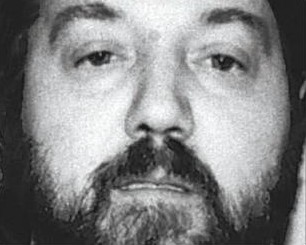
Danny Lee King
Murderer Brian Kevin Rosenfeld
Murderer · USA · 1985
Brian Kevin Rosenfeld Brian Kevin Rosenfeld was sentenced to three concurrent l…
23 victims
Brian Kevin Rosenfeld
Murderer · USA · 1985
Brian Kevin Rosenfeld Brian Kevin Rosenfeld was sentenced to three concurrent l…
23 victims
 Yahweh ben Yahweh
Murderer · USA · 1980
Yahweh ben Yahweh was born and legally named Hulon Mitchell Jr. (October 27, 19…
23 victims
Yahweh ben Yahweh
Murderer · USA · 1980
Yahweh ben Yahweh was born and legally named Hulon Mitchell Jr. (October 27, 19…
23 victims
 Russell Ellwood
Murderer · USA · 1991
Russell Ellwood was a former taxi driver. Authorities suspected him of killing…
20 victims
Russell Ellwood
Murderer · USA · 1991
Russell Ellwood was a former taxi driver. Authorities suspected him of killing…
20 victims
 Robert Martines Perez
Murderer · USA · 1994
Name: Robert Martines Perez · Other name used in proceedings: Robert Martinez P…
15 victims
Robert Martines Perez
Murderer · USA · 1994
Name: Robert Martines Perez · Other name used in proceedings: Robert Martinez P…
15 victims
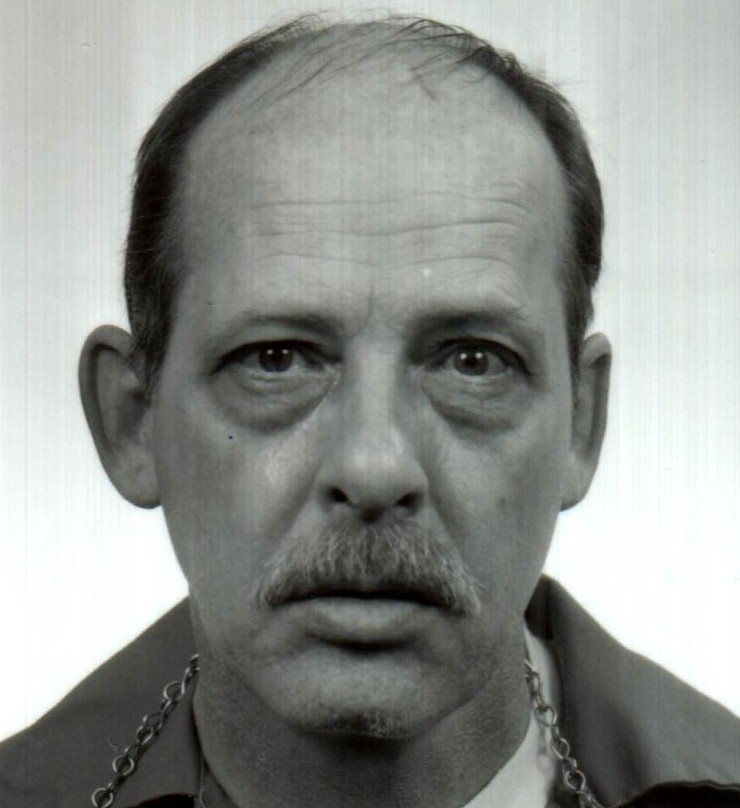 John Ingle
Murderer · USA · 1996
Name: John Ingle Sex/Race: White male Date of birth: 10-29-49 Age: not stated D…
1 victim
John Ingle
Murderer · USA · 1996
Name: John Ingle Sex/Race: White male Date of birth: 10-29-49 Age: not stated D…
1 victim
 The Marquise de Brinvilliers
Murderer · France · 1664
Marie-Madeleine-Marguerite d'Aubray, Marquise de Brinvilliers (c. 1630–1676) wa…
54 victims
The Marquise de Brinvilliers
Murderer · France · 1664
Marie-Madeleine-Marguerite d'Aubray, Marquise de Brinvilliers (c. 1630–1676) wa…
54 victims
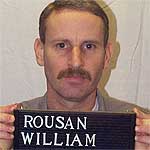 William Rousan
Murderer · USA · 1993
William Rousan was convicted in Missouri for the murders of Charles Lewis and G…
2 victims
William Rousan
Murderer · USA · 1993
William Rousan was convicted in Missouri for the murders of Charles Lewis and G…
2 victims
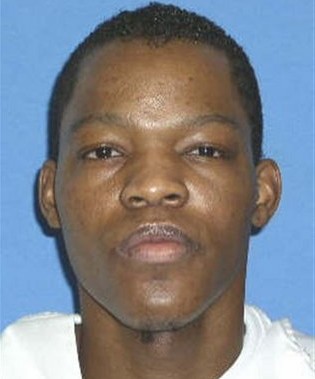 Derrick Lamone Johnson
Murderer · USA · 1999
Derrick Lamone Johnson was a Black male with black hair and brown eyes. He was…
1 victim
Derrick Lamone Johnson
Murderer · USA · 1999
Derrick Lamone Johnson was a Black male with black hair and brown eyes. He was…
1 victim
 Richard Shere
Murderer · USA · 1987
Richard Shere was sentenced to death on April 17, 1989. · 01/15/88 — Shere was…
1 victim
Richard Shere
Murderer · USA · 1987
Richard Shere was sentenced to death on April 17, 1989. · 01/15/88 — Shere was…
1 victim
- Gender
- male
- Country
- USA
- Location
- Roanoke County, Virginia, USA
- Date of birth
- 1950
- Age at first offence
- 40
- Characteristics
- robbery, drugs
- Victim profile
- Carolyn Horton Rogers, 55 ( real estate agent )
- Method of murder
- Stabbing with knife
- Date(s) of murder
- October 11, 1990
- Years active
- 1990
- Date of arrest
- 5 days after
- Status
-
Executed
Executed by lethal injection in Virginia on July 23, 1998
Case record: Danny Lee King
Background
Danny Lee King was found guilty of the 1990 capital murder of Mrs. Carolyn Rogers. Mrs. Rogers was a realtor. She was lured into a robbery at a vacant Roanoke County home after King and his wife posed as potential home buyers.
During several different interviews with different lawyers and detectives, King made contradictory statements about the murder, sometimes accepting blame, sometimes blaming his partner Becky, and other times blaming a hitman with various names. During the trial, the defense tried to prove that Becky had delivered the stab wounds and that King’s confessions were his way of trying to protect her from harm.
King also implicated Becky and stated that the murder occurred because Rogers’ son owed Becky a drug debt. Evidence was given that Becky had made threatening remarks in the past, and several of her former coworkers testified that she “had a knife and was willing to use it if necessary.” Despite this testimony, the jury still found King guilty of capital murder.
The offence
On Oct. 11, 1990, King and his former wife, Becky Smith, posed as potential home buyers to lure Ms. Rogers to a vacant Roanoke County home. Ms. Smith said she went out for a smoke while Ms. Rogers and King toured the house. She later said she saw King standing over the 55-year-old woman’s battered and bloodied body with a knife in his hand.
King was sentenced to be executed for beating, stomping, choking and stabbing Carolyn Rogers to death.
In the separate summary of events, King and Becky were described as posing as “Dannya nd Becky Keaton” when they met Ms. Rogers at the vacant house in Kings Chase and toured the property, eventually reaching the basement. The record described that Becky asked King for a cigarette; King said he did not have any and suggested she get one from their van. Becky left and was gone “a few minutes.” After she left, Lilley described what happened based on King’s statements and confessions.
The victim’s husband, Chet Rogers, was present in a Chesterfield County courtroom in the summer of 1991. When asked about King’s testimony that it was a drug deal that led to his wife’s death, Rogers said: “That’s a bunch of crap”.
Investigation
A ring and an earring had been forcibly removed from Ms. Rogers’ body and were missing, along with other jewelry. Ms. Rogers’ automobile was found at a nearby shopping mall.
On the same afternoon, three checks forged by King and drawn on Ms. Rogers’ account were presented and cashed by Becky at Roanoke area banks. Ms. Rogers’ ring was pawned by Becky at a local pawnshop.
Police traced those items to Ms. Smith. Because police traced those items to her, Ms. Smith was first charged with the killing.
King and Becky were later arrested in the stolen van in New Philadelphia, Ohio.
At the time of his arrest, King spontaneously told Ohio police officers: “[Becky]doesn’t know anything about this. I’m the one you want.”
Bruises on Rogers’ head matched the pattern on King’s boot sole, an expert witness testified. Commonwealth’s Attorney Skip Burkart argued that was proof that King stomped the woman in the head so viciously that blood vessels in her eyes burst.
Detective Ken Kern was described as having talked with King in the basement of the Carroll County jail and showing him items of clothing seized from the van. Kern singled out a shirt with a button missing; King stated that he “had never seen it before and it wasn’t his.”
Barry Keesee, the state police special agent investigating Gene McPherson’s death, would not comment on whether King was a suspect in that case.
Arrest
Four days after the murder, King and Becky were arrested in the stolen van in New Philadelphia, Ohio.
Trial
King was tried by a jury in Chesterfield County after a ruling that it would be impossible for him to get a fair trial in Roanoke County because of pretrial publicity.
King was convicted in June 1991 of capital murder and was sentenced to death.
The case summary also stated that on June 14, 1991, a jury convicted King of murder, robbery, and two counts of forgery and uttering. All charges stemmed from the brutal murder of Carolyn Horton Rogers on October 11, 1990.
The jury recommended a term of life imprisonment plus 40 years for the noncapital offenses. After a separate sentencing hearing, the jury found both future dangerousness and vileness as statutory aggravating factors under Va. Code § 19.2-264.4(c) and recommended a death sentence for the murder conviction. The state trial court considered King’s presentence report and imposed the sentences recommended by the jury.
The sentence imposed at sentencing included the death penalty for Rogers’ death, as well as a life sentence for robbing her and 40 years for forging and passing two of her checks.
King’s wife, Becky King (who now went by her maiden name of Becky Tilley), had been sentenced by a Roanoke County jury to five years in jail for her role in Rogers’ death. The jury believed she was not aware that her husband intended to kill Rogers as she showed them the house.
During King’s sentencing proceeding, King told Roanoke County Circuit Court Judge Kenneth Trabue that he did not inflict the blow that killed Carolyn Horton Rogers and said it was his wife who killed Rogers Oct. 11 in an empty Southwest Roanoke County home she had listed for sale.
King appeared shaken and looked down at the table as Trabue announced the sentence.
King also told Trabue that his court-appointed attorneys had not presented the defense he had wanted them to present and asked that he be appointed new attorneys. Trabue denied the request, saying that defense attorneys David Damico and James Swanson had “done an outstanding job on your behalf, from what I have observed.”
King read a long statement saying he did not have a violent history and was productive while serving time in prison on other charges. He began to sob once when he told Trabue that Rogers’ family and society deserved retribution, but that the “guilty party is allowed to walk free before God and man.”
During the trial, King also made admissions during the seven-day trial, including that he beat Rogers and then forged her checks, while accusing his wife of fatally stabbing Rogers. During his testimony, King implicated Becky and stated that the murdered occurred because Rogers’ son owed Becky a drug debt.
Sentencing
King received a death sentence and the record described that he was scheduled for execution and later executed.
Commonwealth’s Attorney Skip Burkart advised Trabue to rely not just on the jury verdict in sentencing King to death, saying the jury did not see photographs and did not see a videotape of Carolyn Rogers’ body.
Trabue imposed the death penalty on King for Rogers’ death, as well as a life sentence for robbing her and 40 years for forging and passing two of her checks. The sentence was described as automatically reviewed by the state Supreme Court.
During the sentencing portion of the trial, evidence of substantial childhood abuse was revealed. King’s mother gave detailed testimony of the extensive beatings and verbal abuse that King suffered at the hands of his father. King’s mother testified that the abuse began when King was a baby and continued throughout his childhood. She also testified that her father often called King “crazy, stupid or unnecessary” and denied being King’s father.
A psychiatrist pointed to the abuse as the cause for King’s inclination toward violence and stated it could be treatable, but the jury still sentenced him to death.
In addition, Dr. Moody, a forensic psychologist, testified that King was not likely to pose a threat or danger to anyone if he were incarcerated.
King’s wife Gail had testified that he had been a hard-working father who idolized their daughter until he met Becky. After he began a relationship with her, he began to abuse drugs and alcohol.
Appeals
King appealed, and it was described that his appeal was denied.
In one described appellate argument, King appealed because remarks which he made without the presence of an attorney were used against him during trial. It was described that the appellate court denied this appeal because he had previously told the detectives they could ask him anything they wanted, waiving his Miranda rights.
King also appealed on the basis of his lawyer’s lack of competency. It was described that he listed reasons including their neglect to introduce incriminating letters exchanged between Becky and King, to rebut Becky’s testimony, and to introduce evidence that would have implicated Becky as the killer.
King also appealed because evidence was “essentially in equipoise” as to whether he or Becky inflicted the fatal stab. His appeal was denied.
The record also described the federal habeas corpus proceedings in the U.S. Court of Appeals for the Fourth Circuit, where the court affirmed the district court’s denial of King’s petition for federal habeas relief.
U.S. Court of Appeals for the Fourth Circuit
Danny Lee King v. Fred W. Greene, Warden, Mecklenburg Correctional Center. No. 97-28.
The appeal was heard on March 4, 1998 and decided on April 20, 1998. The opinion was per curiam.
It was described that a jury found Danny Lee King had beaten, kicked, choked and stabbed a woman to death and that the state court sentenced King to death after direct appeals and post-conviction relief efforts. The district court had denied federal habeas relief, and the Fourth Circuit affirmed.
Outcome
On July 23, 1998, King was executed by lethal injection in Virginia.
On July 23, 1998, less than four hours before execution, Gov. Jim Gilmore rejected King’s clemency petition. The petition included affidavits from 2 jurors who reportedly were having “2nd thoughts about having condemned him to death” for killing Carolyn Rogers. Gilmore said he thoroughly reviewed court records and the circumstances of the case and would not intervene.
The U.S. Supreme Court voted 7-2 Wednesday to deny King a stay of execution and a separate appeal.
Before the execution, lethal chemicals started flowing into his tattooed right arm at 9:04 p.m. His last visitor was his wife, Karen King, from 1 p.m. to 3 p.m. King refused to eat a final meal. When asked by Ms. Kelly if he wanted to make a statement, he had no final words and was shaking his head.
King said last week: “They’re going to be executing someone who is innocent, and what’s going to be buried with me is the truth”.
Roanoke County Chief Assistant Commonwealth’s Attorney Randy Leach said the jury was instructed about Virginia’s “trigger-man rule,” stating that if there are multiple defendants in a capital murder case, only the person who inflicted the fatal wound can be put to death.
In the petition to Gilmore, King’s lawyers said that at least 2 jurors didn’t know who did the killing, and one juror said: “There was no definitive evidence presented to us indicating which person, Danny King or Becky King, stabbed and killed Ms. Rogers,” as quoted in the petition.
Other details
John Colclasure, a career criminal already serving life plus 156 years for various crimes, pleaded guilty in 1989 to killing McPherson and was sentenced to life in prison plus four years for using a firearm in the commission of murder.
McPherson was identified as Gene Allen McPherson, a Catawba Hospital maintenance man, who disappeared May 23, 1987. His body was never found.
It was described that Colclasure told authorities he was hired to kill McPherson by a Roanoke County man who was angry that McPherson was having an affair with his wife. It was described that Colclasure said he had known the man in Richmond in the 1970s, when the man was dealing drugs. It was stated that the man was not charged by police, moved out of state, and repeatedly denied involvement in McPherson’s death. It was also described that the man served time in prison in 1979 and 1980 on drug charges.
Danny Lee King was also described as being a suspect in the disappearance and slaying four years ago of the brother of Craig County Sheriff B.B. McPherson.
Sheriff B.B. McPherson said Tuesday that authorities had information that King helped another career criminal kill Gene Allen McPherson in a murder-for-hire scheme in May 1987. King denied to investigators that he was involved in killing McPherson, but Sheriff B.B. McPherson said King had admitted that he was aware that a contract was out on Gene McPherson’s life.
The involvement in Gene McPherson’s death was not mentioned at King’s sentencing hearing.
King was described as of Montgomery County and 40 during sentencing. It was described that about 40 real estate agents attended the sentencing.
King was described as having lived in the area of Smith Mountain Lake, where authorities spent many weeks searching for Gene McPherson’s remains. King’s mother’s address was described as his current residence.
In the legal proceedings described, it was stated that King’s bigamous marriage to Becky Hodges King began in January 1989.
On October 1, 1990, King was released on parole from imprisonment for a prior offense.
On October 8, he and Becky Hodges King stole a van from a used car lot in Chesterfield County and traveled to the home of King’s mother in Christiansburg, where Becky had been staying during King’s imprisonment.
On November 2, 1990, Lilley accepted a collect telephone call from King while King was calling from the Powhatan Correctional Center. King told Lilley: “[T]his thing with Becky is, insane . . . because [she] did not do what she’s charged with.”
When Lilley pointed out that Becky had cashed Ms. Rogers’ checks and that the police had Becky “on file doing that,” King said: “she cashed checks because if she wouldn’t have, [he] would have broken her damn neck, or she believed that.”
King asked Lilley to visit him and described what he wanted to talk about as “the fact that [he, King, was] the one that should be charged with it.”
On November 6, King told Lilley he was a member of “a Hell’s Angels . . . motorcycle gang” and described Rogers’ killing as “a contract killing, murder for hire,” that was set up before he got out of the penitentiary.
King told Lilley that a “guynamed Smoky” contacted him after his release from prison and asked for his help with “a hit.” King said Smoky knew Rogers was a real estate agent and “wanted to have her show a vacant house because she was ‘the focus of this murder for hire.’”
King told Lilley Smoky “had [already] been paid.” King said Rogers was supposed to have at least $1,000 in her checking account and King “could get whatever he wanted off of Mrs.Rogers.”
King told Lilley he boasted that he owned Becky, that she was his “property,” and that “[if he]told her to do something, that was it.”
King wrote “I D-I-D” and said, “I did.”
King told Lilley about the planned roles of Smoky and himself, including that Smoky was supposed to “come creeping down the stairs and get in the basement,” and that King was to get Rogers to the basement and “knock her out to the point of unconsciousness,” after which Smoky would “take her to another place and complete the contract killing.”
King told Lilley he struck and choked Rogers until she was unconscious but did not stab her. King told Lilley Smoky appeared from the garage area and said: “[T]hat’s good enough. You’ve done your part.” King told Lilley that the last thing he saw was Smoky pulling Rogers’ sweater “up over her head.”
On December 6, Lilley accompanied by John Gregory, Jr., Becky’s co-counsel, and George Harris, III, Lilley’s investigator, visited King at the Buckingham Correctional Center. King “just burst out” and said: “let’s cut the b___ s ___, I stabbed Carolyn Rogers to death. Becky had nothing to do with it. Now, what do you want to know?”
King described striking Rogers and choking her, including that when he squeezed her throat “squeezed very, very hard,” and that he removed a knife from his boot and thrust it “in an upward fashion. . . int oher chest and that was how he killed her.”
King directed Becky to drive Rogers’ car to a nearby shopping mall and said he would be right behind her. King then described “wip[ing] down” Rogers’ car to remove any fingerprints. After that, King and Becky left the mall in the van and there cashed checks forged on Rogers’ account and pawned the ring stolen from her.
During the U.S. Court of Appeals for the Fourth Circuit discussion, the court quoted the following: “[Becky]doesn’t know anything about this. I’m the one you want.” It also quoted: “[T]his thing with Becky is, insane . . . because [she] did not do what she’s charged with.” It also quoted: “she cashed checks because if she wouldn’t have, [he] would have broken her damn neck, or she believed that.” It also quoted: “[t]hat’s good enough. You’ve done your part.” It also quoted: “let’s cut the b___ s ___, I stabbed Carolyn Rogers to death. Now, what do you want to know?”
The appellate discussion also quoted King’s comment to law enforcement about waiting: “I think I better not say anything else until I talk to an attorney.” It also stated, quoting the narrative, that on November 9 King told the police: “[i]f you got questions, just ask me.”
Finally, it was stated that about 40 real estate agents attended the sentencing, and one groaned when King denied he had killed Rogers.
The U.S. Court of Appeals for the Fourth Circuit described that on March 4, 1998 the case was argued and on April 20, 1998 it was decided, and concluded: “AFFIRMED.”
Spotted an error, or have more information about this case?