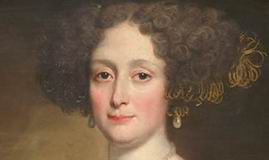
The Marquise de Brinvilliers
Murderer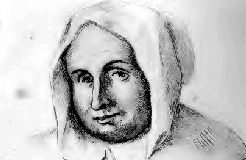 Catherine Deshayes
Murderer · France · 1660
Catherine Deshayes, sometimes known as Catherine Monvoisin, and known as La Voi…
Catherine Deshayes
Murderer · France · 1660
Catherine Deshayes, sometimes known as Catherine Monvoisin, and known as La Voi…
 Florence Rey
Murderer · France · 1994
Florence Rey was born August 25, 1975. She was 19 years old at the time of the…
4 victims
Florence Rey
Murderer · France · 1994
Florence Rey was born August 25, 1975. She was 19 years old at the time of the…
4 victims
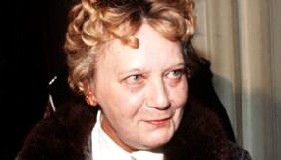 Simone Weber
Murderer · France · 1980
Simone Weber was 60 years old at trial. She was described as “round and dowdy”…
2 victims
Simone Weber
Murderer · France · 1980
Simone Weber was 60 years old at trial. She was described as “round and dowdy”…
2 victims
 Charlotte Corday
Murderer · France · 1793
Marie-Anne Charlotte Corday d'Armont (July 27, 1768 – July 17, 1793), known by…
1 victim
Charlotte Corday
Murderer · France · 1793
Marie-Anne Charlotte Corday d'Armont (July 27, 1768 – July 17, 1793), known by…
1 victim
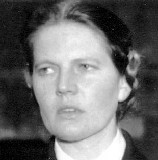 Denise Labbé
Murderer · France · 1954
Denise Labbé was convicted of the murder of her 2-year-old daughter, Catherine.…
1 victim
Denise Labbé
Murderer · France · 1954
Denise Labbé was convicted of the murder of her 2-year-old daughter, Catherine.…
1 victim
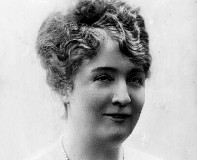 Henriette Caillaux
Murderer · France · 1914
Henriette Caillaux was the wife of France's minister of finance, Joseph Caillau…
1 victim
Henriette Caillaux
Murderer · France · 1914
Henriette Caillaux was the wife of France's minister of finance, Joseph Caillau…
1 victim
 James Michael Briddle
Murderer · USA · 1980
James Michael Briddle was executed by lethal injection in Texas on December 12,…
2 victims
James Michael Briddle
Murderer · USA · 1980
James Michael Briddle was executed by lethal injection in Texas on December 12,…
2 victims
 Jerry Terrell Jackson
Murderer · USA · 2001
Jerry Terrell Jackson was a Black male. He grew up in James City County. He was…
1 victim
Jerry Terrell Jackson
Murderer · USA · 2001
Jerry Terrell Jackson was a Black male. He grew up in James City County. He was…
1 victim
 Roger Dean
Mass murderer · Australia · 2011
Roger Kingsley Dean was an aged-care nurse and worked at Quakers Hill Nursing H…
11 victims
Roger Dean
Mass murderer · Australia · 2011
Roger Kingsley Dean was an aged-care nurse and worked at Quakers Hill Nursing H…
11 victims
 Jermaine Lebron
Murderer · USA · 1995
Jermaine “Bugsy” LeBron was sentenced to death for first-degree murder and to l…
1 victim
Jermaine Lebron
Murderer · USA · 1995
Jermaine “Bugsy” LeBron was sentenced to death for first-degree murder and to l…
1 victim
- Gender
- female
- Country
- France
- Location
- Paris, France
- Date of birth
- July 22, 1630
- Characteristics
- poisoner, beheading, torture
- Victim profile
- Hospital patients / Her father, brothers, and lover
- Method of murder
- Poisoning
- Date(s) of murder
- 1664 - 1673
- Years active
- 1664–1673
- Date of arrest
- M arch 25, 1676
- Status
-
Beheaded and her body burned in Paris on the 16th of July 1676
Background
Marie-Madeleine-Marguerite d'Aubray, Marquise de Brinvilliers (c. 1630–1676) was a French poisoner. She was the daughter of Dreux d'Aubray and the wife of the marquis de Brinvilliers.
In 1651 she married the marquis de Brinvilliers, who was serving in the regiment of Normandy. Contemporary evidence described her at that time as a “pretty and much-courted little woman” with “a fascinating air of childlike innocence.”
In 1659 her husband introduced her to Godin de Sainte-Croix, a young cavalry officer of extravagant tastes and bad reputation, whose mistress she became. Their relations soon created a public scandal. The marquis de Brinvilliers had left France to avoid his creditors, and he made no effort to terminate the relationship. Dreux d'Aubray secured the arrest of Sainte-Croix on a lettre de cachet.
For a year Sainte-Croix remained a prisoner in the Bastille, where he was popularly supposed to have acquired knowledge of poisons from his fellow-prisoner, the Italian poisoner Exili.
While Sainte-Croix plotted revenge, he and the marquise planned killings motivated by inheritance and profit. Sainte-Croix, completely ruined financially, expanded his original idea so that her father, her father’s two sons, and other daughter would be poisoned to allow the marquise de Brinvilliers and himself to come into possession of the large family fortune.
There were also rumors that she had poisoned poor people during her visits to hospitals.
The offence
The marquise undertook to experiment with poisons prepared by Sainte-Croix. Their preparations were described as possibly involving the help of a chemist, Christopher Glaser. She found “subjects ready to hand in the poor who sought her charity, and the sick whom she visited in the hospitals.”
She poisoned her father in February 1666. In 1670, with the connivance of their valet La Chaussée, she poisoned her two brothers.
She also used her “practice” poisoning of hospital patients as part of her poison practice for profit-motivated murders of her father, brothers, and lover. The account stated she poisoned 50 hospital patients as practice.
Investigation
After Sainte-Croix suddenly died leaving no heirs, the police were called in. They discovered documents among his belongings that seriously incriminated the marquise and La Chaussée.
A post-mortem examination after the father’s death suggested the real cause of death, but no suspicion had been directed to the murderers at that time.
Arrest
La Chaussée was arrested, tortured into a complete confession, and broken alive on the wheel in 1673.
The marquise escaped arrest. She took refuge first probably in England, then in Germany, and finally in a convent at Liége. She was decoyed from the convent by a police emissary disguised as a priest.
Trial
A full account of her life and crimes was found among her papers after her capture.
Her attempt to commit suicide was frustrated, and she was taken to Paris.
A later account stated she was forced to confess and sentenced to death, and that on 17 July she was tortured with the water cure, forced to drink sixteen pints of water.
Sentencing
She was sentenced to death. She was tortured with the water cure and then executed.
Outcome
She was beheaded and her body burned in Paris on the 16th of July 1676.
Other details
Sainte-Croix died of natural causes in 1672.
In 1675, she fled to England, Germany, and a convent, before being arrested in Liège.
The narrative included references to later public scandal and the broader “Affair of the Poisons,” which involved accusations of poisoning and witchcraft. The account stated that it “launched the Affair of the Poisons,” which saw several French aristocrats charged with poison and witchcraft.
The account quoted a statement attributed to Police Chief Reynie: “the enormity of their crimes proved their safeguard.”

Spotted an error, or have more information about this case?