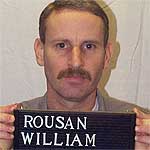
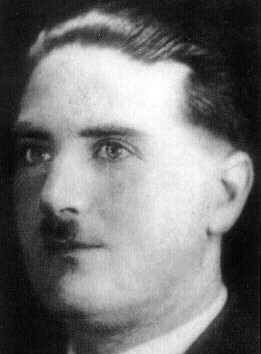
William Rousan
Murderer Brian Kevin Rosenfeld
Murderer · USA · 1985
Brian Kevin Rosenfeld Brian Kevin Rosenfeld was sentenced to three concurrent l…
23 victims
Brian Kevin Rosenfeld
Murderer · USA · 1985
Brian Kevin Rosenfeld Brian Kevin Rosenfeld was sentenced to three concurrent l…
23 victims
 Russell Ellwood
Murderer · USA · 1991
Russell Ellwood was a former taxi driver. Authorities suspected him of killing…
20 victims
Russell Ellwood
Murderer · USA · 1991
Russell Ellwood was a former taxi driver. Authorities suspected him of killing…
20 victims
 Robert Martines Perez
Murderer · USA · 1994
Name: Robert Martines Perez · Other name used in proceedings: Robert Martinez P…
15 victims
Robert Martines Perez
Murderer · USA · 1994
Name: Robert Martines Perez · Other name used in proceedings: Robert Martinez P…
15 victims
 Billy Frank Vickers
Murderer · USA · 1993
Billy Frank Vickers Vickers was executed by lethal injection in Texas on Januar…
14 victims
Billy Frank Vickers
Murderer · USA · 1993
Billy Frank Vickers Vickers was executed by lethal injection in Texas on Januar…
14 victims
 Karl Myers
Murderer · USA · 1993
Defendant/Appellant: Karl Lee Myers · Prosecution/Appellee: State of Oklahoma ·…
2 victims
Karl Myers
Murderer · USA · 1993
Defendant/Appellant: Karl Lee Myers · Prosecution/Appellee: State of Oklahoma ·…
2 victims
 Kiyotaka Katsuta
Serial killer · Japan · 1972
Kiyotaka Katsuta (勝田 清孝; Katsuta Kiyotaka; August 29, 1948 - November 30, 2000)…
22 victims
Kiyotaka Katsuta
Serial killer · Japan · 1972
Kiyotaka Katsuta (勝田 清孝; Katsuta Kiyotaka; August 29, 1948 - November 30, 2000)…
22 victims
 Rasheed Muhammad
Murderer · USA · 1995
April 4, 1995 — A 29-year-old homeless man, Rasheed Muhammed, was described as…
1 victim
Rasheed Muhammad
Murderer · USA · 1995
April 4, 1995 — A 29-year-old homeless man, Rasheed Muhammed, was described as…
1 victim
 Daniel Pelosi
Murderer · USA · 2001
Daniel Pelosi (born 2 August 1963 in Center Moriches, New York) was convicted o…
1 victim
Daniel Pelosi
Murderer · USA · 2001
Daniel Pelosi (born 2 August 1963 in Center Moriches, New York) was convicted o…
1 victim
- Gender
- male
- Country
- USA
- Location
- Washington County, Missouri, USA
- Date of birth
- July 17, 1956
- Age at first offence
- 37
- Characteristics
- robbery, history of mental illness, drug addict
- Victim profile
- Charles Lewis, 67, and his wife Grace Lewis, 62
- Method of murder
- Shooting (.22 caliber rifle)
- Date(s) of murder
- September 21, 1993
- Years active
- 1993
- Date of arrest
- September 20, 1994
- Status
-
Executed
Sentenced to death on December 20, 1996; executed by lethal injection in Missouri on April 23, 2014
Parties and identity
William Rousan was convicted in Missouri for the murders of Charles Lewis and Grace Lewis.
Status and outcome
William Rousan was sentenced to death on December 20, 1996. He was executed by lethal injection in Missouri on April 23, 2014. The execution proceeded after Gov. Jay Nixon declined William Rousan's clemency request.
Timeline
- Sept. 21, 1993 — William Rousan, his son Brent Rousan, and his brother Robert Rousan met and discussed stealing cattle from Charles and Grace Lewis, including discussing killing the Lewises; the men killed Charles Lewis and Grace Lewis and took items and cattle from the Lewis farm.
- Sept. 21, 1993 — Prosecutors said Rousan masterminded the plot to kill Grace Lewis, 62, and Charles Lewis, 67, at their farm near Bonne Terre; authorities said the men drove by the farm, William Rousan pointed out the cattle to steal, they parked about two miles away and hiked through the woods, and they ambushed and shot Charles Lewis and Grace Lewis.
- Sept. 20, 1994 — After a nearly year-long investigation without an arrest, William Rousan was arrested after investigators received two tips; he was arrested while hiding in a barn.
- June 1993 — William Rousan was released from prison, and he returned to the farm where he said he tried to thank the Lewises for their kindness and rekindle their friendship.
- 2001 — The Supreme Court of Missouri affirmed the denial of post-conviction relief in a case styled William L. Rousan, Appellant v. State of Missouri, Respondent.
- May 15, 2001 — Handdown date for the Supreme Court of Missouri opinion in State of Missouri v. William Rousan, SC82406.
- Dec. 28, 1999 — The circuit court overruled Rousan’s Rule 29.15 motion for post-conviction relief.
- Apr. 23, 2014 — William Rousan was declared dead at 12:10 a.m., nine minutes after the procedure started.
- Tuesday evening (year not specified in the excerpt) — Gov.
- Earlier Tuesday (year not specified in the excerpt) — The U.S. Supreme Court turned down Rousan’s request to delay his execution.
Background
William Rousan lived in the St. Francois County area about 70 miles southwest of St. Louis at the time prosecutors said he plotted the murders. The killings took place as part of a plot to steal their cows.
At the time of the killing, prosecutors said William Rousan also lived in the same area of St. Francois County, about 70 miles southwest of St. Louis.
The case facts included that a .22 caliber rifle belonged to William Rousan’s girlfriend, Mary Lambing, and that William Rousan removed and loaded the rifle in case anyone was home.
The offence
Planning and approach
On Sept. 21, 1993, William Rousan, his son Brent Rousan, and his brother Robert Rousan met and discussed stealing cattle from Charles and Grace Lewis. The men also discussed killing the Lewises and agreed that "if it had to be done it had to be done." They set out for the Lewis farm, and William Rousan pointed out the cattle the men would steal. William Rousan parked his truck approximately two miles from the farm and removed a .22 caliber rifle that belonged to Mary Lambing, then loaded it for use in the crime in case anyone was home. The men argued over who would carry the gun, and Brent said he was "man enough to do whatever needed to be done and that he would use the weapon." William Rousan warned Brent that if they were caught, they would "fry." The men hiked through the woods and waited under cover behind a fallen tree.
Murder of Charles Lewis
Between 3 p.m. and 4 p.m. on the afternoon of Sept. 21, 1993, Charles and Grace Lewis returned home. Charles Lewis began to mow the lawn. Grace Lewis spoke by telephone with the couple's oldest daughter, who called at approximately 4 p.m. Brent grew tired of waiting and exclaimed that he wanted to "do it." William Rousan told Brent to wait until he and Robert had secured the house. William Rousan headed for the front door and Robert made his way to the back door. Before they arrived at the home, Charles Lewis saw Brent and called out. Brent fired at least six shots from the rifle, all of which struck Charles Lewis. Charles Lewis died as a result of the multiple gunshot wounds.
Murder of Grace Lewis
Grace Lewis told her daughter on the phone she heard gunfire and hung up the telephone. As Grace Lewis exited the house through the front door, she stepped outside to check on the commotion. Brent shot Grace Lewis several times. Although the bullets fractured both of Grace Lewis’s arms, the wounds were not fatal. Grace Lewis ran back into the home. William Rousan followed her, removed a garment bag from a coat rack, placed the bag over Grace Lewis's head and the upper part of her body, picked her up, and carried her outside. When William Rousan placed Grace Lewis on the ground, she was alive. William Rousan turned to Brent and instructed him to "finish her off." Brent fired one shot into the left side of Grace Lewis’s head. The shot killed Grace Lewis.
Cleanup, burial, and property taken
The men wrapped the bodies in a tarpaulin and tied it with a rope. William Rousan instructed that they should pick up the shell casings and clean up the blood stains. After doing so, the men deposited the bodies near a shed and left, planning to return later to get the bodies and the cattle. The men returned that night with another Rousan brother, Jerry Rousan, and loaded the bodies into Charles Lewis’s truck. They took two cows, a VCR, jewelry, soda, two gas cans, and a saddle. The men then returned to Mary Lambing’s farm.
The men buried Charles Lewis and Grace Lewis in a shallow grave by the barn. After digging the grave and placing the bodies in it, the men poured concrete over the bodies, covered the grave with a pile of manure, and burned rags used to clean the blood from the Lewis house. They burned Mr. Lewis’s truck and disposed of the Lewises’ property in various ways.
The men consumed the soda on the night of the murders. The cows were later sold at auction. Robert Rousan gave the VCR to his sister and brother-in-law, Barbara and Bruce Williams, on the day following the murders. Mr. and Mrs. Williams sold the VCR to a local pawn broker approximately eight months later. Robert Rousan buried the couple’s personal items and gave the remainder of the jewelry to Mary Lambing on special occasions during the following year.
Investigation and arrest
When the Lewises' daughter could not reach her parents the following day, she became concerned and called the police. Authorities undertook an investigation into the Lewises’ disappearance. The police investigation continued for nearly a year without an arrest.
In September 1994, investigators received two tips that helped solve the case. Rousan's brother-in-law, Bruce Williams, called police to implicate Rousan in the couple's killings. A sister of William and Robert Rousan sold a VCR to a pawn shop that had been stolen from the Lewises.
The bodies were found buried in a shallow grave covered with concrete and a pile of horse manure on the farm where William Rousan was living at the time.
After a four-day manhunt, Rousan was arrested while hiding in a barn on Sept. 20, 1994. He was caught with a .22-caliber semi-automatic rifle and a knife. Authorities took him to the Washington County sheriff's department. Officers advised Rousan of his Miranda rights and questioned him. Rousan provided information that implicated himself.
Arrest-related questioning and statements
At the Washington County sheriff's department, officers advised Rousan of his Miranda rights and questioned him. Rousan provided information implicating himself in the murders.
Rousan told the police that he had first met the victims in 1975 and saw them again in 1989 after he escaped from custody in the State of Washington and sought refuge at their farm. Rousan said Charles Lewis fed him and clothed him, and that when he left the farm two weeks later, Charles Lewis gave him twenty dollars.
Rousan claimed that after his release from prison in June 1993 he returned to the farm to thank the Lewises for their kindness and to rekindle their friendship. Rousan claimed Mrs. Lewis was in poor health, and he said Charles Lewis asked Rousan to kill Mrs. Lewis to put her out of her misery and to kill him because he did not want to live without his wife. Rousan also claimed that he was hired by Charles Lewis, IV, son of Mr. and Mrs. Lewis, to kill them in exchange for fifty-thousand dollars. Rousan maintained that his actual motivation was mercy.
In another account of the facts, Rousan warned Brent that they would "fry" if they were caught, and investigators described that Rousan followed Grace Lewis outside, placed a garment bag over her head, and instructed Brent to "finish her off." In the context of post-conviction review, Sergeant Crump also testified that Rousan told him on the way to the Lewises’ farm that he told Brent that "they would all fry" if they got caught.
During questioning, Rousan said he could show where the bodies were located, and later agreed to a recorded statement. The interview was not recorded prior to the break and the subsequent recorded statement.
Rousan later claimed that Sergeant Crump told him during questioning that his son Brent would probably be on death row because they knew he was the shooter, and he claimed his first statement was fabricated to help Brent avoid the death penalty. Rousan also made statements about knowing Antonio Salazar and Ron McKinney, claiming Salazar was one of his prior attorneys and McKinney was a man he had been incarcerated with in Washington.
Trial
Charges and verdict
Rousan was charged with the murder of Charles and Grace Lewis. A jury found him guilty of two counts of first degree murder.
Guilt-phase evidence
The facts of the offence were presented so that the jury found him guilty of first degree murder as an accomplice.
The proceedings included references to Rousan’s prior convictions for rape, assault, escape, and unlawful possession of a firearm during the penalty phase.
Penalty phase aggravating circumstances and recommendations
At the penalty phase, the state introduced evidence of Rousan’s prior convictions for rape, assault, escape, and unlawful possession of a firearm. The state also presented testimony from family members of Mr. and Mrs. Lewis regarding the impact of their deaths on the family. Rousan presented testimony of friends and family members in mitigation of punishment.
The jury found five statutory aggravating circumstances with respect to Grace Lewis' murder and recommended a sentence of death. The jury also recommended that Rousan be sentenced to death for the murder of Charles Lewis. The jury found four statutory aggravating circumstances with respect to his murder.
One statutory aggravator submitted for Grace Lewis’s murder was that the defendant murdered Grace Lewis for another for the purpose of the defendant receiving money or any other thing of monetary value from Grace Lewis or another. Another aggravator submitted was that the murder of Grace Lewis was committed while the defendant was engaged in the perpetration of robbery.
In another instruction summary set out in the post-conviction opinion, Instruction 25 included:
- "Whether the defendant was convicted of rape in the second degree on August 12, 1998, in the Superior Court of Washington for King County, State of Washington."
- "Whether the defendant was convicted of assault in the second degree on August 12, 1998, in the Superior Court of Washington for King County, State of Washington."
- "Whether the murder of Grace Lewis was committed while the defendant was engaged in the commission of another unlawful homicide of Charles Lewis."
- "Whether the defendant murdered Grace Lewis for another for the purpose of the defendant receiving money or any other thing of monetary value from Grace Lewis or another."
- "Whether the defendant directed William Brent Rousan to murder Grace Lewis."
- "Whether the murder of Grace Lewis involved depravity of mind and whether, as a result thereof, the murder was outrageously and wantonly vile, horrible, and inhuman."
The instructions further stated:
"You can make a determination of depravity of mind only if you find: That the defendant killed Grace Lewis after she was bound or otherwise rendered helpless by defendant or William Brent Rousan and that defendant thereby exhibited a callous disregard for the sanctity of all human life."
and "Whether the murder of Grace Lewis was committed while the defendant was engaged in the perpetration of robbery."
The instruction told jurors:
"The burden rests upon the State to prove at least one of the foregoing circumstances beyond a reasonable doubt."
"On each circumstance that you find beyond a reasonable doubt, all twelve of you must agree as to the existence of that circumstance."
"Therefore, if you do not unanimously find from the evidence beyond a reasonable doubt that at least one of the foregoing statutory aggravating circumstances exists, you must return a verdict fixing the punishment of the defendant at imprisonment for life by the Department of Corrections without eligibility for probation or parole."
Sentencing
The trial court sentenced Rousan to death for the murder of Grace Lewis and life imprisonment without the possibility of parole for the murder of Charles Lewis.
Appeals
Direct appeal and affirmance
The Supreme Court of Missouri affirmed the convictions and sentence. In the post-conviction opinion, the court stated that the jury found Rousan guilty of two counts of first-degree murder for the deaths of Charles and Grace Lewis.
The Supreme Court of Missouri performed plain error review for issues Rousan raised about statutory aggravators, including the use of “killed” rather than “directed” in an aggravator.
Post-conviction relief (Rule 29.15)
Rousan filed a Rule 29.15 motion alleging ineffective assistance of counsel, claiming his attorneys Richard Scholz and Robert Wolfrum were ineffective. The circuit court overruled the motion on Dec. 28, 1999.
The Supreme Court of Missouri affirmed the overrule decision and stated that Rousan failed to show his counsel provided ineffective assistance. The court addressed fifteen points of error, including failures to:
- present past prison records from the Federal Bureau of Prisons, the Washington department of corrections, and the Garrett Heynes educational center;
- call a former employer, Timothy Sander;
- make objections to the prosecutor’s penalty phase closing argument;
- call Rousan to testify during the guilt phase;
- call his son Brent Rousan during the guilt phase;
- present evidence of an attorney request form;
- present or obtain Missouri State highway patrol disciplinary files of Sergeant Conway and Sergeant Crump;
- move to redact references to prior convictions from Rousan’s recorded confession;
- present testimony of Samuel LaFrank during the guilt phase;
- object to aggravating circumstances;
- address aggravator issues relating to “killed” and depravity of mind;
- bring out alleged inconsistencies in Robert Rousan’s statements;
- present BFI work records;
- object to Robert Rousan’s testimony related to alleged inducements;
- object to the death penalty sentence on constitutional grounds for an accomplice.
The Supreme Court of Missouri concluded:
"AFFIRMED."
The opinion stated the judgment was affirmed and Rousan’s post-conviction claims were denied.
Federal habeas corpus appeal
Rousan petitioned for a writ of habeas corpus under 28 U.S.C. § 2254 seeking relief on nineteen grounds. The district court denied habeas relief but granted a certificate of appealability on eight grounds. The U.S. Court of Appeals for the Eighth Circuit affirmed the denial of the writ on those eight grounds. The appellate opinion was submitted on November 16, 2005 and filed on February 8, 2006.
Other details
Clemency and last meal
Gov. Jay Nixon declined Rousan's clemency request on Tuesday evening, clearing the way for the execution to proceed. Nixon stated that he thought Rousan's sentence was appropriate for his alleged role as the mastermind behind the "cold-blooded plot" that led to the couple’s slayings.
During clemency procedures, Rousan’s last meal was: bacon cheeseburger, onion rings, soft drink, and pecan pie.
Execution details and last statements
William Rousan was declared dead at 12:10 a.m. at the Eastern Reception, Diagnostic and Correctional Center in Bonne Terre. He mouthed words to his brother-in-law and a minister he had invited to his execution. As the drug was administered, he breathed deeply twice and then was still. He was declared dead nine minutes after the procedure started.
His last words were:
"My trials and transgressions have been many. But thanks be to my Lord and savior, Jesus Christ, I have a new home in his heavenly kingdom."
Victims and family-witnesses
The slain couple was Charles Lewis and Grace Lewis, with Charles Lewis described as 67-year-old and Grace Lewis described as 62-year-old. Their son and two daughters witnessed the execution, which occurred only a few miles from where their parents were killed.
After the execution, Michael Lewis spoke afterward. He said:
"I draw no real satisfaction from Mr. Rousan's incarceration or execution, for neither can replace or restore the moments lost with my parents or give my sons back the grandparents they never got to know,"
Michael Lewis said.
Co-offenders mentioned
The case facts included that Brent Rousan pleaded guilty to two counts of first-degree murder and was sentenced to life in prison without parole. Robert Rousan cooperated with prosecutors, pleaded guilty to second-degree murder, served seven years in prison, and was released in 2001. Jerry Rousan was also described as another brother who returned with the group that night to load the bodies and take items. Mary Lambing was described as having been the girlfriend whose rifle was used in the crime. Barbara and Bruce Williams were described as receiving the VCR from Robert Rousan.
Prosecutor theory of motive and robbery-related aggravator
Prosecutors described the murders as part of a plot to steal cattle from the Lewis farm. The aggravator submission included whether the murder of Grace Lewis was committed while the defendant was engaged in the perpetration of robbery, and the aggravator submission included whether the defendant murdered Grace Lewis for the purpose of receiving money or any other thing of monetary value.
Spotted an error, or have more information about this case?