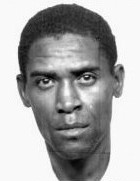
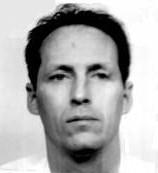
Leon Rutherford King
Murderer Ervil LeBaron
Murderer · USA · 1972
Ervil Morrell LeBaron (1925 to August 16, 1981) was the leader of a polygamous…
35 victims
Ervil LeBaron
Murderer · USA · 1972
Ervil Morrell LeBaron (1925 to August 16, 1981) was the leader of a polygamous…
35 victims
 Brian Kevin Rosenfeld
Murderer · USA · 1985
Brian Kevin Rosenfeld Brian Kevin Rosenfeld was sentenced to three concurrent l…
23 victims
Brian Kevin Rosenfeld
Murderer · USA · 1985
Brian Kevin Rosenfeld Brian Kevin Rosenfeld was sentenced to three concurrent l…
23 victims
 Marvin Gray
Murderer · USA · 1975
Marvin Gray was convicted killer who claimed responsibility for 23 slayings and…
23 victims
Marvin Gray
Murderer · USA · 1975
Marvin Gray was convicted killer who claimed responsibility for 23 slayings and…
23 victims
 Yahweh ben Yahweh
Murderer · USA · 1980
Yahweh ben Yahweh was born and legally named Hulon Mitchell Jr. (October 27, 19…
23 victims
Yahweh ben Yahweh
Murderer · USA · 1980
Yahweh ben Yahweh was born and legally named Hulon Mitchell Jr. (October 27, 19…
23 victims
 John Martin Scripps
Murderer · Singapore / Thailand · 1995
John Martin Scripps was executed by hanging in Singapore on April 19, 1996. · 8…
3 victims
John Martin Scripps
Murderer · Singapore / Thailand · 1995
John Martin Scripps was executed by hanging in Singapore on April 19, 1996. · 8…
3 victims
 Maria Isa
Murderer · USA · 1989
Maria Isa was a Brazilian mother who assisted in the murder of her sixteen-year…
1 victim
Maria Isa
Murderer · USA · 1989
Maria Isa was a Brazilian mother who assisted in the murder of her sixteen-year…
1 victim
 John Joubert
Serial killer · USA · 1982
John Joubert John Joubert entered guilty pleas to two counts of first-degree mu…
3 victims
John Joubert
Serial killer · USA · 1982
John Joubert John Joubert entered guilty pleas to two counts of first-degree mu…
3 victims
 Troy Clark
Murderer · USA · 1998
Troy Clark was a defendant in a capital murder case in the United States Distri…
1 victim
Troy Clark
Murderer · USA · 1998
Troy Clark was a defendant in a capital murder case in the United States Distri…
1 victim
- Gender
- male
- Country
- USA
- Location
- Harris County, Texas, USA
- Date of birth
- May 22, 1944
- Age at first offence
- 34
- Characteristics
- kidnapping, robbery, rape
- Victim profile
- Michael Clayton Underwood, 26
- Method of murder
- Smashing his head in with the butt of a shotgun
- Date(s) of murder
- April 10, 1978
- Years active
- 1978
- Date of arrest
- —
- Status
-
Executed
Executed by lethal injection in Texas on March 22, 1989
Case record: Leon Rutherford King
Identification
- Name: Leon Rutherford King
- Age at execution: 44
- Education level: 11th grade
Status and last statement
Leon Rutherford King was executed by lethal injection in Texas on March 22, 1989.
In his last statement, King said:
"I would like to tell Mr. Richard that I appreciate all he has done for me. I love you all. God bless. Goodbye, David."
Background
On April 10, 1978, King and an accomplice robbed Michael Clayton Underwood, 26, and Underwood’s date as they walked from a Montrose-area nightclub. The woman survived.
King was convicted in relation to the 1978 slaying of Michael Clayton Underwood, 26, for which he was twice tried and convicted.
King was also described in court proceedings as having prior convictions for burglary, forgery and drug possession. His lawyers contended in appeals that his crimes stemmed from brain damage.
In appellate proceedings, the issue included whether a capital murder defendant was constitutionally entitled to question prospective jurors about their understanding of Texas parole law. The United States Court of Appeals for the Fifth Circuit concluded that the Constitution did not require such an inquiry, and vacated a prior panel opinion to the contrary while denying King's application for a writ of habeas corpus.
The offence
King and an accomplice Allen Ray Carter kidnapped Michael Clayton Underwood, 26, and Underwood’s girlfriend Kay at gunpoint as they left a Houston nightclub in 1978.
The men threatened Kay with the same fate if she did not stop crying. They drove in King’s pickup truck to an isolated vacant lot not far from Houston’s Hermann Park.
Kay was forced to watch while King beat Underwood’s head in with a shotgun butt until it looked like a “broken egg.”
For nearly five additional hours, King and Carter repeatedly raped and sodomized Kay, continued to threaten her life, and jeered at having made her observe the execution of her “old man.”
Before they released Kay, King removed from her purse a slip of paper containing her address and again threatened to kill her if she called the police.
Kay was found, bedraggled and hysterical, slumped behind the wheel of her car at approximately 5:00 a.m., and later testified at King’s trials.
Investigation
Court records described Underwood and a 19-year-old companion as being abducted at gunpoint from a Houston club in 1978 and taken to a remote area where Underwood was beaten to death while his female companion was forced to watch.
Trial
King was twice tried and sentenced to capital punishment by Texas juries.
At the start of voir dire, the state court refused defense counsel’s request “[T]o voir dire each and every prospective juror on the question of being convicted of capital murder and in the event of a life sentence that person has to serve 20 years before becoming eligible for parole in light of the fact that the prospective juror is advised the mandatory sentence for capital murder is life or death.”
King founded this request on Tex. Const. art. 1, Sec. 19, and the fourteenth amendment to the federal constitution. Texas law at the time of trial forbade jurors to consider information bearing on parole in any criminal case.
During the punishment phase, the jurors were instructed:
“You are instructed that the punishment for capital murder is by death or confinement in the penitentiary for life ... You are not to discuss among yourselves how long the accused would be required to serve the sentence that you impose. Such matters come within the exclusive jurisdiction of Board of Pardons and Paroles and the Governor, and are no concern of yours.”
King did not request a jury instruction concerning Texas parole law.
During the punishment phase of King’s second trial, King stated to the jury:
“You all found me guilty of one of the most brutal murders that have ever been in Houston. If I had found a man guilty of that type of murder I figure he deserves the death penalty and that's what I am asking you is that the jury give me the death penalty. That's what I want.”
Appeals
King’s appeals reached the United States Supreme Court after appeals were rejected earlier Tuesday by a Federal judge in Houston and by the United States Court of Appeals for the Fifth Circuit.
At the Supreme Court, the United States Supreme Court turned down three emergency appeals by votes of 7 to 2, 7 to 2 and 5 to 4, respectively. Justices William J. Brennan and Thurgood Marshall voted to spare King in acting on each of his three requests. Justices John Paul Stevens and Harry A. Blackmun joined them in one of the votes.
The Fifth Circuit en banc decision stated that it vacated a prior panel opinion to the contrary and denied King’s application for a writ of habeas corpus.
In the Fifth Circuit en banc decision, EDITH H. JONES delivered the opinion and ALVIN B. RUBIN joined by WILLIAMS and JOHNSON dissented.
Fifth Circuit en banc dissent
ALVIN B. RUBIN, Circuit Judge, with whom WILLIAMS and JOHNSON, Circuit Judges, joined, dissented.
The dissent included the following points and quoted phrases from reasoning about due process and sentencing alternatives. It stated that “The jury in a capital case is called upon to make a "highly subjective, 'unique, individualized judgment regarding the punishment that a particular person deserves.' " ” and referenced “ "deserves the sentence of death" ” along with “ "individual culpability is not always measured by the category of the crime committed." ”
The dissent quoted the following language about due process and sentencing alternatives, and explained disagreement with the majority’s decision that a state may deprive a defendant of the right to challenge jurors who may sentence him to death because they mistakenly believe that a sentence of life imprisonment will result in his early parole.
The dissent quoted Texas’s voir dire request and the jury charge about ignoring parole:
“to voir dire each and every prospective juror on the question of being convicted of capital murder and in the event of a life sentence that person has to serve 20 years before becoming eligible for parole[.]”
and “You are instructed that the punishment for capital murder is by death or confinement in the penitentiary for life.... You are not to discuss among yourselves how long the accused would be required to serve the sentence that you impose. Such matters come within the exclusive jurisdiction of the Board of Pardons and Paroles and the Governor, and are no concern of yours.”
Outcome
Leon Rutherford King was executed at 12:27 A.M. after the United States Supreme Court turned down his emergency appeals. He was the third person executed that year and the 107th since the Supreme Court restored the death penalty in 1976. He was the 30th inmate to be put to death in Texas.
In a final statement, King told five friends, “I appreciate what you did for me.”
Other details
- King’s accomplice, Allen Ray Carter, was given a life sentence.
- Court materials described Kay as a protective pseudonym.
- The Fifth Circuit en banc decision cited procedural and legal history about whether capital defendants could question jurors about Texas parole law.
- The Fifth Circuit en banc decision included numbered procedural history and discussion sections addressing whether any error would be harmless and the role of juror instructions and punishment phase testimony.
- The case summary included that prior to the Supreme Court action, appeals had been rejected earlier Tuesday by a Federal judge in Houston and the United States Court of Appeals for the Fifth Circuit.

Spotted an error, or have more information about this case?