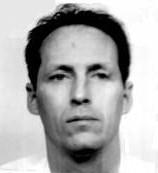
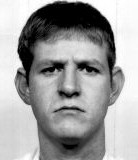
Raymond Kinnamon
Murderer Brian Kevin Rosenfeld
Murderer · USA · 1985
Brian Kevin Rosenfeld Brian Kevin Rosenfeld was sentenced to three concurrent l…
23 victims
Brian Kevin Rosenfeld
Murderer · USA · 1985
Brian Kevin Rosenfeld Brian Kevin Rosenfeld was sentenced to three concurrent l…
23 victims
 Marvin Gray
Murderer · USA · 1975
Marvin Gray was convicted killer who claimed responsibility for 23 slayings and…
23 victims
Marvin Gray
Murderer · USA · 1975
Marvin Gray was convicted killer who claimed responsibility for 23 slayings and…
23 victims
 Yahweh ben Yahweh
Murderer · USA · 1980
Yahweh ben Yahweh was born and legally named Hulon Mitchell Jr. (October 27, 19…
23 victims
Yahweh ben Yahweh
Murderer · USA · 1980
Yahweh ben Yahweh was born and legally named Hulon Mitchell Jr. (October 27, 19…
23 victims
 Russell Ellwood
Murderer · USA · 1991
Russell Ellwood was a former taxi driver. Authorities suspected him of killing…
20 victims
Russell Ellwood
Murderer · USA · 1991
Russell Ellwood was a former taxi driver. Authorities suspected him of killing…
20 victims
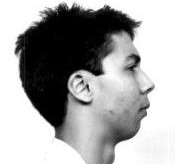 Jose Angel Moreno
Murderer · USA · 1985
Jose Angel Moreno Jose Angel Moreno was sentenced to death on January 14, 1987.…
1 victim
Jose Angel Moreno
Murderer · USA · 1985
Jose Angel Moreno Jose Angel Moreno was sentenced to death on January 14, 1987.…
1 victim
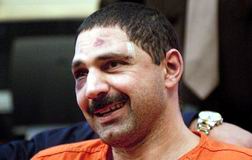 Elias Abuelazam
Serial killer · USA · 2009
Elias Abuelazam (born August 28, 1976) was an Israeli convicted murderer and su…
5 victims
Elias Abuelazam
Serial killer · USA · 2009
Elias Abuelazam (born August 28, 1976) was an Israeli convicted murderer and su…
5 victims
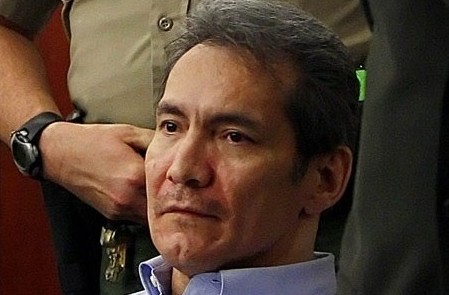 Floyd Maestas
Murderer · USA · 2004
Floyd Eugene Maestas was repeatedly convicted of violence against elderly women…
1 victim
Floyd Maestas
Murderer · USA · 2004
Floyd Eugene Maestas was repeatedly convicted of violence against elderly women…
1 victim
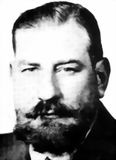 John Donald Merrett
Homicide - Murderer · United Kingdom · 1926
John Donald Merrett (also known as Ronald Chesney) was born in New Zealand in 1…
3 victims
John Donald Merrett
Homicide - Murderer · United Kingdom · 1926
John Donald Merrett (also known as Ronald Chesney) was born in New Zealand in 1…
3 victims
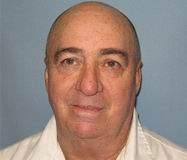 Phillip Hallford
Murderer · USA · 1986
Phillip D. Hallford was convicted of capital murder arising from a murder commi…
1 victim
Phillip Hallford
Murderer · USA · 1986
Phillip D. Hallford was convicted of capital murder arising from a murder commi…
1 victim
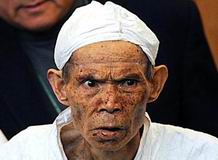 Jieming Liu
Murderer · USA · 2012
Jieming Liu was a 79-year-old man from Shrewsbury. His wife, Yuee Zhou, was 73…
1 victim
Jieming Liu
Murderer · USA · 2012
Jieming Liu was a 79-year-old man from Shrewsbury. His wife, Yuee Zhou, was 73…
1 victim
- Gender
- male
- Country
- USA
- Location
- Harris County, Texas, USA
- Date of birth
- November 20, 1941
- Age at first offence
- 43
- Characteristics
- robbery
- Victim profile
- Ronald Charles Longmire, 41 ( bar customer )
- Method of murder
- Shooting
- Date(s) of murder
- December 11, 1984
- Years active
- 1984
- Date of arrest
- 2 weeks later
- Status
-
Executed
Executed by lethal injection in Texas on December 11, 1994
Case overview
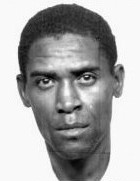
Raymond Kinnamon was executed by lethal injection in Texas on December 11, 1994.
Timeline
- December 11, 1984 — Raymond Kinnamon was one of several patrons seated at the bar in N.J.’s Lounge in Houston and later ordered employees and remaining patrons to put their hands on the bar, take money from the cash register, and proceed single file to the men’s restroom; a shot was fired and Ronald Charles Longmire was fatally shot, and Kinnamon fled the scene.
- December 11, 1984 — Ronald Charles Longmire was wounded fatally in the back after he reportedly slapped Kinnamon’s hand away from his pocket when asked what was in it.
- Two weeks later — Raymond Kinnamon was apprehended at his Houston residence and placed under arrest.
- July 25, 1985 — A jury in Harris County, Texas convicted Kinnamon of the murder of Ronald Charles Longmire in the course of an armed robbery of a bar and its patrons.
- July 30, 1985 — The trial court sentenced Kinnamon to death.
- April 18, 1990 — The Texas Court of Criminal Appeals affirmed the conviction (Kinnamon v. State, 791 S.W.2d 84 (Tex.Crim.App.1990)).
- September 15, 1994 — The United States Court of Appeals, Fifth Circuit decided that it would not issue a certificate of probable cause and dismissed the appeal (Patrick E. Higginbotham, Circuit Judge).
- December 12, 1994 — The New York Times reported Kinnamon was pronounced dead at 5:56 A.M., 11 minutes after receiving an injection of lethal drugs (as referenced within the provided material).
- December 11, 1994 — At approximately 10:30 p.m., a stay of execution was granted by U.S. District Judge Kenneth Hoyt and was later overturned by the 5th U.S. Circuit Court of Appeals in New Orleans; the death warrant took effect shortly after midnight and ordered that the execution be carried out before dawn.
- December 11, 1994 — Eleven minutes after the injection, Raymond Carl Kinnamon was pronounced dead.
The offence
On the evening of December 11, 1984, Raymond Carl Kinnamon was one of several patrons seated at the bar in N.J.’s Lounge in Houston. He entered the bar several hours earlier and, according to witnesses, sat alone, occasionally playing a video game mounted atop the bar. He had a brief conversation with the bartender, Jeannie Marriott. After “last call” had been announced, Kinnamon acted as if he was leaving with the other customers; before exiting, he told Marriott that he had to use the restroom, turned, and walked back across the lounge. When Kinnamon came out of the restroom a short time later, waitress Sharon Bryson and a patron, Kenny Simmons, were seated at the bar, and Marriott was cleaning up behind the counter.
Kinnamon, possessing a firearm, ordered the employees and remaining patrons, including Ronald Longmire, to put their hands on the bar and refrain from looking at him. He ordered Marriott to take the money out of the cash register and place it in a bag, and since no bag was available, she used Bryson’s purse. After Kinnamon took the money, he ordered everyone to proceed single file to the men’s restroom. Ronald Longmire was apparently at the end of the line, with Kinnamon following. As the people were proceeding to the rest room, Kinnamon asked them for their jewelry. As they were trying to remove their rings and watches, Kinnamon asked Longmire “what is that in your pocket?” to which the decedent responded “nothing, just my driver's license.”
A shot was fired, then a second almost immediately thereafter. The record indicated that the second shot entered the decedent’s back from the left side at an angle. Longmire apparently fell to his knees. At that point, Sharon Bryson, the waitress, escaped through a rear exit, and in so doing activated a burglar alarm. The bartender, Jeannie Marriott, was pulled into the walk-in cooler by Kenny Simmons. About that time, a third shot was fired. Simmons later testified that while he and Marriott were in the cooler, someone attempted to enter from the outside by pulling on the door handle to the cooler. Meanwhile, Bryson fled to a nearby convenience store and telephoned the police. Approximately ten minutes after the shooting, Marriott and Simmons came out of the cooler and saw Longmire wandering aimlessly through the bar, muttering incoherently and bleeding profusely from the gunshot wound. When the police arrived, Marriott directed them to Longmire, who by that time was dazed and seated on the floor in a corner. Longmire was rushed to the hospital and died a short time later.
The provided material also stated that before exiting the bar after “last call” had been announced, Kinnamon excused himself to the restroom only to return with a firearm; after demanding money from employees and customers, Kinnamon attempted to lead everyone at gunpoint toward the restrooms when he murdered Ronald Charles Longmire. Longmire was wounded fatally in the back after he reportedly slapped Kinnamon’s hand away from his pocket when asked what was in it. Kinnamon fled the scene and got away with more than $1,500, including $250 from Longmire.
Victim
Ronald Charles Longmire was identified as the decedent and was killed during the armed robbery.
Investigation and arrest
Kinnamon was identified in a photo array by the eyewitnesses to the offense. Some two weeks later, he was apprehended at his Houston residence and placed under arrest.
The provided material stated that two weeks later Kinnamon was arrested and was also charged with an aggravated robbery committed in Houston only six days after the event described for December 11, 1984.
Trial
A jury in Harris County, Texas convicted Kinnamon of the murder of Ronald Charles Longmire in the course of an armed robbery of a bar and its patrons. In sentencing proceedings, the jury answered affirmatively three questions, and on July 30, 1985, the trial court sentenced Kinnamon to death.
The provided material stated that during the trial defense attorney Marcia Rutenbar raised 15 issues in his appeal. Defense attorney R.K. Hansen asked for a life sentence based on evidence that Longmire tried to resist Kinnamon, and Prosecutor Doug Durham kept pushing for the death penalty stating that Kinnamon was an ongoing threat to society.
Kinnamon denied being in the bar, and the provided material stated that on the gurney he talked for 30 minutes in an attempt to stall his death. It also stated that in interviews Kinnamon jokingly remarked that it was “Poe-etic justice.”
During the federal appeal discussion of trial arguments, the provided material quoted:
- Guerinot told the jury: “There is probably but one issue in this case, and there is only one, and you folks are going to decide it, and that is the issue of identity.”
- Guerinot’s co-counsel told the jury: “Now, identity, as I said, is the issue.”
- In rebuttal, the prosecution pointed out to the jury that the defense rested on identity, not an absence of an intent to kill.
Sentencing
On July 30, 1985, the trial court sentenced Kinnamon to death.
The provided material stated that in the sentencing phase evidence of other robberies committed after the charged offense was presented, and Kinnamon argued that this denied him due process and equal protection; the federal court rejected the contention and stated that the panel lacked authority to change settled law of the circuit.
Appeals
Direct appeal and state post-conviction
The Texas Court of Criminal Appeals affirmed the conviction on April 18, 1990 (Kinnamon v.
The provided material stated that instead of filing a petition for certiorari, Kinnamon filed an application for writ of habeas corpus in the state trial court; without a hearing, the state trial court entered findings of fact and conclusions of law, and the Texas Court of Criminal Appeals thereafter denied relief.
It also stated that the Texas Court of Criminal Appeals held that “the evidence did not authorize the submission of a murder instruction on a lesser included offense.” (791 S.W.2d at 96-97, as quoted in the provided material).
The provided material stated that Kinnamon contended on direct appeal that the jury charge allowed the jury to convict of capital murder without finding a specific intent to kill. It included the statement (as given) that the Texas Court of Criminal Appeals agreed capital murder is a “result of conduct” offense and that “not only must an accused be found to have intended to engage in the act that caused the death, he also must have specifically intended that death result from that conduct. The mere intent to pull the trigger of a firearm will not satisfy the statute” (791 S.W.2d at 88-89, citation omitted). The provided material also stated that the Texas Court of Criminal Appeals later overruled its holding, concluding that “it is error for a trial judge to not limit the definitions of the culpable mental states as they relate to the conduct elements involved in the particular offense.” (Cook v. State, --- S.W.2d ----, ----, 1994 WL 122844 (Tex.Crim.App.1994) (en banc) (slip op. at 12), as quoted in the provided material).
Federal appeal (habeas)
The provided material contained the following federal appellate case information:
- Case name: Raymond Carl KINNAMON, Petitioner-Appellant, v. Wayne SCOTT, Director, Texas Department of Criminal Justice, Institutional Division, Respondent-Appellee
- No.: 93-2341
- Court: United States Court of Appeals, Fifth Circuit
- Judge: PATRICK E. HIGGINBOTHAM, Circuit Judge
- Date: Sept. 15, 1994
The federal court stated: “This is a death penalty case from Texas. Raymond Carl Kinnamon appeals dismissal of his petition for writ of habeas corpus and denial of a certificate of probable cause by the United States District Court for the Southern District of Texas. This is Kinnamon's first federal petition and he attacks his conviction for capital murder and sentence of death on six grounds. We refuse to issue a certificate of probable cause and dismiss the appeal.”
The federal appeal discussed Kinnamon’s six grounds, including issues such as ineffective assistance related to jury instructions on lesser included offenses, alleged jury charge errors regarding intent to kill, alleged due process/equal protection issues in sentencing-phase evidence of other robberies, alleged inability to give effect to mitigating evidence, and admissibility of in-court identifications.
On the last point in the federal decision, the federal court stated it rejected Kinnamon’s attack on the admissibility of in-court identifications, noting that each witness testified that the in-court identification relied on observations at the crime scene and not on pre-trial displays, and it stated: “We find no error.”
The federal court concluded: “The application for a certificate of probable cause is denied and this appeal is dismissed.”
Other details
Prior criminal record and other characterizations
The provided material stated that prior to the incident, Kinnamon was described as “a career criminal” who served three prison terms for a variety of robberies and burglaries. It stated that prior to this incident Kinnamon had been convicted of 17 felonies, including eight aggravated robberies, two robberies by assault, and three burglaries. It further stated that altogether he had been sentenced previously to a total of 223 years in prison and had served three separate prison terms. The New York Times quotation also stated he had 18 felony convictions and included:
- “My record looks like I'm John Dillinger or Al Capone,” Mr. Kinnamon said in a recent interview. “But I never was in that bar.”
Other dates and execution details
The provided material stated that the execution would take place before dawn on Dec. 12, 1995, exactly ten years after the murder, as later set by Judge Poe; it also stated that on the date of the execution, at approximately 10:30 p.m., U.S. District Judge Kenneth Hoyt granted a stay of execution only to have it overturned by the 5th U.S. Circuit Court of Appeals in New Orleans; it stated the death warrant took effect shortly after midnight and ordered the execution before dawn.
The provided material also described that Kinnamon made an apparent but unsuccessful attempt at a 30-minute filibuster to talk his way out of his execution, and it stated that he expressed love and thanks to many people while making it clear he was not ready to go.
Last statement
The provided material recorded Kinnamon’s last statement, including the following text verbatim (including punctuation and spacing as provided):
“ …guys like them got tied up in something like this. Thank Chaplain Taylor and Jane. I just got your letter. Thanks to Carolyn and Gloria, who have been my friends for over four years. I want to remember Patsy Buntion, Gladys and a lot more friends. I want to thank the prosecutor in my case; it took courage for him to do what he did but he did what he did because he believed in the judicial system. I’m not ready to go, but I have no choice; I sent several letters to my family; they’ll be very moving when you get them. I want to say goodbye again to my boys. I know I’m missing somebody, but if there’s anything I have left to say, it would be that I wish I had a Shakespearean vocabulary, but since I was raised in TDC, I missed out on some of my vocabulary. If my words can persuade you to discontinue this practice of executing people, please do so. If the citizens don’t do away with the death penalty, Texas won’t be a safe place to be. I have no revenge because hate won’t solve anything. ( I gave Warden Hodges the phone at this time and he listened for 5-10 minutes. When he returned the phone to me, I could hear Kinnamon talking but evidently the phone was not close to the mike, because I could not understand him .) ”
Biographical details
The provided material stated Raymond Carl Kinnamon’s age as 53 (43). It also stated his education level as high school graduate or GED. It stated he was executed on Dec. 11, 1994. It also stated that the execution took place on the ten-year anniversary of his crime, and it described him as the second inmate put to death in Texas that week.
Witnesses and identification
The federal decision discussion stated Kinnamon’s contention that the state had arrested the wrong man; it characterized the issue as identity. It stated that the prosecutor did not attempt to exploit any uncertainty in the charge and that, at trial, Kinnamon’s defense rested on identity rather than an absence of an intent to kill. The provided material also stated that witnesses identified Kinnamon as the gunman.
Outcome
Raymond Carl Kinnamon’s conviction and death sentence were affirmed through state appellate review and later federal habeas proceedings, and he was executed by lethal injection in Texas on December 11, 1994.
Spotted an error, or have more information about this case?