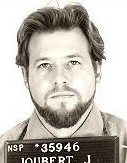
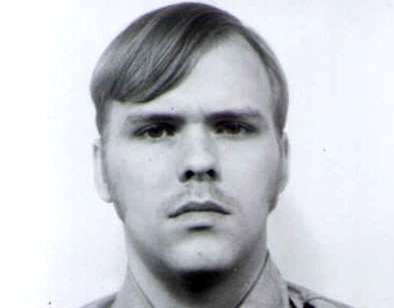
John Joubert
Serial killer Carl Eugene Watts
Serial killer · USA · 1974
Carl Eugene Watts (born November 7, 1953; died September 21, 2007), also known…
100 victims
Carl Eugene Watts
Serial killer · USA · 1974
Carl Eugene Watts (born November 7, 1953; died September 21, 2007), also known…
100 victims
 Rodney Alcala
Serial killer · USA · 1977
Rodney James Alcala (born August 23, 1943) was also known as Rodrigo Jacques Al…
100 victims
Rodney Alcala
Serial killer · USA · 1977
Rodney James Alcala (born August 23, 1943) was also known as Rodrigo Jacques Al…
100 victims
 Donald Leroy Evans
Serial killer · USA · 1975
Donald Leroy Evans (born July 5, 1957) was an American serial killer who murder…
60 victims
Donald Leroy Evans
Serial killer · USA · 1975
Donald Leroy Evans (born July 5, 1957) was an American serial killer who murder…
60 victims
 Michael Swango
Serial killer · USA · 1981
Michael Swango (Joseph Michael Swango) was a physician and American serial kill…
60 victims
Michael Swango
Serial killer · USA · 1981
Michael Swango (Joseph Michael Swango) was a physician and American serial kill…
60 victims
 Efren Saldivar
Serial killer · USA · 1989
Efren Saldivar (born 30 September 1969) was an American serial killer who murde…
50 victims
Efren Saldivar
Serial killer · USA · 1989
Efren Saldivar (born 30 September 1969) was an American serial killer who murde…
50 victims
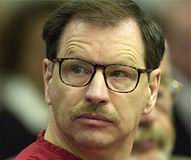 Gary Ridgway
Serial killer · USA · 1982
Gary Leon Ridgway Ridgway was born 18-February-1949 in Salt Lake City, UT. He w…
49 victims
Gary Ridgway
Serial killer · USA · 1982
Gary Leon Ridgway Ridgway was born 18-February-1949 in Salt Lake City, UT. He w…
49 victims
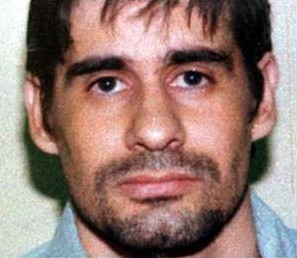 Angel Francisco Breard
Murderer · USA · 1992
Angel Francisco Breard was the petitioner-appellant. Samuel v. Pruett, Warden,…
1 victim
Angel Francisco Breard
Murderer · USA · 1992
Angel Francisco Breard was the petitioner-appellant. Samuel v. Pruett, Warden,…
1 victim
 Adam Ezerski
Murderer · USA · 2001
August 11, 2001 — Kevin Begoon met Ezerski at a Polk Street cafe and let Ezersk…
1 victim
Adam Ezerski
Murderer · USA · 2001
August 11, 2001 — Kevin Begoon met Ezerski at a Polk Street cafe and let Ezersk…
1 victim
 Nannie Doss
Serial killer · USA · 1954
Nannie Doss Nannie Doss pleaded guilty on May 17, 1955, and was sentenced to li…
11 victims
Nannie Doss
Serial killer · USA · 1954
Nannie Doss Nannie Doss pleaded guilty on May 17, 1955, and was sentenced to li…
11 victims
 Ronald Fluke
Murderer · USA · 1997
Ronald Dunaway Fluke was convicted of three counts of First Degree Murder in vi…
3 victims
Ronald Fluke
Murderer · USA · 1997
Ronald Dunaway Fluke was convicted of three counts of First Degree Murder in vi…
3 victims
 Daniel Webb
Homicide · USA · 1989
Daniel Webb (No 124596) was held at Sommers Correctional Institution in Somers,…
1 victim
Daniel Webb
Homicide · USA · 1989
Daniel Webb (No 124596) was held at Sommers Correctional Institution in Somers,…
1 victim
 Nancy Kissel
Murderer · Hong Kong · 2003
Nancy Kissel was found guilty of the murder of her husband and sentenced to lif…
1 victim
Nancy Kissel
Murderer · Hong Kong · 2003
Nancy Kissel was found guilty of the murder of her husband and sentenced to lif…
1 victim
- Gender
- male
- Country
- USA
- Location
- Maine/Nebraska, USA
- Date of birth
- J uly 2, 1963
- Age at first offence
- 19
- Characteristics
- kidnapping
- Victim profile
- Richard Stetson, 11 / Danny Jo Eberle, 13, and Christopher Walden, 12
- Method of murder
- St abbing with knife
- Date(s) of murder
- 1982 - 1983
- Years active
- 1982–1983
- Date of arrest
- January 11, 1984
- Status
-
Executed
Executed by electrocution in Nebraska on July 17, 1996
Case identity
John Joubert
Status and legal posture
John Joubert entered guilty pleas to two counts of first-degree murder and received a death sentence on each count.
Timeline
- August 22, 1982 — 11-year-old Richard Stetson disappeared while jogging near his home in Portland, Maine.
- August 23, 1982 — A motorist found Stetson’s body lying beside a rural highway.
- September 18, 1983 — 13-year-old Danny Joe Eberle disappeared while delivering newspapers in Bellevue, Nebraska.
- September 21, 1983 — Searchers pulled Eberle’s body from roadside weeds.
- December 2, 1983 — 12-year-old Christopher Walden disappeared while walking to school in Papillion, Nebraska.
- January 11, 1984 — A suspicious young man was seen loitering around a Bellevue preschool and accosted a preschool teacher attendant.
- January 12, 1984 — Joubert was charged with two counts of homicide.
- July 3, 1984 — Joubert pled guilty to both counts.
- February 1985 — Hair samples and tooth impressions were obtained from Joubert.
- January 10, 1986 — Joubert was indicted for Richard Stetson’s murder.
- 1990 — Joubert was sentenced to life imprisonment in Maine for the murder of Ricky Stetson.
- 1995 — Joubert filed a writ of habeas corpus over the death sentences.
- June 26, 1996 — The Nebraska Board of Pardons unanimously denied, without a hearing, Joubert’s application for commutation and dissolved the previously issued stay of execution triggered by the application.
- July 17, 1996 — Joubert was executed on death sentences by electrocution in Nebraska.
- June 28, 1996 — Joubert was scheduled to be executed at 12:01 a.m. CDT, but the execution occurred on July 17, 1996.
Background
John J. Joubert was executed in Nebraska and had been convicted of the murders of three boys in Maine and Nebraska. He was also described as an enlisted man at nearby Offutt Air Force Base and a former airman.
Joubert was born on July 2, 1963, in Lawrence, Massachusetts, the first child of Joseph and Beverly Joubert. Two years later, his sister, Jane, was born and later became a Lewiston police officer.
His parents divorced when he was six years old, and he went to live with his mother in Lawrence, Massachusetts. He was not allowed to visit his father and grew to hate his controlling mother. In 1974, she moved the family to Portland, Maine. At age 6, Joubert fantasized about killing his baby sitter. When he was 13, he stabbed a young girl with a pencil and felt sexually stimulated when she cried in pain, and the next day he slashed another girl with a razor blade. He was never caught for either attack.
In another incident, he beat and nearly strangled another boy. He relished the power of bullying and began to stab or slash others.
Childhood accounts described him as reading when he was 3 and checking books out of the library when he was 5. While his parents managed a family restaurant, he attended parochial school and served as an altar boy. Joubert and Brian LaBrecque, a childhood friend, were described as the smallest boys in their class and as being picked on by bullies. A friendship formed from that bond.
Three psychiatric reports prepared in 1984 described that when he was 6, he started fantasizing about killing his baby sitter, including describing the sitter to one psychiatrist as “just someone to kill.” Joubert also told the Maine Sunday Telegram he believed he started having the fantasies after seeing his father choke his mother when he was 4. He told the Telegram he started asking his mother and sister whether he saw or experienced anything that could have caused the fantasies, and for the first time his mother told him that he saw her being choked by his father until she passed out when he was 4. He did not remember such an incident, and he said he and a therapist believed the fantasies were an escape valve for him to forget the episode of family violence and other family arguments. From that point, he said, he had the fantasies when under any sort of stress, describing: “I would think these thoughts, and that would relieve the tension,” and “I have learned that it made me feel better, and as I grew up it became a habit.”
At age 8, his parents divorced again in a different account and he moved to Portland with his mother and sister when he was 11. The family settled in a two-family home in the middle-class Oakdale neighborhood. His mother worked as a bookkeeper. In a psychiatric report prepared by Dr. David Kentsmith, it was stated that the parents continued to argue about where Joubert would live. Joubert told psychiatrists his mother belittled him, spanked him until he was 12, ridiculed his father, and never approved of Joubert’s friends.
Joubert took honors courses at Cheverus High School, excelling in English and history. He maintained a 2.75 grade point average and ran indoor track. He was constantly chided for being one of the smallest members of his class and became defensive. He took the taunting personally. He delivered newspapers in his neighborhood starting at age 12 and kept the job until he was 17. With that money and cash earned from summer jobs, he paid his tuition at Cheverus High School. He was in a scouting troop, went on camping trips, and briefly played trumpet in a school brass ensemble. He spent much of his time alone, listening to his stereo or building model airplanes, and he never dated.
After his arrest, it was stated that psychiatric reports noted Joubert was raised in a broken home by a domineering mother who kept him from developing relationships with other children and that he was taunted about his small build from grade school to high school. After the Nebraska killings, he was diagnosed as having a mixed personality disorder with obsessive compulsive and schizoid traits. Though he vehemently denied it, psychiatrists also classified him as a latent homosexual. He told them he had never had sex.
One later account stated he had a 4-inch brain blister on the top of his head and blistering on both sides of his head above his ears as revealed in appeals about whether the electric chair in Nebraska was cruel and unusual punishment.
The offence
Richard Stetson (Maine)
On August 22, 1982, 11-year-old Richard Stetson disappeared while jogging near his home in Portland, Maine. A motorist found his body the next morning lying beside a rural highway. The initial belief was that he was the victim of a hit-and-run, but autopsy results showed he was strangled and stabbed several times in the chest. Bite marks on the body were inflicted by a set of human teeth.
Danny Joe Eberle (Nebraska)
Danny Joe Eberle, age 13, was delivering newspapers in Bellevue, Nebraska, when he vanished on the morning of September 18, 1983. His bicycle and papers were found inside a gate at the fourth house on his route, but he remained missing until September 21 when searchers pulled his body from roadside weeds. The body was partially stripped and had been stabbed repeatedly, then dumped where it was found. Detectives noticed bite marks on the body, and his ankles had been bound before he died.
Christopher Walden (Nebraska)
On December 2, 12-year-old Christopher Walden disappeared while walking to school in Papillion, Nebraska, three miles from the scene of the Eberle murder. He was stabbed repeatedly and his corpse was found two days later by pheasant hunters hidden in a grove of trees outside of town.
Investigation and evidence
Investigators had no solid evidence at first in the Stetson case, and a year elapsed before a suspect, 24 years old, was booked for Stetson’s murder.
For the Nebraska killings, detectives traced a rented vehicle to 20-year-old John Joubert, an enlisted man at nearby Offutt Air Force Base. A search of Joubert’s quarters turned up rope identical to Danny Eberle’s bindings. More rope and a hunting knife were found in his car when Joubert was arrested that night.
In custody, the suspect confessed both local murders, warning detectives that he might kill again if released.
The FBI obtained hair samples and tooth impressions from Joubert in February 1985. The hair samples and tooth impressions were later used to obtain an indictment for Richard Stetson’s murder on January 10, 1986.
A search warrant was issued after the preschool incident and rope consistent with that used to bind Danny Joe Eberle was found in Joubert’s apartment. It was stated that the FBI found that the unusual rope had been made for the United States military in the South Korea and that under interrogation Joubert admitted getting it from the scoutmaster in the troop he was an assistant in.
In the federal appellate decision’s description of events, Joubert’s confessions included details unknown to the public which were corroborated by the crime scenes, and police also discovered physical evidence further linking Joubert to the murders.
In a Nebraska plea bargaining description within the federal opinion, it was stated that in exchange for guilty pleas, the state agreed not to present evidence to the sentencing panel that Joubert had previously murdered a young boy in Maine.
Arrest and custody
On January 11, 1984, a suspicious young man was seen loitering around a Bellevue preschool. Challenged by an adult attendant, he shoved her, threatened her with death, then ran to a nearby car and sped away. The attendant memorized the license number of his rented vehicle, which was traced to 20-year-old John Joubert, stationed at nearby Offutt Air Force Base.
Rope identical to Danny Eberle’s bindings was found in Joubert’s quarters.
Joubert confessed in custody to the Nebraska murders and warned detectives he might kill again if released.
Trial
Pleas and guilt
Joubert was charged with two counts of homicide on January 12. He pled guilty to both counts on July 3, 1984.
The federal appellate description states that Joubert entered guilty pleas to two counts of first-degree murder pursuant to a plea bargain, and in exchange the state agreed not to present evidence to the sentencing panel that Joubert had previously murdered a young boy in Maine. After pursuing direct and collateral relief in state courts, he filed a petition for writ of habeas corpus in federal district court.
Sentencing
A panel of three judges sentenced Joubert to death for both counts on July 3, 1984.
Aggravating circumstances found at sentencing
In the federal appellate decision’s account, Nebraska statutory aggravator 29-2523(1)(d) contained two prongs, and sentencing panel findings applied.
For the murder of Danny Eberle, the sentencing panel found two statutory aggravating factors:
- that he was killed in order to conceal the perpetrator’s identity (Nebraska statutory aggravator 29-2523(1)(b)); and
- that the murder was both “especially heinous, atrocious, [and] cruel” and represented “exceptional depravity” as those terms were defined at that time (Nebraska statutory aggravator 29-2523(1)(d)).
For the murder of Christopher Walden, the panel found three statutory aggravating factors:
- that Christopher was killed in order to conceal the perpetrator’s identity;
- that the murder was both “especially heinous, atrocious, [and] cruel” and represented “exceptional depravity”; and
- that at the time of the murder, the perpetrator had “a substantial history of serious assaultive or terrorizing criminal activity” (Nebraska statutory aggravator 29-2523(1)(a)).
In mitigation, the panel credited Joubert for pleading guilty and found that he had no prior significant criminal history at the time he killed Danny and that he was acting under an extreme mental disturbance. The federal appellate opinion also stated there was evidence Joubert could control his behavior and choose not to act out his fantasies.
A separate account stated that Joubert was also sentenced to life imprisonment in Maine in 1990 for the murder of Ricky Stetson after his teeth were found to match the bite mark.
Appeals and postconviction proceedings
Federal habeas corpus and Eighth Circuit proceedings (94-3687 / 94-3849)
A federal court of appeals decision described that after direct and postconviction appeals were denied by state courts, Joubert filed a habeas petition in federal district court alleging numerous grounds for relief, including:
- death sentences were infirm because “exceptional depravity” was an unconstitutionally vague aggravator;
- the sentencing panel improperly applied the aggravating circumstance relating to a history of serious assaultive criminal activity;
- the sentencing panel erred in finding that Joubert killed his victims to avoid detection;
- the trial judge improperly injected himself into the plea bargain process;
- counsel was constitutionally ineffective for failing to inform him that the trial court was willing to accept a conditional plea; and
- Nebraska’s death penalty process was facially discriminatory and discriminatory as applied, because it was facially arbitrary and because prosecutorial discretion resulted in uneven application.
The federal district court granted relief on the claim that “exceptional depravity” is an unconstitutionally vague aggravating circumstance and denied relief on other claims. The state of Nebraska appealed, and Joubert cross-appealed.
The appellate decision stated:
- “We reverse the district court’s grant of the writ, and affirm its decisions on all other issues.”
The federal appellate decision held the vagueness claim was procedurally barred due to lack of fairly presented same factual grounds and legal theory to state courts, and it also found any error regarding the application of the “exceptional depravity” prong to be harmless beyond a reasonable doubt.
A dissenting opinion argued that the Nebraska law in the aggravating circumstance contained the clause that the “murder ... manifested exceptional depravity by ordinary standards of morality and intelligence.” and stated:
“The Eighth Circuit has determined that the ‘exceptional depravity’ clause is unconstitutionally vague on its face. See Moore v. Clarke, 904 F.2d 1226, 1228-33 (8th Cir.1990).”
The dissent further quoted a sentencing panel statement from “Appellant’s Addendum”:
“We recognize that all murders may be characterized as atrocious and cruel, and further recognize there must, of necessity, be some interval of time between even the most savage of knife attacks and a resulting death. We, nevertheless, conclude this aggravating circumstance is applicable with respect to both clauses, recognizing the evidence and factors on the second clause of the aggravating circumstance far outweigh those under the first clause. We conclude and find beyond a reasonable doubt this aggravating circumstance exists in both crimes for which the defendant is to be sentenced.”
The dissent argued that harmless error analysis could not stand, and would have affirmed the district court’s grant of habeas relief changing Joubert’s sentence to life imprisonment without possibility of parole unless the Nebraska state courts provided appropriate post-sentencing or resentencing procedures.
Board of Pardons litigation (96-2688)
In a separate proceeding, Joubert appealed a district court’s order denying temporary and permanent injunctive relief under 42 U.S.C. 1983, based on alleged constitutional violations relating to the procedures, conduct, and makeup of the Nebraska Board of Pardons.
That appeal described that Joubert was currently in custody of the State of Nebraska under two sentences of death for murdering two boys in 1983, and he was scheduled to be executed at 12:01 a.m. CDT on June 28, 1996. At 4:15 p.m. on June 26, 1996, the Board unanimously denied, without a hearing, Joubert’s application for commutation of his capital sentences and dissolved a previously issued stay of execution triggered by the application.
Joubert’s 42 U.S.C. 1983 claim alleged three constitutional violations:
- the Board failed to comply with the requirement that Joubert’s commutation application “shall be considered” under Neb.Rev.Stat. § 83-1,129(2) (Reissue 1994);
- the Board failed to comply with its own procedural provisions in Rule 004.05 of the Nebraska Pardons Board Policy and Procedure Guidelines by attempting to limit testimony in the event a hearing was granted; and
- the makeup of the Board violated substantive due process because the Attorney General’s dual role as prosecutor and arbiter rendered the clemency process fundamentally unfair, and participation violated the Eighth Amendment right to be free from cruel and unusual punishment.
The federal appellate decision affirmed the district court and denied Joubert’s emergency application for an injunction pending appeal.
The appellate decision stated that prisoners had no constitutional or fundamental right to clemency and that the Nebraska statute governing operation of the Board gave the Board “unfettered discretion to grant or deny a commutation of a lawfully imposed sentence for any reason or for no reason at all,” and that the statute only required that an application requesting the Board to exercise pardon authority “shall be considered with or without a hearing by the board at its next regular scheduled meeting.”
It concluded that on June 26, 1996, the Board did in fact consider Joubert’s application and decided to deny it without a hearing, and that this was within the Board’s discretion. It also found Rule 004.05 was inapplicable because a hearing was denied.
Outcome
Joubert was executed on July 17, 1996 by the electric chair in Nebraska.
In a final statement, Mr. Joubert apologized for the three murders and added:
“I do not know if my death will change anything or if it will bring anyone any peace.”
In explaining the crimes, Joubert told The Omaha World-Herald:
“It was the power and the domination and seeing the fear. That was more exciting than actually causing the harm.”
He had told authorities he was glad police caught him and that he probably would have killed again.
Aftermath and related accounts
The Omaha World-Herald account included statements attributed to family and other individuals.
Judy Eberle, Danny’s mother, said:
“it is the only punishment that can make sure that he will never walk the streets again.”
John Joubert’s statement included apology for the loss of their son and what he did to the family:
“I’m sorry for the loss of their son and what I did to the family,”
and: “If people can find it in their hearts to forgive me, that’s all I ask for.”
Richard Stetson’s father, Edward Stetson, said:
“I’m just glad it’s almost over,”
and: “When it happens, I’ll have the knowledge that my dead son’s killer has paid the price and won’t walk.”
A further statement attributed to Stetson described that:
“He says he’s sorry, but that’s not going to do any good,”
and: “I think the guy is just trying to make people feel sorry for him so he can buy more time.”
A telephone interview account quoted Joubert’s explanation of stress and thinking thoughts as relief and comfort, describing:
“I suppose I’m dealing with it in the way that anyone would deal with a death before their time, like a 32-year-old terminally ill person who is hoping for a transplant,”
and: “I have learned that it made me feel better, and as I grew up it became a habit.”
The Maine Sunday Telegram account quoted a retired FBI criminal profile specialist, Peter Smerick:
“They are not the Charles Manson types who people get scared of when they see them on the street,”
and: “They are the type of people who blend in and don’t draw attention to themselves.”
The Maine Sunday Telegram account included that in trying to abduct a preschool teacher, Joubert was caught after the license plate number was noted. It also stated that he had been returned to Maine, convicted of murdering Stetson in 1990 and sentenced to life in prison, and that governors of Maine and Nebraska agreed he would be returned to Nebraska after his Maine trial.
Other details
Persons and relationships
- Joseph and Beverly Joubert were named as his parents.
- Jane was named as his sister.
- Brian LaBrecque was named as a childhood friend.
- Theresa O’Brien was named as his first girlfriend, with an age of 37, and it was stated she started corresponding with him four years before the interview and visited each spring since 1994.
- Peter Smerick was named as a retired FBI criminal profile specialist who worked in the agency’s Behavioral Science Unit in Quantico, Va.
- Stuart Tisdale Jr. and James Ciampi were named as teachers or former classmate in Portland.
- Dr. David Kentsmith was named in relation to a psychiatric report prepared.
- Michael Newton was named as author of “An Encyclopedia of Modern Serial Killers - Hunting Humans Nebraska Executes Man Who Killed 3 Boys July 18, 1996,” appearing in the scraped material.
Victims and ages
- Richard Stetson — age 11.
- Danny Joe Eberle — age 13.
- Christopher Walden — age 12. Additionally named in other parts of the material:
- Sarah Canty — age 6.
- Vicky Goff — age 27.
- Michael Witham — age 9. A church nursery school director was mentioned as being accosted and threatened in Bellevue on January 11, 1984.
Charges, bonds, and custody details
- Joubert was held in lieu of $10 million bond pending trial after being charged.
- Charges were dismissed in February 1984 in Stetson-related proceedings, and by that time there were two more victims on the list, some 1,500 miles away.
Confession content in the appellate narrative
The federal appellate decision described detailed confessions about the killings, including that Joubert:
- stripped Danny to his underwear, untying and retying the boy’s bonds, and told him he was going to die;
- stabbed Danny in the back while Danny tried to bargain for his life;
- stabbed and sliced the boy until he died from loss of blood;
- displayed his knife to Christopher and told him to come along;
- made Christopher get down on the car floor boards out of sight, forced him down when he balked, strangled him until his hands got cold, then stabbed and sliced him and cut his throat;
- continued strangling Christopher until he was lapsed into a coma and died from loss of blood;
- left Christopher found with a figure resembling a plant carved into his torso.
It also described that Joubert went hunting again one January morning and found a preschool teacher, who wrote down his license plate number and called police, leading to a license check and Joubert’s spontaneous admissions.
Jury sentencing panel and decision structure
The federal appellate decision noted a sentencing hearing with a panel of three judges.
Spotted an error, or have more information about this case?