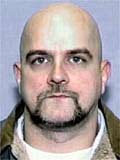
Andrew Kokoraleis
Serial killer Carl Eugene Watts
Serial killer · USA · 1974
Carl Eugene Watts (born November 7, 1953; died September 21, 2007), also known…
100 victims
Carl Eugene Watts
Serial killer · USA · 1974
Carl Eugene Watts (born November 7, 1953; died September 21, 2007), also known…
100 victims
 Rodney Alcala
Serial killer · USA · 1977
Rodney James Alcala (born August 23, 1943) was also known as Rodrigo Jacques Al…
100 victims
Rodney Alcala
Serial killer · USA · 1977
Rodney James Alcala (born August 23, 1943) was also known as Rodrigo Jacques Al…
100 victims
 Donald Leroy Evans
Serial killer · USA · 1975
Donald Leroy Evans (born July 5, 1957) was an American serial killer who murder…
60 victims
Donald Leroy Evans
Serial killer · USA · 1975
Donald Leroy Evans (born July 5, 1957) was an American serial killer who murder…
60 victims
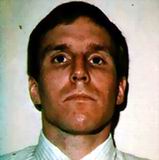 Michael Swango
Serial killer · USA · 1981
Michael Swango (Joseph Michael Swango) was a physician and American serial kill…
60 victims
Michael Swango
Serial killer · USA · 1981
Michael Swango (Joseph Michael Swango) was a physician and American serial kill…
60 victims
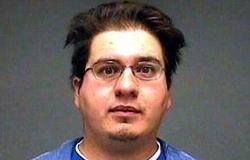 Efren Saldivar
Serial killer · USA · 1989
Efren Saldivar (born 30 September 1969) was an American serial killer who murde…
50 victims
Efren Saldivar
Serial killer · USA · 1989
Efren Saldivar (born 30 September 1969) was an American serial killer who murde…
50 victims
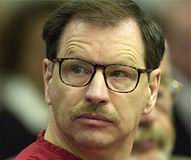 Gary Ridgway
Serial killer · USA · 1982
Gary Leon Ridgway Ridgway was born 18-February-1949 in Salt Lake City, UT. He w…
49 victims
Gary Ridgway
Serial killer · USA · 1982
Gary Leon Ridgway Ridgway was born 18-February-1949 in Salt Lake City, UT. He w…
49 victims
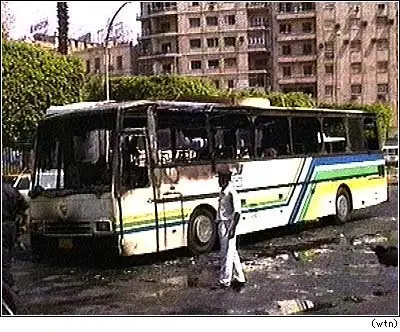 Saber & Mahmoud Abu el-Ulla
Mass murderers · Egypt · 1993
This case concerns Saber Abu el-Ulla and his brother, Mahmoud Abu el-Ulla, who…
13 victims
Saber & Mahmoud Abu el-Ulla
Mass murderers · Egypt · 1993
This case concerns Saber Abu el-Ulla and his brother, Mahmoud Abu el-Ulla, who…
13 victims
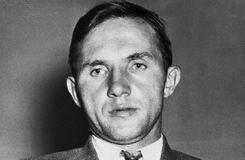 Bruno Hauptmann
Murderer? · USA · 1932
Bruno Hauptmann was a German carpenter and former criminal. He was sentenced to…
1 victim
Bruno Hauptmann
Murderer? · USA · 1932
Bruno Hauptmann was a German carpenter and former criminal. He was sentenced to…
1 victim
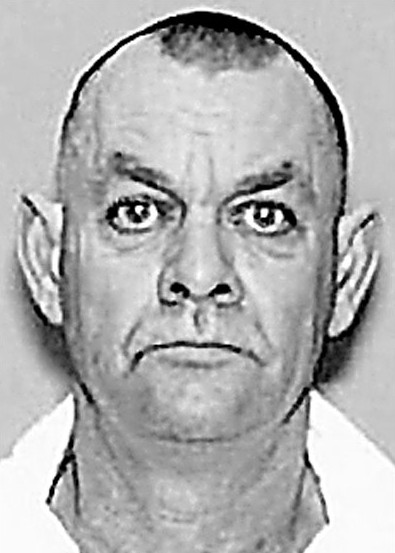 Larry Allen Hayes
Murderer · USA · 1999
Larry Allen Hayes was convicted of capital murder and was executed by lethal in…
2 victims
Larry Allen Hayes
Murderer · USA · 1999
Larry Allen Hayes was convicted of capital murder and was executed by lethal in…
2 victims
 Hilton Lewis Crawford
Murderer · USA · 1995
Hilton Lewis Crawford was executed by lethal injection in Texas on July 2, 2003…
1 victim
Hilton Lewis Crawford
Murderer · USA · 1995
Hilton Lewis Crawford was executed by lethal injection in Texas on July 2, 2003…
1 victim
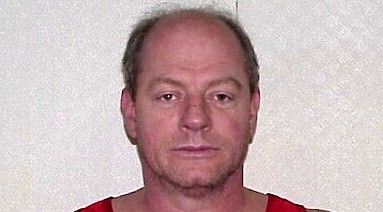 Thomas Clyde Bowling
Murderer · USA · 1990
Name: Thomas Clyde Bowling Also known as: Thomas Clyde Bowling Jr.; T.C. Date o…
2 victims
Thomas Clyde Bowling
Murderer · USA · 1990
Name: Thomas Clyde Bowling Also known as: Thomas Clyde Bowling Jr.; T.C. Date o…
2 victims
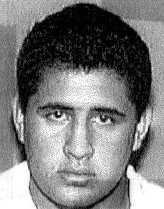 Jose Ignacio Monterrubio
Homicide · USA · 1993
Jose Ignacio Monterrubio was 17 years old when he and his older cousin Sixto Mo…
1 victim
Jose Ignacio Monterrubio
Homicide · USA · 1993
Jose Ignacio Monterrubio was 17 years old when he and his older cousin Sixto Mo…
1 victim
- Gender
- male
- Country
- USA
- Location
- Cook County, Illinois, USA
- Date of birth
- 1961
- Age at first offence
- 20
- Characteristics
- kidnapping, rape, torture, mutilation, cannibalism
- Victim profile
- Women
- Method of murder
- St abbing with knives or ice picks
- Date(s) of murder
- 1981 - 1982
- Years active
- 1981–1982
- Date of arrest
- October 1982
- Status
-
Executed
Executed by lethal injection in Illinois on March 17, 1999
Case record: Andrew Kokoraleis
Timeline
- May 23, 1981 — Linda Sutton was abducted by persons unknown from Elmhurst.
- June 1, 1981 — Detectives arrived at the Moonlit Hotel in Villa Park after a call about a corpse discovered behind the hotel.
- October 6, 1982 — Prostitute Beverly Washington, age 20, was found nude and savaged beside a Chicago railroad track; she survived.
- October 10, 1982 — Lorraine Borowski’s body was found in a cemetery south of Villa Park.
- May 15, 1982 — Lorraine Borowski was abducted while she was entering the real estate office where she worked.
- May 29, 1982 — Shui Mak was reported missing from Hanover Park.
- June 13, 1982 — Prostitute Angel York was picked up by a “john” in a van; her breast was slashed open and she was dumped on the roadside alive.
- August 28, 1982 — Teenage hooker Sandra Delaware was found stabbed and strangled to death on the bank of the Chicago River; her left breast was removed.
- September 8, 1982 — Rose Beck Davis was found stabbed, raped, and strangled in a Chicago alley.
- September 30, 1982 — Shui Mak’s mutilated body was recovered at Barrington.
- October 20, 1982 — Police arrested unemployed carpenter Robin Gecht, age 28, and charged him with the cruel assault on Beverly Washington; police also later pulled over a red van and questioned the driver.
- November 5, 1982 — Police swept up Robin Gecht, Edward Spreitzer, and 20-year-old Andrew Kokoraleis with search and arrest warrants, lodging them in jail under $1 million bond.
- November 12, 1982 — Thomas Kokoraleis was charged with the slaying of Lorraine Borowski.
- November 14, 1982 — Brother Andrew Kokoraleis and Edward Spreitzer were charged with the rape and murder of victim Rose Davis.
- November 16, 1982 — The mangled body of 22-year-old Susan Baker was found at a site where previous victims had been discarded; no charges were filed.
- March 2, 1983 — Robin Gecht was found mentally competent for trial.
- September 20, 1983 — Gecht’s trial opened.
- December 4, 1983 — Confessions were admitted in evidence in connection with Tom Kokoraleis.
- April 2, 1984 — Ed Spreitzer pled guilty on four counts of murder.
- May 18, 1984 — Andrew Kokoraleis was convicted of Lorraine Borowski’s murder.
- September 7, 1984 — The killer’s helpful attitude was rewarded with a sentence of life imprisonment.
- February 6, 1985 — A statement from Andrew Kokoraleis was read to the jury in his trial for the Davis murder.
- February 11, 1985 — Kokoraleis was convicted.
- March 18, 1985 — Kokoraleis received his death sentence.
- March 17, 1999 — Andrew Kokoraleis was executed by lethal injection in Illinois.
- Decided Dec. 16, 1997 — The U.S. Court of Appeals, Seventh Circuit decided Kokoraleis’s appeal.
- Rehearing and Suggestion for Rehearing En Banc Denied Jan. 12, 1998 — Rehearing and suggestion for rehearing en banc were denied.
Background
Andrew Kokoraleis was convicted of a ritualistic mutilation and murder in DuPage County. Kokoraleis was described as one of the “Ripper” killers who police said kidnapped, raped, tortured, murdered and mutilated as many as 18 Chicago-area women in 1981 and 1982. Kokoraleis was of Villa Park, Illinois. Kokoraleis, his brother and 2 friends were believed responsible for up to 17 cult-like mutilation deaths in DuPage and Cook Counties. The case involved a cult blamed for the killings of as many as 18 Chicago-area women in the early 1980s. Police believed the group cannibalized their victims in some cases. The group was described as including Kokoraleis, his brother Tommy, Edward Spreitzer and ringleader Robin Gecht.
The offence
Kokoraleis’s confessions narrated kidnapping, rape, torture, stabbing victims to death with knives or ice picks, mutilating corpses, and hiding remains. Some victims had a breast amputated with piano wire. Kokoraleis and his confederates were described as masturbating on and then eating the victim’s breast. Lorraine Borowski’s body was found in a cemetery. Lorraine Borowski was abducted on her way to work at a real estate office. Lorraine Borowski was beaten, mutilated and stabbed after she was abducted on May 15, 1982, as she was entering the real estate office where she worked. Her mutilated body was found five months later on the property of a cemetery near Darien. Kokoraleis was convicted of the 1982 murder of Lorraine Ann Borowski, age 21. Kokoraleis was convicted of killing Lorraine Borowski and sentenced him to death. Kokoraleis was also linked to killing Rose Beck Davis of Broadview; he received a life sentence for killing Davis. Kokoraleis’s confessions admitted he was “cruising” with fellow cultists Gecht and Spreitzer when they kidnapped Davis, with Andrew stabbing her several times in the process. During deliberations, the court referenced that the multiple-murder aggravating circumstance required that a defendant have been convicted of murdering two or more persons.
Investigation
Police heard enough after Tom Kokoraleis described the “Satanic chapel” in Gecht’s upstairs bedroom. Investigators described captive women being tortured with knives and ice picks, gang-raped, and finally sacrificed to Satan by members of a tiny cult. The material described severing one or both breasts with a thin wire garrote and each celebrant “taking communion” by eating a piece before the relic was consigned to Gecht’s trophy box. It was stated that Kokoraleis told detectives he had counted fifteen breasts inside the box. Police learned the men rented adjoining rooms at Villa Park’s Rip Van Winkle Motel, several months before Linda Sutton was murdered nearby. The manager remembered them as party animals, frequently bringing women to their rooms. A manager described the men as “some kind of cultists,” perhaps devil-worshippers. Searches and arrests were carried out with search and arrest warrants. A search of Gecht’s apartment revealed the Satanic chapel described by Tom Kokoraleis. Lawmen came away with a rifle matched to the recent Torado shooting. Satanic literature was retrieved from the apartment occupied by Andrew Kokoraleis. Authorities speculated that the group might have murdered 18 women in as many months. Tom Kokoraleis was charged with the slaying of Lorraine Borowski on November 12, and formally indicted by a grand jury four days later. Andrew Kokoraleis and Edward Spreitzer were charged on November 14 with the rape and murder of victim Rose Davis. Susan Baker’s death occurred at a site where previous victims had been discarded; no charges were filed. Authorities now connected Baker’s death with her background of drug and prostitution arrests in several states. Gecht was found mentally competent for trial on March 2, 1983.
Arrest
Police arrested Robin Gecht, age 28, on October 20, 1982, and charged him with the cruel assault on Beverly Washington. Gecht made bail on October 26. Armed with search and arrest warrants, police swept up Robin Gecht, Ed Spreitzer, and 20-year-old Andrew Kokoraleis on November 5. The men were lodged in jail under $1 million bond.
Trial
Gecht
Gecht’s trial opened on September 20, 1983. Gecht took the witness stand the next day, confessing the attack on Beverly Washington. Gecht was convicted on all counts and received a sentence of 120 years in prison. It was described that during the time when most of the murders had occurred, Gecht insisted he was not even acquainted with the other defendants. He insisted in court that he had killed no one and was innocent of rape and aggravated battery.
Kokoraleis: Lorraine Borowski
Tom Kokoraleis’s confessions were admitted in evidence on December 4, 1983. Andrew Kokoraleis was convicted of Lorraine Borowski’s murder on May 18, 1984. While awaiting sentencing, he led police to a field where Carole Pappas was allegedly buried, but searchers could find no remains. On September 7, he received a sentence of life imprisonment. Eighteen days later, Kokoraleis, his brother, and Ed Spreitzer were indicted for the murder of Linda Sutton. Andrew Kokoraleis and Spreitzer were also named in a second indictment covering the murder of Lorraine Borowski.
Kokoraleis: Rose Beck Davis
On February 6, 1985, a statement from Andrew Kokoraleis was read to the jury in his trial for the Davis murder. In his confession, the defendant admitted he was “cruising” with fellow cultists Gecht and Spreitzer when they kidnapped Davis, with Andrew stabbing her several times in the process. Kokoraleis was convicted on February 11. He received his death sentence on March 18. The material described that Kokoraleis decided to recant everything he confessed and deny that he had killed or raped anyone. He claimed the police had coerced each of his confessions, made false promises, and beaten him into admitting what they wanted him to say. Prosecutor Brian Telander reviewed interrogations performed by six separate detectives and two prosecutors. Detective Warren Wilcosz testified that when he shown Kokoraleis a line of photos, Kokoraleis picked out “Loraine Borowski” and said, “That's the girl Eddie Spreitzer and I killed in the cemetery.” The jury deliberated only three hours before finding him guilty of the murder of Lorraine Borowski and sentencing him to death. At his sentencing hearing, he once again denied the charges. His attorneys argued that the act did not merit the death penalty. A prison chaplain and a counselor testified that Kokoraleis was non-threatening and could be rehabilitated. It was described that Kokoraleis also argued he had received ineffectual counsel at sentencing. The panel of judges dismissed the appeals and upheld the sentence in 1989.
Sentencing
Kokoraleis was sentenced to life imprisonment for killing Rose Davis. Kokoraleis received his death sentence on March 18 (in connection with the February 11 conviction described in the material). For federal appellate review, it was described that Illinois required the prosecutor to establish a defendant’s eligibility for capital punishment and that one way was demonstrating the defendant killed at least two people with premeditated acts. The sentencing jury found the defendant guilty of the murder of Lorraine Borowski in the present case and it was described that “whether the defendant was guilty of only one other murder or of several other murders could not have affected the jury's determination that he had been convicted of at least two such offenses.” The multiple-murder aggravating circumstance was described as requiring conviction of murder of two or more persons.
Appeals
Kokoraleis filed numerous appeals of his death sentence, but all were rejected, including a request to the U.S. Supreme Court to hear his case. The Illinois Supreme Court affirmed the sentence and rejected a collateral attack; the federal district court also rejected a collateral attack. The U.S. Court of Appeals, Seventh Circuit decided on Dec. 16, 1997 and later denied rehearing en banc on Jan. 12, 1998. The Seventh Circuit affirmed. The Seventh Circuit addressed three arguments: ineffective assistance of counsel at sentencing; collateral estoppel/double jeopardy; and whether evidence supported eligibility for the death penalty. It was stated that Illinois automatically reviews all death sentences, removing forfeiture by failure to appeal, but not necessarily by failure to advance a particular argument. The Seventh Circuit held that the jury’s decision to sentence him to life imprisonment in the Davis case did not preclude the death sentence in the Borowski case. The Seventh Circuit also addressed the standard for effective assistance and residual doubt arguments. The Seventh Circuit quoted Strickland’s framework for fair trial and professional competence and discussed the presumption that counsel’s conduct falls within the wide range of reasonable professional assistance. The Seventh Circuit discussed an affidavit by a psychiatrist describing “borderline personality disorder” and whether it satisfied standards under Daubert; it described the district court’s doubt of the affidavit’s basis. The Seventh Circuit discussed residual doubt and testimony by two religious figures, including a chaplain at Cook County jail and a counselor at DuPage County jail, described as finding Kokoraleis helpful, unthreatening, and a candidate for rehabilitation. The Seventh Circuit noted that counsel’s alternative view was that Kokoraleis had been emotionally disturbed and a pawn under Gecht’s control, but the court concluded the earlier strategy satisfied constitutional minimum. The Seventh Circuit affirmed the conviction and sentence.
Outcome
Kokoraleis was executed by lethal injection in Illinois on March 17, 1999. The execution occurred at 12:32 a.m. Wednesday, and the lethal injection was described as occurring at 12:34 P.M. in the material. Gov. George Ryan denied requests for clemency. It was described that Illinois Supreme Court Justice Moses Harrison II ordered a stay until the nation’s high court could rule, but the Illinois Supreme Court voted 4-3 to toss out Harrison’s stay. Later, the U.S. Supreme Court denied Kokoraleis’s request to postpone the execution. Illinois Supreme Court Chief Justice Charles E. Freeman said the high court finished formal conferences Tuesday without ruling on a separate emergency motion to stay executions. The motion had been filed by legislators in favor of a death penalty moratorium. Freeman stated:
“There are serious questions still to be resolved in connection with that petition, one of which is whether the petitioners have standing to bring the motion in this court,” Freeman said. “The court will continue to study these issues.” It was described that less than five hours before the execution was scheduled to begin, Ryan issued a three-page statement and asked for the prayers of Illinois residents in the belief that he had “acted wisely” by allowing the execution to proceed. Ryan said in a statement late Tuesday: “I must admit that it is very difficult to hold in your hands the life of any person, even a person who, in the eyes of the many, has acted so horrendously as to have forfeited any right to any consideration of mercy,” Ryan said in a statement late Tuesday. “I have struggled with this issue of the death penalty and still feel that some crimes are so horrendous and so heinous that society has a right to demand the ultimate penalty.” An attorney statement included: Alan Freedman said: “We're disappointed.” Freedman said: “So I hope that this execution does not stop the moratorium. There's a problem with the system, and this was a heated case. I think it's outrageous for Andy, but I hope the possibility exists for others.” It was described that Kokoraleis spent the rest of the day praying and fasting before execution and then received a lethal injection. Kokoraleis was described as apologizing to the Borowski family and saying that the Kingdom of Heaven was at hand.
Aftermath
By January 2000, Governor Ryan placed a thirteenth man on the list of people who should never have been on Death Row and announced a moratorium on all executions in the state. Kokoraleis was described as being the last man executed before the moratorium. The material described that the Spreitzer case was affected by the moratorium and that Spreitzer sought mercy in October 2002 when Spreitzer was 41. It was described that Ryan pardoned four death row inmates and offered blanket clemency to the rest, including Edward Spreitzer, as Ryan left office in January 2003. The material described families being outraged and vowed to fight for restoring justice. It was described that later efforts included writing letters to serial killers, including letters by Robin Gecht and Eric Spreitzer.
Other details
Kokoraleis was described as 35 years old at execution and as having sighed three times, licked his lips and appeared to be speaking quietly to himself before he died. Kokoraleis died within minutes after a fatal combination of drugs was injected into his arms. Kokoraleis was described as staring at the ceiling and his lips moving quietly; after two deep breaths, his lips stopped moving. Kokoraleis had been flown by helicopter early Tuesday to Tamms, a new maximum security prison at Tamms, 20 miles north of Cairo. It was described that since being flown, Kokoraleis refused food and drank only water. Kokoraleis’s attorneys began the day with hope because Illinois Supreme Court Justice Moses Harrison II had ordered a stay. The Illinois Supreme Court overturned Harrison’s stay by a vote of 4-3. A statement from Illinois Supreme Court Chief Justice Charles E. Freeman stated that the high court finished formal conferences without ruling on an emergency motion to stay executions. The material described people quoted about Ryan’s deliberations, including a statement that:
“It's his 1st time,” one staff member said as Ryan met with top aides in his office on the 16th floor of the Thompson Center in Chicago. “He's not prepared. He can't make up his mind.” It was described that Springfield-area politicians commented on Ryan’s decision: Democratic House Speaker Michael Madigan said: “From what I read about what this gentleman did, I can't object to what the governor did.” Senate President James “Pate” Philip said: “What (Ryan) ought to do is what a majority of the people of Illinois are for. And when you tell them what this guy has done, that (majority) increases,” Philip said. Kokoraleis met briefly with Kokoraleis’s attorney Alan Freedman was quoted about moratorium concerns. Rutherford said: “I've known Gov. Ryan since 1978, and I think this was probably the most somber, intense time I've spent around him,” and (Ryan) was interested in what I thought of what kind of person (Kokoraleis) was, what kind of things was he saying, how was he reacting and so forth.” The appellate decision included “Andrew Kokoraleis, Petitioner-Appellant, v. Jerry Gilmore, Warden, Pontiac Correctional Center, Respondent-Appellee” and docket number No. 97-2605 in the U.S. Court of Appeals, Seventh Circuit. The appellate case stated “AFFIRMED.”
Spotted an error, or have more information about this case?