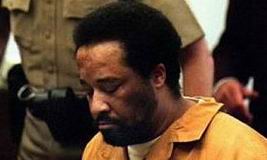
Gerald Parker
Serial killer Donald Henry Gaskins
Serial killer · USA · 1969
Donald Henry Gaskins, also known as Donald “Pee Wee” Gaskins, was a serial kill…
200 victims
Donald Henry Gaskins
Serial killer · USA · 1969
Donald Henry Gaskins, also known as Donald “Pee Wee” Gaskins, was a serial kill…
200 victims
 Carl Eugene Watts
Serial killer · USA · 1974
Carl Eugene Watts (born November 7, 1953; died September 21, 2007), also known…
100 victims
Carl Eugene Watts
Serial killer · USA · 1974
Carl Eugene Watts (born November 7, 1953; died September 21, 2007), also known…
100 victims
 Rodney Alcala
Serial killer · USA · 1977
Rodney James Alcala (born August 23, 1943) was also known as Rodrigo Jacques Al…
100 victims
Rodney Alcala
Serial killer · USA · 1977
Rodney James Alcala (born August 23, 1943) was also known as Rodrigo Jacques Al…
100 victims
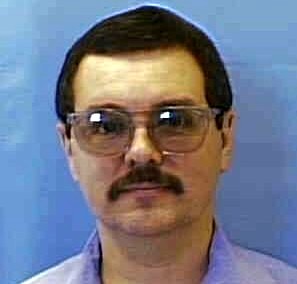 Donald Harvey
Serial killer · USA · 1970
Donald Harvey was known as an American serial killer and a self-professed “Ange…
87 victims
Donald Harvey
Serial killer · USA · 1970
Donald Harvey was known as an American serial killer and a self-professed “Ange…
87 victims
 Donald Leroy Evans
Serial killer · USA · 1975
Donald Leroy Evans (born July 5, 1957) was an American serial killer who murder…
60 victims
Donald Leroy Evans
Serial killer · USA · 1975
Donald Leroy Evans (born July 5, 1957) was an American serial killer who murder…
60 victims
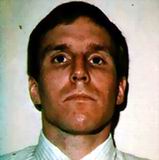 Michael Swango
Serial killer · USA · 1981
Michael Swango (Joseph Michael Swango) was a physician and American serial kill…
60 victims
Michael Swango
Serial killer · USA · 1981
Michael Swango (Joseph Michael Swango) was a physician and American serial kill…
60 victims
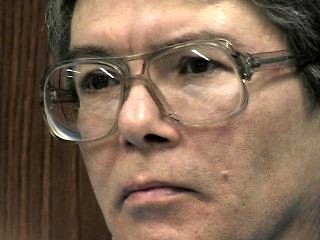 Dale Dean Finch
Murderer · USA · 1976
Dale Dean Finch (born Oct. 21, 1956) was convicted of two murders and a robbery…
2 victims
Dale Dean Finch
Murderer · USA · 1976
Dale Dean Finch (born Oct. 21, 1956) was convicted of two murders and a robbery…
2 victims
 Tiffany Cole
Murderer · USA · 2005
Tiffany Cole (WF), born 12/3/81, was sentenced to death for her role in the dou…
2 victims
Tiffany Cole
Murderer · USA · 2005
Tiffany Cole (WF), born 12/3/81, was sentenced to death for her role in the dou…
2 victims
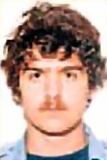 Harry Sassounian
Murderer · USA · 1982
Harry M. Sassounian was convicted of murder in the first degree (Pen. Code, § 1…
1 victim
Harry Sassounian
Murderer · USA · 1982
Harry M. Sassounian was convicted of murder in the first degree (Pen. Code, § 1…
1 victim
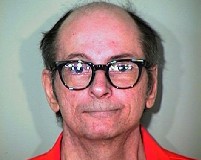 Richard Michael Rossi
Murderer · USA · 1983
Richard Michael Rossi was convicted in Superior Court (Maricopa) of first-degre…
1 victim
Richard Michael Rossi
Murderer · USA · 1983
Richard Michael Rossi was convicted in Superior Court (Maricopa) of first-degre…
1 victim
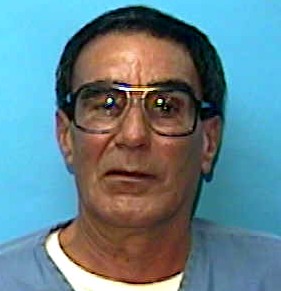 Joseph Spaziano
Murderer · USA · 1973
Joseph Spaziano was tried for the murder of a young woman that had occurred two…
2 victims
Joseph Spaziano
Murderer · USA · 1973
Joseph Spaziano was tried for the murder of a young woman that had occurred two…
2 victims
- Gender
- male
- Country
- USA
- Location
- Orange County, California, USA
- Date of birth
- 1955
- Age at first offence
- 23
- Characteristics
- rape
- Victim profile
- Sandra Kay Fry, 17 / Kimberly Gaye Rawlins, 21 / Marolyn Kay Carleton, 31 / Debora Kennedy, 24 / Debra Lynn Senior, 17 / A unborn child
- Method of murder
- Beating
- Date(s) of murder
- 1978 - 1979
- Years active
- 1978–1979
- Date of arrest
- —
- Status
-
Sentenced to death
Sentenced to death on January 22, 1999
Case record: Gerald Parker
Status
Gerald Parker was sentenced to death on January 22, 1999.
Background
Gerald Parker was an American serial killer. Authorities said he committed six O.C. murders in the 1970s in Orange County, California, including one for which another man endured 17 years in prison.
Parker was identified as the “Bludgeon Killer” after a new system of genetic testing helped link him to attacks on young women who were raped and bashed in their Orange County homes in the late 1970s.
Parker spent 7 1/2 years in the Marine Corps, including stints at the El Toro Marine Corps Air Station as well as bases in North Carolina, Alaska and Mississippi. Parker was convicted of raping a 13-year-old Tustin girl in 1980.
Kevin Lee Green was convicted of second-degree murder for the bludgeoning attack of his pregnant 21-year-old wife and the murder of her full-term fetus. The full-term fetus was described as unborn in later accounts. Green was later freed and declared innocent after DNA evidence linked Parker to the attack.
Parker was known as “The Bedroom Basher” for his 1978–79 murderous rampage.
The offence
Authorities said Parker raped and murdered five women and killed the unborn baby of a sixth woman in Orange County, California in the 1970s.
Jurors described Green’s alibi as “just wasn’t believable,” in relation to the attack on Green’s pregnant wife.
A sixth DNA match linked Parker to a rape of a 24-year-old Costa Mesa optometrist, but the three-year statute of limitations on the case had expired, according to police.
Authorities said investigators initially believed the attack on D’Aiello, who was nine months pregnant, might have been linked to five murders in Orange County, but Tustin detectives shifted their focus to Green.
Parker was described as the feared “Bludgeon Killer” and as a serial rapist associated with bludgeoning attacks in homes in the late 1970s.
Investigation
Investigators said the Green case “blew open” while investigators from Tustin and Costa Mesa were working a cluster of unsolved murder cases earlier in the year that had baffled them for years, involving the killings and sexual assaults of women ages 17 to 31.
Investigators learned of a new state database that could match genetic material from convicted criminals to evidence from open cases, and they lobbied the Orange County sheriff’s crime lab to run their cases. The police work was aided by two local prosecutors who began a project to reexamine the county’s unsolved murder cases.
Investigators said they made six matches, all to Parker, by comparing evidence as tiny as body fluid stains from crime scenes to the database of 65,000 DNA samples of convicted felons. The Orange County Sheriff’s Department had just begun using the new technique—known as the Short Tandem Repeats method—in March.
Orange County Sheriff Brad Gates said: “We were completely amazed.”
Frank Fitzpatrick, the sheriff’s forensic science director, said: “Not only did we get a hit in the database, but it was linked to all of these cases.”
Authorities said they had DNA matches between Parker and murder victims Kimberly Gaye Rawlins, 21, of Costa Mesa; Marolyn Kay Carleton, 31, of Costa Mesa; Debora Kennedy, 24, of Tustin; and Debra Lynn Senior, 17, of Costa Mesa. All were killed in 1979.
Police sources said Parker also confessed to the slaying of Sandra Kay Fry, 17, of Anaheim, who was raped and murdered in 1978.
A sixth DNA match linked Parker to a rape of a 24-year-old Costa Mesa optometrist, but the three-year statute of limitations had expired.
Investigators traveled to Avenal State Prison in Central California and talked to Parker after they established DNA links to the murder cases. Parker was imprisoned for a parole violation and scheduled for release next month.
Arrest / custody / confession
Once investigators traveled to Avenal State Prison, Parker was interviewed while he was imprisoned for a parole violation and scheduled for release the following month.
Police sources said that during the interview, Parker admitted attacking Green’s wife, Dianna D’Aiello. Parker’s confession was described as just a week before prosecutors announced the new charges.
On June 14 detectives met with Parker in the Avenal State Prison in Central Valley where he was imprisoned for a parole violation. In that meeting, he confessed to five killings and the assault on Dianna D’Aiello.
Parker later confessed to the attack on Green’s wife, described in one account as having been committed by Parker 16 years after Green was incarcerated.
People involved
Gerald Parker
Gerald Parker was an ex-Marine, a state prison inmate, and the “Bludgeon Killer” identified through genetic testing.
Parker was described as a drug addict by the sentencing judge during the death sentence, and defense arguments sought to spare his life because he was a drug addict and came from a troubled background.
Kevin Lee Green
Kevin Lee Green was a Marine and the ex-husband of Dianna D’Aiello. Green was convicted in the same year 1980 for second-degree murder for the bludgeoning attack of his pregnant 21-year-old wife and the murder of her full-term fetus. Green was freed in 1996 after DNA evidence linked Parker to the attack.
Green served nearly 17 years in prison. A judge and prosecutors later apologized for the mistake. Green’s innocence was acknowledged in 1996.
Green filed an appeal with the Fourth District Court of Appeal, which was denied in 1982.
Green maintained his innocence over the years and was described as a model inmate. He worked as a warden’s secretary, helped give tours to college students, and coordinated the prison Christmas party at the Correctional Training Facility at Soledad.
Jerry Smith, a spokesman at Soledad, said: “He had a very good rapport with the staff and the inmate population and it was built on respect.”
Tuesday, Tustin Det. Tom Tarpley visited Green in Soledad to tell him his nightmare might soon be over.
Tarpley said: “Kevin was very grateful that somebody was looking into the case.” Tarpley also said: “When I told him where this evidence might lead, he began crying. He immediately broke down.”
Green’s attorney was Ronald G. Brower, who said Green flew to the Midwest to be reunited with his family. Brower said: “He is not resentful. He believes everybody proceeded in good faith,” and “adding that his client had no plans to sue for damages.”
Brower also said that Green passed a defense-administered polygraph test before trial, and that Green tried to have a DNA test performed but lacked the money needed for expensive forensic tests.
Brower said Green’s constant refusal to confess hurt him at parole hearings because officials viewed him as unrepentant, and Brower quoted a comment attributed to Deputy Dist. Atty. Mel Jensen: “He continued to assert his innocence in a series of parole hearings. . . . {Deputy Dist. Atty.} Mel Jensen felt particularly bad because he had gone to several hearings and urged that Green be kept in prison,” Brower said.
Brower said Dianna D’Aiello’s testimony was instrumental in convicting Green and that he is not resentful of his former wife. Brower said: “The fact that she identified Green, who is white, and not Parker, who is African American, as her attacker ‘points to the extent of the wife’s brain damage.’” Brower also said: “I think it was a good-faith effort on her part {when she testified that Green attacked her}. I don’t think she made it up,” Brower said.
Dianna D’Aiello (then Dianna D’Aiello; also referred to as Dianne Green in later account)
Dianna D’Aiello was the pregnant 21-year-old wife attacked in 1979, described as being in her ninth month of pregnancy when her husband attacked her after she refused to have sex.
Her head injuries were described as severe. Doctors considered removing the fetus but feared it would cost D’Aiello her life. Doctors waited 24 hours for her condition to improve and after performing a caesarean section, the fetus was dead.
D’Aiello was comatose for a month after the 1979 attack and suffered significant memory loss.
D’Aiello testified against her husband, who was described as white, and jurors convicted Green. D’Aiello later testified in court and reiterated her claim as of the announcement of Parker’s death sentence.
In court, D’Aiello said: “I feel that I’ve been beaten and raped by two men. By a stranger and by a man who I loved and trusted,” D’Aiello said in court.
In one account, D’Aiello remained convinced that Green beat and raped her shortly before Parker did.
Her father, Jerome D’Aiello, said his daughter was going “to have deal with it” and accept that someone else had now been charged with the crime.
Jerome D’Aiello said: “From what they say, there was a palm print and DNA,” and “My daughter still has no recollection of any other face. You have to understand she was in a very traumatic state at the time. The beating she saw could have been something that happened before, because he did hit her.”
During the events, D’Aiello declined further comment and remained secluded with her mother in Riverside.
Victims linked by DNA and described in the case
Authorities and police linked Parker to multiple victims through DNA and confession.
- Kimberly Gaye Rawlins, 21, of Costa Mesa, killed in 1979.
- Marolyn Kay Carleton, 31, of Costa Mesa, killed in 1979.
- Debora Kennedy, 24, of Tustin, killed in 1979.
- Debra Lynn Senior, 17, of Costa Mesa, killed in 1979.
- Sandra Kay Fry, 17, of Anaheim, who was raped and murdered in 1978; described as slain by Parker’s confession.
- A 24-year-old Costa Mesa optometrist, described as the subject of a DNA match linking Parker to a rape; prosecution barred by expiration of the three-year statute of limitations, according to police.
Dianna D’Aiello’s full-term fetus died as a result of her injuries following the 1979 attack for which Kevin Green had been convicted and later exonerated.
Trial
Parker was convicted last year for the rapes and murders of five women ages 17 to 31, and the killing of a full-term fetus being carried by the pregnant Dianne Green, now Dianna D’Aiello.
During Green’s conviction proceedings, jurors found Green’s alibi not credible, including the claim that he was out getting a cheeseburger at the time of the attack and that he had seen a black man loitering around their apartment complex.
Green’s wrongful conviction was later reversed after DNA evidence linked Parker to the attack.
Sentencing
On January 22, 1999, Orange County Superior Court Judge Francisco P. Briseno sentenced Parker to death after an emotional hearing in which victims’ families spoke of their years of anguish and loss.
Judge Briseno told Parker his “inhuman behavior is beyond belief” and rejected defense arguments that Parker’s life should be spared because he was a drug addict and came from a troubled background.
Jackie Bissonnette said: “Parker ‘will have a peaceful death’ by lethal injection,” and her statement referenced her sister Debra Lynn Senior, 17, as among Parker’s victims.
Jackie Bissonnette also said: “Our sisters, daughters and friends were left bleeding to die.”
Debora Kennedy’s sister, Ann Jones, said: “I think the fears that I feel will always be with me,” and also said: “I’m trying to get over this, but I’m not sure that I ever will.”
Ann Jones said: “In that aspect, it is closure,” and she told the court that knowing her killer has been found, convicted and sentenced brings some respite.
D’Aiello survived the attack but her full-term fetus died as a result of her injuries.
Appeals
Kevin Green’s appeal was denied in 1982 by the Fourth District Court of Appeal.
Aftermath
After DNA links were established, authorities announced charges against Parker and the Green case’s wrongful incarceration was acknowledged.
Orange County Dist. Atty. Michael R. Capizzi said: “You can never get back those 17 years. All of us obviously feel very bad that this took place,” and “Our justice system is not 100% perfect, but it’s as close to perfect as you’re going to find anywhere in this world.”
Sheriff Brad Gates said that when he learned about the Green case, “I felt happy and I felt terrible. My stomach went ‘boom.’ My first words were, ‘I’m glad it wasn’t my brother.’”
Frank Fitzpatrick and others described the DNA hit and linkage across cases.
Thomas Fry, 36, a radio talk show host in Las Vegas and the brother of Sandra Fry, said: “All these years we’ve been haunted by little demons,” and also said: “Now we can put all those wandering thoughts aside, find some tentative closure and hope that this individual will pay the ultimate punishment.”
One account stated that on June 20, 1996, Superior Court Judge Robert Fitzgerald apologized for Green’s wrongful incarceration and declared him a free and innocent man.
After exoneration, Green visited his family in the Midwest and said he did not plan to sue the state for damages resulting from the wrongful conviction.
D’Aiello filed a wrongful death lawsuit against Green, and on Thursday reiterated her claim.
D’Aiello’s condition after the attack included a month-long coma and significant memory loss; she testified that she had regained consciousness and identified her husband as her attacker.
Spotted an error, or have more information about this case?