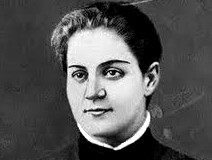
Jane Toppan
Serial killer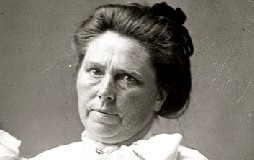 Belle Gunness
Serial killer · USA · 1880
Belle Gunness was Norwegian-born. She was born as Brynhild Paulsdatter Størseth…
42 victims
Belle Gunness
Serial killer · USA · 1880
Belle Gunness was Norwegian-born. She was born as Brynhild Paulsdatter Størseth…
42 victims
 Louise Vermilyea
Serial killer · USA · 1893
Louise Vermilyea was a “black widow” poisoner who killed husbands and children,…
9 victims
Louise Vermilyea
Serial killer · USA · 1893
Louise Vermilyea was a “black widow” poisoner who killed husbands and children,…
9 victims
 Bertha Gifford
Serial killer · USA · 1909
Bertha Gifford (1872- August 20, 1951) was a farmwife in rural Catawissa, Misso…
17 victims
Bertha Gifford
Serial killer · USA · 1909
Bertha Gifford (1872- August 20, 1951) was a farmwife in rural Catawissa, Misso…
17 victims
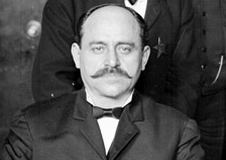 Johann Otto Hoch
Serial killer · USA · 1890
Johann Otto Hoch (1855 - 1906) was the most famous and last-used alias of a Ger…
15 victims
Johann Otto Hoch
Serial killer · USA · 1890
Johann Otto Hoch (1855 - 1906) was the most famous and last-used alias of a Ger…
15 victims
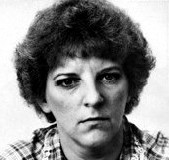 Genene Jones
Serial killer · USA · 1977
Genene Anne Jones (born July 13, 1950) was a former pediatric nurse who worked…
11 victims
Genene Jones
Serial killer · USA · 1977
Genene Anne Jones (born July 13, 1950) was a former pediatric nurse who worked…
11 victims
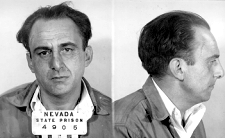 Albert Everette Sala
Murderer · USA · 1945
Albert Everette Sala was a native of Oakland, California, and he was 38 years o…
1 victim
Albert Everette Sala
Murderer · USA · 1945
Albert Everette Sala was a native of Oakland, California, and he was 38 years o…
1 victim
 Benjamin Sifrit
Murderer · USA · 2002
Benjamin Sifrit was convicted in 2003 for the death of Martha Crutchley and was…
2 victims
Benjamin Sifrit
Murderer · USA · 2002
Benjamin Sifrit was convicted in 2003 for the death of Martha Crutchley and was…
2 victims
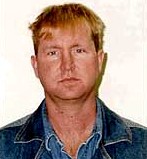 Martin Allen Johnson
Murderer · USA · 1998
Martin Allen Johnson (defendant) · Heather Fay Fraser, 15 (victim) · 1997 — Pol…
1 victim
Martin Allen Johnson
Murderer · USA · 1998
Martin Allen Johnson (defendant) · Heather Fay Fraser, 15 (victim) · 1997 — Pol…
1 victim
 Michael Singley
Murderer · USA · 1998
Michael Singley was sentenced to death on January 31, 2001. The execution was d…
2 victims
Michael Singley
Murderer · USA · 1998
Michael Singley was sentenced to death on January 31, 2001. The execution was d…
2 victims
 Darryl Durr
Murderer · USA · 1988
Darryl Durr was an Ohio death row inmate. Durr kidnapped 16-year-old Angel Vinc…
1 victim
Darryl Durr
Murderer · USA · 1988
Darryl Durr was an Ohio death row inmate. Durr kidnapped 16-year-old Angel Vinc…
1 victim
 Cary Stayner
Murderer · USA · 1999
Cary A. Stayner (born August 13, 1961) was an American serial killer. Stayner w…
4 victims
Cary Stayner
Murderer · USA · 1999
Cary A. Stayner (born August 13, 1961) was an American serial killer. Stayner w…
4 victims
- Gender
- female
- Country
- USA
- Location
- Middlesex County/Suffolk County, Massachusetts, USA
- Date of birth
- 1857
- Age at first offence
- 30
- Characteristics
- poisoner, nurse, serial rapist
- Victim profile
- Hospital patients / Relatives
- Method of murder
- Poisoning ( morphine and atropine)
- Date(s) of murder
- 1887 - 1901
- Years active
- 1887–1901
- Date of arrest
- October 29, 1901
- Status
-
Died in custody
Found not guilty by reason of insanity on June 23, 1902 and committed for life in the Taunton Insane Hospital; died on August 17, 1938
Case record: Jane Toppan
Identity
Jane Toppan (1880-1901) was a nurse from Boston, Massachusetts.
Another record named her as born Honora Kelley and later known as Jane Toppan.
Background
Toppan’s mother was Bridget Kelley, who died of tuberculosis when she was very young. Her father was Peter Kelley, described as an alcoholic and eccentric and nicknamed “Kelley the Crack”.
Kelley was described in later years as the source of local rumors concerning his supposed insanity, including the rumor that his madness drove him to sew his own eyelids closed while working as a tailor.
In 1863, Kelley brought his two youngest children—Delia Josephine (eight years old) and Honora (six years old)—to the Boston Female Asylum, an orphanage for indigent female children founded in 1799 by Mrs. Hannah Stillman. Documents from the asylum noted that the two girls were “rescued from a very miserable home”. The asylum documents recorded that Kelley surrendered the two young girls and never saw them again.
In November 1864, Honora Kelley was placed as an indentured servant in the home of Mrs. Ann C. Toppan of Lowell, Massachusetts. Honora was not formally adopted by the Toppans, but took on their surname and eventually became known as Jane Toppan.
Delia remained in the institution until 1868, when she was placed as a servant in Athol, New York at the age of 12. Later, Delia turned to prostitution and eventually died a destitute alcoholic in squalid conditions.
Nursing career and alleged conduct
Toppan began training to be a nurse at Cambridge Hospital in 1885. During her residency she used patients as “guinea pigs” in experiments with morphine and atropine, and she altered their prescribed dosages to observe effects on their nervous systems. She spent time alone with patients, made up fake charts, medicated patients to drift in and out of consciousness, and even got into bed with them.
When Toppan was asked after her arrest, she answered that she derived a sexual thrill from patients being near death, coming back to life and then dying again.
Toppan administered a drug mixture to patients she chose as victims, lay in bed with them and held them close to her as they died.
She was recommended for Massachusetts General Hospital in 1889. There, she claimed additional victims before being fired the following year. She briefly returned to Cambridge but was soon dismissed for prescribing opiates recklessly.
After that, she began a career as a private nurse, which continued despite complaints of petty theft.
The alleged murders and confessions
The record described Toppan’s poisoning spree as beginning in 1895 by killing her landlords. In 1899, she killed her foster sister Elizabeth with a dose of strychnine.
In 1901, she moved in with the elderly Alden Davis and his family in Cataumet to take care of him after the death of his wife. Within weeks, the record said she killed Davis and two of his daughters.
The record described her moving back to her hometown and courting her late foster sister’s husband, killing his sister and poisoning him so she could prove herself by nursing him back to health. The record also said she poisoned herself to evoke his sympathy. The ruse did not work, and the man cast her out of his house.
The surviving members of the Davis family ordered a toxicology exam on Alden Davis’s youngest daughter. The report found that she had been poisoned, and local authorities put a police detail on Toppan.
The record stated:
- Toppan was arrested for murder on October 26, 1901.
- By 1902, she confessed to 31 murders.
Another part of the record gave additional detail about her ambition and plea, describing that when apprehended she said she wanted to kill more people than anyone who had ever lived before, but could provide details to solve 31 crimes.
The record said that she finally confessed to poisoning not only the Davis clan but eleven other victims as well, and that later she told her lawyer that the true total was thirty-one.
It also described that:
- No accurate list of her hospital victims was ever compiled.
- Various New England families avoided official requests for exhumations and autopsies.
- Students believed her final tally fell somewhere between 70 and 100 victims.
Arrest and trial
Toppan was found not guilty by reason of insanity on June 23, 1902 and committed for life in the Taunton Insane Hospital.
The record said that at trial her lawyer “grudgingly conceded eleven murders” and staked hopes on a plea of insanity. It also said that Toppan “cinched the case with her own testimony”.
Toppan’s quoted statement at court was:
“That is my ambition, to have killed more people -- more helpless people -- than any man or woman who has ever lived.”
Soon after the trial, a New York Journal printed what was purported to be Toppan’s confession to her lawyer. The record quoted the newspaper as stating that she had killed more than 31 people and that she wanted the jury to find her insane so she could eventually have a chance at being released. The record further stated:
- “Whether or not that was truly Toppan’s intention is unknown.”
Sentencing and confinement
Toppan was confined for life in the Taunton Insane Hospital after being declared insane on June 23, 1902. The record stated she remained at Taunton for the rest of her life.
Outcome
Toppan died on August 17, 1938.
The record also stated that she died in custody in August 1938 at age 84, and described how she was remembered by keepers and attendants, including a quoted interaction:
“Get some morphine, dearie,” she would say, “and we’ll go out in the ward. You and I will have a lot of fun seeing them die.”
Fictional portrayals and legacy
The record stated that Toppan was widely believed to have been the inspiration for “the Incomparable Bessie Denker,” a character in William March’s novel The Bad Seed, which Maxwell Anderson turned into a successful play and film. It further described that Denker was a serial poisoner who began killing at a young age.
The record also described fictional portrayals including:
- In the independent film American Nightmare, written and directed by John Keyes, Debbie Rochon portrayed a serial killer named “Jane Toppan” who killed numerous characters throughout the film by various means. The character was also employed as a nurse, and the record stated this character was inspired by Toppan.
- Toppan was the subject of one of six monologues in the play Murderess by Anne Bertram, which premiered in St. Paul, Minnesota at Theatre Unbound.
- She was portrayed by Laura Wiebers in the segment The Truth About Miss Toppan, directed by Mishia Burns Edwards. The play opened to favorable reviews.
- Minneapolis StarTribune theater critic William Randall Beard called the Toppan segment “a chilling portrait of a sociopath nurse.”
Other details
The record described Toppan’s history of suicide attempts, which helped her win an insanity plea, and her confinement for 40 years until she died in custody. It also stated that she was “nabb[ed]” in Amherst, NH, in October 1901.

Spotted an error, or have more information about this case?