Louie Calvert
Murderer Edith Thompson
Murderer · United Kingdom · 1922
Edith Jessie Thompson (Edith Graydon; 25 December 1893 – 9 January 1923) was a…
1 victim
Edith Thompson
Murderer · United Kingdom · 1922
Edith Jessie Thompson (Edith Graydon; 25 December 1893 – 9 January 1923) was a…
1 victim
 Marguerite Fahmy
Murderer · United Kingdom · 1923
Marguerite Fahmy faced a charge of murder in connection with the death of Ali K…
1 victim
Marguerite Fahmy
Murderer · United Kingdom · 1923
Marguerite Fahmy faced a charge of murder in connection with the death of Ali K…
1 victim
 Margaret Waters
Murderer · United Kingdom · 1866
Margaret Waters was an English murderess who was hanged by executioner William…
19 victims
Margaret Waters
Murderer · United Kingdom · 1866
Margaret Waters was an English murderess who was hanged by executioner William…
19 victims
 Catherine Wilson
Murderer · United Kingdom · 1854
Catherine Wilson was a British nurse who poisoned victims after befriending the…
7 victims
Catherine Wilson
Murderer · United Kingdom · 1854
Catherine Wilson was a British nurse who poisoned victims after befriending the…
7 victims
 Albert Burrows
Murderer · United Kingdom · 1920
Albert Burrows (also named Albert Edward Burrows): married farm labourer who to…
4 victims
Albert Burrows
Murderer · United Kingdom · 1920
Albert Burrows (also named Albert Edward Burrows): married farm labourer who to…
4 victims
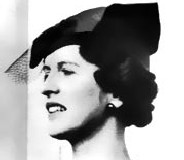 Florence Ransom
Murderer · United Kingdom · 1940
Florence Ransom was a middle-aged woman who was described as physically beautif…
3 victims
Florence Ransom
Murderer · United Kingdom · 1940
Florence Ransom was a middle-aged woman who was described as physically beautif…
3 victims
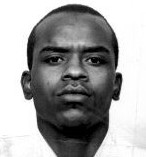 James Lee Henderson
Murderer · USA · 1993
James Lee Henderson was a Texas death row inmate. · October 28, 1993 — Henderso…
1 victim
James Lee Henderson
Murderer · USA · 1993
James Lee Henderson was a Texas death row inmate. · October 28, 1993 — Henderso…
1 victim
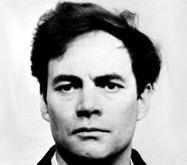 Donald Neilson
Serial killer · United Kingdom · 1974
Donald Neilson was born as Donald Nappey on August 1, 1936. He was nicknamed th…
5 victims
Donald Neilson
Serial killer · United Kingdom · 1974
Donald Neilson was born as Donald Nappey on August 1, 1936. He was nicknamed th…
5 victims
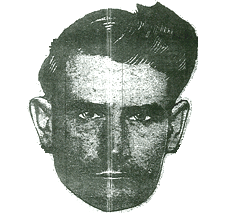 Henry Lee Moore
Serial killer · USA · 1911
Henry Lee Moore was sentenced to life in prison in Missouri in 1913. He was rel…
26 victims
Henry Lee Moore
Serial killer · USA · 1911
Henry Lee Moore was sentenced to life in prison in Missouri in 1913. He was rel…
26 victims
 Joachim Kroll
Serial killer · Germany · 1955
Joachim Kroll was sentenced to 9 terms of life-imprisonment on April 8, 1982. H…
13 victims
Joachim Kroll
Serial killer · Germany · 1955
Joachim Kroll was sentenced to 9 terms of life-imprisonment on April 8, 1982. H…
13 victims
 Yoselyn Ortega
Murderer · USA · 2012
Yoselyn Ortega was a nanny who was charged in New York City with killing two yo…
2 victims
Yoselyn Ortega
Murderer · USA · 2012
Yoselyn Ortega was a nanny who was charged in New York City with killing two yo…
2 victims
 Rosemary West
Serial killer · United Kingdom · 1971
Rosemary Pauline “Rose” West (née Letts) Rosemary Letts was born in Barnstaple,…
10 victims
Rosemary West
Serial killer · United Kingdom · 1971
Rosemary Pauline “Rose” West (née Letts) Rosemary Letts was born in Barnstaple,…
10 victims
- Gender
- female
- Country
- United Kingdom
- Location
- Leeds, West Yorkshire, England, United Kingdom
- Date of birth
- 1893
- Age at first offence
- 29
- Characteristics
- alcohol, drug addict, robbery, abuse
- Victim profile
- John Frobisher (her employer) / Lily Waterhouse (her landlady)
- Method of murder
- Beating / Strangulation
- Date(s) of murder
- 1922 / 1926
- Years active
- 1922–1926
- Date of arrest
- April 2, 1926
- Status
-
Executed
Executed by hanging at Strangeways Prison, Manchester, on June 24, 1926
Case details
Louie Calvert was executed by hanging at Strangeways Prison, Manchester, on June 24, 1926.
Background
Louie Calvert was also known to local police as Louie Gomersal. Louie Calvert was a 33-year-old bad-tempered petty thief and prostitute with two illegitimate children.
In 1925, Louie Calvert worked as a housekeeper for Albert Calvert at his home in Railway Place, Leeds. After working for him for a few months, she informed him she was pregnant. Albert Calvert promptly married the woman. When Albert was starting to wonder about the arrival of his off-spring, he asked his wife about the impending event. She said she was going to stay with her sister, who lived in Dewsbury, for the delivery. When she arrived in Dewsbury she sent Albert a telegram, after which she promptly went back to Leeds.
Louie Calvert lodged with an eccentric widow named Mrs Lily Waterhouse. Louie had agreed to act as maid to pay for her board but refused to do any work and started to pawn Mrs Waterhouse's silverware.
As a prostitute, Louie Calvert worked under the name of Louie Gomersal and was known as Louise Jackson to the Salvation Army, whose meetings she attended. Louie Calvert used several aliases and was reported to have an unpleasant and violent temper. Louie Calvert had a six-year-old son, Kenneth, whom she was particularly fond of and asked to have visit her in the condemned cell. After the execution, Kenneth was taken into care.
Under the name of Louise Jackson, Louie Calvert took a live-in job as a housekeeper to one Arthur Calvert, described as a night watchman living at 7 Railway Place in the Pottery Fields area of Leeds. Louie and Arthur had an affair, and after a while Louie claimed that she was pregnant by him and persuaded Arthur to marry her. Louie was able to deceive Arthur for some time and eventually told him she was leaving him to go to her sister's home in Dewsbury to give birth. She sent Arthur a telegram to let him know she had arrived safely. There was no baby, and the pregnancy had been feigned to force Arthur into marriage.
Louie Calvert took up lodgings with a 40-year-old, rather eccentric widow called Mrs. Lily Waterhouse in Amberley Road, Leeds.
The offence
Louie Calvert battered and strangled her landlady, Mrs Lily Waterhouse, to death after Mrs Waterhouse confronted her with the theft of articles from her boarding house and had reported her to the police.
In the condemned cell, Louie Calvert also admitted to the murder of a previous employer, John Frobisher, in 1922.
Investigation
After Mrs Waterhouse went to the police and lodged a complaint against her boarder, neighbours reported hearing banging from the Waterhouse premises. After the day after Mrs Waterhouse had been to the police, neighbours heard a loud banging from the Waterhouse premises, and within minutes Louie left the house with the baby and explained to the alarmed neighbours that the noises had come from the baby's bed collapsing while she was folding it up.
One of the neighbours, Mrs Clayton, said to Louie that she thought she had heard Mrs Waterhouse making strange noises. Louie replied: "Yes," replied Louie, 'I have left her in bed crying because I am leaving her.'
When a policeman turned up to find out why Mrs Waterhouse hadn't returned to the police station to sign the complaint against Louie, he heard about the noises earlier in the day. He obtained a key and, upon entering, found Mrs Waterhouse battered and strangled to death on the bed.
Police later tracked Louie to her marital home in Railway Place. When the police arrived, she opened the door. The officers found she was wearing Lily's boots even though they were several sizes too large, and some of the missing property was also discovered.
Arrest
Louie Calvert was arrested and taken to the police station. She was charged with Lily's murder.
Trial
Louie Calvert came before Leeds City magistrates charged with Lily's murder and was remanded in custody to stand trial at Leeds Assizes.
Her case was heard at the Assizes before Mr. Justice Wright on the 5th and 6th of May and she was found guilty.
She accepted her death sentence without apparent shock but later claimed that she was pregnant and could not, therefore, be hanged until after she had given birth.
Sentencing
Louie Calvert received a death sentence.
She was taken to Strangeways prison in Manchester to await execution. The condemned cell examination concluded that it was just possible, although very unlikely, that she might be in the early stages of pregnancy but that it would not cause a problem to execute her.
A petition for a reprieve containing two to three thousand signatures, many from her home town of Ossett in Yorkshire, was got up. It was rejected and her execution was scheduled for the 24th June.
A question in parliament related to her pregnancy. On Tuesday 22 June, the Home Secretary informed her solicitor, Mr. E. Ould, that there would be no reprieve and that the story of her pregnancy was not believed to be true.
The autopsy confirmed that she was not pregnant.
Appeals
A petition for a reprieve containing two to three thousand signatures was got up and rejected.
Outcome
She was reported to have accepted her fate with considerable courage. It was reported that she was calm at the end.
She was the first woman to be hanged at Strangeways since Mary Ann Britland in 1886.
While awaiting execution, Louie Calvert confessed to the murder of John Frobisher in 1922. The confession in the condemned cell was described as being during the time she was calling herself Mrs. Louise Jackson and working as John Frobisher's housekeeper at Mercy Street, Wellington Lane, Leeds.
Louie Calvert's body was left on the rope for the customary hour before being taken down and prepared for autopsy. The autopsy found her death had been "instantaneous" and confirmed that she was not pregnant. These facts were made public at the subsequent inquest, held later in the day before the Leeds Coroner, Mr. Stuart Rodgers. Her body was buried in an unmarked grave within the prison grounds in accordance with her sentence.
Other details
Execution day account
At a minute to nine on the summer morning of Thursday June 24, 1926, a small group of men silently formed up outside the condemned cell, at the end of 'B' wing in the central area of Manchester's Strangeways prison. Upon a signal from the governor, Thomas Pierrepoint, Britain's "No. 1" hangman at that time, entered the cell at precisely 8.00 a.m. accompanied by two male warders.
The two women warders who had been looking after the prisoner told her to stand up. Pierrepoint took her arms and quickly strapped her wrists behind her with a leather strap before leading the way out of the cell through a second door which had been uncovered by sliding away the wardrobe.
The prisoner was led forward into the execution chamber by the two male warders and stopped by Pierrepoint on a chalked "T" precisely over the divide of the trap doors. The two warders, standing on boards set across the trap, supported her, one on either side while Pierrepoint's assistant put leather straps round her ankles and thighs.
Pierrepoint withdrew what appeared to her to be a white pocket handkerchief from his top pocket and deftly placed it over her head following quickly with the leather covered noose, positioning the eyelet just under the angle of her lower left jaw and sliding down the claw cut rubber washer to hold it in place. His eyes darted from side to side to check that all was ready before he lent forward, withdrew the safety pin and pushed the metal lever away from him.
The hooded form disappeared through the trap and dangled in the cell below. The medical officer went down to listen to the weakening heartbeat coming from the small broken body, now hanging motionless, its head drooping to one side. It had taken no more than 20 seconds to carry out the sentence of the court upon Mrs. Louie Calvert.
It was unclear why her execution took place at 9.00 a.m. rather than at the customary time of 8.00 a.m. A crowd outside the prison gates estimated at some five hundred people, many of them women, waited until the death notice was displayed on the prison gates. It was said that Louie was somewhat disappointed to find the press were not going to be allowed to witness her hanging. The practice had been discontinued some years earlier.
John Frobisher case details
Louie Calvert was implicated four years earlier in the death of a man named John Frobisher. She had been involved with Frobisher and he had later been found floating in a local canal. His death had been attributed to a drowning accident.
One of the police officers remembered that Frobisher had been discovered minus his boots. The officer asked Louie to remove her boots and it was soon established that they had belonged to Mrs Waterhouse.
Frobisher's body was found by a policeman floating in a canal on the 12th of July 1922. He had a wound on the back of his head and a fractured skull. The Coroner's Court returned a verdict of misadventure and ruled that his death was a simple drowning.
Once again the body was discovered fully dressed but without any boots on. In the Frobisher case, the police officer who had been involved in the Waterhouse case remembered that John had been discovered without his boots and that they were nowhere to be found on the bank.
The narrative described that the motive in the Frobisher case was unclear and compared the circumstances of boots theft in relation to Mrs Waterhouse's murder.


Spotted an error, or have more information about this case?