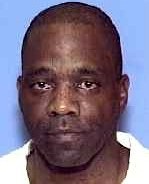
Robert Charles Ladd
Murderer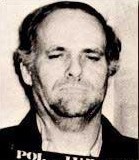 Ervil LeBaron
Murderer · USA · 1972
Ervil Morrell LeBaron (1925 to August 16, 1981) was the leader of a polygamous…
35 victims
Ervil LeBaron
Murderer · USA · 1972
Ervil Morrell LeBaron (1925 to August 16, 1981) was the leader of a polygamous…
35 victims
 Brian Kevin Rosenfeld
Murderer · USA · 1985
Brian Kevin Rosenfeld Brian Kevin Rosenfeld was sentenced to three concurrent l…
23 victims
Brian Kevin Rosenfeld
Murderer · USA · 1985
Brian Kevin Rosenfeld Brian Kevin Rosenfeld was sentenced to three concurrent l…
23 victims
 Marvin Gray
Murderer · USA · 1975
Marvin Gray was convicted killer who claimed responsibility for 23 slayings and…
23 victims
Marvin Gray
Murderer · USA · 1975
Marvin Gray was convicted killer who claimed responsibility for 23 slayings and…
23 victims
 Yahweh ben Yahweh
Murderer · USA · 1980
Yahweh ben Yahweh was born and legally named Hulon Mitchell Jr. (October 27, 19…
23 victims
Yahweh ben Yahweh
Murderer · USA · 1980
Yahweh ben Yahweh was born and legally named Hulon Mitchell Jr. (October 27, 19…
23 victims
 Norman Timberlake
Murderer · USA · 1993
Norman Timberlake and a friend drove from New Albany, Indiana to Indianapolis i…
1 victim
Norman Timberlake
Murderer · USA · 1993
Norman Timberlake and a friend drove from New Albany, Indiana to Indianapolis i…
1 victim
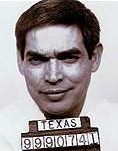 Juan Raul Garza
Murderer · USA / Mexico · 1990
Juan Raul Garza was executed by lethal injection by the U.S. Government at Indi…
8 victims
Juan Raul Garza
Murderer · USA / Mexico · 1990
Juan Raul Garza was executed by lethal injection by the U.S. Government at Indi…
8 victims
 Juan Salvez Soria
Murderer · USA · 1985
June 28, 1985 — Allen Bolden disappeared; his body was later found in a wooded…
1 victim
Juan Salvez Soria
Murderer · USA · 1985
June 28, 1985 — Allen Bolden disappeared; his body was later found in a wooded…
1 victim
 DeVernon LeGrand
Serial killer · USA · 1963
DeVernon LeGrand, who called himself a bishop and headed St. John’s Pentecostal…
12 victims
DeVernon LeGrand
Serial killer · USA · 1963
DeVernon LeGrand, who called himself a bishop and headed St. John’s Pentecostal…
12 victims
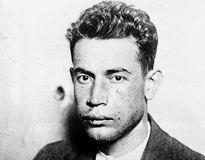 José de León Toral
Murderer · Mexico · 1928
José de León Toral (Matehuala, 23 December 1900 — Mexico City, 9 February 1929)…
1 victim
José de León Toral
Murderer · Mexico · 1928
José de León Toral (Matehuala, 23 December 1900 — Mexico City, 9 February 1929)…
1 victim
- Gender
- male
- Country
- USA
- Location
- Smith County, Texas, USA
- Date of birth
- March 19, 1957
- Age at first offence
- 21
- Characteristics
- robbery, arsons, drugs
- Victim profile
- Vivian Thompson and her infant children, Latoya and Maurice / Vickie Ann Gardner, 38
- Method of murder
- Strangulation
- Date(s) of murder
- October 25, 1978 / September 25, 1996
- Years active
- 1978–1996
- Date of arrest
- —
- Status
-
Sentenced to death
Sentenced to death on August 29, 1997
Case record: Robert Charles Ladd
Identity
Robert Charles Ladd was a Black man. He had black hair.
Background
Ladd had prior prison records in the Texas Department of Criminal Justice (TDCJ):
- TDCJ #247851, received 4/24/75, Dallas County; charge and sentence were unknown; discharged 1/27/76.
- TDCJ #302909, received 3/21/80, Dallas County; life sentence for murder; released under mandatory supervision to Tyler on 10/13/92.
Ladd had prior occupation as a barber in Dallas, Texas. He had prior history as an employee and a client of a rehabilitation center where Vickie Ann Gardner worked.
Prior criminal history
On Aug. 16, 1974, Ladd pleaded guilty to unauthorized use of a motor vehicle and received a four-year sentence, which was probated. On April 8, 1975, Ladd’s probation was revoked and his sentence was reduced to two years in prison.
On Sept. 8, 1980, Ladd pleaded guilty to two charges of murder, one charge of arson, and one charge of theft. He received:
- a 40-year prison sentence for each charge of murder,
- a 20-year prison sentence for the arson charge,
- and a 10-year sentence for the theft charge.
On Jan. 13, 1984, Ladd pleaded guilty to another charge of murder and received a 40-year prison sentence.
Except for additional victims, the murder and arson offenses were described as virtually identical to the murder of Gardner in 1996.
On Oct. 25, 1978, a fire was discovered in the Dallas, Texas, apartment of Vivian Thompson. The bodies of Thompson and her infant children, Latoya and Maurice, were found inside.
The offence
On Sept. 25, 1996, firemen responding to a fire in Vickie Ann Gardner's apartment found her on the floor. Her wrists were bound together in front of her. The fire had been set on or near her body, probably on bedding placed between her legs. She had been severely burned and suffered head wounds.
Gardner died of strangulation. An autopsy revealed that Gardner died as a result of strangulation and had sustained blunt force trauma to the head. A vaginal smear revealed the presence of spermatozoa.
Gardner’s apartment had been ransacked and several items were missing, including a microwave oven, a combination television/video recorder, jewelry, and two telephones.
Several items were later described as stolen following the murder, including electronic items, kitchen appliances, jewelry, and food. Prior to her death, Gardner’s legs and wrist had been bound by a cord.
In the procedures described, the capital murder occurred during the commission of burglary/robbery/arson/sexual assault. Ladd was indicted for the capital offense of murdering Vickie Ann Gardner during a burglary/robbery/arson/sexual assault.
Investigation
Firemen responding to the fire found Gardner with wrists bound together.
DNA tests later showed that spermatozoa found in Gardner's body was consistent with Ladd's. DNA tests also indicated Ladd was in the group that could have produced the spermatozoa found in the vaginal smear.
A fingerprint lifted from the microwave oven that had been missing from Gardner's apartment matched Ladd’s, and a palm print lifted from a kitchen cabinet in Gardner’s apartment matched Ladd.
Trial
Indictment and conviction
Ladd was indicted in the 114th District Court of Smith County, Texas, for the capital offense of murdering Vickie Ann Gardner during a burglary/robbery/arson/sexual assault.
On Aug. 26, 1997, Ladd was convicted of capital murder. On Aug. 26, 1997, following a separate punishment hearing, and based on the jury's answers to the special issues presented during that hearing, the trial court assessed Ladd's punishment at death by lethal injection.
Punishment phase
At the sentencing phase, the State presented 11 witnesses, including testimony that Ladd had previously committed a triple murder and testimony by two psychiatrists that, in their opinion, Ladd constituted a continuing danger to society.
The defense did not present evidence at that phase.
The jury answered the special issues as follows:
- the killing of Gardner was deliberate;
- there was a probability Ladd would commit acts of criminal violence that would constitute a continuing danger to society;
- and there was not sufficient mitigating evidence to justify imposing a sentence of life imprisonment.
Sentence
On Aug. 27, 1997, the trial judge sentenced Ladd to death. The trial court assessed Ladd's punishment at death by lethal injection.
Appeals
Texas Court of Criminal Appeals
The Texas Court of Criminal Appeals affirmed the conviction and sentence on Oct. 6, 1999. Ladd v. State, 3 S.W.3d 547 (Tex. Crim. App. 1999), cert. denied, 529 U.S. 1070, 120 S.Ct. 1680, 146 L.Ed.2d 487 (2000).
The trial court conducted an evidentiary hearing on Ladd’s application on 11 June 1999. On 15 December 1999, the Texas Court of Criminal Appeals adopted the trial court’s proposed findings of fact and conclusions of law and denied the application. Ex Parte Ladd, No. 42,639-01 (Tex. Crim. App. 1999).
On Dec. 15, 1999, the Court of Criminal Appeals denied Ladd's state habeas corpus petition.
Ladd filed a successive state habeas petition on April 4, 2003. The Court of Criminal Appeals dismissed it for abuse of the writ on April 17, 2003.
United States Supreme Court
The Supreme Court denied Ladd's petition for writ of certiorari.
Ladd then attempted to file a petition for writ of certiorari in the United States Supreme Court but missed his deadline. On March 24, 2003, the Court denied his unopposed motion for extension of time to file the petition for writ of certiorari.
Federal habeas corpus and Fifth Circuit
Ladd sought federal habeas corpus relief in the district court in Tyler. That court denied the writ on Oct. 24, 2001.
Ladd appealed, and on Oct. 24, 2002, the United States Court of Appeals for the Fifth Circuit affirmed.
The appeal was from the denial of habeas relief concerning a Texas capital murder conviction for which a death sentence was imposed. The district court had granted a Certificate of Appealability (COA) on two issues:
- whether Robert Charles Ladd was denied the right to a fair and impartial jury because of the prosecution's "shuffle" of the venire; and
- whether Ladd was denied effective assistance of counsel at trial.
On Oct. 24, 2002, the Fifth Circuit decision stated: “AFFIRMED.”
Key procedural findings and contested issues in the appeal
The primary issue addressed was whether the State’s request, as permitted by Texas law, for a “jury-shuffle” at the start of jury selection was impermissibly motivated by race.
The venire consisted of more than 200 persons. Ladd noted that he was black and the victim was white.
Ladd contended that Batson extended to a jury-shuffle and that Batson was violated because the State requested and obtained a shuffle of the venire in which seven of the first 34 potential jurors were black. In his objection at trial to the requested shuffle, Ladd did not mention Batson or the Equal Protection Clause, but objected on the ground that the racial make-up of the venire would be altered.
The trial judge asked the State to articulate its reasons for the shuffle-request “out of an abundance of caution.” The State responded that the request “had nothing to do with race” and offered the following justifications:
- the first section of venire members consisted of “a higher concentration of individuals with criminal histories (“we have fourteen of the first forty-two individuals that show some criminal history or same address”)”;
- not as many people wearing coats and ties;
- only a small number of elderly professional people; and
- a probation officer the State wanted to avoid having to strike.
In objecting to the State's shuffle request, Ladd stated: “Seven of the first several [potential jurors] are black panel members, and this will change the racial makeup”.
The Fifth Circuit held that, assuming the Teague issue did not bar Ladd’s Batson claim and assuming Batson applied to jury-shuffling, Ladd did not show under AEDPA that the Court of Criminal Appeals was unreasonable in holding there was no Batson violation.
Ineffective assistance of counsel claim in appeal
In his state and federal habeas petitions, Ladd claimed ineffective assistance of counsel at sentencing. Ladd asserted that trial counsel was ineffective for failure to fully investigate mitigating evidence and to present it at the sentencing phase.
The Court of Criminal Appeals, adopting the trial court's findings and conclusions, acknowledged counsel’s duty to investigate mitigating evidence in a capital case. It determined that counsel did so, that the investigation did not fall below an objective standard of reasonableness or violate constitutional standards for effective assistance, and that Ladd received effective assistance of counsel at the sentencing phase.
The district court similarly rejected the ineffective assistance claim. Although it concluded certain conduct by defense counsel at the sentencing phase constituted deficient performance, it held there was no reasonable probability the result would have been different.
The Fifth Circuit discussed counsel’s efforts and the alleged failure to obtain Ladd’s juvenile records and earlier juvenile records related to his life as a child. The opinion stated that the Texas court’s decision that counsel’s performance was not deficient may have been unreasonable under AEDPA, but held that the Texas court’s decision that Ladd suffered no prejudice was not unreasonable under AEDPA. The Fifth Circuit concluded that Ladd suffered no prejudice and therefore affirmed the denial of habeas relief.
Other case details
Co-defendants and related testimony
The case materials included co-defendants: Johnny Roberson.
Edwin Wright pawned the missing combination television/video recorder and one of the telephones on the day firemen responded to the fire (25 September). Wright testified he received the items from J.T. Robertson.
Also on 25 September, other items identified as Gardner’s were recovered from Robertson’s apartment.
Robertson testified:
- that sometime between 9:00 and 10:00 p.m. on 24 September 1996, he received the TV/VCR combination, cordless telephone, microwave oven, and clock from Ladd in exchange for five $20 rocks of crack cocaine; and
- that early the next morning, Ladd returned with additional electronic products and a pillowcase stuffed with various food products, and Robertson gave Ladd two $20 rocks of crack cocaine for the items.
Ladd was linked to the stolen property, and his palm print was found on a kitchen cabinet in Gardner’s apartment.
Ladd was arrested the same day the items were recovered from the pawn shop and Robertson’s apartment (25 September). Various pieces of jewelry on his person were identified as Gardner’s.
Dates and names appearing in connection with the case
- The Attorney General Greg Abbott provided information on Robert Charles Ladd, who was scheduled to be executed after 6 p.m. on Wednesday, April 23, 2003.
- The capital murder sentencing date was referenced as “On Aug. 27, 1997,” and the scheduled execution date narrative was associated with a media advisory dated Monday, April 21, 2003.
Victim
Vickie Ann Gardner was described as 38 years old and as a white female in a Tyler, Texas apartment. Her death occurred after the Sept. 25, 1996 fire response.
Linking of crime theories and evidence
The capital murder was described as occurring during the commission of burglary, robbery, sexual assault, and arson. DNA tests, spermatozoa evidence, and bound-wrist findings were tied to Ladd.
Timeline
- Sept. 25, 1996 — Firemen responding to a fire in Vickie Ann Gardner’s apartment found her on the floor with wrists bound together; Gardner died of strangulation and had sustained blunt force trauma to the head; her apartment was ransacked and items were missing including a microwave oven, a combination television/video recorder, and two telephones.
- Oct. 13, 1992 — Ladd was released under mandatory supervision to Tyler (from a life sentence in TDCJ #302909).
- Aug. 26, 1997 — Ladd was convicted of capital murder.
- Aug. 27, 1997 — Ladd was sentenced to death by lethal injection.
- Jun. 11, 1999 — The trial court conducted an evidentiary hearing on Ladd’s application.
- Oct. 6, 1999 — The Texas Court of Criminal Appeals affirmed the conviction and sentence.
- Dec. 15, 1999 — The Court of Criminal Appeals denied Ladd’s state habeas corpus petition.
- Oct. 24, 2001 — The district court denied the writ of habeas corpus in Tyler.
- Oct. 24, 2002 — The United States Court of Appeals for the Fifth Circuit affirmed the denial of habeas relief.
- March 24, 2003 — The Supreme Court denied Ladd’s unopposed motion for extension of time to file a petition for writ of certiorari.
- April 17, 2003 — The Court of Criminal Appeals dismissed Ladd’s successive state habeas petition for abuse of the writ.


Spotted an error, or have more information about this case?