Paul Stephen Clinton
Homicide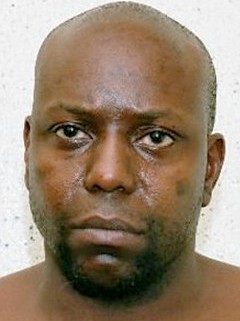 Peter Bryan
Homicide · United Kingdom · 1993
Peter Bryan was a schizophrenic cannibal who was sentenced to closed psychiatri…
3 victims
Peter Bryan
Homicide · United Kingdom · 1993
Peter Bryan was a schizophrenic cannibal who was sentenced to closed psychiatri…
3 victims
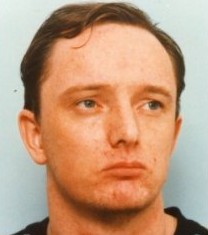 Robert Napper
Homicide · United Kingdom · 1992
Robert Clive Napper (born 25 February 1966) was a paranoid schizophrenic convic…
3 victims
Robert Napper
Homicide · United Kingdom · 1992
Robert Clive Napper (born 25 February 1966) was a paranoid schizophrenic convic…
3 victims
 Jon Venables
Homicide · United Kingdom · 1993
Jon Venables was born 13 August 1982. He was a 10-year-old boy when he abducted…
1 victim
Jon Venables
Homicide · United Kingdom · 1993
Jon Venables was born 13 August 1982. He was a 10-year-old boy when he abducted…
1 victim
 Robert Sartin
Homicide · United Kingdom · 1989
Robert Sartin was found to be unfit to stand trial and was being held in Moss S…
1 victim
Robert Sartin
Homicide · United Kingdom · 1989
Robert Sartin was found to be unfit to stand trial and was being held in Moss S…
1 victim
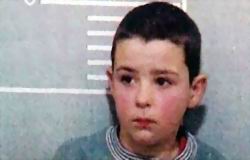 Robert Thompson
Homicide · United Kingdom · 1993
Robert Thompson (born 23 August 1982) abducted, tortured and murdered James Bul…
1 victim
Robert Thompson
Homicide · United Kingdom · 1993
Robert Thompson (born 23 August 1982) abducted, tortured and murdered James Bul…
1 victim
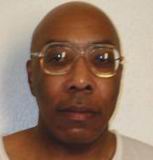 Andrew Sasser
Murderer · USA · 1993
Andrew Sasser was convicted of capital felony murder and sentenced to die by le…
1 victim
Andrew Sasser
Murderer · USA · 1993
Andrew Sasser was convicted of capital felony murder and sentenced to die by le…
1 victim
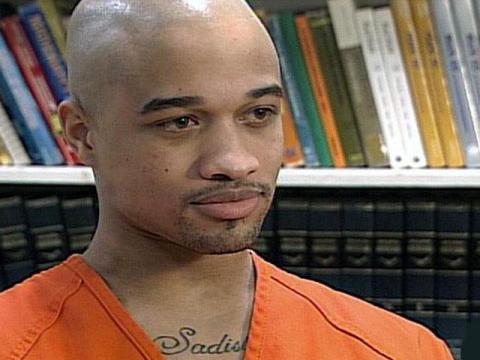 Ulysses Handy
Murderer · USA · 2006
Ulysses Handy III was 24 when he walked into court and entered pleas regarding…
3 victims
Ulysses Handy
Murderer · USA · 2006
Ulysses Handy III was 24 when he walked into court and entered pleas regarding…
3 victims
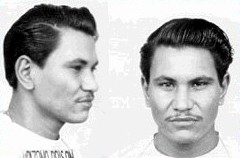 Angel Serna
Murderer · USA · 1947
Angel Serna was executed by asphyxiation-gas in Arizona on July 29, 1950. Angel…
1 victim
Angel Serna
Murderer · USA · 1947
Angel Serna was executed by asphyxiation-gas in Arizona on July 29, 1950. Angel…
1 victim
 Amy Lee Black
Homicide · USA · 1990
Amy Lee Black was 16 years and six months old at the time of the crime. She was…
1 victim
Amy Lee Black
Homicide · USA · 1990
Amy Lee Black was 16 years and six months old at the time of the crime. She was…
1 victim
 Randy Garcia
Murderer · USA · 1993
Randy Garcia was a 37-year-old man. He wrote poetry while on death row. On May…
1 victim
Randy Garcia
Murderer · USA · 1993
Randy Garcia was a 37-year-old man. He wrote poetry while on death row. On May…
1 victim
 Diane Spencer
Murderer · USA
Diane Louise Spencer was sentenced to life in prison in Michigan on March 13, 1…
1990 victims
Diane Spencer
Murderer · USA
Diane Louise Spencer was sentenced to life in prison in Michigan on March 13, 1…
1990 victims
- Gender
- male
- Country
- United Kingdom
- Location
- London, England, United Kingdom
- Date of birth
- October 19, 1971
- Age at first offence
- 18
- Characteristics
- juvenile (17), robbery
- Victim profile
- T wo security guards
- Method of murder
- B urns and asphyixiation (poured white spirit over them and tossed in lit matches)
- Date(s) of murder
- August 2, 1989
- Years active
- 1989
- Date of arrest
- —
- Status
-
Imprisoned
Sentenced to 20 years in prison on February 28, 1990
Case record
Background
Paul Stephen Clinton was born on 19 October 1971. He was 17 at the time the offence was committed.
Relatives of the two deceased victims were contacted and expressed the view that the full sentence should be served. They opposed any reduction in the tariff.
The offence
Paul Stephen Clinton and four others intended to commit a robbery at an amusement arcade.
The instigator of the offending, Victor Castigador, had a grievance against the proprietors of the property. The relief manager and a cashier were carrying out the usual cashing-up process when the defendants arrived at the premises.
It was alleged that both Castigador and the defendant produced guns and threatened the occupants. Castigador obtained keys for the safe from the relief manager and it was alleged that Mr Clinton held a gun to that man's neck. The keys were used to unlock the safe and cash was taken.
Both the relief manager and cashier were forced out of the office and into the vault. At that stage the two security guards were forced into the inner cage of the vault and told to stay on their knees by a man holding a gun. The two guards were then tied up.
White spirits were poured over the heads of the staff. Castigador and Clinton then lit matches and threw them into the cage and retreated, locking the door.
At 7.55am the following morning staff discovered the two victims of the fire and both the relief manager and cashier who had survived.
Both security guards died from asphyxia and inhalation of the fire fumes.
Trial
On 28 February 1990, Paul Stephen Clinton was convicted of two counts of murder and two counts of attempted murder, and, in addition, one count of robbery arising out of an incident on 2 August 1989 at an amusement arcade.
The tariff recommended by both the trial judge and the Lord Chief Justice was 20 years. This tariff was fixed by the Secretary of State in January 1991. This tariff was reaffirmed by the Minister on 4 August 1999 and 19 March 2001.
The trial judge noted that Mr Clinton was heard joking about the whole incident a few days later. The trial judge also noted that Mr Clinton had at the time of the offence already received a separate six-year sentence for robbery.
Sentencing
The decision of the Lord Chief Justice on the minimum term in the case of Paul Stephen Clinton was made in Royal Courts of Justice on 11 December 2003, in accordance with the Practice Direction dated 27 July 2000.
The most recent report prepared on Mr Clinton was prepared by HMP Shepton Mallet and was dated 20 August 2003.
The report noted that Mr Clinton's progression at an earlier juncture of his sentence may be partly attributed to policy changes within the Lifer System as much as a reaction to his progress. The Report further noted that, notwithstanding the systematic change, Mr Clinton had made significant personal progress in the last five or six years, which had contributed to his being held in Category C conditions.
The previous reports highlighted that Mr Clinton had consistently denied guilt for the murder, although the more recent reports indicated that he now understood why he may be guilty by joint enterprise and also understood why this could have resulted in his conviction. However, Mr Clinton continued to refute the evidence of the victims and denied his involvement in the setting alight of the four victims.
He had expressed remorse about the deaths and stated that the offence disgusted him.
He stated that the biggest regret of all for him was the fact that lives were needlessly taken and wasted and destroyed (letter from Mr Clinton dated 5 August 2003).
Mr Clinton had a gift for languages and had studied four or five languages. He also aspired to undertake a course in photography. He had been awaiting a course in the Gymnasium, which it appeared he was unable to take up due to his impending transfer to HMP Channings Wood (report 20 August 2003).
Earlier reports indicated that, in spite of Mr Clinton's intelligence, he was unemployed for a long time by choice, questioning the motive for work at HMP Grendon (Progress Report dated 8 June 2002).
Representations on Behalf of Mr Clinton were made by his solicitors in a statement dated 2 September 2003. The representations sought to highlight Mr Clinton's childhood, which was punctuated by physical abuse and violence in the environment of his father. The statement highlighted the detrimental effect on Mr Clinton of the lengthy custodial sentence, in particular having regard to his young age.
The representations made clear that he sought an oral hearing.
The statement highlighted Mr Clinton's transfer to a Category C prison seven years ahead of his tariff expiry date, although his case could not be referred to the Parole Board for another three years. They submitted that this illustrated, in accordance with the Prison Service's own guidelines, that he had successfully completed the bulk of his offending behaviour work.
The statement further highlighted Mr Clinton's understanding of the causes of his criminal behaviour and his acceptance of responsibility for his involvement in the offence.
Despite the representations of the offender's solicitors, the tariff imposed was considered appropriate. The Lord Chief Justice saw nothing in the papers before him to justify any alteration of the tariff because of any changes in the offender's behaviour. The Lord Chief Justice stated that he did not consider that considerations relating to the offender's welfare required a lower tariff to be set.
The Lord Chief Justice considered whether he would be assisted by oral representations and stated that he was satisfied they would not assist in this case.
Victims and injuries
Yuri Gomez, the relief manager, suffered about 30% full thickness body surface burns, including the whole of the left arm from shoulder to fingers, patches on the face, right arm, back and chest. He also suffered severe inhalation burn injury, which complicated his asthma and required immediate artificial ventilation by medical services.
Deborah Alvarez, the cashier, suffered about 28% mixed depth body surface burns, mainly full thickness on her face, both arms and both hands, back, buttocks and thighs. She also suffered smoke inhalation burn of the upper airways and lungs which caused severe respiratory failure and which required the immediate use of artificial ventilation. She was hypothermic on admission to hospital.
One of the victims who survived, Mr Gomez, made a statement dated 16 January 2003 in which he articulated his opposition to any reduction in the tariff of 20 years. Mr Gomez had been left disabled by the incident. He had only one lung and was dependent on oxygen and had severe burns and scarring.
Ms Alvarez still suffered from injury to her windpipe and was difficult to understand. She was severely disfigured and only left her house once or twice a week. She constantly fell over because of injuries to her legs and continued to suffer fractures to her feet because of these falls.
Timeline
- 19 October 1971 — Paul Stephen Clinton was born.
- 2 August 1989 — Incident at an amusement arcade occurred.
- 28 February 1990 — Paul Stephen Clinton was convicted of two counts of murder, two counts of attempted murder, and one count of robbery.
- January 1991 — The tariff recommended by the trial judge and the Lord Chief Justice was fixed by the Secretary of State.
- 7 March 1990 — Trial judge’s report to the Home Secretary was dated.
- 8 June 2002 — Progress Report dated 8 June 2002 highlighted that Mr Clinton had been unemployed for a long time by choice.
- 4 August 1999 — The tariff was reaffirmed by the Minister.
- 16 January 2003 — Yuri Gomez made a statement opposing any reduction in the tariff of 20 years.
- 5 August 2003 — Letter from Mr Clinton dated 5 August 2003 stated his biggest regret.
- 2 September 2003 — Solicitors’ statement dated 2 September 2003 made representations on Mr Clinton’s behalf.
- 20 August 2003 — HMP Shepton Mallet report dated 20 August 2003 was prepared.
- 11 December 2003 — Decision of the Lord Chief Justice was made at the Royal Courts of Justice.
- 19 March 2001 — The tariff was reaffirmed by the Minister.
- 27 July 2000 — Practice Direction dated 27 July 2000 was referenced for the decision process.
Other details
The facts of the offence were drawn from the trial judge's report to the Home Secretary dated 7 March 1990.
The most recent progress report noted that Mr Clinton was held in Category C conditions.
The police spoke to Ms Alvarez (the cashier) who expressed the view that she did not believe that 12 years was a long enough to reflect the criminality of the behaviour.
The Lord Chief Justice stated he did not consider that considerations relating to the offender's welfare required a lower tariff to be set.
Spotted an error, or have more information about this case?