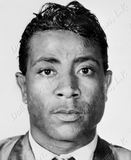
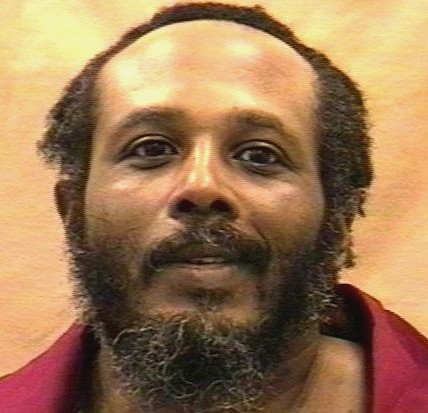
DeVernon LeGrand
Serial killer Donald Henry Gaskins
Serial killer · USA · 1969
Donald Henry Gaskins, also known as Donald “Pee Wee” Gaskins, was a serial kill…
200 victims
Donald Henry Gaskins
Serial killer · USA · 1969
Donald Henry Gaskins, also known as Donald “Pee Wee” Gaskins, was a serial kill…
200 victims
 Donald Harvey
Serial killer · USA · 1970
Donald Harvey was known as an American serial killer and a self-professed “Ange…
87 victims
Donald Harvey
Serial killer · USA · 1970
Donald Harvey was known as an American serial killer and a self-professed “Ange…
87 victims
 Ottis Toole
Serial killer · USA · 1961
Ottis Elwood Toole (sometimes misspelled as “Otis”) was an American serial kill…
65 victims
Ottis Toole
Serial killer · USA · 1961
Ottis Elwood Toole (sometimes misspelled as “Otis”) was an American serial kill…
65 victims
 William George Bonin
Serial killer · USA · 1972
William George Bonin was executed by lethal injection in California on February…
44 victims
William George Bonin
Serial killer · USA · 1972
William George Bonin was executed by lethal injection in California on February…
44 victims
 Gerald Stano
Serial killer · USA · 1969
Gerald Eugene Stano (September 12, 1951 – March 23, 1998) was executed by elect…
41 victims
Gerald Stano
Serial killer · USA · 1969
Gerald Eugene Stano (September 12, 1951 – March 23, 1998) was executed by elect…
41 victims
 Ray Elmer Miller
Murderer · USA · 1932
Ray Elmer Miller was a native of Nebraska and was 34 years old. He worked as a…
1 victim
Ray Elmer Miller
Murderer · USA · 1932
Ray Elmer Miller was a native of Nebraska and was 34 years old. He worked as a…
1 victim
 Samuel Clark Gallamore
Murderer · USA · 1992
Samuel Clark Gallamore was executed by lethal injection in Texas on January 14,…
3 victims
Samuel Clark Gallamore
Murderer · USA · 1992
Samuel Clark Gallamore was executed by lethal injection in Texas on January 14,…
3 victims
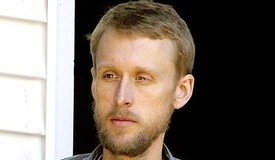 Christian Nielsen
Mass murderer · USA · 2006
Christian Nielsen pleaded guilty to four counts of murder and was sentenced to…
4 victims
Christian Nielsen
Mass murderer · USA · 2006
Christian Nielsen pleaded guilty to four counts of murder and was sentenced to…
4 victims
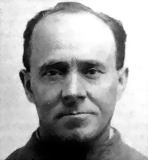 Frederick Guy Browne
Murderer · United Kingdom · 1927
Frederick Guy Browne was executed by hanging at Pentonville prison on May 31, 1…
1 victim
Frederick Guy Browne
Murderer · United Kingdom · 1927
Frederick Guy Browne was executed by hanging at Pentonville prison on May 31, 1…
1 victim
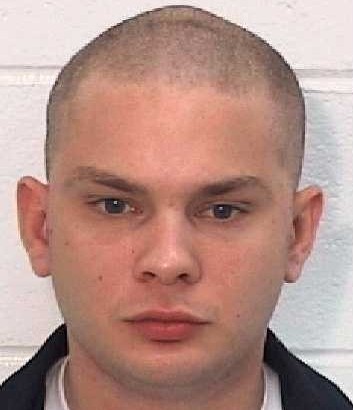 John Anthony Esposito
Murderer · USA · 1996
John Anthony Esposito was convicted in Georgia of murdering Lola Davis and rela…
3 victims
John Anthony Esposito
Murderer · USA · 1996
John Anthony Esposito was convicted in Georgia of murdering Lola Davis and rela…
3 victims
- Gender
- male
- Country
- USA
- Location
- New York/New Jersey, USA
- Date of birth
- 1924
- Age at first offence
- 39
- Characteristics
- convicted rapist, child abuse, rape, kidnapping, torture
- Victim profile
- Women (wives and members of his Brooklyn cult of begging nuns)
- Method of murder
- Shooting - Beating
- Date(s) of murder
- 1963 - 1976
- Years active
- 1963–1976
- Date of arrest
- May 1976
- Status
-
Died in custody
Sentenced to 25 years to life in prison, 1977; died in prison in 2006
Names
DeVernon LeGrand, who called himself a bishop and headed St. John’s Pentecostal Church of Our Lord in Brooklyn.
Background
DeVernon LeGrand presided over St. John’s Pentecostal Church of Our Lord in Crown Heights, Brooklyn. He organized the church about a decade before 1975 and established a headquarters in a four-story townhouse on Brooklyn Avenue that was occupied by eleven “nuns” and their 47 children, many fathered by LeGrand.
LeGrand was a New York native, born in 1925. He said he came to New York as a 12-year-old with his parents from Laurinburg, NC. He claimed he was ordained in 1954 on Long Island and said he got a doctorate in a psychology and theology from an unnamed institute in Newark.
LeGrand used a practice of recruiting teenage girls, described as “nuns” who solicited money for the church. Police said he recruited many teenage “nuns” through seduction, impregnating young women, then threatening them or their children if they refused to beg for money on the streets. Members of the group dressed in black and were seen around Grand Central Station. Some had been jailed on misdemeanor charges in New Jersey.
In 1966, LeGrand’s church purchased a 58-acre spread in the Catskills near White Sulphur Springs and converted it to a summer retreat. Complaints from neighbors described child abuse and health violations, wild parties, and indiscriminate gunfire. Children from the camp allegedly roamed through the countryside begging and stealing, while horses were allegedly cruelly beaten and left to starve. A church headquarters and a farm in the Catskills were used in the church’s activities.
Church members Gladys Stewart, 16, and her sister Yvonne, 18, testified for the prosecution in LeGrand’s bribery trial. They were later missing when the district attorney sought to use their testimony in the later rape case.
DeVernon LeGrand’s family business was later renamed St. Joseph’s Church of Christ and Home and was headed by his son Noconda LeGrand. The church was under investigation by the state attorney general.
The offence
Rape convictions involving the church
In 1975, the pastor, age 50, was convicted of raping one of the 17-year-old “nuns.” LeGrand and his 20-year-old son Noconda were convicted of kidnapping and rape that same year, and they received a sentence of five to 15 years in prison for LeGrand while his son got an eight-year prison term. Another account described LeGrand and a son being convicted of first-degree rape after they repeatedly sexually assaulted a 20-year-old woman in the four-story building at 222 Brooklyn Avenue in 1975.
LeGrand’s “final victim” was described as being raped in the Crown Heights “chapel” during August 1974.
Murder and dismemberment of teenage sisters
In 1976, the bodies of two more girls were found in a pond at LeGrand’s farm in the Catskills. LeGrand and a son were convicted of murdering them. One account stated the sisters were Gladys Stewart and her sister Yvonne Rivera (both described as teenage girls), and described that the dismemberment was connected to keeping the girls from testifying in the rape case.
A narrative account described events in the building at 222 Brooklyn Avenue. It said that when Gladys Stewart made it clear to Donald Stewart on Oct. 3, 1975, that she was leaving for good, Donald flew into a rage and LeGrand intervened. It said LeGrand detained both Stewart and her sister Yvonne Rivera, 16, who was visiting, and ordered the rest of the congregation downstairs to a first-floor meeting room, where he demanded they stay “until I tell you to come out.” Over the next two hours, from 6:30 p.m. to 8:30 p.m., LeGrand and another stepson kicked and beat the two teens. A LeGrand daughter allegedly told the flock, “Daddy’s stomping Gladys.” The narrative said Holman heard a woman scream, and the group began to sing hymns and stayed until 2:30 a.m., when LeGrand came in and sent them to bed.
The same narrative account said that weeks later LeGrand boasted he had killed and dismembered the girls and had their remains incinerated at his upstate farm. It quoted LeGrand saying:
“You all remember Gladys,” he said. “Daughter or no daughter, you'll join the bitch. You know what I do with bitches. I burn them. . . . That little bitch [Yvonne] came down to see about her sister and I got her, too.”
A church handyman, Frank Holman, said he was ordered to load two big garbage bags into his car and drive them to the farm. The narrative said that when he got there, something had spilled from a bag and that it was Yvonne Rivera’s severed head. It said Holman dumped the jumble of body parts into an old bathtub, doused them with paint thinner, and set the contents on fire, with the narrative stating they burned for two hours. It further said Holman put the ashy remains in a garbage can, tossed it into a pond near the camp, later led investigators to where the bone fragments were submerged, and that he enlisted the help of an expert from the Museum of Natural History to piece together fragments. The narrative said LeGrand and stepson Steven LeGrand were convicted of the double homicide and “each got 25 to life.”
The narrative also stated that state police dug up the ranch in mid-December 1975 but came away empty-handed. It said three months later, on March 6, assorted bones and bits of cartilage were found in Briscoe Lake, and Brooklyn raiding parties turned up human bloodstains in the Crown Heights townhouse. It said that by April, state police were confident LeGrand had murdered a dozen or more victims, dumping some of them in Briscoe Lake, and that the list included three wives, two step-children, the Stewart sisters, and two male employees of his church.
Murder convictions involving former wives
In 1977, LeGrand was convicted of murdering his former wives, who died in 1963 and 1970. One account described LeGrand being found guilty of murdering his former wives, who died in 1963 and 1970, and said he was serving life in prison. Another account said LeGrand was convicted of having similarly murdered and dismembered his wife in 1970 in the Brooklyn building.
LeGrand was charged with killing his first wife, Ann Sorise, and his second wife, Ernestine Timmons.
Allegations, arrests, and cases not prosecuted
LeGrand was arrested on charges of kidnapping, assault, and firearms possession in 1965. Three years later, police accused him of snatching a 23-year-old woman from her home, assaulting and raping her before she managed to escape; neither case was prosecuted.
In 1975, LeGrand was convicted of bribery and sexual misconduct with a 17-year-old girl. That same year, along with his 20-year-old son Noconda, he was convicted of kidnapping and rape.
Investigation
Authorities suspected sexual assault was only the tip of the iceberg. In October 1968, authorities raided the camp and seized drug paraphernalia, photographed clogged toilets, and described general squalor. LeGrand’s troop allegedly returned each summer “without fail, immune to public opinion.”
The narrative described how children from the camp allegedly begged and stole while horses were allegedly beaten and left to starve. The narrative described that two cult insiders, Kathleen Kennedy and the church handyman Frank Holman, came forward saying LeGrand had killed his own daughter-in-law Gladys Stewart, 18, in a fit of rage.
It also described multiple police searches for bodies in the church basement: once in 1965 after three members vanished, and again 10 years later while looking for the remains of two teenage sisters.
In the later proceedings, a prosecutor named Michael Newton was referenced in connection with an encyclopedia entry titled “Hunting Humans Back to Brooklyn,” attributed to Michael Newton.
Arrest
LeGrand was arrested in 1965 on charges of kidnapping, assault, and firearms possession.
Trial
Bribery and sexual misconduct trial (1975)
Kidnapping and rape convictions (1975)
In 1975, LeGrand and his 20-year-old son Noconda were convicted of kidnapping and rape. LeGrand received a sentence of five to 15 years in prison, while Noconda got an eight-year prison term.
Another account described the 1975 rape conviction as involving first-degree rape after LeGrand and a son repeatedly sexually assaulted a 20-year-old woman in the building that housed the church and family.
Double homicide trial (1977)
In May 1976, LeGrand was indicted on four counts of murder, including the Stewarts and two of his wives who were slain in 1963 and 1970. One account stated that the indictment included the Stewarts and two wives.
The narrative described that LeGrand and stepson Steven LeGrand were convicted together in the Stewart case on May 7, 1977, and that both drew prison terms of 25 years to life.
Wife murder conviction trial (1977)
In 1977, LeGrand was found guilty of murdering his former wives who died in 1963 and 1970. The narrative also said that later in 1977 he was convicted of having similarly murdered and dismembered his wife in 1970 in the Brooklyn building.
Sentencing
In 1975, LeGrand was convicted in connection with bribery and sexual misconduct with a 17-year-old girl, and was convicted in connection with kidnapping and rape with a sentence described as five to 15 years in prison. His son received an eight-year prison term.
In 1977, LeGrand and stepson Steven LeGrand were convicted of the double homicide and each received terms of 25 years to life. Another account stated that LeGrand was sentenced to 25 years to life in prison in 1977.
The overall account described that LeGrand was serving life in prison for the three murder convictions and the rape.
Appeals
No appeal information was provided.
Outcome
DeVernon LeGrand served his prison sentences. He died in prison in 2006 at age 82.
Aftermath
The family business was later renamed St. Joseph’s Church of Christ and Home and was headed by LeGrand’s son Noconda, a convicted rapist. It was under investigation by the state attorney general, which sought to know why Mindy LeGrand was lying about being an Episcopal sister and raising funds for an orphanage that did not exist. The attorney general’s office served LeGrand with a subpoena after a front-page expose attributed to “The Post” was published.
The city Health Department sent inspectors to 222 Brooklyn Avenue after claims that the church took in orphans and provided child care. Inspectors found no evidence of either. It also stated that Quomenters insisted that nine youths who lived in the house were “away at summer camp” on the family’s farm in White Sulphur Springs.
The narrative also included the claim that the farm location was the same place where Holman burned up the Rivera sisters’ bodies, and described that the previously abandoned farm remained linked to the investigation.
Parole information described that LeGrand was to be considered for parole in October, after reaching the minimum 25 years of his term, and that he was first considered for parole in early 2001.
LeGrand addressed the parole commissioners at the Shawangunk Correctional Facility in Wallkill, N.Y., and said:
“I was a minister, and I liked a lot of women,” he told the parole commissioners interviewing him at the Shawangunk Correctional Facility in Wallkill, N.Y., where he is confined. But he said he had “nothing to do with that woman,” referring to the rape victim. He blamed the sisters’ killings on the husband of one of them. And his own wife’s killing? “She's in Africa,” he said. “She left and went to Africa.”
The parole commissioners denied release and said:
“Your conduct indicates a depraved indifference for human life and no respect for the law.”
At 222 Brooklyn Avenue, St. Joseph’s Church of Christ and Home listed the Rev. Noconda LeGrand among the ministers.
Other details
People mentioned
Gladys Stewart, 16 at the time of the bribery trial; later described as 18 in a narrative account; daughter-in-law to LeGrand’s stepson Donald Stewart. Yvonne Rivera, 18 at the time of the bribery trial testimony; later described as 16. Noconda LeGrand, LeGrand’s son; convicted in connection with kidnapping and rape. Steven LeGrand, 26-year-old son charged with murdering the Stewart sisters and two men employed by LeGrand; convicted with LeGrand in the Stewart case. Ann Sorise, LeGrand’s first wife; charged in relation to killing in 1963. Ernestine Timmons, LeGrand’s second wife; charged in relation to killing in 1970. Donald Stewart, described as LeGrand’s 20-year-old stepson and husband of Gladys Stewart; flew into a rage after Gladys decided she was leaving. Kathleen Kennedy, described as a cult insider who came forward. Frank Holman, described as church handyman; described as ordered to handle disposal of remains; joined the church after leaving his job as an autopsy assistant with the Brooklyn Medical Examiner’s Office. Harold Rosenbaum, described as a former Brooklyn prosecutor. Eugene Jarkow, described as having investigated LeGrand for the Brooklyn District Attorney’s Office. Michael Newton, referenced as an Encyclopedia of Modern Serial Killers author. Brad Hamilton, attributed in connection with “NYPost.com” in 2010. Cathy Brown, described as the sister of Elizabeth Brown.
Elizabeth Brown and a 1974 incident (narrative)
Elizabeth Brown, 15, met LeGrand at “Adventurers Inn,” described as a second-rate amusement park in College Point, Queens, in 1974. The narrative described that LeGrand arrived in a chauffeur-driven, cream-colored Cadillac with its own bar and TV, and that he stepped out. It described him as “pastor,” DeVernon “Doc” LeGrand, 50, and said he rolled up to the park at night when she was with friends. It described that he recruited her to his commune in Brooklyn where he allegedly plied teens with drugs and booze, seduced them, and forced them to panhandle in nun garb. It described that Brown became LeGrand’s concubine and beggar, solicited subway riders by day, and had sex with him and “dropp[ed] angel dust by night.” It quoted Cathy Brown:
“She had a good heart but was very angry, very belligerent,” said Brown's sister Cathy. “Our father was sick with cancer and dying. She was looking for stability. A kid like that attracts dirtbags like magnets.”
Missing “parishioners” and allegations
The narrative stated that as many as 23 additional “parishioners” went missing and could not be located, and that police wondered whether LeGrand had killed them.
Description of alleged abuse and conditions at the church
The narrative described that for years kids were kept in cages, starved and beaten. It described a big meat freezer in the basement that was “supposedly where he'd put the bodies,” and said there was “no proof of that.” It described how LeGrand would pile the phony nuns into his Cadillac each morning and drop them off at locations across the city. It also described church income as an estimated $250,000 a year and said it was enough to buy the Crown Heights building and the 58-acre farm, which LeGrand paid for with rolls of coins.
It also described that there were always parties and that when DeVernon “wasn’t in a rage,” life could be good with tailored outfits, luxury cars, and gambling trips to Atlantic City, and that booze and drugs flowed freely.
Police and witness commentary (narrative quotes)
Eugene Jarkow was quoted describing the conditions:
“They had these tiny little rooms. The kids would stay with their mothers or just run around everywhere,” said Eugene Jarkow, who investigated LeGrand for the Brooklyn District Attorney's Office. “The street-level floor is where they had the church. There was a big meat freezer in the basement, supposedly where he'd put the bodies, but there was no proof of that.”
Harold Rosenbaum was quoted describing Vivian Roye:
“was olive-skinned and passed as Italian -- she did very well on Mulberry Street,” recalled former Brooklyn prosecutor Harold Rosenbaum.
Jarkow was quoted about his view of LeGrand:
“I liked him -- and I knew the horrors he committed, the grief he brought on this earth,” said Jarkow. “The guy could have sold me anything. He was very charming. . . . He was like an entertainer.”
Cathy Brown was quoted:
“There was always a party at that place.”
Other individuals
Mindy LeGrand was mentioned as pulling “the same old sister act” in Little Italy. Quomenters and the Rev. Noconda LeGrand were also mentioned in the aftermath narrative. Vivian Roye was mentioned as a fake sister who was described as passing as Italian and doing well on Mulberry Street.
Spotted an error, or have more information about this case?