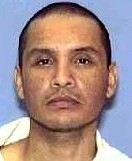
Gilberto Reyes
Murderer Russell Ellwood
Murderer · USA · 1991
Russell Ellwood was a former taxi driver. Authorities suspected him of killing…
20 victims
Russell Ellwood
Murderer · USA · 1991
Russell Ellwood was a former taxi driver. Authorities suspected him of killing…
20 victims
 Robert Martines Perez
Murderer · USA · 1994
Name: Robert Martines Perez · Other name used in proceedings: Robert Martinez P…
15 victims
Robert Martines Perez
Murderer · USA · 1994
Name: Robert Martines Perez · Other name used in proceedings: Robert Martinez P…
15 victims
 Billy Frank Vickers
Murderer · USA · 1993
Billy Frank Vickers Vickers was executed by lethal injection in Texas on Januar…
14 victims
Billy Frank Vickers
Murderer · USA · 1993
Billy Frank Vickers Vickers was executed by lethal injection in Texas on Januar…
14 victims
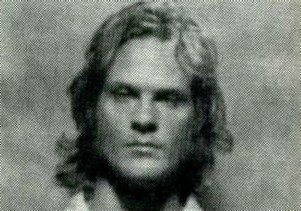 Michael Dee Mattson
Murderer · USA · 1978
Michael Dee Mattson was convicted of multiple offenses arising from the kidnapp…
3 victims
Michael Dee Mattson
Murderer · USA · 1978
Michael Dee Mattson was convicted of multiple offenses arising from the kidnapp…
3 victims
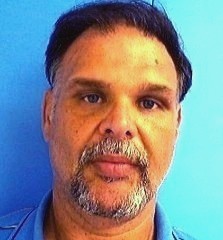 Patrick Burris
Spree killer · USA · 2009
Patrick Tracy Burris (August 8, 1967 – July 6, 2009) was an American spree kill…
5 victims
Patrick Burris
Spree killer · USA · 2009
Patrick Tracy Burris (August 8, 1967 – July 6, 2009) was an American spree kill…
5 victims
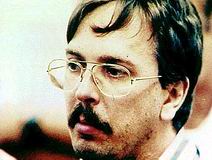 Joel Rifkin
Serial killer · USA · 1989
August 22, 1987 — Joel Rifkin was arrested in Hempstead, Long Island, for solic…
17 victims
Joel Rifkin
Serial killer · USA · 1989
August 22, 1987 — Joel Rifkin was arrested in Hempstead, Long Island, for solic…
17 victims
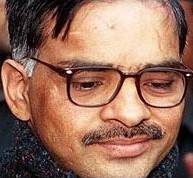 Javed Iqbal
Serial killer · Pakistan · 1998
Javed Iqbal (born 1956 in Lahore, Punjab, Pakistan; died October 8, 2001, in La…
100 victims
Javed Iqbal
Serial killer · Pakistan · 1998
Javed Iqbal (born 1956 in Lahore, Punjab, Pakistan; died October 8, 2001, in La…
100 victims
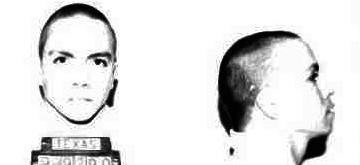 Ignacio Gomez
Murderer · USA · 1996
Ignacio Gomez was a Hispanic male. He was born in 1969 and was a Mexican nation…
3 victims
Ignacio Gomez
Murderer · USA · 1996
Ignacio Gomez was a Hispanic male. He was born in 1969 and was a Mexican nation…
3 victims
- Gender
- male
- Country
- USA
- Location
- Bailey County, Texas, USA
- Date of birth
- September 19, 1973
- Age at first offence
- 25
- Characteristics
- stalker, kidnapping, rape
- Victim profile
- Yvette Barraz, 19 ( his ex-girlfriend )
- Method of murder
- Beating with a claw hammer
- Date(s) of murder
- March 12, 1998
- Years active
- 1998
- Date of arrest
- June 7, 1998
- Status
-
Executed
Executed by lethal injection in Texas on June 21, 2007
Case information
Gilberto Reyes was convicted of capital murder in the 287th Judicial District Court of Bailey County, Texas, for the 1998 kidnapping and murder of Yvette Barraz. He was sentenced to death and was executed by lethal injection in Texas on June 21, 2007.
Timeline
- March 11, 1998 — Yvette Barraz left her parents' house for her waitress job at Leal's Restaurant in Muleshoe, Texas.
- March 11, 1998 (around 11:45 p.m.) — Gilberto Reyes arrived at his cousin’s home in Pecos, Texas and asked how to get to Ojinaga, Mexico.
- March 12, 1998 (between 3:30 a.m. and 4:00 a.m.) — Border officers at a check point in Presidio, Texas observed Reyes walking on the highway heading toward Mexico; officers stopped him and asked him to empty his pockets.
- March 13, 1998 — Presidio County authorities received a teletype informing them that Reyes was connected to a missing person and that he may have used a gray 1996 Mitsubishi to get to Presidio.
- March 12, 1998 (next morning after Barraz failed to return home) — Barraz’s parents called the police after she failed to return home from work.
- June 7, 1998 — Reyes was arrested in Portales, New Mexico, carrying keys matching Barraz’s car and residence.
- January 31, 2000 — A jury convicted Reyes of capital murder and the trial judge sentenced him to death.
- September 2002 — The Texas Court of Criminal Appeals affirmed the conviction and sentence.
- October 9, 2002 — The Texas Court of Criminal Appeals adopted the recommendation to deny state habeas relief.
- April 2005 — A U.S. district court denied federal habeas corpus relief.
- August 2006 — The 5th U.S. Circuit Court of Appeals affirmed the denial of federal habeas corpus relief.
- November 2006 — The U.S. Supreme Court denied Reyes’s petition for writ of certiorari.
- June 21, 2007 — Reyes was executed by lethal injection in Texas; he was pronounced dead at 6:17 p.m. and the lethal injection was started eight minutes earlier, after a final statement.
Background
Yvette Barraz and Gilberto Reyes dated for about eight months before their relationship ended in January 1998. Barraz’s parents reported her missing when she failed to return home from work at a Muleshoe restaurant.
Reyes had a history of criminal matters, including arrests and charges unrelated to the capital murder. He was arrested and charged with aggravated assault in July 1992 for driving a truck into a group of men, injuring one of them. He received deferred adjudication, which was revoked in 1995 after he was convicted of an October 1994 DWI offense. He served about six months in state prison.
In February 1998, about one month before the capital murder, Reyes chased Yvette Barraz, her ten-year-old sister, and her infant daughter with a rifle from a Muleshoe convenience store to Barraz’s house. He was arrested and charged with aggravated assault with a deadly weapon, DWI, and unlawful possession of a firearm by a felon. After posting bail, he abducted and killed Barraz the following month.
Reyes was described as having been involved in a “social club” called the 8th Street Posse, which sometimes engaged in fights with another “social club.”
During his execution proceedings, a federal lawsuit challenging the constitutionality of the Texas lethal injection procedure was dismissed by a federal judge in Houston, and no additional appeals were filed to try to block the punishment.
The offence
On the evening of March 11, 1998, Barraz left her parents’ house for her job as a waitress at Leal’s Restaurant in Muleshoe, Texas. At the end of her shift, she walked out to her car with the front apron pocket full of coins and small bills from tips.
Reyes, who was 24 at the time of the killing as described in the appellate summary, abducted Barraz from the parking lot wielding a knife and put her in her car, a gray 1996 Mitsubishi Eclipse. Reyes drove her to a remote area behind a business and raped her, strangled her, and hit her in the head six times with a claw hammer.
After the assault and death, Reyes drove Barraz’s body in the car about 400 miles south to Presidio on the Mexican border. He left the car behind a building and proceeded to cross the border on foot.
Investigation
On March 12, 1998, when Barraz failed to return home, her parents contacted authorities. Police officers went to the parking lot of Leal’s Restaurant and discovered blood on the ground with loose change nearby.
Barraz’s car was not in the parking lot when her co-worker left about twenty minutes after Barraz. The investigation later found Barraz’s car parked behind a store near the border in Presidio. Her body was found in the hatchback area of the vehicle under articles of clothing. Her pants and underwear were pulled down to her knees. She had multiple head wounds and a laceration on one of her fingers of her left hand. Officials recovered a knife on the floorboard of the back seat and a claw hammer on the passenger side between the seat and the edge of the door rail.
Sergeant Dusty McCord testified he observed bloodstains on the passenger-side seat belt and blood pooling in the hatchback area and on the floorboard behind the passenger seat, and it appeared the body had been moved around two or three locations in the back of the vehicle.
Authorities found bloodstains in and on the car. An autopsy concluded that Barraz was struck in the head six times by a claw hammer. The cause of death was strangulation and the blows to the head. The autopsy also determined Barraz had been sexually assaulted at or near the time of death, and that she had been alive both when she was strangled and beaten. The medical examiner concluded that while it appeared Barraz was initially injured in the restaurant parking lot, there was not enough blood in the parking lot to suggest she died there, and that she was still alive and bleeding in the car at some point.
DNA testing showed Barraz’s DNA matched bloodstains in the restaurant parking lot, inside the vehicle, and on the claw hammer. Reyes’s DNA matched a semen stain on Barraz’s underwear.
Border officers in Presidio documented Reyes crossing a border check-point on foot heading toward Mexico. Before dawn the next morning, border police questioned Reyes at the International Bridge in Presidio as he was walking toward Mexico. He carried as much as $100 in coins, including one- and five-dollar bills and change, and officers allowed him to continue into Mexico after a records check showed he was not involved in Presidio burglaries for which officers were on heightened alert. Officers later speculated the coins were Barraz’s tip money.
Investigators began looking for Reyes after Barraz’s disappearance. On June 7, 1998, Reyes was arrested in Portales, New Mexico, in possession of keys matching Barraz’s car and residence. A forensic expert testified that one key matched the lock at the Barraz residence and another key appeared to be a duplicate of the extra key to Barraz’s Mitsubishi Eclipse.
Arrest
Reyes was arrested in Portales, New Mexico on June 7, 1998. He was in possession of keys matching Barraz’s car and residence.
Trial
A Bailey County jury deliberated about two hours before convicting Reyes of capital murder, and it took another two hours before deciding on the death penalty.
Reyes was indicted for murdering Yvette Barraz while in the course of committing or attempting to commit kidnapping. The evidence at trial showed that Barraz and Reyes had dated for approximately eight months before their relationship ended in January 1998. At around 6:00 p.m. on March 11, 1998, 19-year-old Barraz left her parents’ house for her waitressing job at Leal’s Restaurant in Muleshoe, driving her 1996 silver Mitsubishi Eclipse.
Yolanda Jaramillo, Barraz’s co-worker, testified that after work Barraz left the restaurant before Jaramillo did and that Barraz’s car was not in the parking lot when Jaramillo left about twenty minutes later. Barraz’s mother testified Barraz’s vehicle could be described as either gray or silver in color.
At around 11:45 p.m. on March 11, 1998, Reyes arrived at his cousin’s home in Pecos, Texas and asked how to get to Ojinaga, Mexico, and the cousin’s husband testified Reyes drove away in a “small gray car.”
During the pre-dawn hours of March 12, officers at the border check point in Presidio, Texas observed Reyes walking on the highway heading toward Mexico, stopped him, and asked him to empty his pockets. The officers found in his possession a couple of sets of keys, a large amount of currency including one dollar bills and five-dollar bills, and handfuls of change. Reyes told the officers one key was the key to his girlfriend’s car. After the records check showed he was not involved in the Presidio burglaries, he was permitted to cross the bridge into Mexico.
On March 13, Presidio County authorities received a teletype informing them Reyes was connected to a missing person and it was possible he used a gray 1996 Mitsubishi to get to Presidio. Authorities located Barraz’s car parked behind a store about half a mile from the border, and Barraz’s body was found in the hatchback area under clothing, with pants and underwear pulled down to her knees, multiple head wounds, and a laceration on one of her fingers of her left hand. A knife was found on the back floorboard and a claw hammer on the passenger side between the seat and the edge of the door rail.
Sergeant Dusty McCord testified about bloodstains and blood pooling and that it appeared the body had been moved around two or three locations in the back of the vehicle.
Keys were found matching Barraz’s residence and vehicle. Samples of Reyes’s blood and hair were collected once he was transported back to Texas. Javier Flores performed DNA testing on the evidence collected from the crime scene and on samples taken from Reyes. Flores testified Barraz’s DNA matched bloodstains in the restaurant parking lot, inside the vehicle, and on the claw hammer, and Reyes’s DNA matched a semen stain on Barraz’s underwear, with a stated frequency of “one in less than 5.7 billion.”
Glen Groben testified that Barraz had six separate blunt force injury wounds to her head consistent with being struck by a claw hammer, and concluded her death was caused by blunt force trauma to the head while also noting evidence of strangulation. Groben concluded Barraz was alive when she was strangled and beaten and that she had been sexually assaulted at or near the time of death. Groben also testified that while it appeared Barraz was initially injured in the parking lot, there was not enough blood to suggest she died there, and that she was alive and bleeding in the car “at some point in time.” Groben stated that “in addition to being hit in the head, somebody had strangled her, either using her tie, which is most likely, or using their hands.”
During the punishment phase, the State called witnesses including those who provided evidence about Reyes’s prior charges and background, including charges relating to driving while intoxicated and aggravated assault with a deadly weapon. Evidence also demonstrated Reyes was observed chasing Barraz and her sister into their parents’ home, and that the investigating officer found Reyes with a rifle in his truck and bullets in his pocket. Evidence showed Reyes was a member of the 8th Street Posse involved in conflicts with another social club. He had been charged with aggravated assault and placed on deferred adjudication supervision for driving a truck over a curb and into Robert Rodriguez, a member of a “social club” in Muleshoe. After he was subsequently charged with driving while intoxicated, his deferred adjudication was revoked, and he was sent to a state, military-style boot camp program. Dr. Gripon, a psychiatrist, testified Reyes was a continuing threat to society because Reyes’s behavior increased in its progression towards violence, involved gang-related activity, and included abuse of substances.
Reyes’s trial counsel presented nine witnesses. Maria Reyes and Jesse Reyes testified that Reyes supported his family after his father died, that Barraz abused Reyes, and that Reyes often took care of Barraz’s daughter. Other witnesses testified that Reyes was a hard worker and a good employee. Dr. Walter Quijano testified Reyes would not be a continuing threat or future danger to society. The jury answered the punishment special issue regarding future dangerousness affirmatively and the mitigating evidence special issue negatively, based on Texas Code of Criminal Procedure Article 37.071, § 2.
A jury verdict resulted in Reyes’s capital murder conviction and sentence to death.
Sentencing
The trial judge sentenced Reyes to death following the jury’s answers to the special issues under Texas Code of Criminal Procedure Article 37.071, §§ 2(b) and 2(e), with reference to Article 37.071, § 2(g).
Appeals
Direct appeal (Texas Court of Criminal Appeals)
The Texas Court of Criminal Appeals affirmed the conviction and sentence in September 2002 and concluded:
- The evidence was sufficient to support conviction of murder in course of committing or attempting to commit kidnapping.
- The state capital sentencing scheme was not unconstitutional on its face or as applied.
- Reyes waived any objection to admission of Barraz’s written statement to police.
- The punishment phase jury was not improperly prevented from considering mitigating evidence. The court’s decision is reflected in the case citation “Reyes v. State, 84 S.W.3d 633 (Tex.Cr.App. 2002) (Direct Appeal).”
The direct appeal addressed Reyes’s challenges:
- In point of error two, Reyes argued evidence was legally insufficient to support capital murder conviction because the State failed to prove the underlying offense of kidnapping, and the court overruled the point.
- In point of error one, Reyes challenged the constitutionality of the Texas capital sentencing scheme, and the court overruled the point.
- In point of error three, Reyes argued the trial court erred in admitting Barraz’s written statement into evidence, and the court overruled the point.
- In point of error four, Reyes alleged due process was denied by preventing him from presenting mitigating evidence, and the court overruled the point.
The direct appeal discussion included the legal definitions of kidnapping under Texas Penal Code and the analysis of whether the restraint was “in the course of committing or attempting to commit kidnapping.” The court also described how Barraz’s written statement to police was introduced after an earlier presentation of the same contents through testimony without objection.
Barraz’s written statement included the following verbatim passage:
On February 13, 1998 Gilbert Reyes got into my car at Town and Country East, and stole my jacket. The clerk at Town and County [sic], my friend, Melissa Morales and I saw Gilbert take it. I told him to get out of my car. I got into my car and he took my jacket and got out of my car.
On February 22, 1998 someone broke into my house. There was a lot of valuable stuff in the house that was not taken. My bed was messed up, and they had gone through my underwear drawer. All the screens in the house were torn. Only a few were not touched. The window in my room was unlocked and the blinds were messed up. Also one of the blinds was messed up in the livingroom.
On February 23, 1998 I was with my brother and some friends in my friends [sic] car and Gilbert Reyes kept following us and was flashing us with his headlights. He also kept showing up everywhere we went. Then I came to the Police Department and spoke with Officer Benny Parker. Gilbert Reyes keeps driving by my residence and any place that I happen to be at. This has been going on for several weeks. I am afraid of Gilbert Reyes.
The direct appeal also addressed mitigation evidence at the punishment phase, including a bill of exception describing what Dr. Walter Quijano would have testified were mitigating factors:
the dependent relationship that developed between the defendant and the victim, “the history of alcoholism”, and “a stable work history”.
State habeas
After the direct appeal, state habeas corpus relief was denied. The Texas Court of Criminal Appeals adopted the trial court’s recommendation to deny relief on October 9, 2002, in Ex parte Reyes, No. 52,801-01.
Federal habeas
Reyes sought federal habeas corpus relief:
- April 2005 — A U.S. district court denied federal habeas corpus petition.
- August 2006 — The 5th U.S. Circuit Court of Appeals affirmed denial of federal habeas corpus relief.
- November 2006 — The U.S.
Reyes also sought a certificate of appealability (COA) in the 5th Circuit case referenced as “Reyes v. Quarterman, 195 Fed.Appx. 272 (5th Cir. 2006) (Habeas).” In that proceeding, the Court of Appeals held that he was not entitled to an evidentiary hearing and not entitled to appeal denial of the petition, and it denied the COA application.
Outcome
Reyes was executed by lethal injection in Texas on June 21, 2007.
Reyes made a final statement:
“I love y’all and I’m going to miss y’all,” he said, smiling but never looking at the parents and other relatives of his victim watching through a window.
At least two reports stated he was pronounced dead at 6:17 p.m. after eight minutes from the start of the lethal injection. He requested BBQ turkey and brisket as his last meal, along with a bowl of cheddar cheese and avocados.
Other details
Witnesses and legal personnel included the following, as named in the case proceedings:
- David Martinez, who was identified as Reyes’s trial lawyer and made a statement about the difficulty of convincing a jury to give life instead of death:
“I love y'all and I'm going to miss y'all,” Reyes said, smiling but never looking at the parents and other relatives of his victim watching through a window.
“We kept hoping with his age and his boyish looks, I might be able to convince a jury to give him life, but I wasn't able to.”
- Victor Leal, a former Muleshoe mayor who ran the restaurant where Barraz had worked for several months, stated:
“She was a beautiful, vivacious, respectful young lady,”
“I regret the fact apparently he’d been stalking her and she did not tell me that.”
“I've always looked back and thought if I had taken time, sat down and known her a little better, maybe she would have shared that with me and I would have done something like make sure she was getting walked out to her car.”
- Don Carter, the former Muleshoe police chief (later described as a captain with the Lubbock County Sheriff’s Department), stated:
“We certainly wanted to find him and visit with him,”
“I don't think you have to be in law enforcement to figure that deal out. And the fact was we never could find him, which just made him even more so a suspect.”
“The sad part about it was he crossed over by the time she was determined to be a missing person,”
“So we were just behind him, and since he got across the border, it delayed apprehension.”
- Paul Mansur, an attorney quoted after meeting with Reyes on death row, stated:
“I think that’s what he wants,”
“Just let it go.”
Reyes was described as having no witnesses in attendance at his execution and having requested his last meal.
His execution was described as occurring 24 hours after another execution of Lionell Rodriguez, and with another execution set for the next week involving Patrick Knight.

Spotted an error, or have more information about this case?