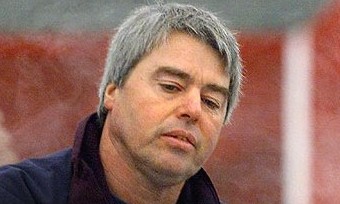
Robert Latimer
Homicide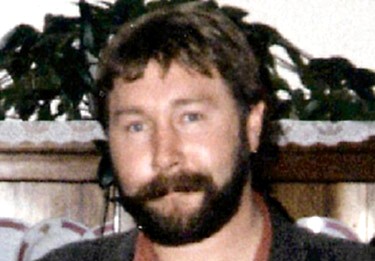 Jeffrey Arenburg
Homicide · Canada · 1995
Jeffrey Arenburg was a Canadian gunman who shot and killed broadcaster Brian Sm…
1 victim
Jeffrey Arenburg
Homicide · Canada · 1995
Jeffrey Arenburg was a Canadian gunman who shot and killed broadcaster Brian Sm…
1 victim
 William Shrubsall
Homicide · Canada · 1988
William Shrubsall (also known as Ian Thor Greene and now Simon Templar (Ethan S…
1 victim
William Shrubsall
Homicide · Canada · 1988
William Shrubsall (also known as Ian Thor Greene and now Simon Templar (Ethan S…
1 victim
 David Michael Krueger
Homicide · Canada · 1956
David Michael Krueger was best known by his birth name, Peter Woodcock. In 1982…
4 victims
David Michael Krueger
Homicide · Canada · 1956
David Michael Krueger was best known by his birth name, Peter Woodcock. In 1982…
4 victims
 David Michael Krueger
Homicide · Canada · 1956
Peter Woodcock (birth name) was a Canadian serial killer and child rapist. · Da…
4 victims
David Michael Krueger
Homicide · Canada · 1956
Peter Woodcock (birth name) was a Canadian serial killer and child rapist. · Da…
4 victims
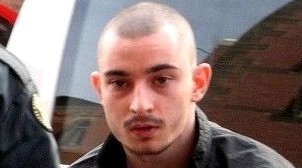 Gregory Despres
Homicide · Canada · 2005
July 1982 — Gregory Allan Despres was born in Minto, New Brunswick, Canada. · A…
2 victims
Gregory Despres
Homicide · Canada · 2005
July 1982 — Gregory Allan Despres was born in Minto, New Brunswick, Canada. · A…
2 victims
 Shawn Tyson
Homicide · USA · 2011
Shawn Tyson was a 16-year-old resident of Sarasota, Florida at the time of the…
2 victims
Shawn Tyson
Homicide · USA · 2011
Shawn Tyson was a 16-year-old resident of Sarasota, Florida at the time of the…
2 victims
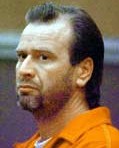 Wayne Adam Ford
Serial killer · USA · 1997
Wayne Adam Ford (born December 3, 1961) was an American serial killer. Ford sur…
4 victims
Wayne Adam Ford
Serial killer · USA · 1997
Wayne Adam Ford (born December 3, 1961) was an American serial killer. Ford sur…
4 victims
 Roy Allen Harich
Murderer · USA · 1981
Roy Allen Harich (appellant/petitioner), v. State of Florida (appellee/responde…
1 victim
Roy Allen Harich
Murderer · USA · 1981
Roy Allen Harich (appellant/petitioner), v. State of Florida (appellee/responde…
1 victim
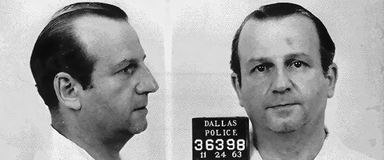 Jack Ruby
Murderer · USA · 1963
Jack Leon Ruby (born Jacob Rubenstein in 1911) was a Dallas nightclub owner who…
1 victim
Jack Ruby
Murderer · USA · 1963
Jack Leon Ruby (born Jacob Rubenstein in 1911) was a Dallas nightclub owner who…
1 victim
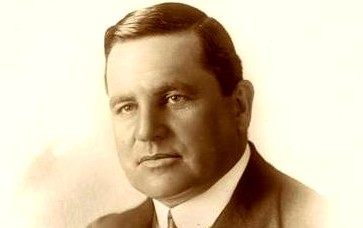 Thomas John Ley
Murderer · Australia/United Kingdom · 1946
Thomas John Ley (28 October 1880 — 29 July 1947) was an Australian politician w…
1 victim
Thomas John Ley
Murderer · Australia/United Kingdom · 1946
Thomas John Ley (28 October 1880 — 29 July 1947) was an Australian politician w…
1 victim
- Gender
- male
- Country
- Canada
- Location
- Saskatchewan, Canada
- Date of birth
- March 13, 1953
- Age at first offence
- 40
- Characteristics
- parricide, child abuse
- Victim profile
- H is severely disabled daughter Tracy , 12
- Method of murder
- B y placing her in his truck and connecting a hose from the truck's exhaust pipe to the cab
- Date(s) of murder
- October 24, 1993
- Years active
- 1993
- Date of arrest
- —
- Status
-
Released
Sentenced to life imprisonment without the possibility of parole for ten years; Released December 6, 2010
Case record: Robert Latimer
Overview
Robert Latimer (born March 13, 1953) was a Canadian farmer who was sentenced to life imprisonment without the possibility of parole for ten years for the murder of his daughter Tracy (born November 23, 1980). Tracy’s death occurred on October 24, 1993.
The case generated a national controversy about the ethics of mercy killings and disability rights. It involved two Supreme Court decisions: R. v. Latimer (1997) and R. v. Latimer (2001).
The offence
Robert Latimer killed his daughter Tracy.
Latimer stated that he killed her because she had severe mental and physical disabilities and ongoing health problems as a result of cerebral palsy. He said he believed that the next surgery she was to have, to remove a permanently disconnected hip, would only add to her suffering.
Victim: Tracy Latimer
Tracy Latimer was born on November 23, 1980.
An interruption in Tracy’s supply of oxygen during the birth caused cerebral palsy, leading to severe mental and physical disabilities, including seizures controlled with seizure medication. She had little or no voluntary control of her muscles, wore diapers, and could not walk or talk.
The account of her care included that her doctors described the care given by her family as excellent.
The Supreme Court judgment of 1997 noted: “It is undisputed that Tracy was in constant pain.”
Dr. Dzus, Tracy’s orthopaedic surgeon, testified: “the biggest thing I remember from that visit is how painful Tracy was. Her mother was holding her right leg in a fixed, flexed position with her knee in the air and any time you tried to move that leg Tracy expressed pain and cried out”
It was also stated that Tracy could not take painkillers because she was on anti-seizure medication which, in combination with painkillers, could lead to renewed seizures, stomach bleeding, constipation, aspiration and aspiration pneumonia.
Robert Latimer reported that the family was not aware of any medication other than Tylenol that could be safely administered to Tracy.
The Latimers did not wish a feeding tube to be inserted. The 2001 Supreme Court judgment stated it might have allowed more effective pain medication to be administered and might have improved her nutrition and health.
During her life, Tracy underwent several surgeries, including surgery to lengthen tendons and release muscles and surgery to correct scoliosis in which rods were inserted into her back.
It was stated that Tracy attended school regularly in Wilkie.
People who worked with Tracy in group homes and schools described her smile, love of music, and reaction to horses at the circus.
It was stated that, in the Crown prosecutors’ brief presented at the second trial: “She also responded to visits by her family, smiling and looking happy to see them. There is no dispute that through her life, Tracy at times suffered considerable pain. As well, the quality of her life was limited by her severe disability. But the pain she suffered was not unremitting, and her life had value and quality.”
Death of Tracy Latimer
On October 24, 1993, Laura Latimer found Tracy dead. It was stated that Tracy had died under the care of her father while the rest of the family was at church.
At first, Robert Latimer maintained that Tracy had died in her sleep. When confronted by police with autopsy evidence that high levels of carbon monoxide were found in Tracy’s blood, Latimer confessed that he had killed her by placing her in his truck and connecting a hose from the truck’s exhaust pipe to the cab.
Latimer said he had also considered other methods of killing Tracy, including Valium overdose and “shooting her in the head”.
Latimer said his actions were motivated by love for Tracy and a desire to end her pain.
Latimer described the medical treatments Tracy had undergone and was scheduled to undergo as “mutilation and torture”.
He asked: “With the combination of a feeding tube, rods in her back, the leg cut and flopping around and bedsores, how can people say she was a happy little girl?”
Murder-related medical background and planned surgery
In October 1993, Dr. Dzus recommended further surgery on November 19, 1993 in the hope that it would lessen the constant pain in Tracy’s dislocated hip.
Depending on the state of her hip joint, it was stated the procedure might have been a hip reconstruction or might have involved removing the upper part of her thigh bone, leaving the leg connected to her body only by muscles and nerves.
The anticipated recovery period for this surgery was one year.
It was stated that the Latimers were told the procedure would cause pain, and that doctors suggested further surgery might be required in the future to relieve pain emanating from various joints in Tracy’s body.
Dr. Dzus reported: “the post operative pain can be incredible”
Dr. Dzus described the only useful short-term solution being the use of an epidural to anesthetize the lower part of the body and help alleviate pain while Tracy was still in hospital.
Family and farm background
Before his imprisonment, Bob (Robert William “Bob”) Latimer lived near Wilkie, Saskatchewan, on a 1,280 acres (520 ha) wheat and canola farm with his wife, Laura, and their four children.
Trial and conviction
A jury convicted Latimer of second degree murder on November 16, 1994.
The jury that convicted him felt he should spend one year in jail and another under house arrest at his farm near Wilkie, Saskatchewan.
Retrial ordered and jury interference
The Supreme Court of Canada ordered a retrial because of jury interference. It was stated that the prosecutor had questioned potential jurors about religion, abortion, and mercy killing during jury selection.
Supreme Court decisions
The case involved two Supreme Court decisions:
- R. v. Latimer, [1997] 1 S.C.R. 217
- R. v. Latimer, [2001] 1 S.C.R. 3, 2001 SCC 1
The 1997 decision addressed section 10 of the Canadian Charter of Rights and Freedoms.
The 2001 decision addressed cruel and unusual punishments under section 12 of the Charter.
Sentencing
Robert Latimer was sentenced to life imprisonment without the possibility of parole for ten years.
It was stated that the minimum penalty for second degree murder in Canada was life imprisonment, with parole eligibility beginning after 10 years.
Parole and release
It was stated that he was seeking a reduction of his sentence and that he had served three years as of 2004.
It was stated that he was currently serving his sentence in a minimum-security facility on Vancouver Island.
It was stated that Latimer was released on day parole in March 2008.
It was also stated that he was granted full parole effective December 6, 2010.
Other views and controversy
Supporters of Latimer said the killing was a mercy killing and should not be punished as harshly as other murders.
Disability rights advocates said killing a severely disabled child like Tracy should carry the same penalty as killing a non-disabled child. They said doing otherwise would devalue the lives of disabled people and increase the risk of more such killings by caregivers.
Spotted an error, or have more information about this case?