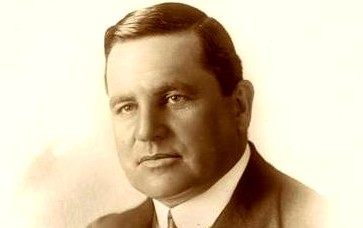
Thomas John Ley
Murderer Ernesto Picchioni
Murderer · Italy · 1944
March 12, 1949 — He was sentenced to life in prison. · 2016 — The case record l…
16 victims
Ernesto Picchioni
Murderer · Italy · 1944
March 12, 1949 — He was sentenced to life in prison. · 2016 — The case record l…
16 victims
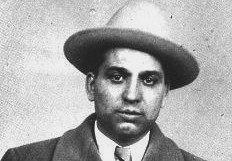 Harry Maione
Murderer · USA · 1937
Harry “Happy” Maione (1908 – February 19, 1942) was a New York mobster who serv…
12 victims
Harry Maione
Murderer · USA · 1937
Harry “Happy” Maione (1908 – February 19, 1942) was a New York mobster who serv…
12 victims
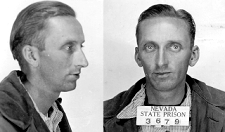 Luther Jones
Murderer · USA · 1936
Luther Jones Luther Jones was executed by asphyxiation-gas in Nevada on January…
4 victims
Luther Jones
Murderer · USA · 1936
Luther Jones Luther Jones was executed by asphyxiation-gas in Nevada on January…
4 victims
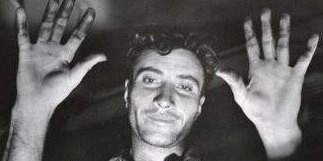 Albert Dyer
Murderer · USA · 1937
Albert Dyer was a 32-year-old WPA crossing guard and traffic guard at Centinela…
3 victims
Albert Dyer
Murderer · USA · 1937
Albert Dyer was a 32-year-old WPA crossing guard and traffic guard at Centinela…
3 victims
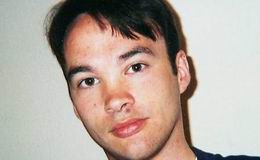 Magnus Gäfgen
Murderer · Germany · 2002
Magnus Gäfgen (born April 11, 1975 in Frankfurt am Main) was a German child mur…
1 victim
Magnus Gäfgen
Murderer · Germany · 2002
Magnus Gäfgen (born April 11, 1975 in Frankfurt am Main) was a German child mur…
1 victim
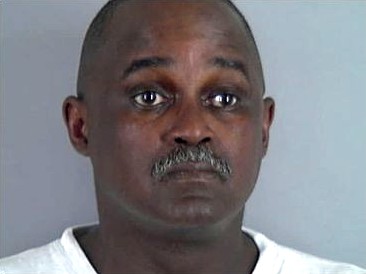 Lorenzo Gilyard
Serial killer · USA · 1977
Lorenzo Gilyard (born c.1951) was an American serial killer. A former trash com…
13 victims
Lorenzo Gilyard
Serial killer · USA · 1977
Lorenzo Gilyard (born c.1951) was an American serial killer. A former trash com…
13 victims
 Tracy Lee Housel
Murderer · USA · 1985
Tracy Lee Housel was executed by lethal injection in Georgia on March 12, 2002.…
2 victims
Tracy Lee Housel
Murderer · USA · 1985
Tracy Lee Housel was executed by lethal injection in Georgia on March 12, 2002.…
2 victims
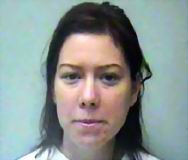 Nicola Edgington
Homicide/Murderer · United Kingdom · 2005
Nicola Edgington was a British woman convicted of manslaughter due to diminishe…
2 victims
Nicola Edgington
Homicide/Murderer · United Kingdom · 2005
Nicola Edgington was a British woman convicted of manslaughter due to diminishe…
2 victims
- Gender
- male
- Country
- Australia/United Kingdom
- Location
- Australia/United Kingdom
- Date of birth
- October 28, 1880
- Age at first offence
- 66
- Characteristics
- jealousy
- Victim profile
- John McMain Mudie, 35
- Method of murder
- Strangulation
- Date(s) of murder
- November 28, 1946
- Years active
- 1946
- Date of arrest
- December 14, 1946
- Status
-
Died in custody
Sentenced to death on May 5, 1947; declared insane and sent to Broadmoor Asylum for the Criminally Insane; died on July 29, 1947
Case record: Thomas John Ley
Identifying information
Thomas John Ley (28 October 1880 — 29 July 1947) was an Australian politician who was convicted of murder in England.
Background
Ley was born on 28 October 1880 at Bath, Somerset, England, the son of Henry Ley, butler, and his wife Elizabeth, née Bryant. Henry Ley died in 1882. In 1886 Ley’s mother migrated with Ley and her four children to Sydney.
Ley earned money as a paper-boy and messenger from an early age. He attended Crown Street Public School, but his formal education ended when he was ten because his mother withdrew him to assist her in running a grocery store she had bought. Ley later worked on a dairy-farm near Windsor.
Ley had ambitions for the law. While at Windsor he learned shorthand and, at 14, secured appointment as a junior clerk-stenographer in a Pitt Street solicitor’s office. In 1901 he transferred to Norton, Smith & Co., was articled to F. Osborne in 1906, and was admitted as a solicitor on 13 March 1914.
On 16 June 1898 Ley married Emily Lewise (Louisa) Stone Vernon, known as “Lewie”, and also known as “Louisa” Vernon. The Leys lived with the widowed Mrs Vernon at Glebe until 1906, during which time they had three sons.
Ley joined the Sydney Mechanics’ School of Arts in 1896 and developed debating skill. In 1907 he moved to the developing suburb of Hurstville. Within five months Ley was elected to local council. He served on council committees dealing with parks and gardens, rates and levies, building and health by-laws, and street maintenance. He was involved in the local ratepayers’ association and the Parents’ and Citizens’ executive, and was active in Protestant organizations such as the Presbyterian Debating Society.
Through his advocacy of prohibition and involvement in the temperance movement, Ley acquired the nickname “Lemonade Ley”. After losing several elections for mayor, he did not seek re-election in 1911 and instead turned his attention to State politics.
Ley was a teetotaller and a prominent and vocal advocate of proportional representation.
The offence
Ley was convicted and sentenced to death for arranging the death of John McBain Mudie, a barman whom he believed to be Maggie Brook’s lover.
The case became known as the “Chalk-pit Murder” because Mudie’s body was dumped in a Surrey chalkpit.
Ley imagined wrongly that Brook and a barman called John McMain Mudie were lovers. Ley persuaded two of his labourers that Mudie was a blackmailer, and together they tortured and killed him.
Investigation and arrest
The record described subsequent investigations and suspicions around Ley’s conduct, including allegations of bribery and irregular business dealings before the murder conviction, but it did not provide investigative steps for the Chalk-pit Murder.
Trial
With Lawrence John Smith, Ley was tried at the Old Bailey. Both were sentenced to death in March 1947.
Sentencing
Ley was sentenced to death in March 1947 for the “Chalk-pit Murder”. His death sentence was commuted shortly before he was due to hang, and he was committed to Broadmoor Criminal Lunatic Asylum, Berkshire.
The status field recorded that Ley was sentenced to death on May 5, 1947.
Appeals
The record stated that both Ley and Smith received death sentences, and later recorded commutation for Smith while Ley was declared insane and sent to Broadmoor. It did not describe appeal proceedings in detail.
Outcome
Smith’s sentence was commuted to life imprisonment. Ley was declared insane and sent to Broadmoor Asylum for the Criminally Insane. Ley died soon after.
Aftermath
From Broadmoor, Ley wrote letters and poems and protested his innocence to his wife and children. After Ley’s death, Lewie Ley returned to Australia and died at Bowral, New South Wales, in 1956. Ley left his estate, valued for probate at £744 in New South Wales, to his wife and sons.
Other details
Ley’s political career in New South Wales included:
- He was elected in March 1917 to the Legislative Assembly for Hurstville for the National Party, led by W. A. Holman after Labor split over conscription.
- Ley became the leading advocate of proportional representation, and despite Holman’s opposition the government enacted it in 1919.
- In 1920 Ley was returned as a Progressive for St George.
- Ley was minister of public instruction and of labour and industry in Sir George Fuller's “seven-hour” ministry of December 1921.
- In 1922 Ley was returned as a Nationalist and appointed minister of justice in Fuller's coalition ministry of 1922-25.
- The record stated that Ley’s ministry was disastrous and described it as virulently sectarian; it also described his support of the marriage amendment (ne temere) bill and his alleged prevarication about a prohibition plebiscite.
- There was community outcry at his refusal to commute the death sentence on Edward Williams, an impoverished music teacher who murdered his three daughters.
- Ley resigned in September after being re-elected in 1925 but now in Opposition, allegedly at the invitation of Prime Minister S. M. (Viscount) Bruce, to stand for the Federal seat of Barton.
Ley’s federal campaign and related allegations included:
- In 1925 he was elected for Barton in the federal House of Representatives.
- During the 1925 federal campaign, Labor opponent Frederick McDonald alleged Ley tried to bribe him to withdraw from the contest.
- McDonald also alleged that Ley offered him a £2000 share in a property at Sydney’s Kings Cross in return for withdrawing from the ballot.
- Ley won the election.
- McDonald sought to have the election declared void in the Court of Disputed Returns, but on 15 April 1926, on his way to meet Premier J. T. Lang, he mysteriously disappeared, and the case against Ley collapsed for lack of evidence when McDonald failed to show up.
- The disappearance may have been a coincidence.
- In 1927 Hyman Goldstein was found dead after apparently falling from “Suicide Point” on the cliffs of Coogee.
- Businessmen concerned about Ley’s reputation for dubious business dealings appointed Keith Greedor, an opponent of Ley but formerly an associate of his, to investigate.
- Greedor travelled to Newcastle by boat, fell overboard, and drowned.
Ley’s return to England and later activities included:
- After defeat in the 1928 election, Ley returned to England with Maggie Brook, leaving his wife in Australia.
- In England Ley continued involvement in shady business ventures, including promoting an unrealized £1 million sweepstake for the 1931 Derby and engaging in dubious real estate dealings.
- During World War II Ley was arrested and convicted for black marketeering.
Broadmoor and death included:
- Ley was committed to Broadmoor Criminal Lunatic Asylum, Berkshire.
- The record stated that Ley died of meningeal haemorrhage on 24 July 1947, while the status field recorded death on July 29, 1947.
- The record stated Ley was said to have been the wealthiest person ever to be a Broadmoor prisoner.
Timeline
- 13 March 1914 — Ley was admitted as a solicitor.
- 16 June 1898 — Ley married Emily Lewise (Louisa) Stone Vernon.
- March 1917 — Ley was elected to the Legislative Assembly for Hurstville for the National Party.
- December 1921 — Ley served in Sir George Fuller’s “seven-hour” ministry.
- 1922 — Ley was appointed minister of justice in Fuller's coalition ministry of 1922–25.
- September (year not stated) — Ley resigned allegedly at the invitation of Prime Minister S. M.
- 1925 — Ley was elected to the federal House of Representatives for Barton.
- 15 April 1926 — Frederick McDonald disappeared.
- 3 September 1928 — Hyman Goldstein was found dead at the foot of the cliffs at Coogee.
- May 5, 1947 — Ley was sentenced to death.
- March 1947 — With Lawrence John Smith, Ley was sentenced to death at the Old Bailey.
- 24 July 1947 — Ley died of meningeal haemorrhage.
- 29 July 1947 — Ley died.
- 1956 — Lewie Ley died at Bowral, New South Wales.
Spotted an error, or have more information about this case?