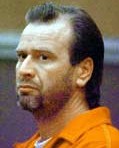
Wayne Adam Ford
Serial killer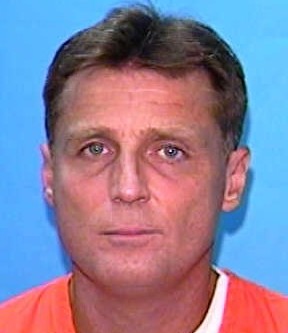 Glen Edward Rogers
Serial killer · USA · 1993
Glen Edward Rogers was a spree killer whose cross-country rampage in 1994-95 le…
70 victims
Glen Edward Rogers
Serial killer · USA · 1993
Glen Edward Rogers was a spree killer whose cross-country rampage in 1994-95 le…
70 victims
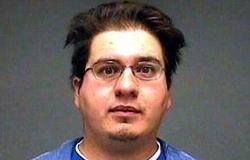 Efren Saldivar
Serial killer · USA · 1989
Efren Saldivar (born 30 September 1969) was an American serial killer who murde…
50 victims
Efren Saldivar
Serial killer · USA · 1989
Efren Saldivar (born 30 September 1969) was an American serial killer who murde…
50 victims
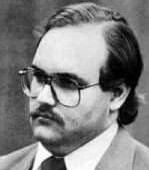 Richard Angelo
Serial killer · USA · 1987
Richard Angelo was 26 years old when he went to work at Good Samaritan Hospital…
25 victims
Richard Angelo
Serial killer · USA · 1987
Richard Angelo was 26 years old when he went to work at Good Samaritan Hospital…
25 victims
 Ronald Dominique
Serial killer · USA · 1997
Ronald Joseph Dominique (born 1964) was an American serial killer from the Bayo…
23 victims
Ronald Dominique
Serial killer · USA · 1997
Ronald Joseph Dominique (born 1964) was an American serial killer from the Bayo…
23 victims
 Jeremy Jones
Serial killer · USA · 1992
Name: Jeremy Jones · Aliases/identities mentioned: John Paul Chapman · Age (as…
21 victims
Jeremy Jones
Serial killer · USA · 1992
Name: Jeremy Jones · Aliases/identities mentioned: John Paul Chapman · Age (as…
21 victims
 Desmond Jennings
Serial killer · USA · 1993
Desmond Jennings declined to make a last statement. Texas Attorney General John…
20 victims
Desmond Jennings
Serial killer · USA · 1993
Desmond Jennings declined to make a last statement. Texas Attorney General John…
20 victims
 Esequel Banda
Murderer · USA · 1986
December 11, 1995 — Esequel Banda was executed by lethal injection in Texas. ·…
1 victim
Esequel Banda
Murderer · USA · 1986
December 11, 1995 — Esequel Banda was executed by lethal injection in Texas. ·…
1 victim
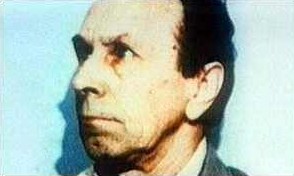 Sidney Cooke
Murderer · United Kingdom · 1985
Sidney Cooke was sentenced for the manslaughter of Jason Swift to 19 years in p…
1 victim
Sidney Cooke
Murderer · United Kingdom · 1985
Sidney Cooke was sentenced for the manslaughter of Jason Swift to 19 years in p…
1 victim
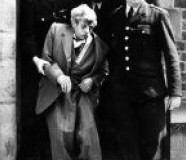 Tom Lionel Burns
Homicide · 1958
Tom Lionel Burns was a retired driver and played the piano. He was 71 years old…
2 victims
Tom Lionel Burns
Homicide · 1958
Tom Lionel Burns was a retired driver and played the piano. He was 71 years old…
2 victims
- Gender
- male
- Country
- USA
- Location
- San Bernardino County, California, USA
- Date of birth
- December 3, 1961
- Age at first offence
- 36
- Characteristics
- rape, necrophilia, mutilation
- Victim profile
- Patricia Tamez, 29 / Lanett Deyon White, 25 / Tina Renee Gibbs, 26 / An unidentified woman whose torso was found in a slough
- Method of murder
- Stabbing with knife - Strangulation
- Date(s) of murder
- 1997 - 1998
- Years active
- 1997–1998
- Date of arrest
- November 4, 1998 (surrenders)
- Status
-
Sentenced to death
Sentenced to death on August 1, 2006
Case identification
Wayne Adam Ford (born December 3, 1961) was an American serial killer.
Background
Ford surrendered after walking into the Humboldt County Sheriff’s Department in Eureka, California in November 1998 with a woman’s severed breast in his pocket. He confessed to having killed four women, and authorities thought he had killed others.
Investigators said the four victims Ford mentioned were female hitchhikers and/or prostitutes who had been sexually assaulted before they were slain and mutilated post mortem.
Authorities said Ford implicated himself in two other recent slayings, in San Bernardino and San Joaquin counties.
The offence
Ford was accused of killing four women across California in 1997 and 1998. Prosecutors alleged the victims were killed during sexual activity that grew rough and aggressive, sometimes including asphyxiation, bondage, striking and burning, and that he raped the women. Prosecutors also alleged dismemberment and mutilation after death and that the victims were discarded nude into nearby waterways.
Ford was found guilty of four counts of first-degree murder.
Victims
Unidentified woman (Humboldt County Jane Doe)
- A torso of a woman aged 18 to 25 was found in a slough near Eureka in October 1997.
- Investigators described her as having been dismembered, with her identity unknown.
- Authorities later found parts based on information Ford provided, including that the head, arms, legs and breasts had been cut off, and that the torso had been stabbed 27 times and cut down the middle.
- Investigators said six or seven body parts were found based on Ford’s information.
- Ford told authorities he picked her up in Eureka and that she later died during sex in his trailer in Arcata.
- Ford told investigators he had buried the head in the channel of the Mad River, but it was never found.
- At a campsite where Ford lived after he left his Arcata trailer, authorities found identified parts, including the unidentified woman’s thighs and boiled breasts, wrapped in plastic and stuffed in a tree stump.
- Evidence of the woman’s body parts and the bathtub where they were cut was found at the trailer.
- A coffee can with rendered fat from the woman’s breasts was also found at the trailer.
- Ford told authorities the torso he identified involved evidence he described as “just the tip of the iceberg.”
Tina Renee Gibbs
- Gibbs was identified as a 26-year-old prostitute from Las Vegas.
- Her nude body was found in an aqueduct in Kern County on June 2, 1998 (near the town of Buttonwillow).
- An autopsy determined she died of strangulation.
- Investigators said Gibbs’ body was found in June 1998 and that she was not dismembered.
Lanett Deyon White
- White was identified as a 25-year-old prostitute from Fontana.
- Her nude body was found floating in a San Joaquin County irrigation canal on September 25, 1998, near Lodi.
- The precise cause of death was described as undetermined, with the cause of death given as “homicidal violence of unknown etiology.”
- Ford told detectives he picked her up at an Ontario truck stop and that her death occurred in San Bernardino County before he drove to Phoenix with her body tied up in his truck, and that he later drove to Lodi and dropped the body in a canal.
Patricia Ann Tamez
- Tamez was identified as a 29-year-old woman from Hesperia (including a reference to her as a Victorville woman).
- Her nude body was found floating in the California Aqueduct in San Bernardino County in October 1998, near Hesperia (also referenced as near Interstate 15 outside Hesperia).
- Authorities said she had been strangled and one of her breasts had been removed, described as the one Ford carried in his coat pocket more than a week later when he and his brother walked into a sheriff’s station in Humboldt County.
- Ford’s severed breast carried in his jacket pocket was later described as belonging to Patricia Tamez.
- The body was described as missing a breast.
- Ford told authorities Tamez’s death occurred during sex and that he paid her for sex.
- Ford told detectives White picked up Tamez by a convenience store near Victorville, and that Tamez’s neck had been broken below her shoulders and her cause of death was ruled strangulation, with a thoracic spine fracture and possible drowning.
Investigation and surrender
Ford called authorities and asked if he could surrender after he walked into the Humboldt County Sheriff’s Department in Eureka, California with a woman’s severed breast in a plastic bag. Sheriff Dennis Lewis said Ford walked into the department, said he had some evidence, and pulled out a bagged bag breast.
Investigators said Ford was remorseful and apparently had reached a point in his life where he wanted to talk about what he had been involved in.
Humboldt County Coroner Frank Jager Jr. said Ford told authorities he turned himself in so he wouldn’t kill his ex-wife and leave his son an orphan. Jager said: “He said he was ashamed of what he was doing and his anger was mostly directed against his wife and he was getting more angry at her every day”
Ford told authorities that he was ashamed and upset about his wife’s actions in keeping him from seeing their son.
Authorities said Ford disclosed the location of the head of a woman’s headless torso that was found on Oct. 26, 1997, in a channel outside Eureka during a 3 1/2-hour interview with investigators just before his arraignment.
Investigators sought to use knife and saw marks on bones from five body parts Ford led them to at a campsite outside Trinidad to match them with the still-unidentified torso.
Authorities said Ford had kept body parts in a freezer in his Airstream trailer in Arcata for the past year and hid them in a hole at the base of a tree just days before turning himself in.
Arrest and custody
Ford’s surrender happened after he walked into a Humboldt County sheriff’s station on Nov. 3, 1998, accompanied by his brother. On Nov. 2, 1998, Ford reportedly called his brother, Rodney Calvin Ford, for help.
On Nov. 3, 1998, Ford walked into the Humboldt County sheriff’s station with his brother and told deputies that he had done “bad things.”
Over the next few days, Ford reportedly told detectives about the four dead victims.
Deposies found a severed female breast in a plastic bag inside his jacket pocket.
Trial
Ford was charged with killing four women in 1997 and 1998.
Ford faced the death penalty if convicted of four counts of first-degree murder and a special circumstance of multiple murders.
Prosecutors and defense counsels
- Deputy District Attorney David Whitney filed two death-penalty murder counts against Ford. Whitney said it was possible all four murder cases including those in Humboldt and Kern counties may be tried in San Bernardino County.
- Deputy District Attorney David Mazurek handled prosecution in San Bernardino County.
- Defense attorney Joseph Canty represented Ford.
- Defense attorney Steve Mapes represented Ford.
- Superior Court Judge Michael A. Smith presided over proceedings in San Bernardino Superior Court.
Pretrial and consolidation A new state law allowed consolidation of related murders into one jurisdiction. Prosecutors planned to seek the death penalty, and hearings included discussions about trying all four cases in one county. In Humboldt County, a gag order was imposed on attorneys.
Preliminary hearing scheduling was discussed, with a preliminary hearing scheduled for April 21.
Arraignment and trial start dynamics In a March 13, 2006 opening statement, Deputy District Attorney David Mazurek used an electronic presentation showing photographs of the severed breast that belonged to Patricia Tamez (29, of Hesperia).
On April 24, 2006, defense attorneys began laying out their side after prosecutors wrapped up their case April 12.
Expert testimony issue Defense attorneys filed a motion to throw out testimony of forensic psychiatrist Park Dietz because he was not licensed to practice medicine in California. Dietz was described as a graduate of Johns Hopkins University. Prosecutor David Mazurek responded that Dietz graduated from medical school, was licensed in at least one other state, and did not need to be licensed in California to testify as an expert. Judge Michael A. Smith denied the defense motion, saying: “I think (Dietz) is qualified as an expert and qualified to render the opinions he has rendered,” Smith said.
Jury composition and trial expectations A jury of 12 plus alternates was selected from 900 prospective jurors. The guilt phase was expected to last about four months. If convicted, the panel would spend another two to three weeks hearing evidence in a penalty phase and deciding whether to recommend capital punishment.
Openings, evidence descriptions, and contested mental state Prosecutors alleged each victim was raped, tortured and used for Ford’s own sexual gratification and then coldly discarded with no way to inform police and loved ones. Prosecutor Mazurek told the jury: “Wayne Adam Ford know's what he's done,” Mazurek told the jury. “And he knows what he is.”
The defense portrayed Ford as having a brain injury after a 1984 traffic collision in Irvine, and argued his mental state and personality disorders could prevent him from forming intent to kill.
Defense argued Ford would be ineligible for the death penalty if the jury convicted him on a lesser charge such as second-degree murder or involuntary manslaughter. Defense attorney Joseph Canty said: “We know that a person who dismembers a human being is severely disturbed,” Canty said in his closing argument — acknowledging that the jury must have been horrified by Ford's killings.
Canty also said: “Someone who turns himself in and wishes to stop killing must have suffered the same horror himself. He must have had difficulty imagining that he could do these things. "He wants to stop…. That's what gets him into that jail,” Canty said.
Defense presented Ford’s religious interests A Christian bookstore owner, Ballard Anderson Lowery Jr., testified that he owned a Christian bookstore in McKinleyville near Eureka and that Ford visited monthly over one to two years. Lowery said Ford came into his store and talked about his son, Max, and problems with the child’s mother. Lowery testified: “Basically, when he first came in, he didn't think he had a conscience,” Lowery testified.
Lowery testified that he told Ford he had to have a conscience or he wouldn’t be there, saying: “The store owner told Ford he had to have a conscience or he wouldn't be there, he said.”
Lowery testified that Ford bought items from the bookstore and that he didn’t know if Ford ever used the religious items. Mazurek pointed out that Lowery told police detectives the defendant bought religious items to appease the store owner for taking up his time.
Pentecostal pastor testimony Pentecostal pastor James C. Ray of McKinleyville testified he met Ford at Humboldt County Jail while ministering, singing and praying with inmates. Ray testified: “Most of what we spoke about was spiritual aspects . . . conviction, remorse, forgiveness,” Ray testified.
Ray testified Ford asked: “He asked if I thought God would forgive him,” Ray said.
Ray said he told Ford: “And all I could do was tell him what the Scriptures says.”
Evidence of Ford’s character and behavior at trial Ford cried and dabbed at his eyes when his brother and two ex-wives testified, according to trial coverage.
Family and friends testimony A judge refused to allow Ford's family members and friends to testify during the trial, ruling their testimony was better suited in the penalty phase.
Courtroom incident during Tamez’s father testimony At sentencing hearing coverage, Ford shouted: “That's not true. It never happened.”
The shout occurred during testimony by Rudolfo Tamez, father of Patricia Tamez, about sexual asphyxiation on his daughter.
Sentencing
A jury convicted Ford of four counts of first-degree murder and found true the special circumstance allegation of multiple murders.
The trial proceeded to the penalty phase. A jury announced that Ford should be put to death on August 10, 2006 after deliberating for two weeks. The jury later returned a verdict imposing a death sentence.
Ford was sentenced to death on August 1, 2006.
Appeals
The proceedings indicated the possibility of motions for a new trial or reduction in penalty after sentencing, with an automatic appeal if motions failed.
Outcome
A jury unanimously convicted Ford of four counts of first-degree murder on June 27, 2006.
A jury also found true the special-circumstance allegation of multiple murders.
A jury sentenced Ford to death after deliberations on August 10, 2006.
Timeline
- Oct. 14, 1997 — Allegedly picked up his first victim, identified as Jane Doe; victim was estimated to be 18 to 25 years old, a nonsmoker, and had given birth.
- Oct. 26, 1997 — A human torso, later determined to belong to victim No. 1, was found in a slough at the end of Park Street in Eureka in Humboldt County.
- February 1998 — Started driving a long-haul truck.
- May 1998 — Allegedly picked up his second victim, Tina Renee Gibbs, a Las Vegas prostitute.
- June 2, 1998 — Gibbs’ naked body was found in the California Aqueduct, near the town of Buttonwillow in Kern County.
- Sept. 1998 — Allegedly picked up his third victim, Lanett Deyon White, 25, of Fontana, near an Ontario truck stop.
- Sept. 25, 1998 — White’s naked body was found in an irrigation canal near Lodi in San Joaquin County.
- October 1998 — Allegedly picked up his fourth victim, Patricia Anne Tamez, 29, of Hesperia, by a convenience store.
- Oct. 23, 1998 — Tamez’s naked body was found in the California Aqueduct near Hesperia.
- Nov. 2, 1998 — Ford reportedly called his brother, Rodney Calvin Ford, for help.
- Nov. 3, 1998 — Ford walked into Humboldt County sheriff’s station with his brother and told deputies that he had done “bad things”; Ford carried a severed breast in his pocket.
- June 2, 1998 — Gibbs’ naked body was found in an aqueduct near Buttonwillow in Kern County.
- June 27, 2006 — A jury found Ford guilty of four counts of first-degree murder.
- August 1, 2006 — Ford was sentenced to death.
- August 10, 2006 — A jury announced Ford should be put to death after deliberating for two weeks.
Other details
Ford was described as a depressed and emotionally unstable man who cried at times.
Ford had blamed his behavior on a brain injury received in a 1984 traffic collision in Irvine, and he told media outlets he was in a coma for nine days. One witness account said police reports previously indicated Ford was in a coma for nine days, while another account said he was conscious during the injury.
An earlier jailhouse interview in 1994 was discussed regarding Ford’s head injury.
Elizabeth Ault, Ford’s ex-wife, testified that although she encouraged Ford to spend time with their son Max, Ford made little effort to see him after divorce. Ault testified: “He would hold (Max) until he cried and would give him back to me,” she testified.
Ault testified: “Since I left him, it was my fault he couldn't see Max,” Ault said bitterly.
Ault also testified she once arranged to bring Max to see Ford during a California theme park vacation she had planned. Ault testified Ford took Max for a walk along the shore near San Luis Obispo but spent only 90 minutes with him out of a six-hour visit.
Kelly Pletcher testified about a car accident near Irvine a month after she met Ford, when he was in the Marine Corps. Pletcher described that she returned to the scene after calling 911 and later received a phone call from the hospital.
In closing arguments, Mapes said: “What we have to do in this case is put ourselves in someone else's shoes,” Mapes told the jury.
Mapes also said: “There's no way you can decide this case without going into Mr. Ford's mind,” Mapes said.
Ford told authorities he turned himself in because he decided the killings had to stop, and he described his breast as: “just the tip of the iceberg.”
During the taped confession presented in closing arguments, Ford told officers: “I didn't want to hurt people,” he sobbed as an officer patted his knee and told him authorities weren't going to kill him as Ford feared. “I hurt people. That's why you guys just have to keep me.”
In comments quoted during deliberations, juror Darlena Murray said: “He knew right from wrong. He knew what he was doing,” said juror Darlena Murray, a teacher at San Gorgonio High School in San Bernardino.
Juror Murray said: “Self-gratification is all we can come up with,” said Murray.
Juror Debi Bain said: “They're people. And they didn't deserve this,”
A juror stated about Ford’s story: “So there was no amnesia.”
Investigators said Ford stored other body parts in the freezer of his Arcata trailer for a year, and laboratory analysis suggested he apparently tried to cook some of them.
A friend, Deborah Reck, said of Patricia Tamez that she was “really into crystal meth,” and she was described as an upper middle class college student who dropped out because she liked to party too much.
Authorities described Ford’s victims often as prostitutes and hitchhikers, and prosecutors said similarities among slayings compounded and confounded investigators.
Prosecutors said Ford’s DNA was found on some of the victims.

Spotted an error, or have more information about this case?