
Roy Allen Harich
Murderer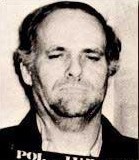 Ervil LeBaron
Murderer · USA · 1972
Ervil Morrell LeBaron (1925 to August 16, 1981) was the leader of a polygamous…
35 victims
Ervil LeBaron
Murderer · USA · 1972
Ervil Morrell LeBaron (1925 to August 16, 1981) was the leader of a polygamous…
35 victims
 Brian Kevin Rosenfeld
Murderer · USA · 1985
Brian Kevin Rosenfeld Brian Kevin Rosenfeld was sentenced to three concurrent l…
23 victims
Brian Kevin Rosenfeld
Murderer · USA · 1985
Brian Kevin Rosenfeld Brian Kevin Rosenfeld was sentenced to three concurrent l…
23 victims
 Marvin Gray
Murderer · USA · 1975
Marvin Gray was convicted killer who claimed responsibility for 23 slayings and…
23 victims
Marvin Gray
Murderer · USA · 1975
Marvin Gray was convicted killer who claimed responsibility for 23 slayings and…
23 victims
 Yahweh ben Yahweh
Murderer · USA · 1980
Yahweh ben Yahweh was born and legally named Hulon Mitchell Jr. (October 27, 19…
23 victims
Yahweh ben Yahweh
Murderer · USA · 1980
Yahweh ben Yahweh was born and legally named Hulon Mitchell Jr. (October 27, 19…
23 victims
 Russell Ellwood
Murderer · USA · 1991
Russell Ellwood was a former taxi driver. Authorities suspected him of killing…
20 victims
Russell Ellwood
Murderer · USA · 1991
Russell Ellwood was a former taxi driver. Authorities suspected him of killing…
20 victims
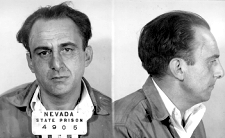 Albert Everette Sala
Murderer · USA · 1945
Albert Everette Sala was a native of Oakland, California, and he was 38 years o…
1 victim
Albert Everette Sala
Murderer · USA · 1945
Albert Everette Sala was a native of Oakland, California, and he was 38 years o…
1 victim
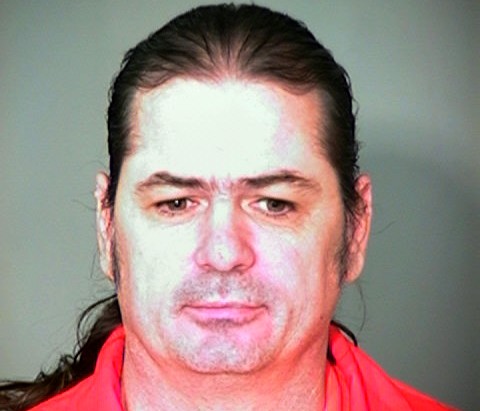 Barry Lee Jones
Murderer · USA · 1994
Barry Lee Jones was charged by the State with sexual assault, three counts of c…
1 victim
Barry Lee Jones
Murderer · USA · 1994
Barry Lee Jones was charged by the State with sexual assault, three counts of c…
1 victim
 Raymond Solano
Murderer · USA · 2001
Raymond Solano was sentenced to death on May 30, 2003 for the murder of Armondo…
1 victim
Raymond Solano
Murderer · USA · 2001
Raymond Solano was sentenced to death on May 30, 2003 for the murder of Armondo…
1 victim
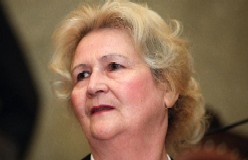 Elfriede Blauensteiner
Serial killer · Austria · 1981
Elfriede Blauensteiner (born 22 January 1931 in Vienna; died 18 November 2003)…
5 victims
Elfriede Blauensteiner
Serial killer · Austria · 1981
Elfriede Blauensteiner (born 22 January 1931 in Vienna; died 18 November 2003)…
5 victims
- Gender
- male
- Country
- USA
- Location
- Volusia County, Florida, USA
- Date of birth
- 1958
- Age at first offence
- 23
- Characteristics
- rape, drug addict, alcohol, mentally ill
- Victim profile
- Carlene Gayle Kelly (female, 18)
- Method of murder
- Shooting
- Date(s) of murder
- June 27, 1981
- Years active
- 1981
- Date of arrest
- —
- Status
-
Executed
Executed by electrocution in Florida on April 24, 1991
Case record: Roy Allen Harich
Parties
Roy Allen Harich (appellant/petitioner), v. State of Florida (appellee/respondent).
Identification and age
Roy Allen Harich was 32 years old when he was executed.
Timeline
- April 20, 1989 — Supreme Court of Florida docket #73930 (Roy Allen Harich, Appellant, vs. State of Florida, Appellee), cited as 542 So. 2d 980; and Supreme Court of Florida docket #73931 (Roy Allen Harich, Petitioner, vs. Richard L. Dugger, Respondent), cited as 542 So. 2d 980; the cases were consolidated.
- December 13, 1990 — Supreme Court of Florida docket #74620 (Roy Allen Harich, Appellant, vs. State of Florida, Appellee), cited as 573 So. 2d 203.
- March 18, 1987 — Federal appellate docket No. 86-3167 (Roy Allen Harich, Petitioner-Appellant, v. Louie L. Wainwright, Secretary, Florida Department of Corrections, Respondent-Appellee) was decided.
- March 17, 1986 — Roy Allen Harich filed a motion to vacate judgment and sentence in the Circuit Court for Volusia County, Florida pursuant to Florida Rule of Criminal Procedure 3.850 and sought an evidentiary hearing.
- March 18, 1986 — Roy Allen Harich filed a petition for writ of habeas corpus in the United States District Court for the Middle District of Florida; the district court dismissed the petition the same day and denied a request for an evidentiary hearing.
- March 18, 1987 — The United States Court of Appeals for the Eleventh Circuit decided Roy Allen Harich v. Louie L. Wainwright.
- June 27, 1981 — The sexual assault, shooting, and slashing death of Carlene Kelly occurred near Daytona Beach; Roy Allen Harich was executed later for these events.
- June 26, 1981 — Harich came home from work at 4:00 p.m.; between 4:00 p.m. and 9:00 p.m., he consumed about fifteen cans of beer and six marijuana cigarettes and was “mildly drunk.”
- March 1986 — The governor signed a death warrant for Harich.
- March 1989 — The governor signed a second death warrant for Harich.
- April 24, 1991 — Roy Allen Harich was executed by electrocution in Florida.
The offence
This case concerned the murder of a teenage girl, Carlene Kelly, and the attempted murder of a second teenage girl, Deborah Miller.
Background events leading to the killings
On June 26, 1981, Roy Harich met Carlene Kelley and Deborah Miller at a gas station in Daytona Beach. The girls accepted his offer of a ride. While in Harich’s van, the three smoked a small amount of marijuana. They stopped at a convenience store and purchased a six-pack of beer. They drove to the woods where Harich was growing marijuana plants. The marijuana leaves were damp, so they placed the leaves under the hood of the van to dry. The group waited and talked for about an hour while trying to dry the leaves.
Prosecution and defense positions at trial
State’s case
Deborah Miller testified at trial and described what happened after Harich stopped the van and ordered the girls to undress at gunpoint. Deborah testified that Harich forced Carlene Kelley to perform fellatio on him. She further testified that although she did not actually see the sexual intercourse, she heard sounds indicating that Harich also had sexual intercourse with Carlene. Harich then told the girls to get dressed and promised to give them a ride and not to do anything more to them.
Deborah testified that Harich drove them about a quarter of a mile before Carlene said she needed to use the bathroom. Harich stopped the van and told Deborah and Carlene they could walk to the road but should lie down behind the van while he drove away. Deborah stated that Carlene began to cry and beg him not to shoot her. Deborah described that Harich wrapped a towel around the barrel of his gun. Deborah testified that Harich shot Carlene in the back of the head. The prosecutor’s record also described that Harich shot Deborah in the back of the head.
Deborah testified that Carlene was still alive after the shooting and that both she and Carlene were crying softly when Harich returned carrying a knife. Deborah described that Harich stood behind her, lifted her head by her chin, and began cutting her neck with the knife; she tried to protect herself with her hands. The narrative stated that Harich cut Carlene’s throat, severing her spinal cord and causing instantaneous death.
Deborah testified she did not lose consciousness and that after concluding Carlene was dead, she crawled and dragged herself out of the woods to the side of the highway, where she was found by a passing motorist and taken to a hospital.
At the hospital, Deborah told the police that her attacker’s name was Roy and provided a physical description of the man and his van. She was the state’s key witness and made an in-court identification of Harich.
Defense case
Harich testified on his own behalf. He stated that he had consumed a substantial amount of beer and smoked marijuana that evening. He admitted picking up the girls at the filling station and driving them to a deserted area in the woods to pick marijuana. He testified that the group waited in the woods for more than an hour while trying to dry the marijuana leaves and then departed after Deborah asked if they could leave.
Harich denied sexual battery of Carlene Kelley, denied Carlene’s murder, and denied the attempted murder of Deborah Miller. He stated that he drove the girls out of the woods and dropped them off at a nearby convenience store so they could call a friend for a ride home.
Victims and witnesses
- Carlene Kelly / Carlene Kelley (murder victim; teenage girl; died instantly after her throat was cut, with spinal cord severed).
- Deborah Miller (surviving victim; teenage girl; testified and made an in-court identification).
- Tina Wooten — identified as Carlene’s sister who watched proceedings outside the prison during Harich’s final appeal, and was a witness among those described in the execution reporting narrative.
- Alex and Keith Kelly — identified as Carlene’s brothers, waiting outside the prison during the final appeal.
Investigation, interrogation, and suppressed statements
During interrogation, investigators Vail and Burnsed obtained statements from Harich. The trial judge excluded these statements during the guilt phase because they were obtained in violation of Harich’s Fifth and Sixth Amendment rights, but allowed the prosecutor to introduce them during the penalty phase.
The trial record described:
- Investigator Vail testified that Harich said he remembered leaving Deborah Miller and Carlene Kelley lying behind the van as he drove away.
- Investigator Burnsed testified that when Harich was questioned regarding the whereabouts of his weapon, Harich stated that he “must have thrown it out of the window of the van into the drainage ditch next to the dirt road.”
Trial
Charges
The jury heard evidence in a capital case where Harich was charged under Florida law with:
- first degree murder,
- attempted first degree murder,
- use of a firearm in the commission of a felony,
- two counts of kidnapping.
Guilt phase findings
The jury found Harich guilty of:
- the first-degree murder of Carlene Kelley,
- the attempted first-degree murder of Deborah Miller,
- the use of a firearm in the commission of a felony,
- and two counts of kidnapping.
Sentencing phase
During the penalty phase:
- Harich presented a clinical psychologist who testified that, though Harich was competent at the time of the offense, he was operating under the influence of extreme mental or emotional disturbance due to his consumption of substantial amounts of drugs and alcohol.
- Harich called character witnesses who testified that he worked very effectively as a volunteer fireman and that he had been a model prisoner while confined in jail before his trial.
- The state presented as evidence the testimony of two law enforcement officers, Sergeants Vail and Burnsed, concerning statements Harich had made during interrogation; these statements had been suppressed during the guilt phase but were admitted in the penalty phase under the more liberal evidentiary standard in section 921.141(1), Florida Statutes (1981).
At the conclusion of the penalty phase, the jury voted nine-to-three to recommend imposition of the death penalty. The trial judge agreed with the jury and imposed the death penalty, finding aggravating circumstances:
- Harich murdered Carlene Kelley while he was committing or attempting to commit the crimes of sexual battery and kidnapping.
- Harich killed Carlene Kelley for the purpose of avoiding and preventing his lawful arrest.
- The killing was especially heinous, atrocious, and cruel.
- The capital felony was committed in a cold, calculated, and premeditated manner, without any pretense of moral or legal justification.
The trial court found one mitigating circumstance: Harich had no significant prior history of criminal activity.
Appeals and post-conviction proceedings
Direct appeal and certiorari
The Florida Supreme Court affirmed Harich’s convictions and sentences in Harich v. State, 437 So.2d 1082 (Fla. 1983). Certiorari was denied by the United States Supreme Court in Harich v. Florida, 465 U.S. 1051 (1984).
Habeas and Rule 3.850 proceedings
After the governor signed a death warrant for Harich in March 1986, Harich petitioned the Florida Supreme Court for a writ of habeas corpus; the arguments were rejected. The case was Harich v. Wainwright, 484 So.2d 1237 (Fla.), cert. denied, 476 U.S. 1178 (1986).
On March 17, 1986, Harich filed a motion to vacate judgment and sentence in the Circuit Court for Volusia County, Florida under Florida Rule of Criminal Procedure 3.850, seeking an evidentiary hearing. His only cognizable claims at that stage were ineffective assistance of trial counsel:
- trial counsel did not prepare an involuntary intoxication defense,
- trial counsel did not call available witnesses during the sentencing phase.
On March 18, 1986, the trial court denied the motion and the request for a hearing; the Florida Supreme Court affirmed in Harich v. State, 484 So.2d 1239 (Fla. 1986).
On March 18, 1986, Harich also filed a petition for writ of habeas corpus in the United States District Court for the Middle District of Florida. The district court dismissed the petition the same day and denied a request for an evidentiary hearing.
The Eleventh Circuit Court of Appeals affirmed the denial of habeas corpus relief in Harich v. Dugger, 844 F.2d 1464 (11th Cir. 1988), noting that “Indeed, we think that the lawyer was above average if not outstanding in representing his client in this case.”
Second death warrant and subsequent proceedings
After the governor signed a second death warrant in March 1989, Harich filed a second motion for relief under Rule 3.850. After the trial court denied relief, Harich appealed and also filed with the Florida Supreme Court a petition for a writ of habeas corpus raising multiple grounds for relief, including that a conflict of interest existed due to trial counsel’s failure to reveal that he served as a special deputy sheriff in an adjacent county at the same time he represented Harich.
Execution reporting and last appeal narrative
Roy Allen Harich was executed in Florida in an electric chair at Florida State Prison, with the execution occurring hours after the United States Supreme Court rejected his last appeal.
He was executed on April 24, 1991 at 7:06 A.M. after the executioner threw the switch on the electric chair.
A quoted statement was attributed to Harich: “I’m disappointed with the almost total lack of fairness in the American criminal justice system,” the 32-year-old inmate said in a barely audible voice after he was strapped in. “This is truly a sad time in our country’s history, when political concerns take on more importance than the fundamental rights of the individual.”
Other details
Marijuana and beer consumption
The appellate record described that Harich consumed approximately fifteen cans of beer and six marijuana cigarettes between 4:00 p.m. and 9:00 p.m. on June 26, 1981, and testified he was “mildly drunk.”
Prosecutorial closing argument quotations (voluntary intoxication discussion)
During guilt/innocence closing argument, the prosecutor stated: “Well, perhaps it might come to your mind, might come up later on, well, there's a lot of drinking. Does that take away the premeditation? There was some, even though, as you recall, Debbie did not say she thought the Defendant was drunk. She said she thought he was sober. He had two beers, only, while she was with him. That they didn't smoke any pot. That they couldn't get it dried out. So that, at least, her characterization, at that time, of the Defendant, was that he was not intoxicated, nor had he been on drugs, from her observation. The Defendant disagrees with that. He's had a lot of beer. And he's had drugs. But regardless of which point of view you might take, you will still find that the acts took such a deliberate intent and over a period of time, and that the alcohol was consumed voluntarily, not involuntarily, and that makes a difference, that that the pot, if, in fact, pot got smoked, that was done voluntarily, not involuntarily, so that drunkenness, and there's been no testimony from any of the State's witnesses concerning that there was any drunkenness or that, but drunkenness in the situation that you have before you, I submit to you, even that would not be a defense to premeditated murder in this particular case. Nor had it been argued. Like I say, I only have one argument.”
Harich’s counsel, in rebuttal closing argument, stated: “I am here to say to you, on behalf of Roy Harich, as his lawyer, that he says he is not guilty of any of these offenses. Okay. And, so, if I argue anything that sounds any different than that, take it as theory, take it as an answer in part to Mr. Smith's argument. But still I feel that is something that should be said, because Mr. Smith commented on the law with respect to premeditated design.”
Counsel further stated: “But, suppose a man is so drunk and so stoned out on marijuana that he can't premeditate? What then? Suppose he's not capable of forming rational, logical thoughts, courses of conduct? Then where is the premeditation if he can't premeditate? So, if you find from the evidence that Roy Harich, in fact, committed the killing, or any other offense, remember and give effect, if you will, to the rules of the law as they may be, as they will be given to you as to whether or not he could really premeditate and plan and design what happened here.”
Prosecutorial statements related to right to counsel
In penalty-phase argument, the prosecutor stated: “[W]e know that he was attempting to go undetected. Even when it showed up in the papers, his first reaction was not to call the police and assist them in their investigation. His first reaction was to call a lawyer. And it was to turn himself in for arrest for suspicion of murder, not to give vital information. We know his intent was not to be apprehended and, therefore, another aggravating circumstance, because the murder was committed with the intention of ... avoiding detection or from escaping of any possible custodial situation.”
Prosecutor’s statements on mental impairment and age (penalty phase)
The prosecutor stated: “Another mitigating circumstance ... is whether or not the Defendant could appreciate the criminality of his conduct and conform the conduct to the requirements of law was substantially impaired. I remind you on that particular point that the doctor stated that in her opinion the Defendant was sane. That not only was he sane but at the time, I actually read a quote to her which she agreed with, from her report, was that it was her opinion that he was not suffering from any disease or defect of the mind such that he was unable to know and appreciate the nature and quality or consequences of his behavior and know that it was wrong. So that Dr. McMahon, without a doubt, has testified he knew the difference at the time of the crime, of right and wrong, and he could understand the nature and consequences of his act. So that the mitigating circumstance, I would submit to you, is not applicable. However, it exists before you to consider. The age of the Defendant. I think the testimony, at least the appearance, would show that the Defendant is probably twenty-three years old, maybe twenty-two, at the time of this occurrence. That, we would show, is not really a mitigating circumstance since our common knowledge and our experience shows us most crimes are committed by people in the eighteen to twenty-five year range.”
Witness attempt to leave evidence
Deborah testified that she attempted to leave evidence by trying to write either “the name Roy, or the word van, in the sand with her fingers during one of her rest stops.” She was unable to positively identify what she had written when shown a photograph of the area at trial.
Police identification and “Roy” reference
Deborah told police that her attacker’s name was Roy and described the man and his van. She was the state's key witness and made an in-court identification.
Sentence details and jury recommendation
The appellate record described that:
- the jury voted nine-to-three to recommend the death penalty for the murder charge,
- the trial court imposed the death penalty for the murder,
- and, separately from the death sentence for murder, the trial court sentenced Harich to thirty years for attempted murder, fifteen years for using a firearm, and thirty years for each of the two kidnappings.
Decision language recorded in the appellate opinions (procedural dispositions)
In the federal appellate decision described in the record:
- the court affirmed in part and reversed in part and remanded for an evidentiary hearing, with the conclusion that the case was remanded to determine whether trial counsel rendered ineffective assistance with respect to the intoxication defense and, if so, the legal consequence of such a determination.
- the final later federal decision described affirmed the denial of habeas relief and did not grant an evidentiary hearing on the intoxication ineffectiveness claim, and affirmed rejection of the Caldwell claim.
Outcome
Roy Allen Harich was executed by electrocution in Florida on April 24, 1991.
Spotted an error, or have more information about this case?