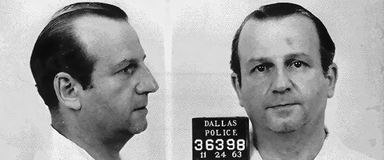
Jack Ruby
Murderer Ervil LeBaron
Murderer · USA · 1972
Ervil Morrell LeBaron (1925 to August 16, 1981) was the leader of a polygamous…
35 victims
Ervil LeBaron
Murderer · USA · 1972
Ervil Morrell LeBaron (1925 to August 16, 1981) was the leader of a polygamous…
35 victims
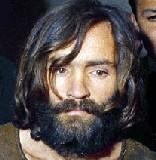 Charles Manson
Murderer · USA · 1969
Charles Milles Manson (born November 12, 1934) was an American criminal and mus…
9 victims
Charles Manson
Murderer · USA · 1969
Charles Milles Manson (born November 12, 1934) was an American criminal and mus…
9 victims
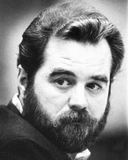 Dennis Duane Webb
Murderer · USA · 1973
Defendant: Dennis Duane Webb · Victims: John Rainwater and Lori Rainwater · Cou…
7 victims
Dennis Duane Webb
Murderer · USA · 1973
Defendant: Dennis Duane Webb · Victims: John Rainwater and Lori Rainwater · Cou…
7 victims
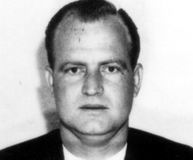 Gary Gene Tison
Murderer · USA · 1967
Gary Gene Tison was serving life sentences at the Arizona state prison. He had…
7 victims
Gary Gene Tison
Murderer · USA · 1967
Gary Gene Tison was serving life sentences at the Arizona state prison. He had…
7 victims
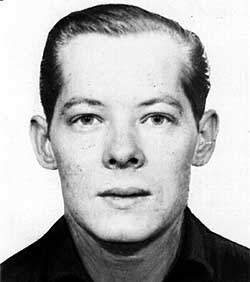 Richard Lee Tingle
Murderer · USA · 1968
Richard Lee Tingle was born out of wedlock in December 1940. He was raised by a…
6 victims
Richard Lee Tingle
Murderer · USA · 1968
Richard Lee Tingle was born out of wedlock in December 1940. He was raised by a…
6 victims
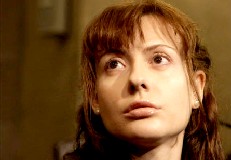 Estibaliz Carranza
Murderer · Austria · 2008
Estibaliz Carranza was sentenced to life in a secure mental institution on Nove…
2 victims
Estibaliz Carranza
Murderer · Austria · 2008
Estibaliz Carranza was sentenced to life in a secure mental institution on Nove…
2 victims
 Larry Keith Robison
Mass murderer · USA · 1982
August 10, 1982 (4:30 p.m.) — Junett Bryant arrived at the home of her adult so…
5 victims
Larry Keith Robison
Mass murderer · USA · 1982
August 10, 1982 (4:30 p.m.) — Junett Bryant arrived at the home of her adult so…
5 victims
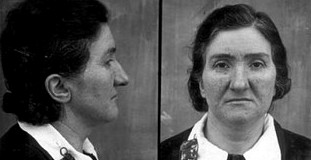 Leonarda Cianciulli
Serial killer · Italy · 1939
Leonarda Cianciulli (November 14, 1893, Montella, Province of Avellino – Octobe…
3 victims
Leonarda Cianciulli
Serial killer · Italy · 1939
Leonarda Cianciulli (November 14, 1893, Montella, Province of Avellino – Octobe…
3 victims
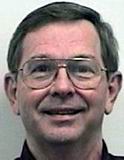 William Phillips
Murderer · USA · 2007
William Phillips was identified as the gunman in the Johnson Space Center (JSC)…
1 victim
William Phillips
Murderer · USA · 2007
William Phillips was identified as the gunman in the Johnson Space Center (JSC)…
1 victim
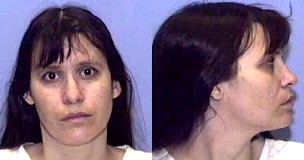 Andrea Yates
Homicide · USA · 2001
Andrea Pia Yates (born Andrea Pia Kennedy on July 2, 1964) was a former Houston…
5 victims
Andrea Yates
Homicide · USA · 2001
Andrea Pia Yates (born Andrea Pia Kennedy on July 2, 1964) was a former Houston…
5 victims
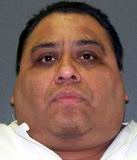 Ramiro Hernandez
Murderer · USA · 1997
Ramiro Hernandez was convicted of capital murder and sentenced to death. He was…
2 victims
Ramiro Hernandez
Murderer · USA · 1997
Ramiro Hernandez was convicted of capital murder and sentenced to death. He was…
2 victims
- Gender
- male
- Country
- USA
- Location
- Dallas, Texas, USA
- Date of birth
- March 25, 1911
- Age at first offence
- 52
- Characteristics
- —
- Victim profile
- Lee Harvey Oswald, 24 ( arrested for the assassination of President John F. Kennedy )
- Method of murder
- Shooting ( snub-nosed Colt Cobra .38)
- Date(s) of murder
- November 24, 1963
- Years active
- 1963
- Date of arrest
- Same day
- Status
-
Died in custody
Sentenced to death on March 14, 1964; died in prison on January 3, 1967
Case overview
Jack Leon Ruby (born Jacob Rubenstein in 1911) was a Dallas nightclub owner who murdered Lee Harvey Oswald on November 24, 1963. He changed his name to Jack Leon Ruby in December 1947. Ruby was sentenced to death on March 14, 1964. He died of a pulmonary embolism on January 3, 1967 while he was awaiting a new trial.
Timeline
- November 24, 1963 — Jack Ruby shot and fatally wounded Lee Harvey Oswald at 11:21 AM CST while authorities were preparing to transfer Oswald by car from police headquarters to a nearby jail.
- March 14, 1964 — Ruby was convicted of “murder with malice” and received a death sentence.
- June 7, 1964 — Ruby expressed to Chief Justice Warren that he had been used for a purpose.
- July 18, 1964 — A polygraph examination was conducted in Dallas jail proceedings relating to Ruby’s case.
- March 1965 — Ruby conducted a brief televised news conference.
- December 9, 1966 — Ruby was admitted to Parkland Hospital in Dallas, apparently suffering from pneumonia.
- January 3, 1967 — Ruby died of a pulmonary embolism at Parkland Hospital.
- February 1967 — Arrangements for a new trial in Wichita Falls, Texas were under way when Ruby died.
Background
Jack Ruby was born Jacob Rubenstein to Joseph Rubenstein (1871–1958) and Fannie Turek Rutkowski or Rokowsky in Chicago, Illinois, in 1911. His Polish-born parents were Orthodox Jews. His father was born in the town of Sokołów Podlaski, Poland (then part of Imperial Russia), and joined the Russian army in 1893, serving in the artillery. Ruby’s family left the Russian Empire about four years later and briefly lived in the United Kingdom of Great Britain and Ireland and then Canada. They entered the United States in 1903 and settled in the heavily Jewish 24th Ward on Chicago’s West Side in the following year.
Conflicting birth dates for Jacob Rubenstein were quoted by various sources and were given by Ruby at various times. March 25, 1911 was the date he most commonly gave for his own birthdate. Other dates stated in the material included June to March ranges and other specific days, including March 19, 1911. The recording of births in Chicago in 1911 was stated as not being mandatory before 1915.
Ruby was the fifth of his parents’ eight living children. He had a troubled childhood and adolescence marked by juvenile delinquency and time spent in foster homes. He sold horse-racing tip sheets and other novelties and acted as business agent for a local refuse collectors union that later became part of the International Brotherhood of Teamsters.
In December 1939, Ruby was implicated in the fatal shooting of the union’s president, attorney Leon Cooke, but he was cleared of wrongdoing. In memory of Cooke, Ruby later adopted “Leon” as his middle name.
Organized crime links and underworld associations
Ruby ran errands for Al Capone’s Mafia organization as a youngster. During the 1940s, he frequented race tracks in Illinois and California.
During the years leading up to 1963, Ruby developed close ties to many Dallas police officers, who frequented his nightclubs. He showered them with large quantities of liquor and other favors. The material also stated that Ruby was known to have been acquainted with members and associates of the Italian Mafia, including connections described around Sam and Joe Campisi, and through links described to Carlos Marcello and Santo Trafficante Jr.
The House Select Committee on Assassinations said Ruby knew Sam and Joe Campisi since 1947 and had been seen with them on many occasions. A PBS news report described the Campisi Brothers as leading figures in the Dallas underworld. The material stated that the Campisi Brothers were lieutenants of Carlos Marcello, and that Marcello had reportedly talked of killing the President.
Ruby went to Joe Campisi’s restaurant a day before President Kennedy was murdered. After Ruby was jailed for murdering Lee Oswald, Campisi visited him in jail.
The material also stated that Ruby had been seen with a handgun in the halls of Dallas police headquarters on several occasions after the assassination and Oswald’s arrest. It stated Ruby impersonated a newspaper reporter and was at the police station on the night of November 22, though the reason was unknown.
Some portions described contested disputes about Ruby’s entry route into the basement of Dallas police headquarters and prisoner holding area. Ruby stated he entered the jail via the entrance ramp, and Napoleon Daniels stated he saw Ruby use the ramp. Others disputed that claim and argued Ruby entered the basement from inside police headquarters itself. The material also included the comment: “He [Ruby] practically lived at the [police] station, and they [the police] lived at his place” (the Carousel Club).
The offence
Ruby (also known as “Sparky,” linked in the material to his short temper and boxing nickname “Sparkling Ruby”) was a publicity-focused Dallas nightclub owner. Witnesses saw him with a handgun in the halls of Dallas police headquarters on several occasions after President Kennedy’s assassination and Oswald’s arrest.
On Sunday, November 24, 1963, Ruby shot and fatally wounded 24-year-old Lee Harvey Oswald at 11:21 AM CST while authorities were preparing to transfer Oswald from police headquarters to a nearby jail. The shooting was broadcast live nationally on television, described as the first live broadcast of a homicide in television history.
When Ruby was arrested immediately after the shooting, he told several witnesses that his killing of Oswald would show the world that “Jews have guts,” that he helped the city of Dallas “redeem” itself in the eyes of the public, and that Oswald’s death would spare Jacqueline Kennedy the ordeal of appearing at Oswald’s trial. Later, he claimed he shot Oswald on the spur of the moment when the opportunity presented itself, without considering any reason for doing so.
The weapon used by Ruby was a snub-nosed Colt Cobra .38 revolver with the serial number 2744 LW.
Some details of Ruby’s earlier behavior on the night of the assassination and immediately before the shooting were described. Ruby impersonated a newspaper reporter during a press conference at Dallas Police Headquarters. The District Attorney Henry Wade said that Lee Oswald was a member of the anti-Castro Free Cuba Committee. Ruby corrected him by stating: “it was the pro-Castro Fair Play for Cuba Committee.”
The route that Ruby took to get into the basement of Dallas police headquarters and prisoner holding area was stated as disputed, including competing claims about whether he used a ramp.
The material also stated Ruby was taking phenmetrazine at the time of the shooting. Another alleged motive attributed in the material included a conversation by Frank Sheeran with Jimmy Hoffa, in which Hoffa claimed Ruby was assigned to coordinate police officers loyal to Ruby to murder Oswald while he was in their custody, and that Ruby mismanaged the operation, leading to a choice to finish the job himself or forfeit his life.
Ruby left his favorite dog, Sheba, in the car before the shooting, and the material stated there was “some evidence that Ruby’s actions were on a whim.”
At his hospital bed after the appellate developments (as presented in the material’s discussion of later statements), the material attributed an “unsigned Associated Press release” stating Ruby made a final statement that he and he alone had been responsible for the murder of Lee Harvey Oswald: “There is nothing to hide... There was no one else.”
Prosecution and conviction
Melvin Belli agreed to represent Ruby free of charge and attempted to prove legal insanity and a history of mental illness in Ruby’s family. The material stated Ruby’s mother had been committed to a mental hospital years before.
On March 14, 1964, Ruby was convicted of “murder with malice” and received a death sentence.
Ruby repeatedly asked orally and in writing to speak to the Warren Commission members over the six months following the Kennedy assassination. Only after Ruby’s sister Eileen wrote letters to the Warren Commission (and after her writing letters became publicly reported) did the commission agree to talk to Ruby.
In June 1964, Chief Justice Earl Warren, then-Representative Gerald R. Ford of Michigan, and other commission members went to Dallas and met with Ruby. Ruby begged Warren several times to take him to Washington D.C., fearing for his life and that of his family members. Ruby told Warren: “a whole new form of government is going to take over this country, and I know I won’t live to see you another time.”
The record of Ruby’s testimony showed Warren declaring the Commission would have no way of providing protection because it had no police powers.
Following his March 1964 conviction, Ruby’s lawyers, led by Sam Houston Clinton, appealed to the Texas Supreme Court. Ruby’s lawyers argued he could not have received a fair trial in Dallas due to excessive publicity.
A year after the conviction, in March 1965, Ruby held a brief televised news conference and stated: “everything pertaining to what’s happening has never come to the surface. The world will never know the true facts, of what occurred, my motives. The people who had so much to gain, and had such an ulterior motive for putting me in the position I’m in, will never let the true facts come aboveboard to the world.”
Eventually, the appellate court agreed to a new trial and in November 1966 ruled that his motion for a change of venue before the original trial court should have been granted. Ruby’s conviction and death sentence were overturned.
Appeals and subsequent procedural developments
The appellate court ordered a new trial, with arrangements underway for a new trial in February 1967 in Wichita Falls, Texas. On December 9, 1966, Ruby was admitted to Parkland Hospital in Dallas apparently suffering from pneumonia. The material stated that a day later doctors realized he had cancer in his liver, lungs, and brain. The material then stated Ruby died three weeks later.
The material also discussed criticisms and contested interpretations of Ruby’s claims about conspiracy and his relationships.
Polygraph examination proceedings (commission arrangement)
The material included a sequence of exchanges and proceedings associated with a polygraph examination.
During preliminary arrangements, Jack Ruby asked:
“Without a lie detector test on my testimony, my verbal statements to you, how do you know if I am telling the truth ?”
Defense counsel Tonahill replied:
“Don’t worry about that, Jack.”
Chief Justice Warren stated:
“I can’t tell you just how much confidence I have in it, because it depends so much on who is taking it, and so forth. But I will say this to you, that if you and your counsel want any kind of test, I will arrange it for you. I would be glad to do that, if you want it. I wouldn’t suggest a lie detector test to testify the truth. We will treat you just the same as we do any other witness, but if you want such a test, I will arrange for it.”
Ruby said:
“All I want to do is to tell the truth, and the only way you can know it is by the polygraph, as that is the only way you can know it.”
Chief Justice Warren stated:
“That we will do for you.”
Arrangements were made for the FBI to conduct the examination, and the material stated a detailed set of questions was prepared, with the test set for July 16, 1964. The material stated that a few days before the scheduled test the Commission was informed that Eva Grant and counsel Joe H. Tonahill opposed the polygraph on the grounds that psychiatric examinations showed his mental state would make the test meaningless. The material stated Sol Dann informed the Dallas office of the FBI on July 15, 1964 that a polygraph examination would affect Ruby’s health and would be of questionable value according to Dr. Emanuel Tanay.
It stated Chief Defense Counsel Fowler requested that Dr. Tanay be present, that results not be disclosed other than to the Commission, that questions not be disclosed to the District Attorney’s office, and that the results be made available to defense counsel.
It stated that Dr. Tanay was not in Dallas and that arrangements were made for Dr. William R. Beavers, a psychiatrist who had previously examined and evaluated Ruby’s mental state, to attend. It described that Ruby entered the jury conference room at 2:23 p.m. and was informed that the Commission was prepared to fulfill its commitment to offer him a polygraph examination but was not requesting the test.
On behalf of the Commission, Assistant Counsel Specter warned Ruby that anything he said could be used against him. Ruby stated he wanted the polygraph examination conducted and wanted the results released to the public as promptly as possible.
The material listed questions and answers, including these:
- Ruby answered “No” to: “Did you know Oswald before November 22, 1963 ?”
- Ruby answered “No” to: “Did you assist Oswald in the assassination ?”
- Ruby answered “No” to: “Are you now a member of the Communist Party ?”
- Ruby answered “No” to: “Between the assassination and the shooting, did anybody you know tell you they knew Oswald ?”
- Ruby answered “No” to: “Aside from anything you .said to George Senator on Sunday morning, did you ever tell anyone else that you intended to shoot Oswald ?”
- Ruby answered “Yes” to: “Did you first decide to shoot Oswald on Sunday Morning ?”
- Ruby answered “Yes” to: “Were you on the sidewalk at the time Lieutenant Pierce’s car stopped on the ramp exit ?”
- Ruby answered “No” to: “Did you enter the jail by walking through an alleyway ?”
- Ruby answered “Yes” to: “Did you walk past the guard at the time Lieutenant Pierce's car was parked on the ramp exit ?”
- Ruby answered “No” to: “Did you talk with any Dallas police officers on Sunday, November 24, prior to the shooting of Oswald ?”
- Ruby answered “No” to: “Did you see the armored car before it entered the basement ?”
- Ruby answered “Yes” to: “Did you shoot Oswald in order to save Mrs. Kennedy the ordeal of a trial ?”
- Ruby answered “No” to: “Did you know the Tippit that was killed ?”
- Ruby answered “Yes” to: “Did you tell the truth about relaying the message to Ray Brantley to get McWillie a few guns ?”
- Ruby answered “Yes” to: “Did you go to the assembly room on Friday night to get the telephone number of KLIF ?”
- Ruby answered “No” to: “Did you ever meet with Oswald and Officer Tippit at your club ?”
- Ruby answered “No” to: “Were you at the Parkland Hospital at any time on Friday ?”
- Ruby answered “No” to: “Did “Blackie” Hanson speak to you just before you shot Oswald?”
- Ruby answered “Yes” to: “Is everything you told the Warren Commission the entire truth ?”
The material included discussion of polygraph interpretation and limitations, and stated that Dr. Beavers generally described Ruby as a “psychotic depressive” and that no significance should be placed on the polygraph examination, stating charts could not be relied upon.
Sentencing and death
The material stated that his conviction and death sentence were later overturned. It also stated arrangements for a new trial in February 1967 in Wichita Falls were under way when Ruby died.
Death and aftermath
Ruby died of a pulmonary embolism at Parkland Hospital in Dallas on January 3, 1967. The material stated he also suffered from lung cancer and that the embolism was secondary to bronchogenic carcinoma. It also stated Parkland was the hospital where President Kennedy was taken and where Lee Harvey Oswald died.
The material stated Ruby was buried in the Westlawn Cemetery in Chicago.
It further stated that Ruby died while awaiting his new trial, and that some believe that if he had survived he likely would have had his sentence commuted to “time served,” leaving him free.
Other details: identity, name change, and personal background included in the material
The material described Ruby’s legal name change: on December 30, 1947 he changed his name to Jack L. Ruby by securing a decree from the 68th Judicial District Court of Dallas. His brothers Earl and Sam also legally changed their names from Rubenstein to Ruby sometime in 1947.
It described Ruby’s middle name “Leon” adoption in memory of attorney Leon Cooke, and his earlier involvement in labor union activities including Local 20467 of the Scrap Iron and Junk Handlers Union, with Cooke as the union’s financial secretary.
It described Ruby’s employment and activities in San Francisco and Chicago, including ticket scalping, novelty sales, newspaper subscription sales, and various commercial ventures including Spartan Novelty Co. It described military service in the U.S. Army Air Forces, induction on May 21, 1943, training as an aircraft mechanic, passing marksmanship tests and sharpshooter rating, and honorably discharged on February 21, 1946.
It described disputes and arrests before the assassination, including multiple arrests and several instances where charges were dismissed or Ruby was found not guilty.
It described multiple incidents of violence toward employees and others, including a 1950 incident where Ruby struck an employee over the head with a blackjack, a 1951 incident where Ruby knocked guitarist Willis Dickerson to the ground and the top half of Ruby’s left index finger was amputated after Dickerson bit Ruby’s finger, and other reported beatings and threats.
It described Ruby’s business operations including multiple clubs such as the Singapore Supper Club (later renamed Silver Spur Club), the Vegas Club, the Sovereign Club, and the Carousel Club, and it described financial and tax problems including State franchise and Federal excise and income taxes.
It described Ruby’s police associations and that he attended a funeral for at least one policeman killed in action and staged a benefit performance for the widow of another. It also described that at least one policeman regularly dated and eventually married one of the Carousel’s strippers.
It discussed Ruby’s personal interests and relationships, including stated affection for dogs and testimony that he referred to his dogs as his “children.” It also included discussions of his religious interests as not especially devout, with traditional memorial prayer recited for 11 months after his father’s death, and attendance on Jewish high holy days.
Film, music, and books mentioned
The material stated Ruby’s shooting of Oswald and the mystery surrounding his behavior were topics of films, including:
- “Ruby & Oswald” (1978 made-for-television movie)
- “Ruby” (1992 feature film)
- “JFK” (1991 film by Oliver Stone)
Music referenced in the material included:
- Camper Van Beethoven song “Jack Ruby” on the album Key Lime Pie
- Deep Purple song “Jack Ruby” on the album Abandon
- Billy Bragg reference to Jack Ruby in “Wishing The Days Away” on the album Talking With the Taxman About Poetry
Books mentioned in the material included multiple titles and authors, including “Breach of Trust: How the Warren Commission Failed the Nation and Why” (Gerald D. McKnight, 2005), “Not in Your Lifetime: The Definitive Book on the JFK Assassination” (Anthony Summers, 1998), “The Last Investigation” (Gaeton Fonzi, 1993), “Oswald and the CIA” (John Newman, 1995), “All American Mafioso” (Charles Rappleye and Ed Becker, 1991), “The Death of a President: November 20-November 25” (William Manchester), “Report of the Warren Commission on the assassination of President Kennedy” (McGraw-Hill, 1964), and an “American Tabloid” novel by James Ellroy featuring Ruby as a supporting character.
Disputes and contested assertions included
The material described disputed assertions including:
- dispute over the route Ruby took to reach the basement of Dallas police headquarters
- disputed claims about Ruby’s presence at Parkland Hospital on Friday and the Warren Commission’s decision to believe Ruby rather than Seth Kantor
- debated motives for Ruby’s shooting, including conspiracy theories involving organized crime and competing suggestions about emotional instability and vengeance
- disputes over whether Ruby was affiliated with organized crime
Spotted an error, or have more information about this case?