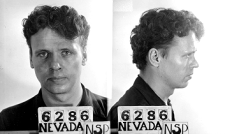
Ferdinand Bourdlais
Murderer Ernesto Picchioni
Murderer · Italy · 1944
March 12, 1949 — He was sentenced to life in prison. · 2016 — The case record l…
16 victims
Ernesto Picchioni
Murderer · Italy · 1944
March 12, 1949 — He was sentenced to life in prison. · 2016 — The case record l…
16 victims
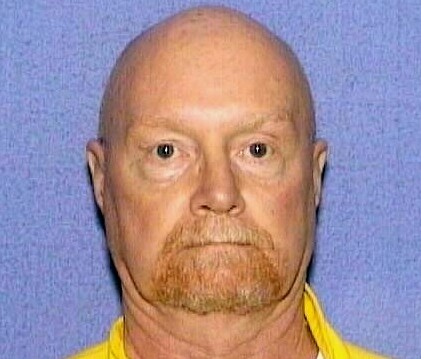 Gary Duane Rardon
Murderer · USA · 1962
Gary Duane Rardon killed a man in 1962 and later served 4 years for manslaughte…
4 victims
Gary Duane Rardon
Murderer · USA · 1962
Gary Duane Rardon killed a man in 1962 and later served 4 years for manslaughte…
4 victims
 José María Jarabo
Murderer · Spain · 1958
José María Jarabo was a Spanish spree killer. · April 28, 1923 — José María Jar…
4 victims
José María Jarabo
Murderer · Spain · 1958
José María Jarabo was a Spanish spree killer. · April 28, 1923 — José María Jar…
4 victims
 Cynthia Pugh
Murderer · USA · 1983
Cynthia Pugh was convicted in 1984 of murdering her boss and lover, Manlius bus…
1 victim
Cynthia Pugh
Murderer · USA · 1983
Cynthia Pugh was convicted in 1984 of murdering her boss and lover, Manlius bus…
1 victim
 Travis Lee Gibson
Murderer · USA · 2000
Travis Lee Gibson received sentences of death on 2001. On automatic and direct…
1 victim
Travis Lee Gibson
Murderer · USA · 2000
Travis Lee Gibson received sentences of death on 2001. On automatic and direct…
1 victim
 Wade Frankum
Mass murderer · Australia · 1991
Wade Frankum Committed suicide by shooting himself the same day; in 1991 Wade F…
7 victims
Wade Frankum
Mass murderer · Australia · 1991
Wade Frankum Committed suicide by shooting himself the same day; in 1991 Wade F…
7 victims
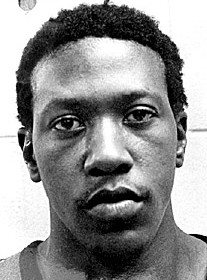 Hastings Wise
Mass murderer · USA · 1997
Arthur Hastings Wise was the defendant. Wise worked for about four years at the…
4 victims
Hastings Wise
Mass murderer · USA · 1997
Arthur Hastings Wise was the defendant. Wise worked for about four years at the…
4 victims
 Jose de la Cruz
Murderer · USA · 1987
Jose De La Cruz was convicted for the 1988 murder of Domingo Rosas. De La Cruz…
1 victim
Jose de la Cruz
Murderer · USA · 1987
Jose De La Cruz was convicted for the 1988 murder of Domingo Rosas. De La Cruz…
1 victim
 Jacquelyn Greco
Murderer · USA · 1979
Jacquelyn Greco (also known as Jackie; formerly Jacquelyn Gaimari) — defendant;…
1 victim
Jacquelyn Greco
Murderer · USA · 1979
Jacquelyn Greco (also known as Jackie; formerly Jacquelyn Gaimari) — defendant;…
1 victim
- Gender
- male
- Country
- —
- Location
- —
- Date of birth
- 1926
- Age at first offence
- 26
- Characteristics
- robbery, hitchhiking, attempted rape
- Victim profile
- Ward Budzien, Sr.
- Method of murder
- Shooting Loca tion : Clark County, Nevada, USA
- Date(s) of murder
- May 20, 1952
- Years active
- 1952
- Date of arrest
- —
- Status
-
Executed
Executed by asphyxiation-gas in Nevada on April 23, 1954
Case identification
- Name: Ferdinand Bourdlais
- Also known as: Vernon Bourdlais
- Age at death: 27
- Place of origin: Marinette, Wisconsin
Status and outcome
- Ferdinand A. Bourdlais was executed at the Nevada State Prison on April 23, 1954.
- He was tried, convicted, and sentenced to death upon a charge of murdering Ward Budzien, Sr., on or about May 21, 1952.
- The Supreme Court of Nevada affirmed the judgment and the order denying a new trial.
- On Petition for Rehearing, March 19, 1954, rehearing was denied.
Timeline
- 1948 — Bourdlais escaped from the Wisconsin State Prison.
- May 19, 1952 — Bourdlais met Harry Dyer in a bar in Los Angeles, California; they determined to travel east together and stayed in a hotel that evening.
- May 20, 1952 — Ward Budzien, Sr. picked up Bourdlais and others while driving near San Bernardino, California; the group proceeded through Barstow and Baker, California.
- May 20, 1952 — Outside Las Vegas, Bourdlais informed the other hitchhikers that he intended to rob Budzien.
- May 20, 1952 — Outside Henderson, Nevada, Bourdlais robbed Budzien and murdered him; the body was buried in the desert.
- May 22, 1952 — Bourdlais was examined in the office of the Clark County district attorney by Dr. G. W. Shannon.
- January 15, 1954 — The Supreme Court of Nevada addressed the appeal from the Eighth Judicial District Court of the State of Nevada, in and for the County of Clark.
- March 19, 1954 — On Petition for Rehearing, rehearing was denied.
- April 23, 1954 — Bourdlais was executed at the Nevada State Prison.
Background
Escape and travel plan
- Bourdlais was a native of Marinette, Wisconsin.
- In 1948, Bourdlais escaped from the Wisconsin State Prison.
- In May of 1952, Bourdlais and an associate, Harry Dyer, decided to travel back east from Los Angeles by robbing people.
Defendant’s family background and institutional history
- The evidence produced on behalf of defendant stated that he was born in 1927 in Marinette, Wisconsin, of a large and impoverished family.
- The family resided in a building used as a city poor house that lacked minimum conveniences including running water, electricity, and inside toilet facilities.
- In 1942, the family of defendant was reported to have been on the relief rolls since 1925.
- Defendant’s father was crippled and unemployed except for odd or part-time jobs as a cook or bartender, and was an alcoholic.
- Defendant’s mother was mentally retarded and illiterate.
- An older brother, Francis, was committed to an institution for the feeble-minded for a period of more than four years.
- Defendant’s childhood was described as one of severe privation.
- At the age of 11, he stole a bicycle, was apprehended, pleaded guilty, and was placed on probation.
- In June 1941, at the age of 14, he was committed to the State Industrial School after pleading guilty to a charge of car theft.
- From June 1941 until July 26, 1951 (with brief intervals), defendant was institutionalized in the industrial school, the Wisconsin Reformatory, or Wisconsin State Prison, for stealing, violation of parole, or attempted escape.
- During this period, defendant was subjected on three occasions (November 6, 1941; August 14, 1946; February 13, 1947) to mental examinations by Peter Bell, M.D., examiner for the Psychiatric Field Service of the Wisconsin State Department of Public Welfare.
- Defendant was twice placed in the Mendota Hospital in Wisconsin for treatment and care for persons with mental illness for diagnosis and treatment, and mental observation and treatment.
- He was transferred to Mendota Hospital on February 7, 1942, after a suicide attempt, and remained there until March 18, 1942, when he was returned to the industrial school.
- He was later returned to the said hospital for further observation (the record showed that defendant was there on August 14, 1942), and was subsequently returned to the Wisconsin School for Boys.
- The examiner, Dr. Bell, reported low normal mentality.
- At age 14, defendant’s mental age was determined to be 13 1/2.
- At age 19, on two separate occasions, he showed a mental age of 13 years, 6 months.
- He repeated the sixth grade at age 14.
- Dr. Bell reported defendant’s reasoning powers were impaired and judgment was defective.
- Dr. Bell further reported defendant as unstable, preoccupied, inhibited, sensitive, devoid of good self-confidence, immature, obsessed of conflicts of personal nature, self-conscious, rather morbid and depressed, blocked in his thought associations, rather schizophrenically colored in his reaction, and evaluated defendant as having a neurotic character defect.
- Dr. Bell’s prognosis for defendant’s future was described as poor and dark.
- The evidence stated that although defendant at the time of Dr. Bell’s examination was found unable to evidence proper self-control, he was found able to distinguish between right and wrong.
The offence
Parties and vehicle occupants
- Ward Budzien, Sr. was described as age 47 and a Los Angeles salesman.
- Ward Budzien, Sr. was driving a 1949 Buick 4-door sedan.
- One group included Joseph Juszczak (age 23), Arnold Cole (age 22), and Boleslaus Melski (age 18) from Buffalo, New York.
- Another group included James Cockrell (age 17) and Daryl Andrews (age 17) from Sarcoxie, Missouri.
- Outside Las Vegas, Bourdlais informed other hitchhikers he intended to rob Budzien.
- Three of the hitchhikers left the vehicle in Las Vegas, wanting no part of the robbery.
- Two others accompanied Bourdlais and Dyer as they drove outside Henderson, Nevada.
- While traveling, three people occupied the front seat and three the back seat.
- In the front seat, Andrews was driving with Cockrell next to him, Dyer next, and Juszczak beside the right front door.
- In the back seat, Budzien sat next to the left door, Bourdlais next to him, Cole beside Bourdlais, and Melski next to the right rear door.
Meeting, hitchhiking route, and stated intention
- On the evening of May 19, 1952, Bourdlais met Harry Dyer in a bar in Los Angeles, California.
- Bourdlais and Dyer determined to travel east together and stayed in a hotel that evening.
- While in the hotel room, Bourdlais displayed a 38-caliber revolver and expressed an intention of robbing people to finance the trip across the country.
- In this, Dyer acquiesced and bullets were packed in Dyer’s suitcase.
- The rest of the luggage was checked at a Railway Express Office in Los Angeles.
- After breakfast in Los Angeles, Bourdlais and Dyer started hitchhiking eastward on U. S. Highway No. 66.
- At the same time, two other groups of young men left Los Angeles for points east:
- One group included Joseph Juszczak, Arnold Cole, and Boleslaus Melski, unsuccessfully sought work in the Los Angeles area, and were traveling to Detroit.
- The other group consisted of James Cockrell and Daryl Andrews, recent graduates of Sarcoxie, Missouri, high school, who had journeyed to Los Angeles for summer employment to finance their continued studies in a small Missouri college and were returning home.
Contact with Budzien and drinking
- On May 20, 1952, Budzien picked up the two Missouri boys a few miles beyond San Bernardino, California city limits, and ten miles further down the highway the three Buffalo boys were picked up.
- Budzien observed Bourdlais and Dyer standing beside the highway at the intersection of U. S. Highway 191 and 91 and told the occupants to make room so the two could also secure a ride.
- Budzien had hitchhiked himself when he was young.
- Budzien had been drinking to the extent that he was intoxicated before he picked up the hitchhikers; his driving became so erratic that he was asked by Daryl Andrews to let him drive.
- Budzien took a rear seat and Daryl Andrews took the driver’s seat.
- Budzien offered all occupants a drink, but no one other than Bourdlais took the bottle.
- They stopped in Barstow, California, for gasoline, and Budzien sent Bourdlais after another pint of whiskey.
- When Bourdlais returned with the whiskey, he noticed a roll of bills in Budzien’s shirt pocket and testified: "When I bought this whiskey for that man, this Mr. Budzien, and returned the money to his shirt pocket, I noticed a roll of bills there and I figured I would rob him of his money."
- They continued to Baker, California, where they stopped to eat.
- While entering a roadside cafe, Bourdlais said to Dyer: "I've got something cooked up."
- Dyer said: "So lay off the whiskey."
- Bourdlais responded: "I'm not drinking, I'm only pretending. I stick my tongue in the bottle to stop the liquor from going down my throat."
- While in the cafe, Bourdlais reiterated to Daryl Andrews that he was not drinking but sticking his tongue in the bottle.
- Defendant testified he drank throughout the trip, while Melski and Cole testified that no one in the car had anything to drink after eating at Baker, California.
- Dyer testified he had been afraid defendant might get drunk and he would have him on his hands in Las Vegas.
- The evidence included a statement by the court that it was the defendant who displayed the revolver and expressed intent to rob.
Revolver, planned robbery, and leaving some hitchhikers
- Bourdlais removed the 38-caliber revolver from his belt and it remained in his hands for the remainder of the trip, though Bourdlais and Dyer contended Cole handled it at one point.
- Bourdlais was asked to put it away and stated he was going to rob Budzien.
- He feigned illness and asked Andrews to stop the vehicle.
- He awakened Budzien and asked him to get out, but Budzien and Cockrell told him to get out by the other door.
- Bourdlais closed the door, struck Cockrell on the arm, and the group continued for a distance of 30 miles.
- With the revolver in his hand, Bourdlais leaned over the back of the front seat and asked if the boys wanted in on robbing Budzien or taking the money; the defendant testified: "I did ask the other boys if they wanted in on the robbery or in on taking the money."
- Cockrell and Andrews said they did not and asked to be let out in Las Vegas.
- In Las Vegas, Nevada, Andrews and Cockrell were permitted to leave after passing through the outskirts of the city.
- Bourdlais admonished them not to say anything to the police.
- As Juszczak helped them remove their luggage from the trunk, Juszczak asked them to remain because five could get the gun away from Bourdlais, who remained in the vehicle beside Budzien.
- The Missouri boys went immediately to a drive-in and reported the incident to police.
Murder of Ward Budzien, Sr. and statements
- After Juszczak driving with Dyer beside him and Melski beside the right front door, Budzien was still sleeping in the left rear seat; Bourdlais sat next to him and Cole by the right rear door.
- Beyond Henderson, Clark County, Nevada, Juszczak was directed by Bourdlais to pull off the main highway onto a dirt road.
- They proceeded until Bourdlais directed Juszczak to stop the vehicle.
- Bourdlais struck Budzien over the head with the butt of his gun three times.
- Budzien awakened and asked why he was being hit.
- Bourdlais told Budzien: he was going to rob him and take his car.
- Bourdlais removed money from Budzien’s pockets while the two were still in the vehicle.
- Bourdlais ordered Budzien out of the left rear door.
- Outside the vehicle, Bourdlais removed money from Budzien’s shirt pocket.
- Juszczak and Cole endeavored to save Budzien and left the vehicle.
- Cole went around the back of the vehicle toward Budzien while Juszczak approached from the other side.
- In view of Juszczak and Cole, Bourdlais raised the revolver to the right temple of Budzien and pulled the trigger.
- Cole and Juszczak froze.
- Bourdlais testified: "The only thing I can remember real well is when the gun went off. I remember pulling the trigger. I don't know why I shot the man; I realized what I had done when the gun went off, because I had the gun in my hand."
- When Budzien’s body slumped to the ground, Bourdlais made the statement: "He's deader than a mackerel."
Burying the body, destruction intentions, and further actions
- Bourdlais ordered the boys to dig a grave.
- He removed a tire iron from the trunk of the vehicle and asked Dyer to get cartridges out of the suitcase so he would not have an empty chamber in the revolver.
- The dirt was loosened with the tire iron while the other boys dug with their hands.
- Bourdlais pulled the body from the point where it had fallen to the shallow grave.
- Before burying the body, Bourdlais said he would blow the face off the deceased so he could not be recognized and would destroy the laundry markings in the clothing and burn the clothing.
- The boys were able to talk Bourdlais out of this and the body was covered.
- Bourdlais expressed an intention of returning to dig the grave deeper so vultures would not be attracted and so attention of by-passers would not be called to the location.
- After returning to the vehicle, Bourdlais searched the glove compartment for other valuables.
- The group drove to obtain gasoline, then went to the Igloo in Pittman, Nevada to secure a room.
- Bourdlais went in to register; he did not know the license number of the vehicle, so one of the others accompanied him.
- Harry Dyer was called to the manager’s office to register with Bourdlais.
- Juszczak, Cole, and Melski remained in the vehicle; Bourdlais, Dyer, and the motel manager went into a room.
- Juszczak turned the vehicle around and sped out into the highway into Las Vegas as fast as the vehicle would travel.
- Dyer testified that while he was in the motel with Bourdlais after the three Buffalo boys had left, Bourdlais became enraged because the car had been taken.
- Dyer testified Bourdlais stated: "he killed the man for nothing; because he wanted the car and now the car was gone, it was all for nothing; if he had known the boys were going to do this he would have killed them too."
- At an intersection in Las Vegas, Juszczak observed a Las Vegas department police car.
- Juszczak spun the vehicle around, stopped in the middle of the street, and the three New York boys ran over to the policeman to report what they witnessed.
- The policeman quieted them down, radioed the sheriff’s office, placed them in his vehicle, and returned to the drive-in where the Missouri boys were waiting with other officers.
- All proceeded back to the motel where the three Buffalo boys had last seen Bourdlais and Dyer.
- The group searched the motel but were unable to find either Bourdlais or Dyer.
- One sheriff’s vehicle proceeded down the highway and Bourdlais and Dyer were arrested walking in the opposite lane of traffic, ordered over with hands up, and the murder weapon was removed from Bourdlais’s belt.
Arrest location and condition
- Bourdlais navigated under his own power up the dirt road connecting to the main highway and needed no assistance.
- In the opinion of arresting officers, Bourdlais was not in any condition indicating he was under the influence of alcohol.
- At the grave site, Bourdlais and Dyer removed earth from the body.
- Bourdlais was taken into custody.
Post-arrest statements
- After being booked, Bourdlais said: "He's dead, I killed him, and that is that. I don't want to say any more."
Investigation and evidence
Doctor’s examination
- After being booked, Bourdlais was examined in the office of the Clark County district attorney on May 22, 1952.
- The examiner was Dr. G. W. Shannon, assistant superintendent of Patton State Hospital, a branch of the State of California Department of Mental Hygiene.
- Dr. Shannon concluded Bourdlais was sane.
- Dr. Shannon concluded he was a psychopathic personality.
- Dr. Shannon concluded Bourdlais had normal mental development and intellectual development and was able to tell the difference between right and wrong.
Witness and testimony concerning intoxication
- The court noted that there was variance in the details but no conflict as to who committed the homicide or how or why it was committed.
- The court described many disputes during trial about procedure and law, and identified the key question as whether the defendant at the time of taking Budzien’s life was mentally deficient.
- Bourdlais contended he had been imbibing intoxicating liquor and that the combination of his mentally retarded personality with intoxicating liquor produced a mental condition under which he did not realize the nature or consequences of his act and that it was wrong.
- The state insisted the killing was committed in the perpetration of robbery and was therefore murder in the first degree.
Bourdlais’s testimony on drinking
- Bourdlais testified: "I seen him tip the bottle up and take a drink and he offered it around and asked everybody if they wanted a drink. Nobody accepted. I took the bottle and had a pretty good drink."
- Bourdlais testified: "When Budzien moved to the back seat he "took a couple of more drinks, handed the bottle over to me and I took a couple of more drinks and I handed it back to him. He set it on the floor by his feet and then dozed off. * * * Whenever I wanted a drink I didn't want to wake him up, so I would reach over and take a drink and put the cap on and put it back."
- Bourdlais testified: "After securing the other bottle, "He took a drink and I took a drink and he put it back on the floor. No one else in the car was drinking, just myself and Mr. Budzien. I think we drank most of the liquor which was in that bottle."
- The court stated that Bourdlais did not testify he became intoxicated.
Other witness testimony on intoxication
- Harry Dyer testified: "Q. Now as you moved along down the highway, is it true that you lost your concern over Vernon becoming intoxicated? A. Yes. * * * "
- Dyer testified: "Q. Was his speech coherent? A. Yes, sir. "
- Dyer testified: "Q. Did he speak plainly? A. Yes. "
- Dyer testified: "Q. Were his eyes clear? A. I am not sure of the condition of his eyes."
- Lloyd Bell, deputy sheriff of Clark County, testified: "Q. Now, officer Bell, while you were walking with the defendant did you have an opportunity to observe whether he was steady on his feet? A. Yes, sir. "
- Bell testified: "Q. How did he walk? A. He walked straight up the road without help. "
- Bell testified: "Q. Was he standing erect? A. Yes. "
- Bell testified: "Q. Did you have an opportunity to observe whether there was a smell or odor of alcohol on his breath? A. There was not. "
- Bell testified: "Q. Did you have an opportunity to observe whether or not his eyes were bloodshot at that time? A. I didn't get too good an opportunity to notice. "
- Bell testified: "Q. Did you have an opportunity to observe whether or not his speech was slurred or thick? A. It didn't appear to me to be so. "
- Bell testified: "Q. Did he speak coherently? A. Yes, sir."
Trial
Charges and verdict
- Bourdlais was tried, convicted, and sentenced to death upon a charge of murdering Ward Budzien, Sr., on or about May 21, 1952.
- The state argued the killing was committed in the perpetration of robbery and was murder in the first degree.
Contested issues and assigned errors
- The appeal stated Bourdlais contended his trial was not fair nor in accordance with law.
- Seven errors were assigned.
Instruction No. 30 (drunkenness)
- Defendant challenged the giving of Instruction No. 30.
- Instruction No. 30 read:
- The Supreme Court stated there was not a particle of evidence showing Bourdlais was intoxicated at the time of the commission of the crime, and it found no prejudicial error in giving Instruction No. 30.
"It is a well settled rule of law that drunkenness is no excuse for the commission of a crime. Drunkenness forms no defense whatever to the fact of guilt, for, when a crime is committed by a party while in a fit of intoxication, the law will not allow him to avail himself of his own gross vice and misconduct to shelter himself from the legal consequences of such crime. Evidence of drunkenness can only be considered by the jury for the purpose of determining the degree of the crime, or for the purpose of determining whether the defendant was sane or insane at the time the alleged offense was committed."
Refusal of Proposed Instruction C (incapable of forming intention)
- Defendant contended the trial court erred in refusing Proposed Instruction C.
- Proposed Instruction C read:
- The trial court refused it on the ground it did not correctly state the law regarding intoxication.
"If you find from a preponderance that the defendant, at the moment of the killing, by reason of intoxication or insanity was incapable of forming in his mind and had not formed in his mind any intention to commit either robbery or murder, then you must find the defendant not guilty."
Instruction No. 25 (sane presumption and insanity)
- Defendant contended the trial court erred in giving Instruction No. 25.
- Instruction No. 25 read:
- The Supreme Court found no error in giving Instruction No. 25.
"The defendant is presumed to be sane until proven insane. In determining whether the defense of insanity has been made out, you must decide whether the evidence for or against it outweighs. If the evidence tending to show insanity outweighs that against it, then it is proven. If not proven, it is out of the case; if proven, it takes its place along with other received proof; and if, upon the whole evidence, as thus settled, there is any reasonable doubt of guilt, either in existence or degree, the defendant must be given the benefit of such doubt, either to acquit or reduce the grade of crime."
Instructions No. 26 and 27 (repetition and burden)
- Defendant contended error in giving Instructions Nos. 26 and 27 because they were repetitious and placed undue emphasis on the burden on defendant of proving insanity.
- The Supreme Court treated them as repetitious but not prejudicial error.
Expert witness testimony and jury instructions
- Defendant contended the trial court erred in permitting the State’s expert witness to testify to sanity at the time of the act and whether he could distinguish between right and wrong.
- The Supreme Court discussed cases including People v. Jacobs (Cal.), and People v. Woods (Cal.), and referenced Nevada authorities and Wharton’s Criminal Evidence.
Instruction No. 32 (expert testimony weight)
- Defendant challenged Instruction No. 32 as judicial comment and undue weight.
- Instruction No. 32 read:
- The Supreme Court stated the instruction properly instructed the jury.
"While you are not bound by the testimony of expert witnesses, still, in considering such testimony, the professional standing of such witnesses must be taken into consideration in arriving at a verdict; and you should consider the character, the capacity, the skill, the opportunities for observation and the state of mind of the expert. The opinions of experts are to be considered by you in connection with all other evidence in the case. You are not to act upon them to the exclusion of other testimony. You are to apply the same rules to testimony of experts that are applicable to other witnesses in determining its weight."
Other jury instructions
- Instruction No. 34 instructed the jury it was their province to award credence and weight to statements of witnesses.
- Instruction No. 2 advised it was the exclusive province of the jury to decide and determine questions of fact.
Evidence of insanity and intent
- The Supreme Court stated there was no evidence showing or tending to show that Bourdlais was insane at the time he killed Budzien.
- It stated he knew the nature of his act because he planned it and executed it.
- It stated he knew he would be punished if apprehended and that his actions constituted robbery and murder.
Appeals
Court and case details
- Supreme Court of Nevada: The State of Nevada, plaintiff/respondent, v. Ferdinand Bourdlais (also known as Vernon Bourdlais), defendant/appellant.
- Appeal from the Eighth Judicial District Court of the State of Nevada, in and for the County of Clark.
- Trial judge: A. S. Henderson, Judge, Department No. 2.
- Argument date noted: January 15, 1954.
- Appellant counsel: Jack J. Pursel, of Las Vegas, for Appellant.
- Respondent counsel: William T. Mathews, Attorney General; George P. Annand, John W. Barrett, and Wm. N. Dunseath, Deputy Attorneys General, of Carson City; Roger D. Foley, District Attorney; George M. Dickerson, Deputy District Attorney, of Clark County, Las Vegas, for Respondent.
- By the Court: Eather, C. J.
- Statement included that parties would be referred to as plaintiff and defendant as in the lower court.
- Justices listed as: Merrill and Badt, JJ., concur.
- Petition for rehearing: March 19, 1954; rehearing denied.
Grounds on appeal
- Bourdlais appealed, contending his trial was not fair nor in accordance with law.
- The appeal identified disputes involving questions of procedure and law, but stated the main question was whether Bourdlais at the time he took Budzien’s life was mentally deficient.
- Bourdlais contended intoxication and mentally retarded personality combined to produce a mental condition under which he did not realize the nature or consequences of his act and that it was wrong.
- The state insisted the homicide was committed in perpetration of robbery and was murder in the first degree.
Appellate findings
- The Supreme Court stated there was substantial evidence supporting the jury verdict.
- It held that it would not reverse if there was substantial evidence to support the verdict and would not weigh evidence anew.
- The Supreme Court affirmed the judgment and the order denying a new trial.
Sentencing
- Bourdlais was sentenced to death.
Other details
Additional described intent and conduct
- The Supreme Court recorded that during the trial many disputes and controversies arose involving procedure and law.
- The Supreme Court stated drunkenness did not fully support a defense under the evidence in the record.
- The Supreme Court indicated Bourdlais’s testimony about drinking varied and that he did not testify he became intoxicated.
Legal instruction and included lesser offenses
- The record indicated Instruction No. 8 and instructions on all lesser included offenses of the crime of murder were given.
- Instruction No. 24 addressed involuntary manslaughter, described as an unintentional killing of a human being in commission of an unlawful act or a lawful act which might probably produce such a consequence in an unlawful manner.
Spotted an error, or have more information about this case?