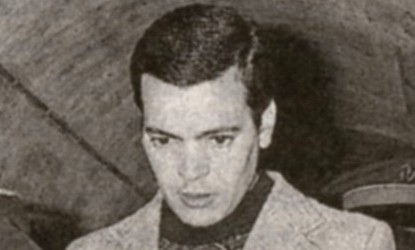
Hamida Djandoubi
Murderer Jean-Laurent Olivier
Murderer · France · 1967
Jean-Laurent Olivier was born in 1944 in the Aisne. He was abandoned very early…
2 victims
Jean-Laurent Olivier
Murderer · France · 1967
Jean-Laurent Olivier was born in 1944 in the Aisne. He was abandoned very early…
2 victims
 Christian Ranucci
Murderer · France · 1974
Christian Ranucci (April 6, 1954 – July 28, 1976) was one of the last people ex…
1 victim
Christian Ranucci
Murderer · France · 1974
Christian Ranucci (April 6, 1954 – July 28, 1976) was one of the last people ex…
1 victim
 Issei Sagawa
Murderer · France · 1981
Name: Issei Sagawa (佐川 一政, Sagawa Issei) Born: June 11, 1949 Age at offence: 32…
1 victim
Issei Sagawa
Murderer · France · 1981
Name: Issei Sagawa (佐川 一政, Sagawa Issei) Born: June 11, 1949 Age at offence: 32…
1 victim
 Jérôme Carrein
Murderer · France · 1975
Jérôme Carrein (1939 — June 23, 1977) was executed by guillotine in the yard of…
1 victim
Jérôme Carrein
Murderer · France · 1975
Jérôme Carrein (1939 — June 23, 1977) was executed by guillotine in the yard of…
1 victim
 Lucien Leger
Murderer · France · 1964
Lucien Léger was a French national who lived in Landas (France). He was describ…
1 victim
Lucien Leger
Murderer · France · 1964
Lucien Léger was a French national who lived in Landas (France). He was describ…
1 victim
 Patrick Henry
Murderer · France · 1976
Patrick Henry was born on March 31, 1953 in Troyes (France). He was described a…
1 victim
Patrick Henry
Murderer · France · 1976
Patrick Henry was born on March 31, 1953 in Troyes (France). He was described a…
1 victim
 Gregory Lynn Summers
Murderer · USA · 1990
Gregory Lynn Summers was executed by lethal injection in Texas on October 25, 2…
3 victims
Gregory Lynn Summers
Murderer · USA · 1990
Gregory Lynn Summers was executed by lethal injection in Texas on October 25, 2…
3 victims
 Skylar Deleon
Murderer · USA · 2003
Skylar Deleon — named as the perpetrator in the murders of Thomas Hawks and Jac…
3 victims
Skylar Deleon
Murderer · USA · 2003
Skylar Deleon — named as the perpetrator in the murders of Thomas Hawks and Jac…
3 victims
 Andrew Yellowbear
Murderer · USA · 2004
Andrew John Yellowbear Jr. (born September 5, 1974) was the defendant in a Wyom…
1 victim
Andrew Yellowbear
Murderer · USA · 2004
Andrew John Yellowbear Jr. (born September 5, 1974) was the defendant in a Wyom…
1 victim
 David Clayton Hill
Murderer · USA · 1994
June 9, 1964 — David Clayton Hill was born. · March 7, 1994 — Spencer Guerry wa…
1 victim
David Clayton Hill
Murderer · USA · 1994
June 9, 1964 — David Clayton Hill was born. · March 7, 1994 — Spencer Guerry wa…
1 victim
 Wayne Williams
Serial killer? · USA · 1979
Wayne Bertram Williams was sentenced to two consecutive terms of life imprisonm…
24 victims
Wayne Williams
Serial killer? · USA · 1979
Wayne Bertram Williams was sentenced to two consecutive terms of life imprisonm…
24 victims
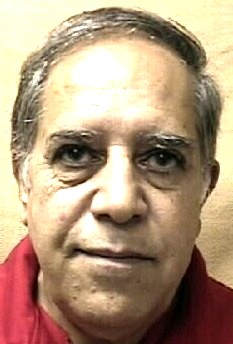 Elias Syriani
Murderer · USA · 1990
Elias Hanna Syriani was convicted of first-degree murder of his wife, Teresa Yo…
1 victim
Elias Syriani
Murderer · USA · 1990
Elias Hanna Syriani was convicted of first-degree murder of his wife, Teresa Yo…
1 victim
- Gender
- male
- Country
- France
- Location
- Marseille, France
- Date of birth
- 1949
- Age at first offence
- 25
- Characteristics
- torture, revenge
- Victim profile
- Elisabeth Bousquet, 21 (his former girlfriend)
- Method of murder
- Strangulation
- Date(s) of murder
- July 2, 1974
- Years active
- 1974
- Date of arrest
- —
- Status
-
Executed
Executed by guillotine at Baumettes Prison in Marseille on September 10, 1977
Timeline
- 1968 — Hamida Djandoubi started living and working in Marseille, France, as a packer.
- 1971 — Djandoubi lost his job after a workplace accident removed two-thirds of his right leg.
- spring of 1973 — Djandoubi was arrested and released from custody during the spring of 1973.
- July 1974 — Djandoubi kidnapped Elisabeth Bousquet and took her into his home, where he beat her in full view of two young girls and stubbing a lit cigarette all over her breasts and genital area.
- one month after 7 July 1974 — Elisabeth Bousquet’s body was identified in a shed by two children on 7 July 1974, and the two girls finally took their story to the authorities.
- 7 July 1974 — Bousquet’s body was discovered in a shed by two children.
- 24 February 1977 — Djandoubi appeared in court in Aix-en-Provence on charges of torture-murder, rape and premeditated violence.
- 25 February 1977 — Djandoubi was condemned to death.
- 9 June (year not stated) — An appeal against his sentence was rejected.
- 10 September 1977 — Djandoubi was executed by guillotine at Baumettes Prison in Marseille at 4:40 a.m.
Background
Hamida Djandoubi was a Tunisian immigrant who started living and working in Marseille, France in 1968, as a packer. He lost his job in 1971 after a workplace accident removed two-thirds of his right leg. Djandoubi’s legal case involved revenge connected to a complaint made against him.
The offence
A 21-year-old woman, Elisabeth Bousquet, filed a complaint against Djandoubi for illegal confinement and cruelty. She claimed that he tried to force her into prostitution. After his arrest and eventual release from custody during the spring of 1973, Djandoubi drew two other young girls into his confidence and forced them to “work” for him.
In July 1974, Djandoubi kidnapped Bousquet and took her into his home, where, in full view of the terrified girls, he beat her mercilessly and stubbing a lit cigarette all over her breasts and genital area. After Bousquet survived the ordeal, Djandoubi took her by car to an outskirt of Marseille and strangled her. After returning, Djandoubi warned the two girls to say nothing of what they had seen.
Investigation
Bousquet’s body was identified one month after its discovery in a shed by two children on 7 July 1974. It was not until then that the two girls found the courage to take their story to the authorities.
Arrest
Djandoubi was arrested after the complaint filed by Elisabeth Bousquet and was later released from custody during the spring of 1973.
Trial
Djandoubi eventually appeared in court in Aix-en-Provence on charges of torture-murder, rape and premeditated violence on 24 February 1977. His main defence was that the effects of the amputation of his leg six years earlier had driven him to a paroxysm of alcohol and violence, turning him into a “different” man. The court condemned him to death.
Verdict / sentence
On 25 February 1977, Djandoubi was condemned to death.
Appeals
An appeal against Djandoubi’s sentence was rejected on 9 June.
Outcome
Djandoubi was executed by guillotine at Baumettes Prison in Marseille on 10 September 1977. He was woken to be informed that all hope of a presidential reprieve had failed. Shortly afterwards, at 4:40 a.m., he was executed.
Aftermath
Marcel Chevalier served as chief executioner. Djandoubi’s life story was told in the book When the Guillotine Fell written by the Canadian author Jeremy Mercer. While Djandoubi was the last person executed in France, he was not the last condemned. Capital punishment was abolished in France in 1981 following the election of François Mitterrand.
Djandoubi confessed to Bousquet’s murder, saying:
“I put the scarf around her neck and she didn’t struggle when I began to choke her. … I choked her for a few minutes and then I asked for the flashlight so I could make sure she was really dead. At one point, for reasons I can’t really explain, I kicked the girl’s nose but she didn’t move.”
The Associated Press review of the book described Djandoubi as:
“Handsome and exotic, he seduced and then controlled several young women, before torturing one of them to death,”
Other details
Djandoubi was described as a Tunisian immigrant, born in Tunisia around 1949, and his age is given as c. 1949–10 September 1977. Elisabeth Bousquet was 21 years old.
The case generated a great deal of attention throughout France. The death penalty could be avoided if the jury concluded there were “extenuating circumstances,” but the jury said “no,” and Djandoubi went to the guillotine.
Spotted an error, or have more information about this case?