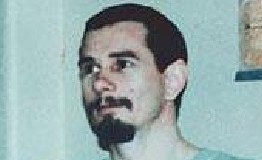
Peter Chester
Murderer John Cooper
Murderer · United Kingdom · 1985
John Cooper was a serial killer from Milford Haven, Pembrokeshire. Cooper was c…
4 victims
John Cooper
Murderer · United Kingdom · 1985
John Cooper was a serial killer from Milford Haven, Pembrokeshire. Cooper was c…
4 victims
 Andrew Walker
Murderer · United Kingdom · 1985
Royal Scots corporal Andrew Walker killed three Army colleagues in a payroll ro…
3 victims
Andrew Walker
Murderer · United Kingdom · 1985
Royal Scots corporal Andrew Walker killed three Army colleagues in a payroll ro…
3 victims
 Arthur Hutchinson
Murderer · United Kingdom · 1983
Arthur Hutchinson was an English murderer and rapist who committed three murder…
3 victims
Arthur Hutchinson
Murderer · United Kingdom · 1983
Arthur Hutchinson was an English murderer and rapist who committed three murder…
3 victims
 Barry Prudom
Murderer · United Kingdom · 1982
Barry Prudom was the prime suspect in the killings of police officers after pol…
3 victims
Barry Prudom
Murderer · United Kingdom · 1982
Barry Prudom was the prime suspect in the killings of police officers after pol…
3 victims
 David McGreavy
Murderer · United Kingdom · 1973
David McGreavy was born in 1950 or 1951. He was an English convicted murderer w…
3 victims
David McGreavy
Murderer · United Kingdom · 1973
David McGreavy was born in 1950 or 1951. He was an English convicted murderer w…
3 victims
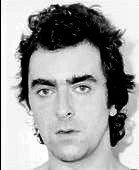 John Cannan
Murderer · United Kingdom · 1986
John Cannan Susannah “Suzy” Lamplugh was a British estate agent reported missin…
3 victims
John Cannan
Murderer · United Kingdom · 1986
John Cannan Susannah “Suzy” Lamplugh was a British estate agent reported missin…
3 victims
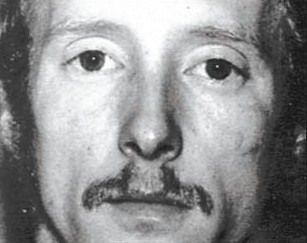 Richard Boggs
Murderer · USA · 1984
Richard T. Boggs was convicted and sentenced to death for the capital murder of…
2 victims
Richard Boggs
Murderer · USA · 1984
Richard T. Boggs was convicted and sentenced to death for the capital murder of…
2 victims
 Modise Mokwadi Fly
Murderer · Botswana · 2006
Modise Mokwadi Fly was a Botswana politician and activist. He was the general s…
1 victim
Modise Mokwadi Fly
Murderer · Botswana · 2006
Modise Mokwadi Fly was a Botswana politician and activist. He was the general s…
1 victim
 John Frank Hickey
Serial killer · USA · 1883
John Frank Hickey, “The Postcard Killer,” was one of the first known and captur…
3 victims
John Frank Hickey
Serial killer · USA · 1883
John Frank Hickey, “The Postcard Killer,” was one of the first known and captur…
3 victims
 Jeffrey Keller Davis
Murderer · USA · 1991
Jeffrey Keller Davis was sentenced in Greene County, Mississippi, in May 1992 f…
1 victim
Jeffrey Keller Davis
Murderer · USA · 1991
Jeffrey Keller Davis was sentenced in Greene County, Mississippi, in May 1992 f…
1 victim
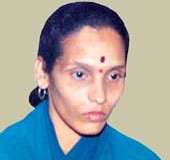 Renuka Shinde
Murderer · India · 1990
Renuka Shinde was sentenced to death on June 29, 2001. The High Court upheld th…
9 victims
Renuka Shinde
Murderer · India · 1990
Renuka Shinde was sentenced to death on June 29, 2001. The High Court upheld th…
9 victims
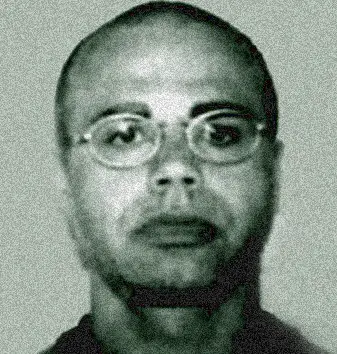 Antonio Mantovani
Serial killer · Italy · 1983
Antonio Mantovani was born in Trevenzuolo (Verona) in 1957 and was known as the…
4 victims
Antonio Mantovani
Serial killer · Italy · 1983
Antonio Mantovani was born in Trevenzuolo (Verona) in 1957 and was known as the…
4 victims
- Gender
- male
- Country
- United Kingdom
- Location
- Blackpool, Lancashire, England, United Kingdom
- Date of birth
- 1955
- Age at first offence
- 22
- Characteristics
- rape, kidnapping
- Victim profile
- His niece Donna Marie Gillbanks, 7
- Method of murder
- Strangulation
- Date(s) of murder
- October 29, 1977
- Years active
- 1977
- Date of arrest
- —
- Status
-
Life imprisonment
Sentenced to life imprisonment with a recommended minimum term 20 years in March 1978
Overview
Peter Chester (born 1955 in Blackpool, Lancashire, England) was a convicted murderer. He was also known as Peter Chester Speakman. He was a married man.
Chester raped and murdered his niece, Donna-Marie Gillbanks (aged seven). The killing took place at the home of Chester’s sister, June Gillbanks, in October 1977.
Chester fled the flat on Mickleden Road, having left Donna-Marie in her bed. Donna-Marie was later discovered by her mother.
The offence
Donna-Marie Gillbanks was seven years old when she was raped and murdered. She was found strangled at her home in Blackpool in 1977.
June Gillbanks was Chester’s sister and Donna-Marie’s mother. June said that she was haunted by her daughter’s death and that she had flashbacks of finding her body in her bedroom.
After the offence, Chester placed Donna-Marie back under the bed covers as though she were asleep and put his favourite cuddly toy alongside her.
Chester had lived on Lytham Road, South Shore, when he raped and murdered Donna-Marie in her own bed at the family flat in Mickleden Road in October 1977.
Investigation
Chester had denied raping and killing Donna-Marie at trial.
Arrest
Chester was jailed in 1977 for raping and strangling his niece in Blackpool and was deemed too dangerous to be allowed out of jail on licence.
Trial
Chester pleaded not guilty to the murder at his trial in March 1978. A jury unanimously found him guilty.
At Chester Crown Court in March 1978, Chester was found guilty of rape and murder.
Chester was sentenced to life imprisonment with a recommended minimum of 20 years.
Sentencing
Chester received a life sentence with a recommended minimum term of 20 years.
Appeals
Chester launched a legal challenge to gain prisoners the right to vote in October 2009. Three judges unanimously dismissed his case and refused him permission to go to the Supreme Court.
A Court of Appeal hearing took place after the government said it had no choice but to give “some prisoners” the vote following a European court ruling.
The European Court of Human Rights had ruled that the current blanket ban on serving prisoners from voting was incompatible with the European Convention on Human Rights. Chester’s legal team argued that denying him a vote was a “disproportionate” reaction and violated human rights.
During the legal challenge, Mr Justice Burton threw out Chester’s claim and refused permission to appeal.
Verbatim statements from judges and lawyers:
“The application is hopeless.”
— Mr Justice Burton
“The application is wholly inappropriate” and offensive.
“fairness demands an oral hearing for Mr Chester”.
— Flo Krause
In December 2010, Chester lost his appeal over his right to vote.
Other legal challenges: parole and related hearings
Chester served more than 30 years in prison. Parole Board reports stated that the risk he posed was still too high for him to be granted parole.
Chester had made seven applications for parole or to be sent to a less secure jail, all of which were rejected.
The latest review took place in May (year not specified in the record). The Parole Board found that he was unsuitable for release or for a recommendation that he should be transferred to open conditions.
Chester applied for an oral hearing with the Parole Board to assess the risk he posed, but the request was turned down again.
Judge John Behrens upheld Chester’s challenge at the High Court. Judge Behrens ruled that Chester had the right for his appeal to be heard by the Parole Board and told the High Court that Chester deserved an oral hearing before the Parole Board.
Verbatim statements from June Gillbanks and other individuals:
“In 2006, the Parole Board hearing said he was still considered a very high risk to children, the public and known adults.”
— June Gillbanks
“totally devastated”.
“I would like to be at the parole hearing so I can speak for my daughter Donna Marie,”
“He is entitled to everything and I am entitled to nothing and that is what I don't like.”
“It has been nothing like a nice life at all. Obviously I think about her every day,”
In April 2011, June Gillbanks said she believed her brother was still a risk, despite him claiming he had changed.
Chester told the judge at the High Court that he had changed and that he had served more than 30 years in prison.
Verbatim statements from Chester:
“why he has changed over 30 years in prison”
— Chester (as described in court representations)
Chester submitted representations to the judge and said that he would have a completely different lifestyle if released and that he had a “realistic release plan”.
Outcome
Chester remained imprisoned more than 30 years after his conviction. The Parole Board had refused to release him on licence from Wakefield Prison.
Chester had lost his vote bid after the Court of Appeal dismissed his case and refused permission to go to the Supreme Court. Ministers were considering changing the law for prisoners to have the vote based on European Court of Human Rights developments.
Aftermath
June Gillbanks campaigned to keep her brother behind bars and started a petition to “make sure life means life”. She planned to take the petition to the House of Commons and also described protesting at Trafalgar Square.
June Gillbanks said she wanted to set up a support group in Blackpool run by victims, for victims, because she said it was too far to travel to Liverpool given her disability.
She said she had arthritis and ME, and she described having suffered from stress since her daughter was murdered.
June’s campaign included a visit to Downing Street. In 1999, she travelled to London to join a rally supporting MAMA – Mothers Against Murder and Aggression.
Verbatim statements from June Gillbanks:
“I'm feeling strong now and I want people to know I'm there for them.”
“There needs to be a group in Blackpool run by victims, for victims.”
“I'm disabled now and it's too far to go to Liverpool,”
“so it's important for there to be a support group in Blackpool.”
“But not just for me, for the many other people who have to deal with similar things.”
“What we need now is a room to hold the meetings and help getting office administration together. Then we can start helping people.”
“Life should mean life. Small prison sentences are no deterrent. The only way they can be sure that they won't re-offend is by not letting them out.”
“I'll take the petition down to London, I'll protest at Trafalgar Square.”
“I want to set this support group up and get a petition going in memory of Donna.”
“But it's not just for my precious daughter, it's for all the other children and their families too.”
“Things like this spilt families up and break up marriages.”
“I want to help people and listen to them.”
In May 2008, June Gillbanks said her brother’s parole application would be considered “this summer”.
June described that “There have been so many since my precious Donna was taken from me and sadly there will be more in the future. It must stop now.”
Support group planning included statements from Rose Dixon of SAMM:
“We would be delighted to speak with Miss Gillbanks about setting up a group in Blackpool.”
— Rose Dixon
“We would arrange a training day and then an introduction meeting where members could meet the local contact as well as representatives from the Parole Board and Victim Support.”
People involved
- Peter Chester (also known as Peter Chester Speakman) — convicted murderer; married man; convicted of rape and murder of his niece.
- Donna-Marie Gillbanks — victim; seven-year-old niece of Peter Chester; was raped and murdered; found strangled at her home in Blackpool in 1977.
- June Gillbanks — sister of Peter Chester; mother of Donna-Marie Gillbanks; campaigned to keep Chester imprisoned.
Timeline
- October 1977 — Chester raped and murdered his niece Donna-Marie Gillbanks at the home of his sister June Gillbanks; he fled the flat on Mickleden Road leaving Donna-Marie in her bed.
- March 1978 — Chester Crown Court found Chester guilty of rape and murder; he was sentenced to life imprisonment with a recommended minimum term of 20 years.
- October 2009 — Chester launched a legal challenge to gain prisoners the right to vote.
- May 2010 — The Parole Board carried out a review “on paper” finding Chester unsuitable for release and unsuitable for transfer to open conditions.
- December 17, 2010 — Chester lost his appeal over his right to vote; three judges unanimously dismissed his case and refused permission to appeal to the Supreme Court.
- April 4, 2011 — Judge John Behrens upheld Chester’s challenge, granting the right to an oral hearing before the Parole Board.
- April 5, 2011 — June Gillbanks said she believed Chester should never be released and described being “totally devastated”.
- May 23, 2008 — June Gillbanks described campaigning for life sentences meaning life and support group planning.
Other details
Chester had passed his minimum 20 year tariff, but the Parole Board refused to release him on licence from Wakefield Prison.
The legal campaign on voting followed another prisoner, John Hirst, who won his 2005 case at the European Court of Human Rights. Hirst successfully argued that the bar on all prisoners voting was discriminatory because it did not take into account rehabilitation.
The Ministry of Justice consultation set out options including allowing prisoners sentenced to up to four years the right to vote. Ministers categorically ruled out giving the vote to anyone serving more than four years or jailed for life.
During Chester’s vote challenge, Lord Justice Laws, Lord Justice Carnwath, and the Master of the Rolls, Lord Neuberger dismissed his appeal.
Chester had been known as Peter Chester Speakman in the voting proceedings.
June Gillbanks said she had been ill for a long time after Donna’s murder and described that Donna was her world. She said she had “got my strength back” and was fed up of “innocent children getting murdered, strangled and raped.”

Spotted an error, or have more information about this case?