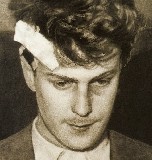
Jacques Fesch
Murderer Lucien Leger
Murderer · France · 1964
Lucien Léger was a French national who lived in Landas (France). He was describ…
1 victim
Lucien Leger
Murderer · France · 1964
Lucien Léger was a French national who lived in Landas (France). He was describ…
1 victim
 Albert Foulcher
Murderer · France · 1993
Albert Foulcher was described as a former insurance agent and a gun enthusiast.…
5 victims
Albert Foulcher
Murderer · France · 1993
Albert Foulcher was described as a former insurance agent and a gun enthusiast.…
5 victims
 Alfredo Stranieri
Murderer · France · 1997
Alfredo Stranieri (born July 30, 1956) was nicknamed "the killer ads." Alfredo…
4 victims
Alfredo Stranieri
Murderer · France · 1997
Alfredo Stranieri (born July 30, 1956) was nicknamed "the killer ads." Alfredo…
4 victims
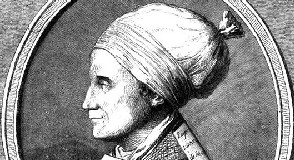 Antoine François Desrues
Murderer · France · 1777
Antoine François Desrues (1744–1777) was a French poisoner. Desrues was born at…
2 victims
Antoine François Desrues
Murderer · France · 1777
Antoine François Desrues (1744–1777) was a French poisoner. Desrues was born at…
2 victims
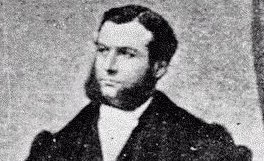 Edmond de la Pommerais
Murderer · France · 1862
Edmond de la Pommerais presented himself as a count and married a woman from a…
2 victims
Edmond de la Pommerais
Murderer · France · 1862
Edmond de la Pommerais presented himself as a count and married a woman from a…
2 victims
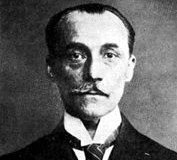 Henri Girard
Murderer · France · 1912
Henri Girard Henri Girard was a French killer-for-profit. He insured his victim…
2 victims
Henri Girard
Murderer · France · 1912
Henri Girard Henri Girard was a French killer-for-profit. He insured his victim…
2 victims
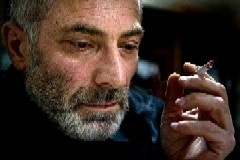 Vitaly Kaloyev
Murderer · Switzerland · 2004
Vitaly Konstantinovich Kaloyev was born in 1956 in Vladikavkaz. He was an archi…
1 victim
Vitaly Kaloyev
Murderer · Switzerland · 2004
Vitaly Konstantinovich Kaloyev was born in 1956 in Vladikavkaz. He was an archi…
1 victim
 Nanette Johnston
Murderer · USA · 1994
Nanette Johnston was sentenced to life in prison without the possibility of par…
1 victim
Nanette Johnston
Murderer · USA · 1994
Nanette Johnston was sentenced to life in prison without the possibility of par…
1 victim
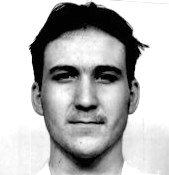 Jeffery Motley
Murderer · USA · 1984
Offender: Jeffery (Jeffrey Dean) Motley · Case number: 3 F.3d 781; Jeffrey Dean…
1 victim
Jeffery Motley
Murderer · USA · 1984
Offender: Jeffery (Jeffrey Dean) Motley · Case number: 3 F.3d 781; Jeffrey Dean…
1 victim
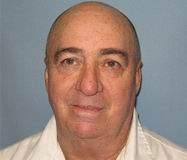 Phillip Hallford
Murderer · USA · 1986
Phillip D. Hallford was convicted of capital murder arising from a murder commi…
1 victim
Phillip Hallford
Murderer · USA · 1986
Phillip D. Hallford was convicted of capital murder arising from a murder commi…
1 victim
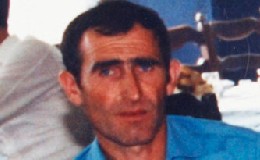 Ljubiša Bogdanović
Mass murderer · Serbia · 2013
Ljubiša Bogdanović was born in Velika Ivanča in 1953. He served as a Serb veter…
13 victims
Ljubiša Bogdanović
Mass murderer · Serbia · 2013
Ljubiša Bogdanović was born in Velika Ivanča in 1953. He served as a Serb veter…
13 victims
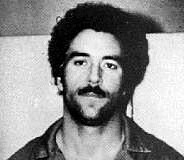 Randall Woodfield
Serial killer · USA · 1979
Randall Woodfield was an American serial killer dubbed The I-5 Killer or The I-…
18 victims
Randall Woodfield
Serial killer · USA · 1979
Randall Woodfield was an American serial killer dubbed The I-5 Killer or The I-…
18 victims
- Gender
- male
- Country
- France
- Location
- Paris, France
- Date of birth
- April 6, 1930
- Age at first offence
- 24
- Characteristics
- murder for hire, to avoid arrest
- Victim profile
- Jean Vergne, 35 (police officer)
- Method of murder
- Shooting
- Date(s) of murder
- February 24, 1954
- Years active
- 1954
- Date of arrest
- Same day
- Status
-
Executed
Executed by guillotine at La Santé Prison, Paris, on October 1, 1957
Case details
Jacques Fesch (April 6, 1930, Saint-Germain-en-Laye – October 1, 1957, La Santé Prison, Paris) was executed by guillotine at La Santé Prison, Paris, on October 1, 1957. He was convicted for the murder of Jean Vergne, a police officer.
Timeline
- February 24, 1954 — To fund the purchase of a boat, Jacques Fesch went to rob Alexandre Sylberstein, a money changer, of gold coins.
- February 28, 1955 — Jacques Fesch experienced a sudden and dramatic conversion while in bed with his eyes open.
- April 6, 1957 — The Cour d'assises of Paris condemned Jacques Fesch to death.
- April 8, 1957 — At 7:45 p.m., Jacques Fesch was sentenced to death.
- October 1, 1957 — Jacques Fesch was guillotined at La Santé Prison, Paris.
Background
Jacques Fesch was the son of a wealthy banker of Belgian origin named Georges Fesch. His father was described as an artist and atheist. Georges Fesch was distant from Jacques and unfaithful to his wife, whom he ultimately divorced. Jacques Fesch was described as an idler and had been brought up Roman Catholic, but he abandoned religion by the age of 17.
At age 21, Jacques Fesch married his pregnant girlfriend Pierrette Polack in a civil ceremony. He gave up a position at his father's bank, lived the life of a playboy, left his wife and their daughter, and fathered an illegitimate son with one of his mistresses.
Jacques Fesch was described as dreaming of escaping to sail around the South Pacific Ocean, but his parents refused to pay for a boat. After his service travelling to Germany with the army, his father found him a well-paying job at the bank, but Jacques soon tired of it. He had no real occupation afterward, and he sailed boats, rode horses, drove fast cars, and hung out with a band where he tried to learn the trumpet.
Jacques Fesch’s anti-semitic parents were said to be horrified by Pierrette Polack, whose Jewish father made her the neighbor’s daughter who was expecting his child. After a daughter was born, Jacques continued to see other women. With one of these women he had an illegitimate son named Gerard, whom he abandoned to public care. Jacques and Pierrette separated but remained friends. Jacques Fesch conceived the plan to buy a boat and sail away to the South Pacific in order to start a new life.
The offence
On February 24, 1954, Jacques Fesch went to rob Alexandre Sylberstein, a money changer, of gold coins. Sylberstein was struck but not unconscious, and raised the alarm. Jacques Fesch fled, losing his glasses.
Jacques Fesch shot at Jean Vergne, a pursuing police officer, and killed him. Minutes later Jacques Fesch was arrested.
The incident was also described in more detail as beginning near the Paris Stock Exchange with Jacques Fesch arriving with a friend at an office of Alexandre Silberstein, a currency dealer in the Rue Vivenne. It was said that on the previous day Jacques Fesch had arranged to change 2 million francs into gold bars and that Silberstein asked his son to bring the gold from the safe. It was further said that while the young man was out of the way, Fesch pulled a revolver from his briefcase, pointed it at Silberstein, and demanded the cash from the till. His friend turned and fled. Jacques Fesch was said to have hit the dealer twice across the head with the revolver butt, grabbed 300,000 francs, and ran.
Once outside, Jacques Fesch tried to melt into the crowd on a busy street, but Sylberstein recovered quickly and shouted to passers-by that Fesch had robbed him. As a crowd chased him, he took refuge in a building on Les Grandes Boulevards and later re-emerged attempting to play the part of an innocent citizen. Someone cried “That’s him!”
Jean Vergne arrived at the scene. He was described as a widower with a 4-year-old daughter. Vergne drew his revolver and ordered Fesch to put his hands up. It was then said that Fesch reached inside his raincoat pocket for his own gun and fired three times. Vergne was shot through the heart.
The crowd chased Jacques Fesch into the Richelieu-Drouot Metro station. It was said that Fesch, still firing, wounded one pursuer in the neck before he was surrounded and overcome.
In court, Jacques Fesch was described as sitting with a bandaged head and having a defiant mood. He said he was only sorry he had not carried a submachine gun.
Investigation and arrest
Minutes after the killing of Jean Vergne, Jacques Fesch was arrested.
Trial
Jacques Fesch was tried by the Cour d'assises of Paris. The Cour d'assises of Paris condemned him to death on April 6, 1957. At 7:45 p.m. on April 8, 1957, Jacques Fesch was sentenced to death.
Jacques Fesch’s defense attorney was Paul Baudet. Baudet argued that the shooting had not been premeditated and had been the act of a frightened man facing a hostile crowd. Jacques Fesch expressed remorse for the murder of Jean Vergne and for the grief he had caused the officer’s family. This feeling was said to be shown in his letters and in his journal, which was published after his death and dedicated to his daughter, Veronique.
Neither Baudet’s eloquence nor Jacques Fesch’s remorse moved the court.
Sentencing
At 7:45 p.m.
Jacques Fesch did not find it easy to accept his fate, and he believed that because his crime was unpremeditated, he did not deserve to die. He was tempted to hate those sending him to the guillotine but overcame the temptation. He wrote: “May each drop of my blood wipe out a mortal sin”.
Appeals and clemency
An appeal for clemency to President René Coty failed. René Coty replied to Baudet’s personal appeal: “Tell your client that he has all my esteem and that I wanted very much to reprieve him,” and added: “But if I did that, I would put the lives of other police officers in danger.”
Execution and last statements
Jacques Fesch was guillotined at La Santé Prison, Paris, on October 1, 1957. It was described that as the president lay awake, Jacques Fesch wrote in his journal: “The last day of struggle, at this time tomorrow I shall be in heaven! May I die as the Lord wishes me to die…Night falls and I feel sad, sad…I will meditate on the agony of Our Lord in the Garden of Olives, but good Jesus, help me! ... Only five hours to live! In five hours, I shall see Jesus.”
In the execution description, it was said that he asked the priest beside him for the crucifix and kissed it. Before the blade fell, he uttered his last words: “Holy Virgin, have pity on me!”
Religious conversion and prison life
At first Jacques Fesch was described as indifferent to his plight and as mocking his lawyer’s Catholic faith. After a year in prison, he experienced a profound mystical conversion, became very pious, and bitterly regretted his crime. He corresponded regularly with his family, notably his brother and stepmother, and kept a spiritual journal. He accepted his punishment serenely and was reconciled to his wife the night before his execution.
His last journal entry was said to have been: “In five hours, I will see Jesus!”
It was described that Jacques Fesch corresponded with Pierrette Polack’s circle through Brother Thomas, a young Benedictine who knew Pierrette and wrote regularly from his monastery. Dominican chaplain Père Devoyod was also described as advocating for him.
The details of the conversion included a verbatim account written by Jacques Fesch two months before his execution:
“I was in bed, eyes open, really suffering for the first time in my life ... It was then that a cry burst from my breast, an appeal for help – My God – and instantly, like a violent wind which passes over without anyone knowing where it comes from, the spirit of the Lord seized me by the throat. “I had an impression of infinite power and kindness and, from that moment onward, I believed with an unshakeable conviction that has never left me”.
Jacques Fesch’s letters from prison included a prison rule statement to Brother Thomas:
“In prison there two possible solutions: You can rebel against your situation, or you can regard yourself as a monk.”
During his prison life, he lived a life even more ascetic than the rules demanded. He went to bed at 7 each evening, gave up chocolate and cigarettes, and took only a half-hour of exercise each day.
It was said that he kept spiritual writing and that his final hope lay with President René Coty. He also pleaded that Gerard should be well cared for.
Other people and relationships
Jacques Fesch’s wife was Pierrette Polack. His daughter was named Veronique. His illegitimate son was named Gerard, who was described as having been abandoned to public care. His brother and stepmother were referenced in connection with his correspondence.
Jean Vergne was the murdered police officer. Alexandre Sylberstein was the money changer he robbed. Père Devoyod was a Dominican chaplain who had another advocate for Jacques Fesch. Brother Thomas was a young Benedictine who wrote regularly from his monastery. Soeur Véronique, a Carmelite nun, was said to have effected publication of his writings.
Aftermath
After his death, Jacques Fesch’s wife and daughter honoured his memory as an example of redemption.
At first he was described as being excoriated by the public. It was later described that the publication of his journal and letters created widespread interest among the French public and touched young people especially.
After his execution, interest in his beatification and associated controversy developed. On September 21, 1987, the Archbishop of Paris, Jean-Marie Cardinal Lustiger, opened a diocesan inquiry into his life. It was said that the cause for beatification was formally opened in 1993.
Controversy about his suitability was described using quotations from others, including a police union chief who demanded: “Where are we headed, if we start beatifying criminals?” Another warning stated: “Where are we headed, if we start beatifying criminals?” and separately: “Where are we headed, if we start beatifying criminals?” (the phrase was repeated). Another editorial warning stated: “the proposed step might encourage offenders to use conversion as a ploy to avoid punishment.”
One editorial predicted: “Fesch would become the patron saint of gunmen, who would in future pack a votive medal of St. Jacques along with their Magnum 357s.”
Jean-Marie Cardinal Lustiger was quoted as saying: “Nobody is ever lost in God’s eyes, even when society has condemned him,” and as wishing to see Jacques Fesch beatified “to give a great hope to those who despise themselves, who see themselves as irredeemably lost”.
It was also described that frequently Fesch was likened to the good Thief on Calvary. It was said that Vergne’s daughter, now a lawyer, refused to comment publicly but privately had met with Cardinal Lustiger.
Bibliography
- Fesch, Jacques (1991). Lumière sur l'échafaud ; suivi de Cellule 18 : lettres de prison de Jacques Fesch, guillotiné le 1er octobre 1957 à 27 ans (in French). Paris: Éditions Ouvrières. ISBN 978-2-7082-2833-7.
- Fesch, Jacques (1998). Dans 5 heures je verrai Jésus!: Journal de prison, 3rd (in French), Fayard - Le Sarment. ISBN 978-2-86679-168-1.
Spotted an error, or have more information about this case?