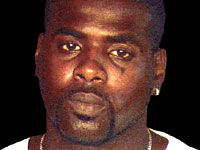
Marlon Legere
Murderer Robert Martines Perez
Murderer · USA · 1994
Name: Robert Martines Perez · Other name used in proceedings: Robert Martinez P…
15 victims
Robert Martines Perez
Murderer · USA · 1994
Name: Robert Martines Perez · Other name used in proceedings: Robert Martinez P…
15 victims
 Robert Glen Jones
Murderer · USA · 1996
Defendant: Robert Glenn Jones (ADC#070566) · Co-defendant: Scott Nordstrom (ADC…
7 victims
Robert Glen Jones
Murderer · USA · 1996
Defendant: Robert Glenn Jones (ADC#070566) · Co-defendant: Scott Nordstrom (ADC…
7 victims
 Joshua Wayne Andrews
Murderer · USA · 2000
Joshua Wayne Andrews was a serial killer accused of killing several people in V…
5 victims
Joshua Wayne Andrews
Murderer · USA · 2000
Joshua Wayne Andrews was a serial killer accused of killing several people in V…
5 victims
 Juan Carlos Alvarez
Murderer · USA · 1998
Juan Carlos Alvarez, born on March 9, 1977, in San Luis, Mexico, was a Hispanic…
5 victims
Juan Carlos Alvarez
Murderer · USA · 1998
Juan Carlos Alvarez, born on March 9, 1977, in San Luis, Mexico, was a Hispanic…
5 victims
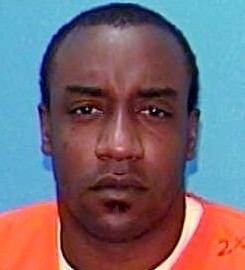 Luther Douglas
Murderer · USA · 1999
Luther Douglas was sentenced to death on June 14, 2002. On the evening of 12/25…
1 victim
Luther Douglas
Murderer · USA · 1999
Luther Douglas was sentenced to death on June 14, 2002. On the evening of 12/25…
1 victim
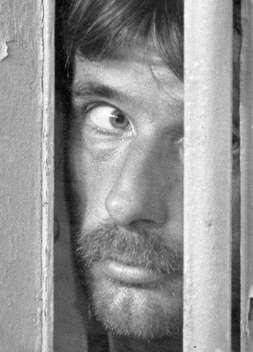 Jimmy Lee Gray
Murderer · USA · 1976
1976 — Jimmy Lee Gray was convicted for the murder of three-year-old Deressa Je…
2 victims
Jimmy Lee Gray
Murderer · USA · 1976
1976 — Jimmy Lee Gray was convicted for the murder of three-year-old Deressa Je…
2 victims
 Ebony Smith
Murderer · USA · 2011
Ebony Passion Smith was a Warner Robins woman who was sentenced to life in pris…
1 victim
Ebony Smith
Murderer · USA · 2011
Ebony Passion Smith was a Warner Robins woman who was sentenced to life in pris…
1 victim
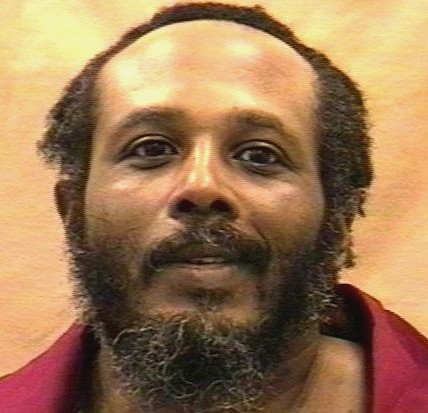 Guy Tobias LeGrande
Murderer · USA · 1983
Guy Tobias LeGrande was sentenced to death in Stanley County Superior Court for…
1 victim
Guy Tobias LeGrande
Murderer · USA · 1983
Guy Tobias LeGrande was sentenced to death in Stanley County Superior Court for…
1 victim
 Luis Cervantes Salazar
Murderer · USA · 1997
Luis Cervantes Salazar was executed by lethal injection in Texas on March 11, 2…
1 victim
Luis Cervantes Salazar
Murderer · USA · 1997
Luis Cervantes Salazar was executed by lethal injection in Texas on March 11, 2…
1 victim
 Jonathan Bryant Moore
Murderer · USA · 1995
Jonathan Bryant Moore was convicted of capital murder for shooting San Antonio…
1 victim
Jonathan Bryant Moore
Murderer · USA · 1995
Jonathan Bryant Moore was convicted of capital murder for shooting San Antonio…
1 victim
- Gender
- male
- Country
- USA
- Location
- Brooklyn, New York, USA
- Date of birth
- October 10, 1975
- Age at first offence
- 29
- Characteristics
- to avoid arrest, history of mental illness, police officer, murder for hire, motive unclear
- Victim profile
- Robert Parker and Patrick Rafferty (NYPD detectives)
- Method of murder
- Shooting ( 9mm Glock)
- Date(s) of murder
- September 10, 2004
- Years active
- 2004
- Date of arrest
- Same day
- Status
-
Life imprisonment
Sentenced to two life sentences without parole on February 27, 2006
Case record: Marlon Legere
Background
Marlon Legere was born October 10, 1975, and he was a Trinidadian-American from New York. He was described as an unemployed ex-convict who previously had done time in Greene and Sing Sing prisons for sexual assault, attempted criminal sale of a controlled substance, and attempted assault. He had been arrested nine times and had served prison time for first-degree sex abuse, attempted assault, and an attempted drug sale. He was last released from prison in March.
Melva Legere was Marlon Legere’s mother. Prosecutors said her son had taken her car without permission, and she had complained to the police for months.
Detective Robert Parker worked at the 67th Precinct in East Flatbush. He had served there for some 15 years and was described as having worked as a second-grade detective. Detective Patrick Rafferty was described as an up-and-comer with 15 years on the force.
Detective Parker had a wife and a child; references in the record also identify Parker as having been divorced and living in the Brownsville section of Brooklyn with several cats. Detective Rafferty lived in Bay Shore with his wife, Eileen, and children: Kara, 12, Kevin, 8, and Emma, 5. The children were not mentioned as attending the sentencing.
The offence
On September 10, 2004, Melva Legere placed a call to the 67th precinct in East Flatbush, Brooklyn. She sought help from detectives Robert Parker and Patrick Rafferty, whom she knew from earlier incidents involving her abusive son. Melva Legere said she feared her son might try to take her car from her.
Marlon Legere was sitting on East 49th Street in his mother’s Mazda 626. The two detectives drove the wrong way down the street and boxed in Legere with their car so he could not drive off. Neither detective was wearing a bulletproof vest. The detectives exited their vehicle and approached Legere from both sides of his mother’s car.
Legere somehow obtained Parker’s 9mm Glock and shot both officers four times each, mortally wounding them. Legere later told police: "When they tried to grab me, I wouldn't let them. I grabbed their gun and I shot them."
Before he passed out, Rafferty managed to shoot Legere in the foot and the ankle. At the same time, Parker dialed 911 on his cell phone and calmly described the situation and identified his attacker to the operator. Parker said: "I have a photo of the guy who shot me on my dashboard," and he was reported to have been able to identify the shooter to the operator.
Both detectives were alive when ambulances showed up, but they did not survive the trip to the hospital. The record also described that all seven rounds fired by Legere hit the detectives at close range, and it listed how the bullets struck Parker and Rafferty, including that Parker was hit twice in the chest and twice in the right leg, and Rafferty was hit twice in the chest, with additional bullets piercing his right leg and entering his left thigh. It further recorded that Rafferty squeezed off one round, hitting Legere in the left foot and right ankle. Investigators described that the bullets fired that hit the detectives were fired from Detective Parker’s 9-millimeter Glock pistol.
The record said that the deaths resulted from a confrontation with a suspect whose mother had come to the precinct because she was frightened of her sometimes violent son. It also described that the detectives had been responding to a call from Legere’s mother and that Legere was in his mother’s car when the detectives approached. Investigators said Legere refused the requests to turn off the ignition and get out of the car, and a struggle ensued that ended with Legere shooting the two detectives.
The record described that it was not clear precisely how Legere got hold of the gun and with the two closest witnesses dead the police said they might never find out. It said Parker was wearing an off-duty holster and that off-duty holsters can be of many types, including a common one that fits inside the waistband and clips onto a belt and normally does not have a safety release button. It also said police had not said exactly what kind of holster Parker was wearing, but they noted that Legere was seated in the car when Parker approached, which would have put Legere at about waist level. It said it was possible that the detective had already drawn his gun when Legere went for it.
The record also described the officers’ response after Legere was shot by Rafferty. Using Parker’s gun, investigators believed Legere hijacked a minivan and fled, and that he drove twelve blocks to the apartment of a female acquaintance, where he tried to get rid of Parker’s gun. Another account in the record stated that he carjacked Omar Harvey out of his Mercury Villager minivan. The record stated that Legere drove twelve blocks to the apartment of a female acquaintance, and he tried to get rid of Parker’s gun there.
The record said Legere left the car after being shot, screaming in pain and staggering to the corner. It also described that he was still bearing Parker’s service weapon when he hobbled into the street and carjacked Omar Harvey. Police took him into custody two hours later after a neighbor saw him lying down and bleeding on the apartment’s fire escape. Parker’s gun was recovered from a lot behind the building.
Investigation
The record said police officers conducted a manhunt for the suspect after the shooting. Detective Parker managed to call 911 and tell the operator that the man who had shot him and his fellow detective, Patrick Rafferty, was pictured in a mug shot on the dashboard of their car. That mug shot was soon distributed by police officers during the manhunt.
The record stated that Parker’s gun was recovered from a lot behind the building.
The record described unanswered questions about how Legere was able to take Parker’s Glock 19. It said the police may never know exactly how Legere got Parker’s gun, including that Parker may have had his gun already drawn and Legere wrestled it away, or Legere may have grabbed it from Parker’s holster. It also described that investigators were still trying to determine exactly what happened during the struggle.
Arrest
The record stated that police took Marlon Legere into custody two hours later. A neighbor saw him lying down and bleeding on the apartment’s fire escape. It further recorded that Parker’s gun was recovered from a lot behind the building.
Trial
On September 13, 2004, prosecutors filed first degree murder charges against Legere.
At trial, Legere pleaded not guilty but declined to take the stand in his defense. His attorneys’ strategy was to portray the crime as an attempt at self-defense, arguing that Legere thought he was being robbed. The detectives were in plainclothes and driving an unmarked car at the time.
Defense attorney Ivan Vogel was quoted: "It's a combination of self defense and just a tragic situation where the circumstances unraveled ... Mr. Legere was fighting for his life."
The record described the police approach during the events leading to the shooting. It said that in the ensuing struggle, the son took Detective Parker’s gun and used it to shoot them both. It also described prosecution witnesses including dozens of crime scene investigators, the wife of Detective Rafferty, the mother of Detective Parker’s child, Legere’s mother, his former girlfriend, and a teenage boy who admired him.
The jury deliberated only one day. Legere was convicted.
Sentencing
On February 27, 2006, Justice Anne G. Feldman rebuked Legere and ordered the maximum penalty. The sentencing resulted in two life sentences without parole for first-degree murder charges.
The record also stated that he received 25 years for a first-degree robbery charge, and one year for a fourth-degree criminal mischief charge.
The record stated that Marlon Legere blamed his lawyers for his conviction, and Justice Feldman reminded him that she had given him a chance to testify and said his lawyers had represented him perfectly well. Feldman was described as saying blaming the lawyers was similar to blaming his mother for the shooting, which Legere did in one of his statements to the police.
Prosecutor Mitchell C. Benson delivered remarks during sentencing. The record included these quoted statements:
"The defendant would not be alive if they had meant to harm him," Mr. Benson said.
"They approached him carefully, not with guns. They got up close to try to protect the mother."
"They were giving him a chance. One last chance he shouldn't have had."
A lawyer for Legere, Wayne C. Bodden, told Justice Feldman that Legere had privately and repeatedly expressed remorse.
In the sentencing remarks, Legere was quoted:
"I want to send my deepest sympathies and condolences to the family of the slain officers," Mr. Legere said.
"I'm not an angel," Mr. Legere said, "but I'm not a killer either."
He added that he had wanted to testify but was advised against it by his lawyers, who "didn't properly represent me."
The record included statements by Dawn Stewart-Riles, a friend of Detective Parker’s since childhood:
"I was always his damsel in distress."
"Mr. Legere, life is a gift from God," Ms. Stewart-Riles said.
"It is very precious, and no man has the right to take a life."
Brian Rafferty, a brother of Detective Rafferty, was quoted:
"We were sentenced to life without Patrick."
"The very air you breathe is rightfully the property of my brother, Detective Patrick Rafferty, and his partner, Detective Robert Parker. You will remember that until you have taken your last breath."
Appeals
No appeal information appeared in the record.
Outcome
Marlon Legere was convicted of first-degree murder and sentenced to two life sentences without parole on February 27, 2006. The record also described 25 years for a first-degree robbery charge and one year for a fourth-degree criminal mischief charge.
As of February 2006, Legere was incarcerated in Clinton Correctional Facility in Dannemora, New York.
Aftermath
The record described that many New Yorkers, especially police officers, were bitterly disappointed that Legere was not eligible for the death penalty because New York’s capital punishment statute had been overturned just three months before.
The record also described a discussion of New York’s death penalty law and that, under the law, anyone who murders a police officer could face the death penalty, but it described that New York’s highest court had ruled the provision unconstitutional in June and that prosecutors and defense lawyers argued there was effectively a moratorium on capital cases. It described that District Attorney Hynes’s spokesman Mitchell C. Benson said: "It's the district attorney's opinion that right now the most serious punishment available is life without parole. There is no viable death penalty statue in effect today."
The record described sentencing as punctuating a monthlong trial attended at times by scores of police officers and by the detectives’ friends and relatives. It described the sentencing room being filled to capacity by detectives in suits and uniformed officers.
Other details
The record described the events leading up to the shooting in May and over the summer. It said that in May, Melva Legere complained that her son had broken a mirror in her house, threatened her, and demanded the keys to her car, which she surrendered. Detective Parker was assigned to the case. Over the summer, Detective Parker worked with Melva Legere at an address given as 519 East 49 Street trying to apprehend her son.
The record described a Friday evening timeline: it said that on Friday, Melva Legere came to the precinct and left word that her son had come home; when Detective Parker arrived for the 4 p.m. shift, he went to the house, but Legere was gone; Detective Parker and Detective Rafferty began to search the neighborhood; and about 8:30 p.m. Melva Legere told them by phone that he was home again in her car, a blue Mazda with tinted windows, in front of the house.
The record stated that the two detectives blocked the Mazda with their car, that Rafferty approached the passenger side and Parker the driver’s side, and that Parker told Legere to turn off the ignition and get out of the car. It recorded that Legere refused and an argument followed that soon escalated into a physical struggle, with investigators still trying to determine exactly what happened. It said that at some point Rafferty went around the car to join his partner; the door to the car was open; and gunfire rang out.
The record included that the detectives were not wearing bulletproof vests when they were shot. It also stated that police officers in uniform are required to wear vests, but detectives usually are in street clothes and have discretion.
The record described that investigators believed at least eight bullets were fired, including seven from Detective Parker’s gun and one from Detective Rafferty’s, and it said it was not clear if Parker had drawn his own gun before Legere wrestled it away. It also recorded that Legere’s wounds could have been caused by a single bullet that passed through his left foot and right ankle, and it stated autopsies on the two officers were not completed as of a date included in the narrative.
The record described that Detective Parker followed his calling to the end and called 911. It described that Commissioner Raymond W. Kelly issued a written statement that said:
"In honoring our officers killed in the extraordinary attack on the World Trade Center three years ago, we are reminded by the deaths of Detective Robert Parker and Detective Patrick Rafferty that our police officers are prepared to give their lives in the day-to-day protection of the people of New York."
It also included a quote by Mayor Michael R. Bloomberg:
"This is a war against the bad people of the world,'' the mayor said.
The record included descriptions and quotes from individuals at the memorial and from colleagues, including Michael J. Palladino stating:
“Their reputation preceded them in the area, in the neighborhood,” Michael J. Palladino, the president of the Detectives Endowment Association told The New York Times.
“They were well-known, well-respected guys.”
It included a quote by Deputy Inspector Vincent Di Donato describing Detective Parker:
"Clark Kent with Superman underneath,"
It included a quote by John Triandafils:
"You knew he was behind you."
"They tend to others while they're bleeding to death."
It included Diane Olatunde:
"The kids called him 'Uncle Robert.' "
"He was like a big teddy bear,"
It included references to training and equipment, including defensive tactics training and weapon retention, and it described that New York police officers attend mandatory defensive tactics training sessions twice a year and that sessions focus in part on weapon retention.
The record described safety holsters developed in the 1970s and described trade-offs. It also discussed that plain-clothes detectives wear holsters that are easier to conceal and that police said Parker was wearing an off-duty hip holster typically not equipped with safety features.
The record discussed New Gun Technology and referenced a New Jersey law in 2002 about user-recognition technology and said law enforcement officers were specifically excluded from the law.
The record referenced Jay “Stoney” Harrison and his use of an officer’s handgun to shoot Detectives Richard Guerzon and Keith Williams, and it stated the death penalty was not in effect at the time.
The record included Detective Parker being described as a former wrestler and a teddy-bearish 6-foot-4 former wrestler, and it included a description that he once bonded with a suspect who was a "Star Trek" fan. It included Deputy Inspector Di Donato recalling that Parker put his hand to the young man’s temple and said he was doing a "Vulcan mind meld," and it said the detective told the suspect that he had read his mind and knew he was guilty and that the suspect confessed to murder.
The record also stated that Detective Parker lived with several cats, and it said that three sisters of a woman who had dated Detective Parker for 12 years came to lay flowers at the scene, with the fourth sister out of town.
The record described Omar Harvey as the person carjacked from his Mercury Villager minivan. It also described the apartment of a female acquaintance where Legere tried to get rid of Parker’s gun, and it described that Parker’s gun was recovered from a lot behind the Brooklyn Avenue building.
Spotted an error, or have more information about this case?