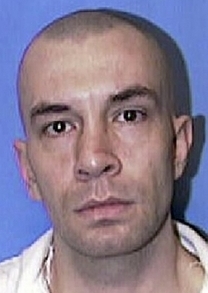
Jonathan Bryant Moore
Murderer Brian Kevin Rosenfeld
Murderer · USA · 1985
Brian Kevin Rosenfeld Brian Kevin Rosenfeld was sentenced to three concurrent l…
23 victims
Brian Kevin Rosenfeld
Murderer · USA · 1985
Brian Kevin Rosenfeld Brian Kevin Rosenfeld was sentenced to three concurrent l…
23 victims
 Russell Ellwood
Murderer · USA · 1991
Russell Ellwood was a former taxi driver. Authorities suspected him of killing…
20 victims
Russell Ellwood
Murderer · USA · 1991
Russell Ellwood was a former taxi driver. Authorities suspected him of killing…
20 victims
 Robert Martines Perez
Murderer · USA · 1994
Name: Robert Martines Perez · Other name used in proceedings: Robert Martinez P…
15 victims
Robert Martines Perez
Murderer · USA · 1994
Name: Robert Martines Perez · Other name used in proceedings: Robert Martinez P…
15 victims
 Billy Frank Vickers
Murderer · USA · 1993
Billy Frank Vickers Vickers was executed by lethal injection in Texas on Januar…
14 victims
Billy Frank Vickers
Murderer · USA · 1993
Billy Frank Vickers Vickers was executed by lethal injection in Texas on Januar…
14 victims
 Jesse Clarence Pratt
Murderer · USA · 1986
Jesse Clarence Pratt was sentenced to death on February 22, 1988. His convictio…
1 victim
Jesse Clarence Pratt
Murderer · USA · 1986
Jesse Clarence Pratt was sentenced to death on February 22, 1988. His convictio…
1 victim
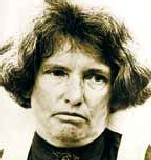 Daisy De Melker
Serial killer · South Africa · 1923
Daisy Louisa De Melker (née Hancorn-Smith) was born on 1 June 1886 and was exec…
3 victims
Daisy De Melker
Serial killer · South Africa · 1923
Daisy Louisa De Melker (née Hancorn-Smith) was born on 1 June 1886 and was exec…
3 victims
 Joshua Wayne Andrews
Murderer · USA · 2000
Joshua Wayne Andrews was a serial killer accused of killing several people in V…
5 victims
Joshua Wayne Andrews
Murderer · USA · 2000
Joshua Wayne Andrews was a serial killer accused of killing several people in V…
5 victims
 Raynella Dossett Leath
Murderer · USA · 2003
October 25, 1948 — Raynella Large was born in Oak Ridge, Tennessee. · 1966 — Ra…
2 victims
Raynella Dossett Leath
Murderer · USA · 2003
October 25, 1948 — Raynella Large was born in Oak Ridge, Tennessee. · 1966 — Ra…
2 victims
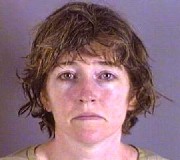 Deanna Laney
Homicide · USA · 2003
Deanna Laney A jury acquitted Deanna Laney of all charges by reason of insanity…
1 victim
Deanna Laney
Homicide · USA · 2003
Deanna Laney A jury acquitted Deanna Laney of all charges by reason of insanity…
1 victim
 Benjamin Stone
Murderer · USA · 1995
Benjamin Stone was executed by lethal injection in Texas on September 25, 1997.…
2 victims
Benjamin Stone
Murderer · USA · 1995
Benjamin Stone was executed by lethal injection in Texas on September 25, 1997.…
2 victims
- Gender
- male
- Country
- USA
- Location
- Bexar County, Texas, USA
- Date of birth
- April 4, 1974
- Age at first offence
- 21
- Characteristics
- anarchist, hate crime, police officer
- Victim profile
- Fabian Dominguez, 29 (San Antonio police officer)
- Method of murder
- Shooting (.25-caliber pistol)
- Date(s) of murder
- January 15, 1995
- Years active
- 1995
- Date of arrest
- Next day
- Status
-
Executed
Executed by lethal injection on 17 January 2007 in Texas
Case details
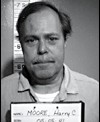
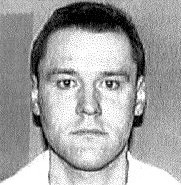
Jonathan Bryant Moore was convicted of capital murder for shooting San Antonio police officer Fabian Dominguez during a burglary and was sentenced to death. He was executed by lethal injection on 17 January 2007 in Texas.
Timeline
- 15 January 1995 (early morning hours) — San Antonio police officer Fabian Dominguez spotted a burglary in progress at a residence while driving home from work and approached the suspects’ vehicle after pulling into the driveway, blocking the car occupied by Johnathan Moore, Pete Dowdle, and Paul Cameron. Moore pulled out a .25 caliber automatic gun and shot Dominguez; Dominguez died from multiple gunshot wounds to the head.
- 15 January 1995 — After leaving the scene, Moore, Cameron, Dowdle, and Moore’s girlfriend, Meredith Nichols, traveled to a plot of land near Pipe Creek, Texas, where they disposed of both murder weapons and stolen items from the Braden residence.
- 15 January 1995 (next day) — Moore was arrested following a high speed chase; while under arrest he signed a full and detailed confession.
- June 1993 — Moore was charged with criminal trespass in Bexar County; he received deferred adjudication.
- January 1995 — Moore was charged with burglary of a vehicle in Bexar County in January 1995; in January 1995 he was also charged with evading arrest in conjunction with the high speed chase.
- October 1996 — Moore was convicted of capital murder and sentenced to death in Bexar County.
- April 1999 — Moore’s conviction and sentence were upheld on direct appeal.
- May 2002 — The Texas Court of Criminal Appeals denied Moore’s application for writ of habeas corpus.
- March 2005 — A U.S. district court denied Moore’s federal habeas corpus petition.
- May 2006 — The 5th U.S. Circuit Court of Appeals affirmed the U.S. district court’s denial of habeas corpus relief.
- November 2006 — The U.S. Supreme Court denied Moore’s petition for writ of certiorari.
- 17 January 2007 — Moore was executed; he was pronounced dead at 6:21 p.m., eight minutes after the lethal dose began.
Background
San Antonio police officer Fabian Dominguez lived in San Antonio with his wife and infant twin daughters. The residence involved in the burglary was associated with William Braden.
The offence
In the early morning hours of 15 January 1995, Dominguez was driving home from work when he spotted what appeared to be a burglary in progress. He pulled into the driveway of the residence, blocking a car occupied by Johnathan Moore, Pete Dowdle, and Paul Cameron, who were finishing their second trip to burglarize the home. Dominguez, still in his uniform, approached with his gun drawn and repeatedly ordered the three men to get out of the car.
After taking the car keys from Dowdle, Dominguez approached the passenger side with his gun drawn. Moore, who was in the front passenger seat, pulled out a .25 caliber automatic gun and shot Dominguez. Dominguez fell to the ground, dropping his gun into the rear seat of the car. Moore got out of the car, recovered the car keys and returned them to Dowdle. Moore grabbed Dominguez’s gun and shot the officer three times in the head. Officer Dominguez died from multiple gunshot wounds to the head.
Ballistics established that the wounds were inflicted by one shot from Moore’s .25 caliber handgun and three shots from Dominguez’s .40 caliber service weapon.
Investigation and arrest
Neighbors across the street heard gunfire coming from the Braden home. Upon receiving a 911 call, police and emergency personnel were immediately dispatched. Officer Dominguez was dead by the time firemen arrived on the scene.
After leaving the scene, Moore, Cameron, Dowdle, and Moore’s girlfriend Meredith Nichols traveled to a plot of land near Pipe Creek, Texas, where they disposed of both murder weapons and stolen items.
Moore was arrested the next day following a high speed chase. After his arrest, Moore signed a full and detailed confession. He also later provided a voluntary written statement describing the sequence of events.
Moore fled from authorities and explained: “I figured pretty much that the cops knew I was the one that shot the cop.”
The high speed chase ended after Moore careened to the side of the road; after a brief struggle, San Antonio police officers arrested Moore and took him into custody.
People involved
- Johnathan Moore (defendant) — born on April 4, 1974; he was twenty years old on the date he committed capital murder.
- Fabian Dominguez (victim) — San Antonio police officer; 29 years old.
- Pete Dowdle (codefendant) — arrested with Cameron after Moore’s arrest; later received a 25-year prison term for engaging in an organized criminal act.
- Paul Cameron (codefendant) — arrested after Moore’s arrest; later received a life sentence.
- Meredith Nichols (Moore’s girlfriend / associate) — traveled with Moore, Cameron, and Dowdle after the shooting and was a passenger in the vehicle Moore was driving.
- Jennifer Morgan (victim’s widow) — Moore apologized to her during his execution events, and she planned to witness the execution.
- Mitchell Morgan (witness) — described the execution chamber features and stated he would not witness the execution.
- Teddy Stewart (witness) — president of the San Antonio Police Officers Association.
- William Braden (property owner referenced in the offence) — whose residence was burglarized.
- James Holguin (detective mentioned in statements) — referenced in Moore’s voluntary written statement to Detective James Holguin.
- Detective McCourt — sat in on Moore’s interview during a discussion about a compound bow.
- Detective Holguin (detective mentioned in statements and testimony) — referenced in the legal discussion about recorded oral statements and adoption of Moore’s transcription.
- Naomi Madsen (girlfriend mentioned in trial-related coverage) — filed for a marriage license at Moore’s request.
- Lily (nickname mentioned for Naomi Madsen) — “Lily” was tattooed on Moore’s knuckles.
- Greg Abbott (Texas Attorney General) — provided information about Moore’s scheduled execution in a media advisory.
- Sharon Macrae (district judge referenced in the appellate record) — presided over sentencing as described in the appellate opinion.
- Keller (judge referenced in the appellate opinion) — delivered the direct appeal opinion.
- Rodriguez (U.S. district judge referenced in habeas background) — denied the federal habeas petition in 2005.
- Michael Graczyk (writer) and Associated Press contributors (media coverage) — described the execution details in contemporaneous reporting.
- Maro Robbins and Vianna Davila (writers) and Stewart Smith (writer) — described the execution events in reporting.
- Emanuella Moore (writer) and Emanuella Grinberg (CourtTV reporter) — described case and interview content.
Criminal history and other proceedings
Texas Department of Criminal Justice records reflected that, in addition to the capital murder of the San Antonio police officer, Moore was charged with criminal trespass in Bexar County in June 1993 and with the burglary of a vehicle in Bexar County in January 1995.
In January 1995, Moore was charged with evading arrest in conjunction with the high speed chase that resulted in his capture on the capital murder charge.
Texas Department of Criminal Justice records showed that Moore made at least two failed escape attempts from the Bexar County jail while in lockup awaiting the capital murder trial.
Trial
Moore’s capital murder trial was in Bexar County.
The case described the capital murder as charged under:
- Texas Penal Code Ann. §§ 19.03(a)(1) and (2), including murder of a peace officer acting in the lawful discharge of official duty and intentionally committing the murder in the course of committing burglary.
A jury convicted Moore of capital murder in October 1996 and the trial judge sentenced him to death under Texas Code of Criminal Procedure Article 37.071 §§ 2(b) and 2(e).
During the guilt-innocence proceedings, Moore’s defense was insanity; the jury rejected the insanity defense.
Moore attempted suicide at least once while awaiting trial. During the trial process, deputies discovered he tried to escape by tucking a handcuff key into his shoes, and he attempted to fire his court-appointed attorneys, accusing them of failing to investigate allegations that prosecutors forced witnesses to lie under oath.
Before the punishment phase, Moore fired his defense team so he could represent himself, then rehired them the following day. During trial he represented himself and later discontinued self-representation; Guyer and Convery were reinstated as counsel.
During the punishment phase, Moore again tried to discharge his attorneys; the court permitted him to proceed without counsel after inquiring into his ability to choose intelligently and voluntarily. Guyer and Convery moved for a competency hearing; the trial court denied the motion.
In the punishment phase, Moore’s mother shouted profanities at lawyers from the witness stand and was arrested after deputies said she bit a court bailiff.
Sentencing
On October 1996, Moore was convicted of capital murder and sentenced to death in Bexar County. The sentencing was pursuant to the jury’s answers to special issues set forth in Texas Code of Criminal Procedure Article 37.071 §§ 2(b) and 2(e).
Appeals
- Direct appeal (April 1999) — The Texas Court of Criminal Appeals upheld Moore’s conviction and sentence. The appellate opinion stated:
- defense counsel’s comments on defendant’s courtroom outbursts and unspecified allegations of difficult communication were insufficient to require a competency hearing;
- defendant’s outbursts were timely, topical, and logical and thus not probative of competence to stand trial;
- defendant’s decision to proceed pro se was knowingly, intelligently made and voluntary;
- failure to supplement the appellate record precluded appellate review of the court reporter’s failure to record bench conferences;
- the visiting judge assigned to preside over a weekly general assembly of veniremen was not trial judge’s “designee” but had power to entertain prospective juror’s excuses and exemptions;
- the court admitted Moore’s oral statement about the location of a compound bow because law enforcement did even know it existed at time, and it rendered the entire oral confession admissible;
- an error in admitting a hand-drawn diagram of crime scene as an oral statement was harmless. The judgment was AFFIRMED.
- March 2005 — A U.S.
- May 2006 — The 5th U.S.
- November 2006 — The U.S.
Post-conviction and habeas
In Moore v. Dretke (5th Cir. 2006), Moore sought a certificate of appealability related to ineffective assistance of counsel claims.
Moore’s ineffective assistance claim centered on counsel’s alleged failure to present available evidence, specifically testimony of defense experts, to support a request for a competency hearing.
Pretrial, Moore’s court-appointed counsel made an ex parte application to the trial court for an examination of Moore on his competency to stand trial, and the court found insufficient evidence necessitating a competency hearing while appointing Dr. Michael Arambula to examine Moore. Dr. Arambula examined Moore but did not give the trial court an opinion as to Moore’s competency; reports were made only to counsel. The only report on competency submitted to the trial court was prepared by Dr. John Sparks, who opined Moore was competent.
During trial, Moore’s defense was insanity. Doctors Arambula and Zuelzer testified about Moore’s mental state at the time of the offense but were not asked about competence to stand trial. The defense later moved for a competency hearing during the punishment phase; Guyer and Convery did not present new evidence regarding competence and relied on the insanity evidence and Moore’s insistence on self-representation.
The state habeas court concluded Moore failed to prove incompetence in fact and failed to establish deficient performance or prejudice under Strickland v. Washington. The Texas Court of Criminal Appeals adopted those findings and denied relief. The U.S. district court denied relief and declined to issue a COA. The U.S. Court of Appeals denied Moore’s application for a certificate of appealability.
In the course of the appellate record, the legal discussion included admission of Moore’s oral statements after arrest and the admissibility under Article 38.22 § 3(c). It referenced Moore’s statement about a compound bow, and it described corroboration by subsequent discovery after the statement.
Execution and last statements
Moore was executed by lethal injection in Texas on 17 January 2007. He was scheduled for execution after 6 p.m. Wednesday, January 17, 2007.
Moore apologized to the victim’s widow, Jennifer Morgan. He asked: “Jennifer, where are you at?” He then said: “It was done out of fear, stupidity and immaturity. It wasn't until I got locked up and saw the newspaper; I saw his face and his smile and I realized I had killed a good man.” He also said: “I did not know the man but for a few seconds before I shot him. He added: “I am sorry for all your family and my disrespect. He deserved better.”
Moore counseled a friend who was a witness to quit using heroin and methadone. He told his father that he loved him. He told his father, his half-brother, and a longtime friend that he loved them.
A witness reported: “I’m feeling relief,” Jennifer Morgan said afterward, “almost like we held our breath for 12 years and now we can let it out.”
Moore was pronounced dead at 6:21 p.m., eight minutes after the lethal dose of drugs began.
Other details
Moore’s age was 32 at the time of execution.
Dominguez’s department carried out efforts to honor him, including a chartered bus and officers outside holding blue glow sticks.
Moore had written on an Internet site about his ideology, describing himself as “a full-blown fascist,” and previously having described himself as an anarchist.
Reporting described that during trial Moore fired his lawyers so he could represent himself, then rehired them the following day. It also described that he attempted to escape during a visit to a health clinic by grabbing a stun gun and a can of pepper spray hidden in a restroom and unsuccessfully trying to overpower a deputy guarding him, and that authorities found a handcuff key inside a shoe in his cell.
Reporting described that Moore had infant twin daughters and that the daughters were 12 at the time of the execution; it included the Bible quote John 15:13: “Greater love has no man than this, that a man lay down his life for his friends.”
Spotted an error, or have more information about this case?