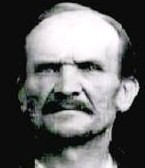
Georg Karl Grossmann
Serial killer Karl Denke
Serial killer · Germany · 1909
Karl Denke (August 12, 1870 – December 20, 1924) was a serial killer from Germa…
30 victims
Karl Denke
Serial killer · Germany · 1909
Karl Denke (August 12, 1870 – December 20, 1924) was a serial killer from Germa…
30 victims
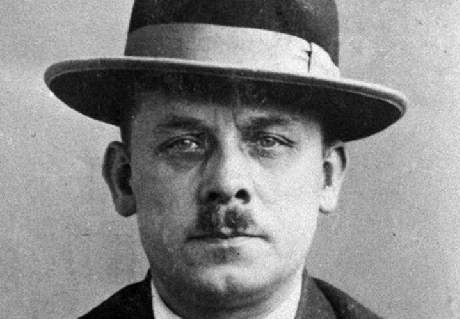 Friedrich Haarmann
Serial killer · Germany · 1918
Friedrich "Fritz" Haarmann (October 25, 1879 – April 15, 1925) was a serial kil…
27 victims
Friedrich Haarmann
Serial killer · Germany · 1918
Friedrich "Fritz" Haarmann (October 25, 1879 – April 15, 1925) was a serial kil…
27 victims
 Adolf Gustav Seefeld
Serial killer · Germany · 1908
Adolf Gustav Seefeld (1871–1936) was a German tramp and religious fanatic who k…
12 victims
Adolf Gustav Seefeld
Serial killer · Germany · 1908
Adolf Gustav Seefeld (1871–1936) was a German tramp and religious fanatic who k…
12 victims
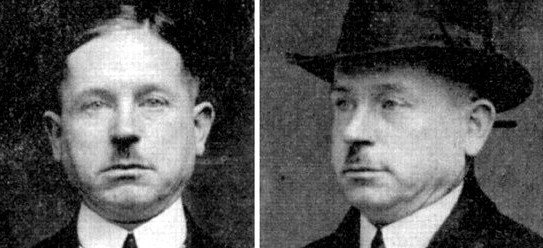 Peter Kürten
Serial killer · Germany · 1913
Peter Kürten Peter Kürten was convicted of nine murders and sentenced to death.…
9 victims
Peter Kürten
Serial killer · Germany · 1913
Peter Kürten Peter Kürten was convicted of nine murders and sentenced to death.…
9 victims
 Friedrich Schumann
Serial killer · Germany · 1911
Friedrich Schumann (1 February 1893 – 27 August 1921) was a German serial kille…
6 victims
Friedrich Schumann
Serial killer · Germany · 1911
Friedrich Schumann (1 February 1893 – 27 August 1921) was a German serial kille…
6 victims
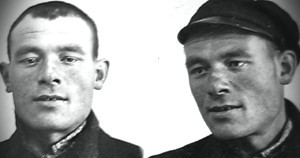 Bruno Lüdke
Serial killer · Germany · 1928
Bruno Lüdke (3 April 1908 – 26 April 1944) was an alleged German serial killer.…
84 victims
Bruno Lüdke
Serial killer · Germany · 1928
Bruno Lüdke (3 April 1908 – 26 April 1944) was an alleged German serial killer.…
84 victims
 Robert Latimer
Homicide · Canada · 1993
Robert Latimer (born March 13, 1953) was a Canadian farmer who was sentenced to…
1 victim
Robert Latimer
Homicide · Canada · 1993
Robert Latimer (born March 13, 1953) was a Canadian farmer who was sentenced to…
1 victim
 Richard Lynn Bible
Murderer · USA · 1988
Richard Lynn Bible was the defendant. Jennifer Wilson was the victim. · May 198…
1 victim
Richard Lynn Bible
Murderer · USA · 1988
Richard Lynn Bible was the defendant. Jennifer Wilson was the victim. · May 198…
1 victim
 Zainulabedin Zaidi
Murderer · United Kingdom · 2000
Zainulabedin Zaidi murdered Shazia Zaidi and their children, Saba Zaidi and Zee…
3 victims
Zainulabedin Zaidi
Murderer · United Kingdom · 2000
Zainulabedin Zaidi murdered Shazia Zaidi and their children, Saba Zaidi and Zee…
3 victims
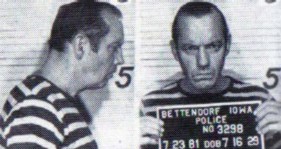 Charles Ray Hatcher
Serial killer · USA · 1969
Charles Ray Hatcher (July 16, 1929 – December 7, 1984) was an American serial k…
16 victims
Charles Ray Hatcher
Serial killer · USA · 1969
Charles Ray Hatcher (July 16, 1929 – December 7, 1984) was an American serial k…
16 victims
- Gender
- male
- Country
- Germany
- Location
- Berlin, Germany
- Date of birth
- December 13, 1863
- Age at first offence
- 50
- Characteristics
- child molester, torture, cannibalism, pedophile
- Victim profile
- Young women (mostly prostitutes)
- Method of murder
- ???
- Date(s) of murder
- 1913 - 1921
- Years active
- 1913–1921
- Date of arrest
- August 21, 1921
- Status
-
Died in custody
Sentenced to death; committed suicide by hanging himself in his cell on July 5, 1922
Case overview
Georg Karl Grossmann, who commonly called himself just Karl Grossman (also given as Carl Friedrich Wilhelm Großmann / Carl Großmann), was a German serial killer.
He was born in Neuruppin near Berlin in 1863. He was convicted of murder and was sentenced to death. Before his sentence could be carried out, he hanged himself in his cell.
Timeline
- 21 August 1921 — Großmann was arrested at his apartment in Berlin after neighbours heard screams and banging noises, followed by silence.
- July 5, 1922 — Großmann committed suicide by hanging himself in his cell.
Background
Not a great deal was known about his early life. It was said that he had sadistic sexual tastes and that he picked up a number of convictions for child molestation.
It was stated that twenty-five arrests occurred throughout his criminal career, including three convictions for molesting children—one of whom was killed. He was said to have been a butcher, but he preferred to live by begging in the streets and to spend his receipts on “sleazy prostitutes who nightly shared his bed.” It was also stated that he had been protected by his rap sheet from the military draft in World War I. During World War I, he peddled fresh meat in the streets and sold meat on the black market.
It was also stated that he rented a squalid upstairs flat in the slums of Berlin, near the terminus of the Silesian railway. His flat had a separate entrance, and the other tenants seldom thought of him before the early morning hours, when he returned from all-night drinking bouts with giggling prostitutes in tow.
The offence
In August 1921, police searched his apartment in Berlin and found a young woman's freshly murdered body on the bed.
Neighbours reported that Karl seemed to have had a steady supply of female companions, mostly destitute-looking young women, over the last few years, and that many went into the apartment but few emerged from it.
Evidence recovered from the flat suggested he had dispatched at least three women in as many weeks. The bloodstains in the apartment indicated that at least three other persons had been butchered in the recent weeks.
It was said that his diary and his statements to police indicated that he used the women sexually and then sold their flesh as beef or pork, disposing of the “useless” remnants in a nearby river. It was also said that bones and other inedible parts were thrown into the river.
Only the body of his final victim was found.
Some suggested as many as 50 young women entered Grossmann’s apartment and ended up being murdered, dismembered and eaten by unwitting customers of his meat business. How many victims he claimed was said to be unknown.
Investigation
In August 1921, the landlord was disturbed by sounds of violent struggle emanating from the butcher’s flat. Police were summoned. They found a freshly murdered woman in the kitchen, trussed up like a hog for slaughter.
Police were summoned after neighbours heard screams and banging noises, followed by silence. Police burst into the apartment, searched it, and found the young woman's freshly murdered body on the bed. Großmann was taken into custody.
Evidence recovered from the flat suggested he had dispatched at least three women in as many weeks, and the apartment contained bloodstains indicating at least three other persons had been butchered in the recent weeks.
Arrest
On 21 August 1921, Großmann was arrested at his apartment in Berlin after neighbours heard screams and banging noises, followed by silence. Police burst in and searched the place.
He was taken into custody and charged with murder. Another statement said he was charged with 1st degree murder.
Neighbours reported that he seemed to have had a steady supply of female companions, mostly destitute-looking young women, over the last few years. Many went into the apartment but few emerged from it.
Trial and sentencing
It was stated that, once employed as a butcher and later while protected by his rap sheet from the military draft, he devised a way to turn a profit on his appetites.
It was stated that he was convicted of murder and sentenced to death. He laughed when he was sentenced to die.
Appeals
No appeal information was provided.
Outcome
It was stated that he committed suicide while awaiting execution without giving a full confession, leaving the extent of his crimes and motives largely unknown. It was also stated that he cheated justice, as had Denke, by hanging himself in his cell.
Aftermath
An additional claim concerned the search for “Anastasia,” the Russian grand duchess believed by some to have escaped the Marxist firing squad that killed her family. It was stated that at one point it was claimed that “Anastasia” was in fact a Polish peasant girl, Franziska Schamzkovski. It was also stated that supporters of the would-be duchess countered that Schamzkovski had been killed by Grossmann during August 1920. Their authority was said to have been an entry in the killer’s diary for “Sasnovski,” which failed to silence critics.
It was also stated that newspapers dubbed the case the case of the “bread and butter brides,” and it was explained that a “bride” in Germany may either be a newly-married woman or a one-night stand.
Other details
- It was stated that he had sadistic sexual tastes and included bestiality among his various perversions.
- He was said to have had an alter ego spelling variant in records, including “Georg Karl Grossman,” and another set of names including “Carl Friedrich Wilhelm Großmann” and “Carl Großmann.”
- He was said to have had a hot dog stand at the nearby train station.
- The narrative included the claim that evidence recovered from the flat included his diary and that his statements to police revealed how he disposed of remnants.
- A comparison was made to Karl Denke in Silesia.
Spotted an error, or have more information about this case?