Kent Bowers
Homicide Jack Kevorkian
Homicide · USA · 1990
Jack Kevorkian (born May 26, 1928) was a controversial American pathologist. He…
130 victims
Jack Kevorkian
Homicide · USA · 1990
Jack Kevorkian (born May 26, 1928) was a controversial American pathologist. He…
130 victims
 David Koresh
Homicide · USA · 1993
David Koresh (born Vernon Wayne Howell; August 17, 1959 – April 19, 1993) led t…
79 victims
David Koresh
Homicide · USA · 1993
David Koresh (born Vernon Wayne Howell; August 17, 1959 – April 19, 1993) led t…
79 victims
 Leszec Pekalski
Homicide · Poland · 1984
1984–1992 — Leszek Pękalski was believed to have killed at least 17 people. · 1…
17 victims
Leszec Pekalski
Homicide · Poland · 1984
1984–1992 — Leszek Pękalski was believed to have killed at least 17 people. · 1…
17 victims
 Edward Charles Allaway
Homicide · USA · 1976
Edward Charles Allaway Edward Charles Allaway was found not guilty by reason of…
7 victims
Edward Charles Allaway
Homicide · USA · 1976
Edward Charles Allaway Edward Charles Allaway was found not guilty by reason of…
7 victims
 Clinton Bankston
Homicide · USA · 1987
15 August 1987 — Ann Morris (63), her sister Sally Nicholson (59), and Sally’s…
5 victims
Clinton Bankston
Homicide · USA · 1987
15 August 1987 — Ann Morris (63), her sister Sally Nicholson (59), and Sally’s…
5 victims
 Randall Eugene Cannon
Murderer · USA · 1985
Name: Randall Eugene Cannon Randall Eugene Cannon and his co-defendant Loyd LaF…
1 victim
Randall Eugene Cannon
Murderer · USA · 1985
Name: Randall Eugene Cannon Randall Eugene Cannon and his co-defendant Loyd LaF…
1 victim
 Akiyoshi Umekawa
Murderer · Japan · 1963
Akiyoshi Umekawa ( 梅川 昭美 , Umekawa Akiyoshi , March 1, 1948 - January 28, 1979)…
5 victims
Akiyoshi Umekawa
Murderer · Japan · 1963
Akiyoshi Umekawa ( 梅川 昭美 , Umekawa Akiyoshi , March 1, 1948 - January 28, 1979)…
5 victims
 Modise Mokwadi Fly
Murderer · Botswana · 2006
Modise Mokwadi Fly was a Botswana politician and activist. He was the general s…
1 victim
Modise Mokwadi Fly
Murderer · Botswana · 2006
Modise Mokwadi Fly was a Botswana politician and activist. He was the general s…
1 victim
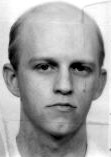 Richard Dinkins
Murderer · USA · 1990
Richard Dinkins was executed in Texas on January 29, 2003. He was convicted of…
2 victims
Richard Dinkins
Murderer · USA · 1990
Richard Dinkins was executed in Texas on January 29, 2003. He was convicted of…
2 victims
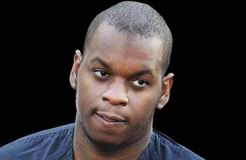 Abdulhakim Muhammad
Murderer · USA · 2009
Abdulhakim Muhammad (formerly known as Carlos Leon Bledsoe) was convicted in co…
1 victim
Abdulhakim Muhammad
Murderer · USA · 2009
Abdulhakim Muhammad (formerly known as Carlos Leon Bledsoe) was convicted in co…
1 victim
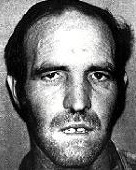 Ottis Toole
Serial killer · USA · 1961
Ottis Elwood Toole (sometimes misspelled as “Otis”) was an American serial kill…
65 victims
Ottis Toole
Serial killer · USA · 1961
Ottis Elwood Toole (sometimes misspelled as “Otis”) was an American serial kill…
65 victims
- Gender
- male
- Country
- Belize
- Location
- Belize City, Belize
- Date of birth
- 1967
- Age at first offence
- 17
- Characteristics
- juvenile (17), former mental patient, drugs, drug addict
- Victim profile
- Francis Codd
- Method of murder
- St abbing with knife
- Date(s) of murder
- July 4, 1984
- Years active
- 1984
- Date of arrest
- Same day
- Status
-
Executed
Executed by hanging on June 19, 1985
Case details
Kent Bowers was a Belizean man who died on 19 June 1985. He was convicted of murder and sentenced to death by hanging.
Background
The incident involved Francis Codd and his wife, Dora Codd, who were hosting a private party for their twenty-fifth wedding anniversary at the Sueno Beliceño restaurant in Belize City.
The offence
On 4 July 1984, Kent Bowers entered a restaurant in Belize City where Francis Codd and Dora Codd were hosting a private party for their twenty-fifth wedding anniversary. Bowers was told that a private party was in progress, that the restaurant was closed, and that he was asked to leave. The deceased, Francis Codd, escorted Bowers to the door, and a struggle ensued outside between Bowers and Codd. During the struggle, Bowers stabbed Francis Codd several times. Francis Codd died within minutes of the incident.
In an unsworn statement from the dock, Kent Bowers said that in addition to shoving him, Francis Codd jumped on him when he turned to go and hit him in the face. Bowers also said that others rushed up and started to beat him, and he heard one say: “Bust his rass, he had no right around here”. Bowers said he was confused by the beating and struck out with the knife to get away.
A written statement given by Bowers to the Police was put in evidence by the prosecution. In that statement, Bowers said that the deceased shoved him inside the restaurant, followed him outside and continued to shove him. Bowers said a fist fight between them started. He said about four other persons came and to “hassle”, and that he then took out his knife and started to stab at anyone because he was desperate and wanted to get away from the crowd because he “knew that these guys always carry guns”.
Investigation
A ground of appeal addressed an allegation that prejudicial publicity affected the fairness of the trial. Counsel for the appellant referred to an article appearing in the Amandala newspaper of July 6, 1984 in which it was suggested that Bowers is a “former mental patient” and “a user of heavy drugs” and “the assailant behaved like a drug crazed maniac”.
The Court of Appeal also considered the circumstances of that publication. The Court observed that in R. v Malik (1968) 52 Cr. App. Rep. 140, the view expressed was that if the court felt there was any danger the appellant had not had a fair trial because of the prejudicial effect of an article about him appearing in the Sunday Times, they would without hesitation set aside the conviction. The Court explained that in that case the article appeared some 10 days before the trial in a responsible newspaper and that contempt of court proceedings had been brought in respect of the article. In the instant case, the Court noted that the article appeared over 3 months before the trial, that contempt of court proceedings were never instituted because, “we are told”, the Director of Public Prosecutions was unaware of the publication of the article, and counsel for the appellant was at the time of the trial himself unaware of the publication of the article. The Court said there was nothing before it to suggest the jurors were any more aware of the article or likely to be influenced by it. The Court stated that any danger would have been removed by the warning the learned trial judge gave early in his summing up to disregard anything the jurors may have heard or read outside of the trial.
Arrest and charge
Bowers was arrested and charged with murder.
Trial
On 23 October 1984, Bowers was convicted of the murder of Robert Codd and sentenced to death.
Francis Codd Sr. testified that he saw the deceased talking to the appellant in the restaurant and then both moved in the direction of the doorway with the appellant backing out reluctantly. When they both went through the doorway, Francis Codd Sr. saw the deceased and Bowers facing each other about 12 feet from the door and almost immediately they clashed. Francis Codd Sr. moved towards them with the intention of separating them and, as he moved, he heard Bowers say: “I was only want buy one drink and now you going get your rass cut up”. He went behind Bowers and tried to pull him away from the deceased but failed. He heard his wife screaming. Bowers shook him off, Francis Codd Sr. fell backwards, and Bowers ran. Afterwards he found that he had received a cut in a finger of one hand and on his back.
In cross-examination, Francis Codd Sr. admitted that he had originally told the Police that he heard Bowers say “You mudder fucker I just want to buy and some other words that he did not make out”, but he “remembered” the other words later and stated them at the preliminary inquiry and at the trial.
Peter Codd, the 13 year old brother of the deceased, stated that he saw the deceased “walk” Bowers to the door of the restaurant. He was about to follow when his father spoke to him and he sat down. His father went outside and shortly afterwards he heard his mother shouting. She was then at the door of the restaurant facing inwards. He ran outside to see his father holding Bowers from behind trying to get Bowers away from the deceased. Bowers managed to get away and ran past bumping but not injuring him.
Francis Codd, another brother of the deceased, stated that when he heard a female screaming outside the restaurant he ran outside and saw the deceased struggling with Bowers. He rushed up to them and pulled the deceased away from Bowers at which point Bowers ran off.
Dora Codd, the mother of the deceased, stated that when out of the corner of her eye she saw movement outside on the lawn she went outside and saw the deceased and Bowers struggling. She went up to them and tried to pull her son away. She heard her husband call to her to move away and she ran back to the restaurant shouting for help. Others came out and when she returned she saw the deceased lying on the ground. Later she realised that she felt pain on her left side and realised that she had received a wound.
Therese Codd, a sister of the deceased, stated that she saw the deceased follow a man to the door of the restaurant. She said the deceased did not follow the man outside. Some 10-15 minutes later she heard her mother screaming outside and when she ran outside she saw the deceased stumbling across the lawn and a man running off.
Susan Codd, another sister of the deceased, did not give evidence. She received a wound on the arm but there was no evidence from any of the witnesses as to how this came about.
The Court of Appeal also discussed the evidence regarding self-defence. It said: “On the evidence of the prosecution witnesses it can hardly be said that the accused in producing a knife and stabbing indiscriminately was acting in self defence. None of the persons around him were armed, two were women and their efforts were directed to separating the appellant and the deceased rather than to attacking the appellant. Indeed it was never suggested to any of the witnesses in cross examination that anyone had struck the appellant or threatened him.”
The Court of Appeal noted that even if Bowers may have become apprehensive at the approach of the other persons, the actions disclosed in their evidence were not such as to confirm that apprehension or justify the use of a knife. It said that in the absence of evidence to the contrary from the prosecution witnesses, the jury would have to assume that the deceased was the aggressor in the fight between Bowers and himself. It stated that the deceased was unarmed and that the use of a knife by Bowers to defend himself would not be justified. The Court said that if the jury accepted Bowers’s version of the incident they may have concluded that given the number of attackers and Bowers’s inability to escape, the use of a weapon in self-defence was justified. The Court also stated that if the jury rejected that version and accepted the evidence of the prosecution witnesses there was ample evidence to justify the verdict. It said it was open to the jury to find that Bowers struck out but with no real intention to kill, or that he was attacked and lost his self-control when other persons came on the scene because he was in terror of death or really serious harm. It stated that on either of these findings the proper verdict would be one of manslaughter. The Court added that Sgt. Jenkins gave evidence that when he approached Bowers on the day after the incident, Bowers reached for a dagger and said: “that he will get to us just like what he did last night”. The Court said that if the jury accepted that evidence or the evidence of Mr. Codd as to what Bowers said at the time of the incident, they might have concluded that Bowers had not lost his self control out of apprehension but acted deliberately and with an intention to kill.
In summing up on self-defence, the trial judge directed the jury as follows:
“The law says for the defence of himself against murder, man-slaughter, dangerous or grievous harm, a person may justify any necessary force or harm and even killing in case, of extreme necessity. So that a person may use any necessary force or harm and even kill in case of extreme necessity if violence is being used against him. But the law also says that force cannot be justified if it goes beyond the amount and kind of force that is reasonably necessary for the purp6se for which force is permitted. 'So everything depends on the circumstances, on the particular circumstances in which the accused was in. So in this case I ask you to bear in mind that if a man reasonably believes that his life is in danger or he is in danger of receiving really serious harm he may use. such force or harm as on reasonable grounds he believes necessary to prevent or resist the attack on him. And if in using such force he kills his attacker he isn't guilty of any crime. And in deciding whether it was reasonably necessary to have used the force that was actually used, you have to consider all the circumstances of the case as put to you including whether the accused had an opportunity to retreat or retreated as far as he could without danger to himself or giving up anything that he was entitled to protect. So I would ask you to consider these things when you go to consider the case. Look and see whether the evidence shows that there was an attack on the accused, whether as a result of that attack the accused reasonably believed that his life was in danger or that he was imminent danger of receiving serious bodily harm Whether the accused had no opportunity to retreat or retreated as far as he could; whether the force he used to protect himself from the danger or from reasonable, apprehension that he was in danger of receiving serious body harm. And whether ther accused believed on reasonable grounds, - whether he reasonably believed that the force he used was necessary to protect or resist the attack. And bear in mind always that it is the prosecution who has to satisfy you that the accused was not acting in self-defence. And, if, after consideration of all the evidence you are left in doubt as to whether or not he was acting in self defence then you have to acquit him.”
The trial judge also gave further directions on the issue of excessive force in the following terms:
“Then you ask yourself. Was the force used to protect himself from the danger or from reasonable apprehension that he was losing his life or about to suffer serious bodily harm? Did Kent Bowers reasonably believe that the force used was necessary to prevent or resist the attack such as you may find to have occurred. You have the facts and circumstances, you consider them But I think that one question you have to ask yourself is this: Was it reasonable for Kent Bowers to believe that stabbing Robert Codd in the left side of his chest in such a way as to damage two ribs and also stab him in his belly by sending the knife in deep to puncture the small intestine and bring out the fatty substance, was necessary to prevent or resist the attack on him such as you may find.”
Regarding retreat, the trial judge said:
“Was he able to retreat or retreated as far as he could in the circumstances I am outlining to you. The question hardly arises because if you are acting on what he is saying, he is fighting, this danger arises and they are all on him. Bobby holding on to him having a fist fight, a fist fight and four others. So according to him it was not a question of his being able to retreat or he had no opportunity to retreat.”
Regarding intention, the trial judge referred to what Bowers said in his statement to the police under caution, as quoted by the trial judge:
“You also have to consider a statement which the accused made to the police under caution. You will find that in that statement under caution he said "I started to stab because I was desperate and wanted to get away from the crowd. I did not want to kill any of them". If you are acting on that statement given under caution you will find that that statement by the accused as to his own state of mind. And that statement may help you to decide what was the accused's intention when he stabbed Bobby Codd. You also have to consider other circumstances. A statement he made to you here from the dock. I didn't juck them to hurt them to any extent. Just to get away from them". Similarly that is a statement by the accused, if you are acting upon it, as to his own state of mind and it may help you to determine what was his intention at the time he stabbed.”
In the trial judge’s remarks on possible verdicts, the Court of Appeal recorded the following direction at the end of the summing up:
“On the other hand, if you find that bowers killed Codd but was acting in self defence or you are left in reasonable doubt as to whether or not he was acting in self defence then the verdict would be not guilty.”
The trial judge also directed the jury on provocation as follows:
“I think the following matters which emerged from the statement which the accused gave to the police and from what he said to you here in the dock and matters which you are to consider on this issue. He said, and raises for consideration, that after he the accused went outside of the restaurant the deceased, Bobby Codd, came behind him and continue to shove him.”
“The deceased Bobby Codd continues to shove him and he puts for consideration, and it is for you to determine whether you accept it or not but it is for you. It is put for consideration. He turned to go away and the dead person Bobby Codd jumped on him, held him back way, from behind. So if you accept that, that is, if you accept that, you may feel that such an assault was unlawful. He was asked to go. He turned to go and while going away the man jumped on him. There was no reason for jumping on him and according to the accused then, from then on there is a first fight between the two of them. And if you accept what he is saying this assault is aggravated by other people coming and beating him. And during this, shout, "Beat his rass, he had no right round here". This issue is raised if you are acting on what he said and accept what he said. But I want you to note that in the statement to the police under caution he doesn't say the dead man caused him any injury or does anything to him but fight with his fists. And here in the unsworn statement from the dock to you he doesn't say that the dead man does anything to him but hit him in the face. So if you are going to consider this issue, if on what he has raised, you have to ask yourselves, if even accepting what he said happened, would be a reasonable person lose self control through a person fighting him with his fists? Would there be a loss of self control through other people coming and joining in? Those are the matters put to you for the consideration for this. So you have to consider whether the matters put before you disclose an assault on Bowers as would cause in any reasonable person a loss of self control. If you find that what happened would cause in any reasonable person a loss of self control you then look to see whether in the circumstances Bowers did in fact lose self control and if you feel sure that he did not lose self control then this matter of provocation does not avail him and the crime still be murder. But if you are left in reasonable doubt as to whether he lost self control, assuming that there is extreme provocation, as you find, then you must return a verdict of manslaughter. But if you come to the conclusion there was extreme provocation and Bowers did in fact lose self control, you still have to consider whether the accused Bowers exceeded what an ordinary person deprived of self control in the circumstances would have done. So you will consider the provocation received and the manner of retaliation and ask yourselves whether an ordinary person provoked in the way the accused was provoked would retaliate in the way the accused retaliated. So if you find that there was extreme provocation and the accused did in fact lose self control in the circumstances he was in but exceeded what an ordinary person losing self control in those circumstances would have done, then the defence of provocation cannot avail the accused and the crime would still be murder. But if you find that there was provocation and the accused did lose self control and acted as an ordinary person would have done in the circumstances than you will acquit of murder and return a verdict of manslaughter. Or even if you are left in reasonable doubt as to whether there was extreme provocation or you are in reasonable doubt on any aspect of this issue you will also consider a verdict manslaughter.”
Appeals
Bowers appealed to the Court of Appeal of Belize.
Grounds of appeal considered
The Court of Appeal considered the following first ground of appeal: the alleged real danger that Bowers had not had a fair trial before the jury due to an article published in the local press concerning the incident. The Court rejected the ground, finding no danger that Bowers did not have a fair trial and stating that any danger would have been removed by the warning in the summing up.
The Court also considered the second ground of appeal: that the verdict was unreasonable and could not be supported by the evidence. The Court rejected that ground.
The Court then considered the third ground of appeal: that the trial judge misdirected the jury by not adequately explaining the circumstances under which Bowers would have been justified in using necessary force extending to killing. The Court addressed counsel’s complaint about whether “grievous harm” had been equated to “really serious harm” or “serious harm,” including a discussion of section 92 of the Criminal Code and related cases. The Court concluded that there was no misdirection.
The Court grouped the fourth and fifth grounds of appeal together. The fourth ground alleged that the trial judge failed to adequately direct the jury on the factors to be taken into consideration in determining whether the force used was too excessive. The fifth ground alleged that the trial judge, in his summing up on self defence, failed to adequately put to the jury the case on behalf of the appellant. The Court rejected those grounds.
The sixth ground of appeal alleged that the trial judge misdirected the jury regarding the burden of proof as it affected self-defence. The Court rejected the ground, stating that the complained-of passage was not about the burden of proof.
The seventh ground also complained about the same passage and also failed.
The eighth ground alleged that the trial judge was wrong in not having left to the jury the fact that Bowers could have had the intention to kill but committed no crime or used excessive force and been guilty only of manslaughter. The Court rejected the ground.
The ninth ground alleged inadequate summing up because the trial judge did not analyze or sufficiently analyze the evidence of Francis Codd Sr., relating in particular to what Bowers was supposed to have said. The Court rejected the ground and quoted portions of the trial judge’s remarks on the issue of remembered words.
Grounds 10, 11 and 12 were argued together. The Court recorded them as follows:
“10. The learned trial judge misdirected the jury on the burden of proof as regards the question of provocation.
11. The summing up was inadequate in that the learned trial judge did not or did not properly indicate to the jury the possible sources from which provocation could emanate.
12. The learned trial judge in his summing up on the question of provocation failed to fairly and adequately put to the jury the case on behalf of the appellant.”
The Court addressed these grounds by quoting relevant provisions. It quoted section 116:
“A person who intentionally causes the death of another person by unlawful harm shall be deemed to be guilty only of manslaughter, and not of murder, if either of the following of extenuation be proved on his behalf, namely- (a) that he was deprived of the power of self-control by extreme provocation given by the other person as is mentioned in section 117,”
It quoted section 117:
“The following matters may amount to extreme provocation one person to cause the death of another person, namely- (a) an unlawful assault or battery committed upon the accused person by the other person, either in an unlawful fight or otherwise, which is of such kind either in respect of its violence or by reason of words, gestures or other circumstances of insult or aggravation, as to be likely to deprive a person, being of ordinary character, and being in the circumstances in which the accused person was, of the power of self-control”
“(b) the assumption by the other person, at the commencement of an unlawful fight of an attitude manifesting and intention of instantly attacking the accused person with deadly or dangerous means or in a deadly manner;”
It quoted section 121:
“Where a sufficient provocation has been given to the accused person by one person and he kills another person under the belief on reasonable grounds that the provocation was given by him, the provocation shall be admissible for the crime to manslaughter in the same manner as if it had been given by the person killed, but except as in this section mentioned provocation given by one person is not a provocation to kill a different person.”
The Court concluded it did not accept the submission regarding whether acts or words could emanate from someone other than the victim after section 118 was introduced, and it considered that the burden of proving extreme provocation lay on the accused.
The Court dismissed the appeal for these reasons.
Sentencing
The Court of Appeal recorded that, on October 23, 1984, Bowers was convicted of the murder of Robert Codd and sentenced to death.
The trial judge imposed the mandatory sentence of death by hanging.
Outcome
Bowers’s arguments on appeal were rejected. Bowers’s petition for clemency was rejected by Manuel Esquivel, the Prime Minister of Belize.
Aftermath
Bowers was hanged on 19 June 1985. No one had been executed by Belize since Bowers, but capital punishment remained as a possible legal punishment in Belize.
Spotted an error, or have more information about this case?