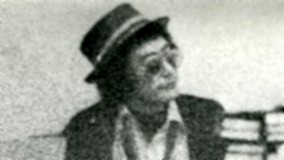
Akiyoshi Umekawa
Murderer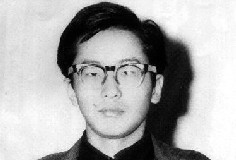 Otoya Yamaguchi
Murderer · Japan · 1960
Otoya Yamaguchi (山口 二矢, Yamaguchi Otoya, February 22, 1943 - November 2, 1960)…
1 victim
Otoya Yamaguchi
Murderer · Japan · 1960
Otoya Yamaguchi (山口 二矢, Yamaguchi Otoya, February 22, 1943 - November 2, 1960)…
1 victim
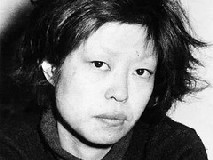 Hiroko Nagata
Murderer · Japan · 1972
Hiroko Nagata (Japanese leftist radical; also sometimes mistakenly referred to…
14 victims
Hiroko Nagata
Murderer · Japan · 1972
Hiroko Nagata (Japanese leftist radical; also sometimes mistakenly referred to…
14 victims
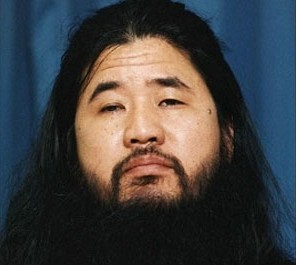 Shoko Asahara
Murderer · Japan · 1995
Shoko Asahara was the founder of Japan's controversial Buddhist religious group…
12 victims
Shoko Asahara
Murderer · Japan · 1995
Shoko Asahara was the founder of Japan's controversial Buddhist religious group…
12 victims
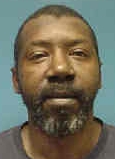 Jay Scott
Murderer · USA · 1983
Jay D. Scott (August 21, 1952 - June 14, 2001) was executed by the state of Ohi…
2 victims
Jay Scott
Murderer · USA · 1983
Jay D. Scott (August 21, 1952 - June 14, 2001) was executed by the state of Ohi…
2 victims
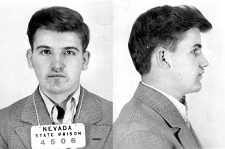 Floyd Loveless
Homicide · USA · 1942
Floyd Loveless was the person executed by asphyxiation-gas on September 29, 194…
1 victim
Floyd Loveless
Homicide · USA · 1942
Floyd Loveless was the person executed by asphyxiation-gas on September 29, 194…
1 victim
 Robert Lee Thompson
Murderer · USA
December 5, 1996 — Robert Lee Thompson and Sammy Butler entered a 7-Evenings fo…
3 victims
Robert Lee Thompson
Murderer · USA
December 5, 1996 — Robert Lee Thompson and Sammy Butler entered a 7-Evenings fo…
3 victims
 Dena Schlosser
Homicide · USA · 2004
Dena Schlosser (born 1969) lived in Plano, Texas. She was the mother of Margare…
1 victim
Dena Schlosser
Homicide · USA · 2004
Dena Schlosser (born 1969) lived in Plano, Texas. She was the mother of Margare…
1 victim
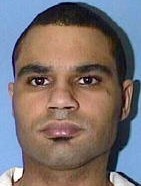 Marcus Bridger Cotton
Murderer · USA · 1996
Marcus Bridger Cotton was convicted of capital murder and sentenced to death fo…
1 victim
Marcus Bridger Cotton
Murderer · USA · 1996
Marcus Bridger Cotton was convicted of capital murder and sentenced to death fo…
1 victim
- Gender
- male
- Country
- Japan
- Location
- Japan
- Date of birth
- March 1, 1948
- Age at first offence
- 15
- Characteristics
- juvenile (15), bank robbery
- Victim profile
- One woman / Two bank employees and two policemen
- Method of murder
- ??? / Shooting
- Date(s) of murder
- December 16, 1963 / January 26, 1979
- Years active
- 1963–1979
- Date of arrest
- —
- Status
-
Died in custody
Osaka armed police fatally shot Umekawa on January 28, 1979
Case record
Identity
Akiyoshi Umekawa ( 梅川 昭美 , Umekawa Akiyoshi , March 1, 1948 - January 28, 1979) was a Japanese mass murderer.
He was also called Teruyoshi Umekawa , Terumi Umekawa , Akimi Umekawa and Akemi Umekawa though those weren't his real name.
Early life
Umekawa was born in Otake, Hiroshima Prefecture.
He was a great reader and loved hardboiled fictions.
He also saw the film Salò o le 120 giornate di Sodoma , which had an impact on his life.
The offence
On December 16, 1963, while he was 15 and still a minor, he killed a women.
He wanted to make a big incident 15 years after he committed the first murder.
Mitsubishi Bank sporting gun kidnapping Umekawa shot dead two employees and two policemen on January 26, 1979 in a Mitsubishi Bank in Sumiyoshi-ku, Osaka.
He took 40 hostages at the bank.
He asked them, "Do you know the city of sodom (Salò o le 120 giornate di Sodoma) ?"
He stripped women of all their clothes and gave them ignominy.
Investigation and incident commander
Rokuro Yoshida, who joined criminal investigations of Kiyoshi Okubo and United Red Army, was appointed as the incident commander.
Police response and fatal shooting
Osaka armed police (now Special Assault Team) were called, which was the first case in the history of Japanese armed police.
They fatally shot Umekawa on January 28, 1979.
Yoshida did not make excuses, claiming that there had been no alternative to deadly force.
Trial and sentencing
No trial or sentencing information was provided.
Appeals
No appeal information was provided.
Outcome
Osaka armed police fatally shot Umekawa on January 28, 1979.
Aftermath
His crime had an impact on Japanese youths.
Neko Oikawa said that he was the main reason why she didn't have leftist views.
A film Tatoo Ari in 1982 was based on his crime.
The words of Kazoku Hyakkei by Japanese rock band Jagatara in 1983 was said to be inspired by the crime.
The situation of Japanese Eroge Gakuen Sodom in 1994 was similar to his crime.
Spotted an error, or have more information about this case?