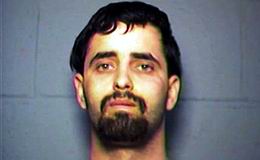
Gunner Lindberg
Murderer Russell Ellwood
Murderer · USA · 1991
Russell Ellwood was a former taxi driver. Authorities suspected him of killing…
20 victims
Russell Ellwood
Murderer · USA · 1991
Russell Ellwood was a former taxi driver. Authorities suspected him of killing…
20 victims
 Robert Martines Perez
Murderer · USA · 1994
Name: Robert Martines Perez · Other name used in proceedings: Robert Martinez P…
15 victims
Robert Martines Perez
Murderer · USA · 1994
Name: Robert Martines Perez · Other name used in proceedings: Robert Martinez P…
15 victims
 Billy Frank Vickers
Murderer · USA · 1993
Billy Frank Vickers Vickers was executed by lethal injection in Texas on Januar…
14 victims
Billy Frank Vickers
Murderer · USA · 1993
Billy Frank Vickers Vickers was executed by lethal injection in Texas on Januar…
14 victims
 Jerome Butler
Murderer · USA · 1973
Jerome Butler was executed by lethal injection in Texas on April 21, 1990. · Ju…
2 victims
Jerome Butler
Murderer · USA · 1973
Jerome Butler was executed by lethal injection in Texas on April 21, 1990. · Ju…
2 victims
 Amelia Dyer
Serial killer · United Kingdom · 1880
Amelia Dyer was convicted for the murder of Doris Marmon. She was known as a “b…
100 victims
Amelia Dyer
Serial killer · United Kingdom · 1880
Amelia Dyer was convicted for the murder of Doris Marmon. She was known as a “b…
100 victims
 Willie Brown
Murderer · USA · 1983
Defendant: Willie Brown Jr. (also referred to as Willie Brown) Victim: Vallerie…
1 victim
Willie Brown
Murderer · USA · 1983
Defendant: Willie Brown Jr. (also referred to as Willie Brown) Victim: Vallerie…
1 victim
 William Gollehon
Murderer · USA · 1985
William Jay Gollehon was sentenced to death in 1992 after he and Douglas Turner…
7 victims
William Gollehon
Murderer · USA · 1985
William Jay Gollehon was sentenced to death in 1992 after he and Douglas Turner…
7 victims
 Paul Rowles
Murderer · USA · 1972
Paul Rowles died in prison on February 12, 2013. Paul Rowles was born in 1948.…
3 victims
Paul Rowles
Murderer · USA · 1972
Paul Rowles died in prison on February 12, 2013. Paul Rowles was born in 1948.…
3 victims
 Carlos de Luna
Murderer · USA · 1983
Carlos de Luna was executed by lethal injection in Texas on December 7, 1989. H…
1 victim
Carlos de Luna
Murderer · USA · 1983
Carlos de Luna was executed by lethal injection in Texas on December 7, 1989. H…
1 victim
- Gender
- male
- Country
- USA
- Location
- Tustin, Orange County, California, USA
- Date of birth
- 1974
- Age at first offence
- 22
- Characteristics
- hate crime, white supremacist
- Victim profile
- Thien Minh Ly, 24
- Method of murder
- St abbing with knife 22 times
- Date(s) of murder
- January 28, 1996
- Years active
- 1996
- Date of arrest
- March 2, 1996
- Status
-
Sentenced to death
Sentenced to death on December 12, 1997
Case record: Gunner Lindberg
Status and overview
Gunner Jay Lindberg was convicted of the first degree murder of Thien Minh Ly and was sentenced to death on December 12, 1997. The California Supreme Court affirmed Lindberg’s trial, convictions, and death sentence in a decision dated August 28, 2008.
Timeline
- January 28, 1996 — Lindberg and an accomplice encountered Thien Minh Ly at Tustin High School; Ly was rollerblading around the tennis courts and was later found dead.
- January 29, 1996 — Thien Minh Ly’s body was found on the Tustin High School tennis courts.
- February 23, 1996 — Lindberg wrote a handwritten letter to “Dear Bro, ex-con 2/11 Rob” describing the killing of “a jap” at Tustin High school and describing a stabbing by Lindberg and involvement by “Dominic.”
- February 29, 1996 — Walter Ray Dulaney IV (also known as Robert Dulaney) received the February 23, 1996 letter while in Alamogordo, New Mexico.
- March 1, 1996 — Dulaney spoke by telephone to Lindberg, who told him the murder “gave [him] a rush,” “like a high,” that he “killed the Jap,” that he “slit his throat and stabbed him a whole bunch of times,” and that he “couldn't stop,” and that he killed Ly “for racial movement [sic].”
- March 2, 1996 — In the early morning hours, police executed a search warrant at Lindberg’s apartment in Tustin and arrested Lindberg and 17-year-old Domenic Michael Christopher.
- March 5, 1996 — Tustin Police Detectives Todd Bullock and Bruce Williams interviewed Dulaney about the letter.
- October 12, 1993 — Lindberg wrote a letter while incarcerated with the phrase “I love to play in the WaR zone.”
- November 3, 1993 — Lindberg wrote a letter postmarked November 3, 1993 discussing “niggers” and an address for Aryan Racial Unity / Nationalist Party of Canada.
- April 11, 1997 — Dulaney telephoned Carl Waddell, an investigator with the Orange County District Attorney’s Office, and informed him that Lindberg had told him the murder was racially motivated.
- April 24, 1997 — Investigator Waddell and Tustin Police Detective Thomas Tarpley interviewed Dulaney in Missouri.
- July 1997 — Lindberg was in custody awaiting trial when Alejandro Villa testified that Lindberg assaulted and threatened Asian inmate Tung Le in the Orange County Jail.
- December 12, 1997 — An Orange County Superior Court judge sentenced Lindberg to death.
- October 16, 1997 — A letter purportedly written by two jurors was filed on October 16, 1997 after the jury returned its death verdict and before Lindberg was sentenced; the letter was not admitted into evidence.
- August 28, 2008 — The California Supreme Court affirmed the judgment (including the death sentence).
- August 29, 2008 — Reporting described the California Supreme Court as having unanimously upheld the death sentence.
The offence
Victim and location
Thien Minh Ly, a 24-year-old Vietnamese American, was killed on the Tustin High School campus on the tennis courts.
Attack and injuries
Lindberg and Domenic Michael Christopher trapped Ly on the tennis courts. Ly suffered multiple injuries and was stabbed numerous times:
- Ly had suffered multiple deep stab wounds on his right and left chest areas that penetrated internal organs.
- Ly had suffered about 22 wounds to his chest and abdominal areas, inflicted from the front and from the back.
- Ly had been stabbed about 14 times in the heart.
- Ly’s stab wounds perforated the heart, both lungs, diaphragm, liver, duodenum, and kidney, and caused Ly to bleed to death.
- Lindberg severed both of Ly’s jugular veins.
- The autopsy described contusions, abrasions, slash wounds to the neck, and evidence of repeated cutting extending wounds. Lindberg and Christopher left Ly on the tennis courts and he later died. Ly’s body was found the next morning.
Motive allegations and hate-crime classification
Prosecutors categorized the murder as a hate crime. The California Supreme Court concluded the evidence supported that Lindberg acted with racial animus and that the defendant “was a racist who regarded non-whites as subhuman.”
Investigation
Initial discovery at Tustin High School
Frank Armenta, a groundskeeper at Tustin High School, noticed someone wearing rollerblades lying on one of the tennis courts. Armenta saw blood on the person’s shirt and a cut on the neck and asked two nearby school employees to call the police. Police found Ly dead. Next to Ly’s body, police recovered a cap and a single key on a key ring; the key fit the locks at Ly’s residence.
Search warrant and seized items
In the early morning hours of March 2, 1996, police executed a search warrant at Lindberg’s apartment in Tustin with assistance from the Orange County Sheriff’s Department SWAT team. On a wall in the bedroom shared by Lindberg and Christopher, police observed a poster at the top that read, “Celebrate Martin Luther King Day” (“Martin Luther King” poster) and that included the additional text: “If they would have shot four more, we could have had the rest of the week off from work.” The word “death” was written below “Luther” in “Martin Luther King.”
Police seized items from Lindberg’s bedroom, including:
- A notebook with writing on numerous pages, including “Blessed Be Ye Ears” discussing “killing the meek,” “devastation and death,” calling Robert Dulaney “Ex-Con,” declaring “Death is apperant in all my members eyes, kill spill the blood of the meek. The meek shall inharent shit. The stronge shall survive my tounament of death.”
- A box labeled “Mixed Fruit” and “Gunner's Box,” and two pairs of gloves on top of the box.
- A Bible with “Presented [¶] to Bambi [illegible] [¶] by Gunner Lindberg” and lists of names of White supremacist organizations and related items on last pages.
- Inserted papers including:
- An application for the N.A.A.W.P. (National Association for the Advancement of White People).
- A newsletter dated August 1994 entitled “The Talon Euro-American alliance” describing the Aryan Movement and stating it “courageously offer[s] the white race its only hope for survival.”
- A paper reading “Failure to speak up, a silent and deadly killer” written by Jack Mohr, a “Brigadier General” who headed “The Crusade for Christ and Country.”
- A Nationalist Party of Canada Membership Oath stating, “I declare that I am a racist who respects other races with common sense and good will and fair play towards the maintenance of my racial integrity and identity. [¶] I pledge to establish and maintain the constitutional racist state homeland ․”.
- A paper titled “Pro White Organizations” listing 12 organizations, including the Aryan Research Fellowship, the Ku Klux Klan, and the White Aryan Resistance.
- A cardboard box labeled “2/11 Insane LOC,” “Insane Loc,” “I.C.P.,” and “O.G.,” with lightning bolts and two swastikas.
- A plastic skull with a motorcycle helmet bearing a swastika across the top.
- A T-shirt belonging to Lindberg with a small bloodstain about the size of a nickel.
Forensic evidence
DNA samples were obtained from dried bloodstains on three areas of the right-hand black glove found on the box in Lindberg’s bedroom. Ly’s DNA was consistent with the sample DNA from all three areas of the glove. Lindberg’s DNA was consistent with being one of the sources of the mixed sample. Christopher was excluded as a contributor of the blood tested on the glove. The percentage of the population that could be excluded as having been the source of the bloodstains on the gloves was 99.999 percent, with estimates of frequency described for Asian, Caucasian, African-American, and Hispanic populations.
A bloodstain found on Lindberg’s T-shirt seized from his bedroom was consistent with the genetic markings of Christopher but not Ly.
Arrest
During the March 2, 1996 search and warrant execution, police arrested Lindberg, who was in the living room, and 17-year-old Domenic Michael Christopher, who had fled through a window but was apprehended nearby. Bob Mix, who was present in the apartment with Lindberg, was detained and taken to the police station.
Trial
Parties and attorneys
The case was titled People v. Lindberg, No. S066527. Michael J. Hersek, State Public Defender, under appointment by the Supreme Court, and Ronald F. Turner, Deputy State Public Defender, represented Lindberg. Bill Lockyer and Edmund G. Brown, Jr., Attorneys General, and Robert R. Anderson, Chief Assistant Attorney General, Gary W. Schons, Assistant Attorney General, Rhonda L. Cartwirght-Ladendorf and Adrianne S. Denault, Deputy Attorneys General, represented the People.
Guilt phase: verdicts and findings
A jury found Lindberg guilty of the first degree murder of Thien Minh Ly and found that he personally used a knife. The jury also found true:
- special circumstance allegations that Lindberg committed murder in the attempted commission of robbery, and
- a hate-murder special circumstance because of the victim’s race, color, religion, nationality, or country of origin.
Evidence emphasized at the guilt phase
Lindberg conceded the prosecution proved he murdered Ly on the Tustin High School tennis courts on January 28, 1996.
Dulaney’s testimony about the confession letter
Walter Ray Dulaney IV (also known as Robert Dulaney) testified that he was Lindberg’s cousin and friend and that he had known Lindberg all his life. Dulaney testified that Lindberg’s gang, formed with Dulaney and Dulaney’s description of white power involvement, had become involved in the white power movement.
Dulaney received a handwritten letter from Lindberg dated February 23, 1996. The letter included verbatim statements describing the killing, including:
- “Oh, I killed a jap a while ago. I stabbed him to death at tustin High school I walked up to him Dominic was with me and I seen this guy Roller blading and I had a knife.”
- “then I hit him with one of my mother fuckers and he feel on the ground”
- “then I said ‘you got a car,’ oh I pulled the knife out a butcher knife!”
- “then I put the knife to his throught and asked him ‘Do you have a car.’”
- “I stomped on his head 3 times”
- “and each time said ‘stop looking at me’”
- “Dominic said, ‘do it again’”
- “I stabbed him about 20 to 21 times in the heart and we took off”
- “after whiping it clean onto the side of the I5 freeway [smiley face] here's the clippings from the news paper and we were on all the news channels 2/11 Insane Loc in having a ball in tustin wish you were here.”
Dulaney testified that he gave the letter to his wife, his wife gave it to his mother and stepfather, and they gave the letter to Alamogordo police. Alamogordo police brought it to the attention of the Orange County District Attorney’s Office and Tustin police.
Dulaney testified that during a telephone call the day after receiving the letter Lindberg admitted he “killed the Jap,” that he “slit his throat and stabbed him a whole bunch of times,” and that he “couldn't stop,” and that he killed Ly “for racial movement [sic ].”
Police interviews with Dulaney
Tustin Police Detectives Todd Bullock and Bruce Williams interviewed Dulaney about the letter. Dulaney denied he had spoken with Lindberg since the letter because he did not want Lindberg to be in more trouble. When Detective Bullock asked Dulaney how Lindberg felt about Asians, Dulaney said he did not know as they never talked about it.
Statements made by Lindberg to police
After his arrest, Lindberg was advised of rights under Miranda v. Arizona (1966) and waived them. Bullock conducted two audiotaped interviews. During the first interview, Lindberg admitted he had heard about the murder of Thien Minh Ly but denied involvement. During the second interview, conducted by Investigators Bullock and Mike Clesceri, Lindberg admitted that “2/11” meant “armed robbery” and that he wrote the entire February 23d letter to Dulaney. Lindberg maintained the statements meant nothing to him and he said he heard about the crime from newspapers and television. Lindberg admitted sending one newspaper article to Dulaney with the February 23d letter as proof he had written the letter. He also said he was interested in the murder “[c]ause it was an ethnic,” and “[i]t wasn't a white person.” He acknowledged “2/11” correspondence to armed robbery.
Lindberg also acknowledged that the letter’s details matched facts that had not been released to the press and that it was “[k]ind of odd” that Ly had only a key and that the letter said Ly had nothing only a key.
Prior uncharged robberies admitted for intent
The prosecution moved to admit evidence of two uncharged robberies to prove intent to rob Ly during the murder. The prior acts were:
- attempted robbery of Emelio Reyes-Martinez in October 1990, and
- attempted robbery of Helen Tillman on October 31, 1990.
The trial court overruled objections and ruled the evidence admissible on intent.
Sentencing
Penalty phase verdict
At the penalty trial, the jury returned a death verdict. The trial court denied Lindberg’s motion for new trial and automatic application to modify the penalty verdict and sentenced him to death.
Appeals
Lindberg’s appeal was automatic. The California Supreme Court affirmed the judgment.
Rulings described by the Supreme Court
The California Supreme Court rejected arguments that special-circumstance allegations lacked substantial support and rejected arguments including:
- that hate-murder special circumstances should be reviewed under a less deferential standard,
- challenges regarding admission of expert testimony by Huntington Beach Police Department Sergeant Ronald Miller, and
- various claimed instructional and constitutional issues relating to the death penalty phase.
The California Supreme Court discussed that the jury reasonably could infer Lindberg was a follower of the White supremacy movement and advocated racial hatred.
The Court rejected Lindberg’s arguments about the admissibility and scope of Sergeant Miller’s expert testimony and also addressed a separate concurrence by Justice Joyce L. Kennard regarding Miller’s testimony on anti-Semitism being harmless.
Other details
Accomplice
The accomplice was 17-year-old Domenic Michael Christopher.
Gang and background evidence
Walter Dulaney testified about a gang called the Insane Criminal Posse (ICP). Dulaney testified it became involved in the white power movement in 1995, with Dulaney defining “white power” as Whites being superior to all other races and stating Lindberg shared this view.
Jail-house assault testimony
Alejandro Villa testified he incarcerated in the same area of the Orange County Jail as Lindberg. Villa testified that Lindberg called Asian inmate Tung Le a “punk, fucking nip,” said he was “going to get [Le],” and threatened to kill him. Villa testified that Lindberg threw Le against a wall and choked him and later choked Le in the shower to the point that Le’s face was purple and blue with his veins and eyeballs bulging. Villa also testified about comments made by Lindberg about killing a Vietnamese and that Lindberg told a friend “Let me show you how easy it is to kill a Vietnamese and get away with it.”
Drugs found during search
During the search of a box found in Lindberg’s bedroom on the day of his arrest, police discovered baggies of marijuana and a baggie of methamphetamine.
Expert testimony on White supremacy beliefs
Huntington Beach Police Department Sergeant Ronald Miller testified as an expert on the subject of White supremacy. Miller testified that a “white supremacist” was “a racist who is oriented toward the superiority of the White race, believing that it is above all others. They tend to view minorities as ․ sub-humans. [¶] They are also quite often Antisemitic [sic], even to the point that they label the Holocaust as a Jewish trick to garner support and sympathy for the Jews throughout the world. [¶] Those are the two major tenets of the white supremacist.” The Court described that Miller opined Lindberg was a White supremacist based on Lindberg’s writings, symbols, and the groups and individuals mentioned in his literature.
Clinical psychologist testimony
Dr. Roberto Flores De Apodaca, Ph.D., testified that he examined Lindberg four days before he testified and that he did not believe all the responses Lindberg provided during the interview. Dr. De Apodaca diagnosed Lindberg with personality disorder not otherwise specified with components of dependency, narcissism, and antisocial behavior, and secondarily with being polysubstance dependent. Dr. De Apodaca testified he was not opining that Ly’s murder was drug induced, and he could not “rule [ ] out” or “rule [ ] in” brain damage without neurological and psychological assessment.
Victim impact testimony
Thai Ly testified about his brother Thien Minh Ly, describing Ly as the oldest of three children and noting Ly had attended Georgetown University and returned to California to work with a charity organization helping minorities, mostly Vietnamese. Thai Ly testified that since the murder his life felt dead and numb and that his parents went to Ly’s room every day and cried, and that Ly’s death affected the lives of his family and friends.
Spotted an error, or have more information about this case?