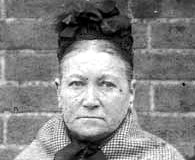
Amelia Dyer
Serial killer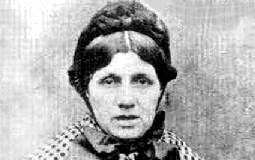 Mary Ann Cotton
Serial killer · United Kingdom · 1857
Mary Ann Cotton was executed by hanging in Durham prison on March 24, 1873. Mar…
21 victims
Mary Ann Cotton
Serial killer · United Kingdom · 1857
Mary Ann Cotton was executed by hanging in Durham prison on March 24, 1873. Mar…
21 victims
 Rosemary West
Serial killer · United Kingdom · 1971
Rosemary Pauline “Rose” West (née Letts) Rosemary Letts was born in Barnstaple,…
10 victims
Rosemary West
Serial killer · United Kingdom · 1971
Rosemary Pauline “Rose” West (née Letts) Rosemary Letts was born in Barnstaple,…
10 victims
 Myra Hindley
Serial killer · United Kingdom · 1963
Myra Hindley was an English serial killer who, in partnership with Ian Brady, c…
5 victims
Myra Hindley
Serial killer · United Kingdom · 1963
Myra Hindley was an English serial killer who, in partnership with Ian Brady, c…
5 victims
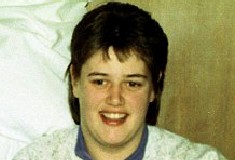 Beverley Allitt
Serial killer · United Kingdom · 1991
Beverley Allitt was a nurse who suffered from the mental illness Munchausen’s S…
4 victims
Beverley Allitt
Serial killer · United Kingdom · 1991
Beverley Allitt was a nurse who suffered from the mental illness Munchausen’s S…
4 victims
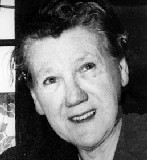 Mary Elizabeth Wilson
Serial killer · United Kingdom · 1955
Mary Elizabeth Wilson (c. 1893 - 1963), also known as the Merry widow of Windy…
4 victims
Mary Elizabeth Wilson
Serial killer · United Kingdom · 1955
Mary Elizabeth Wilson (c. 1893 - 1963), also known as the Merry widow of Windy…
4 victims
 Donte Johnson
Mass murderer · USA · 1998
Donte Johnson was sentenced to death on May 3, 2005 after a jury returned a dea…
4 victims
Donte Johnson
Mass murderer · USA · 1998
Donte Johnson was sentenced to death on May 3, 2005 after a jury returned a dea…
4 victims
 Pamela Smart
Murderer · USA · 1990
Pamela Ann Smart (née Wojas) (born August 16, 1967) was convicted in New Hampsh…
1 victim
Pamela Smart
Murderer · USA · 1990
Pamela Ann Smart (née Wojas) (born August 16, 1967) was convicted in New Hampsh…
1 victim
 Maketu
Mass murderer · New Zealand · 1841
Maketu (also known as Maketu Wharetotara or Waretotara) (c. 1824 – 7 March 1842…
5 victims
Maketu
Mass murderer · New Zealand · 1841
Maketu (also known as Maketu Wharetotara or Waretotara) (c. 1824 – 7 March 1842…
5 victims
 Raul Omar Villarreal
Homicide · USA · 1993
Raul Omar Villarreal was 17 years of age when he participated in the gang rape…
2 victims
Raul Omar Villarreal
Homicide · USA · 1993
Raul Omar Villarreal was 17 years of age when he participated in the gang rape…
2 victims
- Gender
- female
- Country
- United Kingdom
- Location
- Reading, Berkshire, England, United Kingdom
- Date of birth
- 1839
- Age at first offence
- 41
- Characteristics
- child abuse, child killer, infanticide, poisoner
- Victim profile
- Children ( "adopted" illegitimate infants for lump-sum payments)
- Method of murder
- Strangulation
- Date(s) of murder
- 1880 - 1896
- Years active
- 1880–1896
- Date of arrest
- April 4, 1896
- Status
-
Executed
Executed by hanging at Newgate Prison on June 10, 1896
Case information
Amelia Dyer was convicted for the murder of Doris Marmon. She was known as a “baby farmer,” taking in children, usually illegitimate children, for a fee and arranging for them to be cared for until a home could be found.
Status
Amelia Dyer was executed by hanging at Newgate Prison on June 10, 1896.
Background
Amelia Dyer was born in 1829 and was raised in Bristol to respectable parents. She was trained as a nurse. She later decided that “adopting” illegitimate infants was a more lucrative career.
She served a sentence in 1879 after being found guilty on a charge of neglect and being sentenced to six months’ hard labour.
On release, she spent several periods in mental institutions before resuming her child-care activities.
Her mental history included spells in mental hospitals and suicidal tendencies. She was described as using periods in mental institutions and asylum committals as a way to behave so that she could secure a relatively comfortable existence as an asylum inmate.
She was also described as using aliases over the years.
She used the Salvation Army as a reference.
In 1895 she moved to Kensington Road, Reading, and began advertising.
The offence
Amelia Dyer acted as a baby farmer and “adopting” children for a fee. Police investigations found that bodies recovered from the Thames were frequently wrapped in parcels and had tape around their necks.
Identified victims mentioned in the case material included:
- Helena Fry (age identified in one place as 15 months; in another place she is described as “tiny,” with age not consistently stated)
- Doris Marmon (described as four-month-old in connection with the charge)
- Harry Simmonds (described as thirteen-month-old in connection with the Thames recoveries)
- Elizabeth Goulding’s daughter (age not stated; the child remained unnamed in the record text)
- Additional bodies recovered were described as remaining unidentified, and the case material repeatedly refers to multiple small bodies recovered from the Thames.
Amelia Dyer confessed to the killings. She said: “You’ll know all mine by the tape around their necks.”
Investigation
A doctor became suspicious of the number of infants who had died while in Mrs Dyer’s care and reported the matter to the authorities.
A package was retrieved from the Thames at Reading on 30 March 1896. It contained the body of a baby girl later identified as Helena Fry.
Detective Constable Anderson made a breakthrough by using microscopic analysis of the wrapping paper and deciphering a faintly legible name and address connected to Mrs Dyer. The evidence led police to Dyer, although they lacked strong evidence to connect her directly with a serious crime at first.
Police surveillance was placed on her home. Additional intelligence suggested she would abscond if she became suspicious.
Police decided to use a young woman as a decoy to attempt to secure a meeting with Dyer.
On April 3 (Good Friday), police raided Dyer’s home. Officers reported being struck by the stench of human decomposition. The raid did not find human remains at the home, but officers found other related evidence, including:
- white edging tape
- telegrams regarding adoption arrangements
- pawn tickets for children’s clothing
- receipts for advertisements
- letters from mothers inquiring about the well-being of their children
Police calculated that, in the previous few months, at least twenty children had been placed in the care of a “Mrs. Thomas,” later revealed to be Amelia Dyer. Police also suspected she was about to move again, this time to Somerset.
Helena Fry had been handed over to Dyer at Temple Meads station on March 5. That same evening, Dyer arrived home carrying a brown paper parcel. After three weeks, the odor of decomposition prompted Dyer to dump the dead baby in the river. The baby was not weighted adequately and was easily spotted.
During April, the Thames was dragged, and six more bodies were discovered, including Doris Marmon and Harry Simmons—described as Dyer’s last victims. Each baby was strangled with white tape.
Eleven days after handing her daughter to Dyer, Evelina Marmon identified her daughter’s remains.
Inquest into the deaths was held in early May, and no evidence was found that Mary Ann or Arthur Palmer had acted as Dyer’s accomplices.
Arrest
Amelia Dyer was arrested on April 4, 1896 and charged with murder.
Her son-in-law, Arthur Palmer, was charged as an accessory.
Trial
Dyer came to trial at the Old Bailey in May 1896.
She pleaded guilty to one murder, the murder of Doris Marmon.
The Crown proceeded on Doris Marmon’s murder in the first instance. This meant that, if acquitted, she could be tried for another offence, as described in the material.
The defence attempted to prove insanity, but it failed to convince the jury. Despite a dubious mental history, the jury found her guilty.
The jury took five minutes to find Dyer guilty.
She filled five exercise books with her “last true and only confession” while in the condemned cell.
The record includes an in-writing statement by Amelia Dyer, dated April 16, 1896, declaring:
Sir will you kindly grant me the favour of presenting this to the magistrates on Saturday the 18th instant I have made this statement out, for I may not have the opportunity then I must relieve my mind I do know and I feel my days are numbered on this earth but I do feel it is an awful thing drawing innocent people into trouble I do know I shal have to answer before my Maker in Heaven for the awful crimes I have committed but as God Almighty is my judge in Heaven a on Hearth neither my daughter Mary Ann Palmer nor her husband Alfred Ernest Palmer I do most solemnly declare neither of them had any thing at all to do with it, they never knew I contemplated doing such a wicked thing until it was to late I am speaking the truth and nothing but the truth as I hope to be forgiven, I myself and I alone must stand before my Maker in Heaven to give an answer for it all witnes my hand Amelia Dyer. —April 16, 1896
Evidence at trial included testimony from family and associates that they had been growing suspicious and uneasy about her activities.
Evidence also included a man who had seen and spoken to Dyer when she had disposed of two bodies at Caversham Lock.
A daughter’s evidence was described as having ensured Amelia Dyer’s conviction.
There is also a stated defense position that her mental instability was a ploy to avoid suspicion, with the prosecution arguing successfully on that basis. The defence’s insanity argument failed.
In Reading police station, she made two attempts to commit suicide.
Before execution, she was visited by the chaplain the night before and offered her exercise books when asked if she had anything to confess, saying: “isn't this enough?”
She was subpoenaed to appear as a witness in Polly’s trial for murder, set for a week after her own execution date, but it was ruled that Amelia was already legally dead once sentenced, making her evidence inadmissible, and her execution was not delayed.
On the eve of her execution, it was said that charges against Polly had been dropped.
Sentencing
Amelia Dyer was sentenced to death.
Appeals
She decided not to appeal, as stated in the record.
Outcome
Amelia Dyer was executed by hanging at Newgate Prison on June 10, 1896, by James Billington.
She was asked on the scaffold if she had anything to say and replied: “I have nothing to say”, just before being dropped at 9am precisely.
Aftermath
Police suspected that at least twenty other children had disappeared in a similar manner in the few months before her arrest.
The Dyer case caused a scandal, and adoption laws were made stricter, giving local authorities power to police baby farms in the hope of stamping out abuse.
Two years after Dyer’s execution, railway workers inspecting carriages at Newton Abbot, Devon found a parcel containing a three-week-old girl who was alive. The girl was described as the daughter of a widow, Jane Hill, and had been given to a Mrs. Stewart for £12. It was stated that Mrs. Stewart had picked up the baby at Plymouth and apparently dumped her on the next train.
It was claimed that “Mrs. Stewart” was Polly, Amelia Dyer’s daughter.
The case material also described the popular ballad about the “Old baby farmer, the wretched Miss Dyer,” including: “The old baby farmer, the wretched Miss Dyer At the Old Bailey her wages is paid. In times long ago, we'd 'a' made a big fy-er And roasted so nicely that wicked old jade.”
The material also recorded uncertainty about how many more children Amelia Dyer murdered. Inquiries from mothers, other witness evidence, and material found in Dyer’s homes, including letters and many babies’ clothes, pointed to many more.
Speculation included a claim that some suggested Amelia Dyer was Jack the Ripper, and that William Stewart preferred Mary Pearcey as his chosen suspect; it was also stated that there was no evidence to connect Dyer to the Jack the Ripper murders.
The record contains the following classification text for motive and disposition:
- “MOTIVE: CE MO: "Baby farmer" who killed infants of unwed mothers.”
- “DISPOSITION: Hanged June 10, 1896.”


Spotted an error, or have more information about this case?