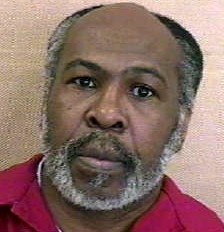
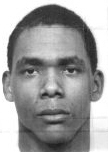
Willie Brown
Murderer Brian Kevin Rosenfeld
Murderer · USA · 1985
Brian Kevin Rosenfeld Brian Kevin Rosenfeld was sentenced to three concurrent l…
23 victims
Brian Kevin Rosenfeld
Murderer · USA · 1985
Brian Kevin Rosenfeld Brian Kevin Rosenfeld was sentenced to three concurrent l…
23 victims
 Marvin Gray
Murderer · USA · 1975
Marvin Gray was convicted killer who claimed responsibility for 23 slayings and…
23 victims
Marvin Gray
Murderer · USA · 1975
Marvin Gray was convicted killer who claimed responsibility for 23 slayings and…
23 victims
 Yahweh ben Yahweh
Murderer · USA · 1980
Yahweh ben Yahweh was born and legally named Hulon Mitchell Jr. (October 27, 19…
23 victims
Yahweh ben Yahweh
Murderer · USA · 1980
Yahweh ben Yahweh was born and legally named Hulon Mitchell Jr. (October 27, 19…
23 victims
 Russell Ellwood
Murderer · USA · 1991
Russell Ellwood was a former taxi driver. Authorities suspected him of killing…
20 victims
Russell Ellwood
Murderer · USA · 1991
Russell Ellwood was a former taxi driver. Authorities suspected him of killing…
20 victims
 Christian Dornier
Spree killer · France · 1989
Christian Dornier Christian Dornier was found insane on November 10, 1989 and w…
14 victims
Christian Dornier
Spree killer · France · 1989
Christian Dornier Christian Dornier was found insane on November 10, 1989 and w…
14 victims
 James Biela
Murderer · USA · 2008
James Michael Biela (also described as James Biela), age 27 at arrest, of Spark…
1 victim
James Biela
Murderer · USA · 2008
James Michael Biela (also described as James Biela), age 27 at arrest, of Spark…
1 victim
 Kimberly Cunningham
Murderer · USA · 2003
Kimberly Cunningham — defendant and killer of Coy Hundley. · Coy Hundley — alle…
1 victim
Kimberly Cunningham
Murderer · USA · 2003
Kimberly Cunningham — defendant and killer of Coy Hundley. · Coy Hundley — alle…
1 victim
 Warren Leblanc
Homicide · Gran Bretaña · 2004
Warren Leblanc, born in 1987 and aged 17, was described as a former friend of 1…
1 victim
Warren Leblanc
Homicide · Gran Bretaña · 2004
Warren Leblanc, born in 1987 and aged 17, was described as a former friend of 1…
1 victim
 Robert Gleason
Murderer · USA · 2007
Robert Charles Gleason was serving life imprisonment for the 2007 fatal shootin…
3 victims
Robert Gleason
Murderer · USA · 2007
Robert Charles Gleason was serving life imprisonment for the 2007 fatal shootin…
3 victims
 Earle Dennison
Murderer · USA · 1952
Earle Dennison was a widow and worked as a surgical nurse. She worked at the We…
2 victims
Earle Dennison
Murderer · USA · 1952
Earle Dennison was a widow and worked as a surgical nurse. She worked at the We…
2 victims
- Gender
- male
- Country
- USA
- Location
- Martin County, North Carolina, USA
- Date of birth
- November 24, 1944
- Age at first offence
- 39
- Characteristics
- robbery, drugs, history of mental illness
- Victim profile
- Vallerie Ann Roberson Dixon (store clerk)
- Method of murder
- Shooting (.32 caliber six-shot revolver)
- Date(s) of murder
- March 6, 1983
- Years active
- 1983
- Date of arrest
- Same day
- Status
-
Executed
Executed by lethal injection in North Carolina on April 20, 2006
Case information
Defendant: Willie Brown Jr. (also referred to as Willie Brown) Victim: Vallerie Ann Roberson Dixon (also referred to as Vallerie Dixon; a clerk at the Zip Mart in Williamston) Location (offence and discovery context): Williamston, Martin County; Dixon’s body was found along a logging road; the evidence referred to an area consistent with where she was headed after being taken from the store.
Status and execution
Willie Brown Jr. was executed by lethal injection in North Carolina on April 20, 2006.
Timeline
- March 6, 1983 — A Zip Mart convenience store on Main Street in Williamston was reported open for business but the clerk was not there; Vallerie Ann Roberson Dixon was missing.
- March 6, 1983 (approximately 5:20 a.m.) — Officer Verlon Godard reported seeing Dixon in the store while patrolling.
- March 6, 1983 (approximately 5:47 a.m.) — Police received a call that the Zip Mart seemed open for business but the clerk was not there.
- March 6, 1983 (approximately 6:20 a.m.) — Dixon’s automobile was spotted; the vehicle was stopped and Willie Brown was arrested after being identified as the driver.
- March 6, 1983 (approximately 10:00 a.m.) — An automobile belonging to Brown’s mother was discovered approximately 100 yards from the Zip Mart.
- March 6, 1983 (approximately 4:00 p.m.) — Dixon’s body was discovered on a muddy single-lane logging path in a rural area outside Williamston.
- March 5, 1965 — Willie Brown shot a Virginia police officer, James M. Caposella, three times and attempted to avoid arrest; Caposella testified about the assault during sentencing.
- November 1983 — A North Carolina jury convicted Brown of the armed robbery and murder of Vallerie Ann Roberson Dixon; Brown was sentenced to death.
- November 15, 1983 — Brown was sentenced to death in Martin County Superior Court for the murder of Vallerie Ann Roberson Dixon.
- 1985 — The North Carolina Supreme Court case citation appeared: State v. Brown, 315 N.C. 40, 337 S.E.2d 808 (N.C. 1985) (Direct Appeal).
- 2003 — Brown v. Lee, 319 F.3d 162 (4th Cir. N.C. 2003) (Habeas).
- April 17, 2006 — The district court denied Brown’s motion for a preliminary injunction.
- April 21, 2006 — Brown was pronounced dead at 2:11 a.m.
- April 24, 2006 — Material described “Less than a week after Easter” and referred to Brown being executed during the early morning Friday, April 21.
The offence
Willie Brown Jr. was convicted for the armed robbery and the murder of Vallerie Ann Roberson Dixon. The record described that the Zip Mart on Main Street in Williamston was reported open for business but the clerk was not there, and Dixon was missing. Police discovered missing items from the store, including cash from the register and safe.
After Dixon’s car was found and Brown was arrested, evidence described included a .32 caliber six-shot revolver, cash and change, and items identified as belonging to Dixon. The record described that Dixon’s body was found on a muddy logging road (along a single-lane logging path) and that she was shot six times.
Dr. Lawrence Harris performed an autopsy and testified that Dixon had been shot six times, with entrance wounds described at the chin, the back side of the upper right arm, at the back base of the neck, the lower central part of the back, the right breast, and the back of her right thigh. He testified that the paths of the bullet wounds to the back were consistent with the wounds being administered as Dixon lay face down. He could not be certain as to the position of the body when the shots were fired, and he could not ascertain which bullet was fired first. He concluded that Dixon slowly bled to death as a result of all six wounds over approximately 15 minutes and would have lost consciousness shortly before she died. He also discovered a series of scratch marks approximately three and one-half inches long on Dixon’s left forearm.
The record also described that special agent Douglas Branch testified regarding test firings and comparisons between test-fired bullets and bullets removed from Dixon, and that melted fabric ends around the bullet hole in Dixon’s blouse indicated the muzzle had been pressed into the blouse at the time of one shot.
The record described that Brown admitted he walked to the Zip Mart and robbed the clerk while wearing a toboggan cap and using a .32 caliber revolver, and that he ordered Dixon to give him her car keys and left in her vehicle until he was apprehended by police. It also described that Brown denied knowing the present whereabouts of the clerk at the time and stated he left her unharmed at the store.
At trial, Brown testified, disputed police officers’ version, and denied robbing or killing Dixon and denied making admissions to police. He testified that he was jogging near the Zip Mart, saw another man run past him to another parked car with an opened door where he saw a gun and a bag of money on the front seat, sat down in the car, and was arrested by police before he could leave.
Investigation and arrest
The record described the initial police response after the clerk’s absence was reported and described the dispatch of officers, including Officer Verlon Godard, who reported seeing Dixon in the store less than thirty minutes prior to the report. Patrolman Johnny Sharp was sent to look for Dixon’s vehicle, and at about 6:20 a.m. reported spotting the car on Highway 64.
The record described the pursuit and stop sequence: Patrolman Sharp activated blue lights and siren; the driver increased speed and drove for several blocks; Sergeant Donnie Hardison arrived to cut it off; officers demanded the driver exit with guns drawn; after a delay a man identified as the defendant exited and was placed under arrest and advised of rights.
A search incident to arrest found a .32 caliber six-shot revolver and a paper bag containing approximately $90 in cash and a small change purse with identification and items belonging to Dixon. A search of the defendant’s person produced a toboggan cap with eye holes cut out and a pair of ski gloves. The exterior of the car was described as partly covered with fresh mud.
At the police station, the defendant was again advised of his rights and questioned by local police and Special Agent Kent Inscoe of the State Bureau of Investigation. The record described that the defendant admitted robbing the clerk and fleeing in her vehicle until apprehended, and denied knowledge of the clerk’s whereabouts after he left the store.
The record also described that an automobile belonging to Brown’s mother was discovered approximately 100 yards from the Zip Mart, and Brown admitted he did not walk from his mother’s house but drove to that point.
Trial
Guilt-innocence phase
Following presentation of the evidence, the jury found the defendant guilty of first-degree murder and of armed robbery.
The North Carolina Supreme Court described that it found substantial evidence of premeditation and deliberation. It described evidence tending to show the Zip Mart was robbed, that upon arrest Brown was in possession of Dixon’s car, personal effects belonging to Dixon, money consistent with the amount estimated to have been taken, and the murder weapon. It also described the body’s discovery on an isolated dirt road several miles from the store, and the lack of evidence of provocation by the deceased.
The Supreme Court described that the physical evidence showed Dixon was shot six times and that some shots may have been fired while Dixon lay on the ground. It concluded that there was sufficient evidence of premeditation and deliberation to support the first-degree murder conviction.
Sentencing phase
The record described the aggravating and mitigating circumstances submitted to the jury.
It described that the trial court submitted three possible aggravating and seven possible mitigating circumstances for the jury’s consideration. The jury found each of the aggravating factors and none of the mitigating circumstances and recommended the defendant be sentenced to death. The trial court then entered judgment sentencing the defendant to death.
The aggravating circumstances included:
- prior felony involving the use or threat of violence to the person,
- the murder committed while engaged in the commission of or flight after committing a robbery,
- the murder being especially heinous, atrocious, or cruel.
The mitigating circumstances included:
- no significant history of prior criminal activity,
- limited intelligence and education,
- under the age of 21 at the time of previous felonies,
- no criminal offense for 18 years,
- surrender at arrest without resistance,
- confession soon after arrest to robbing the Zip Mart,
- any other circumstances with mitigating value.
The North Carolina Supreme Court also discussed an evidentiary issue. It described the defendant arguing that evidence of his 1963 convictions for felonious breaking or entering and felonious larceny was inadmissible to establish an aggravating factor, and the court found that while the convictions were inadmissible to establish that aggravating factor, the court concluded they were admitted to rebut the mitigating factor that the defendant had no significant history of prior criminal activity.
The Supreme Court described that the trial court instructed the jury on the mitigating circumstance and that evidence was introduced in the State’s case in chief to rebut it. It concluded this was error because it should have been withheld until after the defendant presented evidence in support of the mitigating factor, but it concluded the error was not prejudicial.
The Supreme Court also addressed the “especially heinous, atrocious, or cruel” aggravator. It described that Dixon was forced at gunpoint to leave the store, driven several miles to an isolated dirt road, that Dixon was aware of danger during the drive, that she experienced a prolonged period of terror and anguish, and that Dr. Harris testified Dixon may have lived for up to 15 minutes and would not have lost consciousness until later stages. It concluded evidence supported submission of the aggravating factor.
Direct appeal issues and outcomes
- The North Carolina Supreme Court decision concluded “NO ERROR” and upheld the convictions and death sentence.
- A dissent as to sentence was noted in the North Carolina Supreme Court decision.
Appeals and post-conviction
Habeas corpus and related federal appeals
The record described multiple habeas and federal appellate proceedings.
One federal appeals matter described the procedural and substantive treatment of the unanimity instruction issue and the denial or partial reversal of certificate of appealability determinations:
- In Brown v. Lee, 319 F.3d 162 (4th Cir. N.C. 2003) (Habeas), the record described dismissal in part, reversed in part, and remanded on the unanimity claim while denying relief on ineffective assistance claims.
A later federal appeals matter described holdings on:
- adequacy and independence of a procedural default rule relating to unanimity instructions,
- failure to make a substantial showing for issuance of a certificate of appealability on ineffective assistance claims, in Brown v. Polk, 135 Fed. Appx. 618 (4th Cir. N.C. 2005) (Unpublished) (Habeas), where the record described “Dismissed in part, reversed in part, and remanded.”
Another federal habeas matter described:
- that a Supreme Court decision as to unanimity instructions in capital cases was not a watershed rule of criminal procedure implicating fundamental fairness for retroactivity purposes,
- that a state court’s decision on counsel ineffectiveness for failing to anticipate a new rule was not contrary to or an unreasonable application of governing Supreme Court law, in which the court affirmed the district court’s denial of habeas relief in Brown v. Beck, 2006 WL 1030236 (4th Cir. N.C. 2006) (Injunction).
Execution-related federal court action
The record described that by order dated April 17, 2006, the district court denied Brown’s motion for a preliminary injunction enjoining execution scheduled for Friday, April 21, 2006. The federal appeals court affirmed the district court’s denial and directed the clerk to issue the mandate forthwith. A dissent was noted.
Sentencing
Willie Brown Jr. was sentenced to death for the murder of Vallerie Ann Roberson Dixon. The record also described an additional 40-year sentence for robbery with a dangerous weapon.
Other details
Victim and location details
The record described Dixon as a clerk at the Zip Mart in Williamston. It also described that Dixon was taken from the store and found the same day as the robbery lying facedown along a logging road after being shot six times.
Last meal and final interactions
The record described Brown’s last meal as “a well-done T-bone steak, rice, four rolls with butter and a piece of German chocolate cake.”
Before the lethal chemicals were injected, Brown looked into the witness room at his brother and sister, nodded, and mouthed “I love you.” His sister sobbed quietly. The record also described that Brown had electrocardiogram leads attached to his chest and intravenous lines in his arms.
BIS monitor and medical personnel
The record described that North Carolina planned to use a bispectral index (BIS) monitor to measure Brown’s level of consciousness, including a doctor and a nurse watching the BIS monitor. The record described that Brown was thought to be the first inmate in the country whose execution involved such a device.
The record described:
- the state used a three-drug cocktail for lethal injection (one drug to put the inmate to sleep, a second to paralyze, and a third to stop the heart),
- the execution proceedings included a BIS monitor to measure brain waves and rank consciousness from zero to 100,
- the state’s expert said once Brown’s consciousness level dropped below 60, there was little risk he would be conscious,
- Brown’s lawyers argued the BIS monitor could not reliably ensure unconsciousness as the state intended and that it required medical professionals to participate in executions in violation of professional ethics and their roles as caregivers,
- a federal appeals court judge dissent, M. Blane Michael, concluding that Brown presented an impressive array of evidence that a BIS monitor was not suitable as the state intended to use it, and that the clear weight of evidence revealed the BIS monitor would not adequately ensure Brown would remain unconscious throughout his execution.
Statements and quotations captured in the record
- Dr. Priscilla Ray, chairwoman of the AMA’s council on ethical and judicial affairs, said: “You are using medical skills in the participation of an execution,” and also said: “The use of a physician’s clinical skill and judgment for purposes other than promoting an individual’s health and welfare undermines a basic ethical foundation of medicine --first, do no harm,” and: “Therefore, requiring physicians to be involved in executions violates their oath to protect lives and erodes public confidence in the medical profession.”
- Arthur Finn said: “If there’s a state law that says a physician has to be present, and if the medical board says it’s unethical to be present, then they’re going to have to stop executions at least until the rules are changed,”
- Department of Correction spokesman Keith Acree said: “No additional sedation was needed before the lethal drugs were administered,”
- Defense lawyer Don Cowan said: “didn't see anything tonight that changed my mind. Based on what I saw, I don't know if the judge's concerns were met.”
- The judge dissent quoted M. Blane Michael: “Brown presents an impressive array of evidence that although a BIS monitor may be helpful in assessing the effectiveness of anesthesia, it is not suitable as the state intends to use it.”
- The same dissent concluded with: “The clear weight of evidence ... reveals that the state's use of the BIS monitor will not adequately ensure that Brown will remain unconscious throughout his execution.”
- The record described Brown’s mouth gesture: “I love you.”
- William Dixon, husband of the victim, in a written statement, said: “For years, I was thinking that he was going free again to do bad things to other people,” and: “For years, I was thinking that he was going free again to do bad things to other people,” and also: “I was satisfied with the execution and felt sorry for Brown's family.”
Mental health and representation claims appearing in the record
The record included allegations that Brown had a documented history of mental illness, with concerns raised in 1963 when Brown was nineteen years old, and that the record included diagnoses described as paranoid and delusional disorders prior to the crime, along with claims that Brown never received treatment. It also described claims about counsel, plea negotiations, and presentation of mitigating evidence.
Protests
The record described that at Central Prison, about 40 people protested and eight were arrested on trespassing charges.
Prior convictions mentioned in the trial record
The record described that in 1963 Brown was convicted in Martin County of six counts of felonious larceny and six counts of breaking or entering. It also described that in 1965 Brown received an 80-year sentence in Virginia on five counts of armed robbery and one count of felonious assault, including the assault on police officer James M. Caposella on March 5, 1965 (attempt to avoid arrest; he shot the officer three times, causing him to fall paralyzed; then shot at the officer twice more but missed).
Legal citations included in the record
The record included legal citations and case references:
- State v. Brown, 315 N.C. 40, 337 S.E.2d 808 (N.C. 1985) (Direct Appeal).
- Brown v. Lee, 319 F.3d 162 (4th Cir. N.C. 2003) (Habeas).
- Brown v. Polk, 135 Fed. Appx. 618 (4th Cir. N.C. 2005) (Unpublished) (Habeas).
- Brown v. Beck, 2006 WL 1030236 (4th Cir. N.C. 2006) (Injunction).
- Supreme Court references included McKoy v. North Carolina (1990) and Mills v. Maryland (1988), and Beard v. Banks (2004), as well as Gregg v. Georgia and In re Kemmler in the dissenting discussion around injunctive relief.
Spotted an error, or have more information about this case?