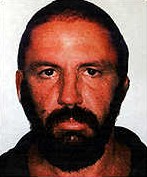
Robert Paul Long
Mass murderer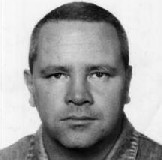 Wade Frankum
Mass murderer · Australia · 1991
Wade Frankum Committed suicide by shooting himself the same day; in 1991 Wade F…
7 victims
Wade Frankum
Mass murderer · Australia · 1991
Wade Frankum Committed suicide by shooting himself the same day; in 1991 Wade F…
7 victims
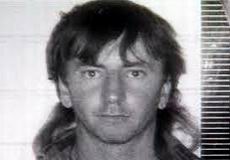 William Patrick Mitchell
Mass murderer · Australia · 1993
William Patrick Mitchell, also known as “Bill Mitchell,” committed the Greenoug…
4 victims
William Patrick Mitchell
Mass murderer · Australia · 1993
William Patrick Mitchell, also known as “Bill Mitchell,” committed the Greenoug…
4 victims
 Roger Dean
Mass murderer · Australia · 2011
Roger Kingsley Dean was an aged-care nurse and worked at Quakers Hill Nursing H…
11 victims
Roger Dean
Mass murderer · Australia · 2011
Roger Kingsley Dean was an aged-care nurse and worked at Quakers Hill Nursing H…
11 victims
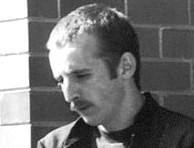 Julian Knight
Mass murderer · Australia · 1987
Julian Knight was a 19-year-old former Australian Army officer cadet who was ar…
7 victims
Julian Knight
Mass murderer · Australia · 1987
Julian Knight was a 19-year-old former Australian Army officer cadet who was ar…
7 victims
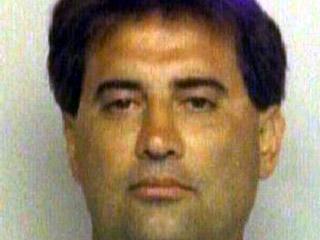 Thomas Tomich
Murderer · USA · 1983
Thomas Tomich committed suicide on November 15, 2006, by jumping off an Omaha b…
1 victim
Thomas Tomich
Murderer · USA · 1983
Thomas Tomich committed suicide on November 15, 2006, by jumping off an Omaha b…
1 victim
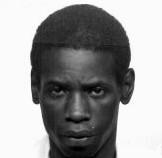 John Fearance
Murderer · USA · 1977
John Fearance (John Fearance Jr.) was executed by lethal injection in Texas on…
1 victim
John Fearance
Murderer · USA · 1977
John Fearance (John Fearance Jr.) was executed by lethal injection in Texas on…
1 victim
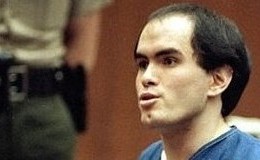 Robert John Bardo
Murderer · USA · 1989
Robert John Bardo (born January 2, 1970) was an American man who was convicted…
1 victim
Robert John Bardo
Murderer · USA · 1989
Robert John Bardo (born January 2, 1970) was an American man who was convicted…
1 victim
- Gender
- male
- Country
- Australia
- Location
- Childers, Queensland, Australia
- Date of birth
- 1962
- Age at first offence
- 38
- Characteristics
- arson, revenge, homeless
- Victim profile
- 9 women and 6 men (backpackers)
- Method of murder
- Fire
- Date(s) of murder
- June 23, 2000
- Years active
- 2000
- Date of arrest
- 5 days after (wounded by police)
- Status
-
Life imprisonment
Sentenced to life in prison on March 2002
Case record: Robert Paul Long
Background
Robert Paul Long was an itinerant fruit-picker who lived in Australia and was described as a homeless fruit-picker with a history of menace and mental illness. He was a drifter who had previously been jailed in 1994 for a maximum four years and three months for abducting his child from his former lover's home, and he was paroled in January 1997.
Long later verbally abused hostel guests and made several threats to set the building alight. He falsely claimed to have been diagnosed with lung cancer and given only two months to live, and he wrote two suicide notes, one of them left on the counter of a local pub. After the fire, Long went on the run and was found by police five days later, hiding in bushland less than 20 miles from Childers.
Long provided statements about his personal circumstances during the trial, including that he was dying of lung cancer and that his wife and children had died in fires or a road accident, his niece had died of leukemia, and his girlfriend had committed suicide.
Long had left the hostel two weeks earlier after not paying his rent, and he had asked the backpackers to leave the back door open for him, which they did not and which he then saw as part of a developing rage.
Long’s life began in Corrimal, a Wollongong suburb. As a youth, he was convicted of stealing women's clothes from clotheslines. Later, he was sentenced to four years for burglary and other charges involving an assault on his then de facto.
The offence
The Childers Palace Backpackers Hostel fire began at about 1 am. The fire started in the downstairs recreation room, and most of the backpackers who died were on the second floor of the hostel.
The timber hostel did not have working smoke detectors or fire alarms. The timber hostel was a more than 100 years old century-old former pub. The fire alarms had been malfunctioning and had been switched off by the management, and residents awoke to the screams of their friends and the sound of breaking glass.
Local firefighters raised a ladder to allow some people to escape. Seventy backpackers survived the fire, and 15 backpackers died.
The 15 people killed included nine women and six men. Long received 20 years in prison for the murder of 27-year-old Australian twin sisters Kelly and Stacey Slarke, and he received a concurrent sentence of 15 years for arson.
The people killed in the fire were:
- Moulay Lalaoui-Kama
- Hui-Kyoung Lee
- Michael Ernest Lewis
- Natalie Morris
- Julie O'Keeffe
- Adam John Rowland
- Kelly June Slarke
- Stacey Louise Slarke
- Melissa Jane Smith
- Gary John Sutton
- Atsushi Toyona
- Joly Van der Velden
- Claire Louise Webb
- Sebastian Westerveld
- Sarah Ann Williams
The British victims were listed as:
- Gary Sutton, 24, of Bath
- Mike Lewis, 25, from Bristol
- Natalie Morris, 28, from Cefn Coed
- Sarah Williams, 23, from Aberfan
- Melissa Smith, 26, from Thatcham, Berks
- Adam Rowland, 19, from St Leonards, Sussex
- Clare Webb, 24, from Ascot
Long was charged with murder (2 counts) and arson (1 count). Long was charged only with the Slarke twins' murder to expedite proceedings and allow for other charges to be brought in the event of an acquittal. Prosecuting lawyers said Long's hatred of backpackers was a compelling motive for starting the blaze, and he was portrayed as having a boiling hatred of the young travellers with whom he briefly shared lodgings.
A British survivor, Keith O'Brien, reported that he overheard a snatched conversation in which Long threatened to "burn this place down".
Investigation
Long was arrested as a result of lighting the fire.
During the trial, the court heard that Long verbally abused the guests at the hostel and made several threats to set the building alight.
A confession was presented at court in connection with Long’s arrest and subsequent evidence. Confession Senior prosecutor David Meredith said he wanted the punishment to reflect the loss of 15 lives, not just the sample two. It was also said that police claimed Long confessed to starting the fire to a member of a police Special Emergency Response Team (SERT) after he had been shot by police.
An officer identified in court only as "SERT operative number two" testified: "I'm dying anyway, I started that fire," an officer who was identified in court only as "SERT operative number two," testified.
The officer said Long wrote the statement on the bill because he did not have a police notebook at the time.
Police said they shot Long because he stabbed an officer in the jaw as he tried to escape arrest.
Arrest
Long was arrested five days after the fire while he was hiding in bushland less than 20 miles from Childers.
During a struggle with two dog handlers, Long produced a knife, slashed a police dog, and stabbed one of the officers on the chin. The second officer opened fire with a handgun and hit Long in the arm. Believing the wound to be fatal, Long said: "I'm dying anyway. I started that fire," the court was told.
Trial
A magistrate found that there was enough evidence for Robert Paul Long, to stand trial after prosecutors wrapped up a preliminary presentation of their case with police claims that Long confessed to starting the fire to a member of a police Special Emergency Response Team (SERT) after he had been shot by police.
Long pleaded innocent to arson and murder charges and denied murder and arson.
The Supreme Court in Brisbane heard harrowing accounts of the blaze that reduced the Palace Backpackers Hostel in Childers to a blackened ruin. Survivors travelled from Britain and across the world to describe their escape. The jury deliberated for two days and then returned guilty verdicts unanimously on all counts.
The jury of seven men and five women was sent out on Thursday morning and was locked in deliberations until after 9pm. They filed into court and stood as Justice Peter Dutney asked them to deliver their verdicts. Three times, they stated in unison: "Guilty".
The trial also heard that Long falsely claimed to have been diagnosed with lung cancer and given only two months to live, and he wrote two suicide notes, one left on the counter of a local pub.
Long was not charged with 13 other deaths because the two was sufficient for the maximum sentence.
Sentencing
Long was sentenced to life in prison on March 2002. Long was found guilty unanimously and the trial judge said Long, 38, should serve a minimum of 20 years in jail for his "callous and cruel" crime.
Justice Peter Dutney sentenced Long at Brisbane's Supreme Court. Justice Peter Dutney said: "I'm happy to concede you had no intent to kill but death was such an inevitability in the circumstances that to light those fires displays callousness and cruelty that is hard to imagine."
It was also said that Justice Peter Dutney described it as the worst case of arson in Queensland history.
Appeals
No appeal information was included.
Outcome
Long was convicted of starting the fire that killed 15 backpackers and was sentenced to life imprisonment.
Aftermath
Princess Anne visited Childers on 2 July, just a week after the blaze, to meet the surviving backpackers and others involved in the disaster.
Bill Trevor, the Isis Shire Mayor, travelled to England and the Netherlands in October 2001 to consult the bereaved families about memorial proposals. He negotiated to rebuild the Palace in its original early-1900s style. The Queensland artist Sam Di Mauro made a 7.7-metre-long glass memorial wall set into the new building. The Sydney artist Josonia Palaitis was selected to paint portraits of those killed.
Josonia Palaitis said: "the most technically challenging and emotionally charged portrait I've ever undertaken".
She said her greatest challenge was to suitably portray the youngsters from the photos of them provided by their families, and she managed to arrange them while maintaining the precise poses of those photos. The background was researched by her to be typical of the Isis area fields where they had worked picking crops. She said: "The response to the artwork was overwhelming with families ecstatic with the result."
Some 250 invited guests, including many members of the families of the dead from around the world, attended the official opening on 26 October 2002.
Frank Slarke, the father of murdered twins Stacey and Kelly, read a poem he wrote as a eulogy.
A statement by the twins’ father, Frank Slarke, 61, said solicitors for Where-on-Earth wrote to the council in December 1998 seeking information on the hostel's fire safety status. A month later a shire officer inspected the hostel and "expressly declined" to issue a safety permit. The shire took no steps to require the company to apply for a permit or conduct further inspections, despite a local law that said it needed to be satisfied premises were free of fire hazards. The allegations also stated that when the Fire and Rescue Service inspected the hostel in 1997 it warned there was an evacuation problem, but that no further inspections were conducted before the fire. The allegations also stated that in June 2000 fire alarm devices had been turned off and temporary or alternative alarms had been provided. In an upstairs room where the twins and eight other victims died, access to a door was blocked by bunks.
Police had "falsely reassured" the twins' parents that the girls' Magna station wagon was not near the hostel, and that they must therefore have moved on. The vehicle was found parked behind the hostel. The family had to wait weeks for confirmation from DNA. They received jewellery taken from the girls' bodies and had to unpack their belongings when the vehicle was returned.
An action by families sought damages from eight parties, including Isis Shire Council and the hostel's management company, Where-on-Earth. In one statement, it was said that one of seven British families said: "somebody needs to be accountable for what happened".
It was also said that the mayor of Childers, Bill Trevor, said: "Justice has been served. It is a result for the parents. It is a result for the survivors. " "It won't bring back those lovely young kids but what it will bring is some peace of mind to those families around the world and across Australia who have waited for this moment. " "I don't know if I am relieved, but I think families around the world will wake up to the news that someone will pay for the misery they have been through."
Valerie and Brian Sutton of Bath, England lost their only son, Gary, 24, and said their lives had become "complete and utter nightmare." Mrs Sutton said: "It's just unbelievable, really," "They went over for an adventure and came home in a coffin." "The actual way he died, it's just so horrific." "We don't want anyone else to go through what we have . . . Somebody needs to be held accountable for what happened. We want justice for our son and the others."
Mrs Sutton also said: "They couldn't get out." "They were packed in like sardines." "If there had not been bars on the windows they would have been able to get out." "They could have [also] got out of the fire exit if that had not been blocked."
It was also reported that Gary Sutton, a croupier at Bristol casino, travelled around Australia with his friend Michael Lewis from Bristol. Gary Sutton had been away from Britain for 10 months and planned to return in two months. It was also reported that since Gary Sutton’s death, his family had been in regular counselling and that Gary Sutton’s father, aged 65, had had to give up his job as a bus driver before official retirement age because he was unable to concentrate on the road.
A fire service spokesman said the claims would be defended and there had been no breach of duty of care by service employees.
A separate action stated that 59 of the 70 survivors of the fire sought damages through the firm Slater and Gordon.
Other details
The hostel was located in Childers, Queensland, Australia, a town popular amongst backpackers for its fruit picking work. The fire was described as starting around 1 am and spreading up the stairwell quickly after beginning in a downstairs TV lounge or recreation room, consuming the century-old structure.
Survivors were housed locally, and the Isis Cultural Centre became the recreational, food and communication centre for them.
Spotted an error, or have more information about this case?