
John Fearance
Murderer Ervil LeBaron
Murderer · USA · 1972
Ervil Morrell LeBaron (1925 to August 16, 1981) was the leader of a polygamous…
35 victims
Ervil LeBaron
Murderer · USA · 1972
Ervil Morrell LeBaron (1925 to August 16, 1981) was the leader of a polygamous…
35 victims
 Brian Kevin Rosenfeld
Murderer · USA · 1985
Brian Kevin Rosenfeld Brian Kevin Rosenfeld was sentenced to three concurrent l…
23 victims
Brian Kevin Rosenfeld
Murderer · USA · 1985
Brian Kevin Rosenfeld Brian Kevin Rosenfeld was sentenced to three concurrent l…
23 victims
 Marvin Gray
Murderer · USA · 1975
Marvin Gray was convicted killer who claimed responsibility for 23 slayings and…
23 victims
Marvin Gray
Murderer · USA · 1975
Marvin Gray was convicted killer who claimed responsibility for 23 slayings and…
23 victims
 Yahweh ben Yahweh
Murderer · USA · 1980
Yahweh ben Yahweh was born and legally named Hulon Mitchell Jr. (October 27, 19…
23 victims
Yahweh ben Yahweh
Murderer · USA · 1980
Yahweh ben Yahweh was born and legally named Hulon Mitchell Jr. (October 27, 19…
23 victims
 Jose Luis Villegas
Murderer · USA · 2001
January 22, 2001 — Lionicio Perez returned home and found his wife Alma Perez’s…
3 victims
Jose Luis Villegas
Murderer · USA · 2001
January 22, 2001 — Lionicio Perez returned home and found his wife Alma Perez’s…
3 victims
 Donald Ray DeBose
Murderer · USA · 1997
Donald Ray DeBose was sentenced to death on July 21, 1999. Debose robbed a woma…
1 victim
Donald Ray DeBose
Murderer · USA · 1997
Donald Ray DeBose was sentenced to death on July 21, 1999. Debose robbed a woma…
1 victim
 Linda Henning
Murderer · USA · 1999
Linda Henning was convicted of felony murder and kidnapping in connection with…
1 victim
Linda Henning
Murderer · USA · 1999
Linda Henning was convicted of felony murder and kidnapping in connection with…
1 victim
 Michael Joe Boyd
Murderer · USA · 1983
Michael Joe Boyd was convicted of felony murder stemming from the shooting deat…
2 victims
Michael Joe Boyd
Murderer · USA · 1983
Michael Joe Boyd was convicted of felony murder stemming from the shooting deat…
2 victims
 Patrick Charles Hannon
Murderer · USA · 1991
Name: Patrick Charles Hannon Date of birth: 10/24/64 Judicial circuit: Thirteen…
2 victims
Patrick Charles Hannon
Murderer · USA · 1991
Name: Patrick Charles Hannon Date of birth: 10/24/64 Judicial circuit: Thirteen…
2 victims
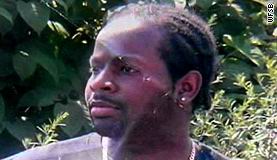 Omar Thornton
Mass murderer · USA · 2010
Omar S. Thornton was 34 years old at the time of the Hartford Distributors shoo…
8 victims
Omar Thornton
Mass murderer · USA · 2010
Omar S. Thornton was 34 years old at the time of the Hartford Distributors shoo…
8 victims
- Gender
- male
- Country
- USA
- Location
- Dallas County, Texas, USA
- Date of birth
- October 27, 1954
- Age at first offence
- 23
- Characteristics
- robbery, drug addict
- Victim profile
- Larry Faircloth (male)
- Method of murder
- St abbing with knife
- Date(s) of murder
- December 23, 1977
- Years active
- 1977
- Date of arrest
- Same day
- Status
-
Executed
Executed by lethal injection in Texas on June 20, 1995
Case record
John Fearance (John Fearance Jr.) was executed by lethal injection in Texas on June 20, 1995.
The offence
John Fearance was sentenced to die for killing Larry Faircloth in Dallas on Dec. 23, 1977. The court of appeals opinion described Fearance as having stabbed Larry Faircloth nineteen times and causing him to bleed to death in his own bedroom, during Fearance's aborted burglary.
Fearance stated that he returned home from his job at a car repair shop and found that his wife had baked him a casserole with meat. He said he liked his meat separate.
Fearance said he argued with his wife and then: "I just lost control of my mind. I just snapped." He said he was remorseful but should not have been sentenced to death, saying: "They should have tried me for temporary insanity."
Mr. Faircloth's wife, Betty, identified John Fearance as the man who stabbed her husband 19 times.
Background
The condemned man was identified as John Fearance Jr., 40.
Fearance's criminal record dates to 1972 when he received a two-year prison sentence for rape and theft. He served eight months. In 1975 he was sentenced to five years in prison for theft but was released after serving slightly more than a year.
There was evidence that he suffered from paranoid schizophrenia.
There was also evidence discussed in the appeals opinion that he was found by mental health experts to be aware that incompetence claims could delay his execution and to be "malingering."
Last statement
John Fearance ended a brief, rambling final statement by saying he was ready to die.
"I would like to say that I have no animosity toward anyone," Mr. Fearance said. "I made a mistake 18 years ago. I feel like I'm not responsible for what I done because I had a bad psychotic break. I lost control. I lost my life. "I don't have any hate toward humanity. I didn't mean to and I'm ready to go meet my Maker." He said "hail Mary" through a gasp before falling silent.
Investigation
The appeals opinion described Fearance's sentencing and execution chronology and his claims in collateral proceedings; it did not describe a separate investigation narrative in the provided text.
Trial
The court of appeals opinion stated that Fearance had been tried and sentenced to death twice for stabbing Larry Faircloth nineteen times and causing him to bleed to death in his own bedroom, during Fearance's aborted burglary.
The state trial court adopted the following chronology as historical fact:
- "This offense occurred on December 23, 1977."
- "[Fearance] was first convicted and assessed the death penalty on July 8, 1978, barely six months after the offense."
- "[Fearance's] first appeal to the Court of Criminal Appeals asserted forty-five grounds for review and resulted in a reversal and remand of his case for a new trial on September 17, 1980, based upon Supreme Court precedent, Adams v. Texas, 448 U.S. 38 [100 S.Ct. 2521, 65 L.Ed.2d 581] (1980), not issued until nearly 2 years after his trial."
- "[Fearance] presumably benefited from the delay, because he had received a resolution of his appeal prior to issuance of Adams, his first conviction presumably would have been affirmed, and he would have been executed."
- "[Fearance] filed a motion for rehearing after the remand for a new trial, which was denied on May 27, 1981."
- "[Fearance] received a second trial, and he was convicted and sentenced to death for the second time of October 21, 1981, only five months after his motion for rehearing was denied."
- "[Fearance] thereafter appealed again to the Court of Criminal Appeals, this time asserting twenty-four points of error, all of which were eventually found by the Court of Criminal Appeals to be meritless."
- "Significantly, [Fearance] filed a plea to the jurisdiction to attempt to delay the second trial and then contended without success in that second direct appeal that the trial court re-tried him too soon, before certiorari was denied on his original appeal, and that the trial court therefore lacked jurisdiction. [Fearance v. State ] 771 S.W.2d at 495 [ (Tex.Cr.App.1988) ]."
- "[Fearance] filed a motion for new trial after the second conviction, which was denied in a bare two weeks."
- "The record of this second trial was not completed and filed with the Court of Criminal Appeals until August 3, 1982, nearly ten months after the trial, and apparently without objection by [Fearance]."
- "[Fearance] thereafter moved for multiple extensions to file his brief, and he did not file the brief until April 28, 1983, one-and-one-half years after the second jury verdict."
- "The State thereafter filed its reply brief to [Fearance's] twenty-four points of error in December 1983, after filing a single extension motion to which [Fearance] lodged no objection."
- "The Court of Criminal Appeals thereafter held the case for five years after which it issued a published opinion nearly 30 pages in length addressing [Fearance's] points of error."
- "[Fearance] lodged no objection with the Court of Criminal Appeals during this five year delay, nor did he file any motions to expedite the appeal."
- "When the conviction was affirmed, [Fearance] filed a motion for rehearing, which was denied in approximately two months' time."
- "[Fearance] thereafter petitioned the Supreme Court for writ of certiorari, which was denied July 3, 1989."
- "The Court of Criminal Appeals issued its mandate on July 6, 1989, after which, on July 31, 1989, the trial court set an execution date of October 18, 1989."
- "[Fearance's] counsel filed the first application for state habeas corpus on October 3, 1989, over three months after certiorari was denied, over two months after the execution date was set, and only two weeks prior to the October 18, 1989 execution date."
- "The trial court was obliged to modify the execution date in order to appoint experts and hold an evidentiary hearing on [Fearance's] claims of mental disease and incompetence."
- "After a protracted hearing, an amended application by [Fearance] filed January 18, 1990, and testimony by numerous experts, see this Court's Findings of Fact and Conclusions of Law, cause no. W81-11256-K(A), this Court found that there was no definitive evidence of mental disease."
- "This Court also found that [Fearance] had been found by mental health experts to be aware that incompetence claims could delay his execution and to be "malingering.""
- "This Court issued its findings in November, 1990, after [Fearance] filed his brief with the Court on May 11, 1990, asserting competence and Penry claims."
- "The Court of Criminal Appeals thereafter held the case for resolution of these claims for approximately ten months, after staying the January 1991 execution date, and again [Fearance] filed no objection to the delay, nor did he file any motions to expedite review of the writ application."
- "[Fearance] thereafter filed a second state habeas application on January 16, 1992, over four months after his first application was denied by the Court of Criminal Appeals."
- "The trial court issued its findings on this application 33 days after it was filed, and the Court of Criminal Appeals denied the application two weeks later."
- "The trial court having set a new execution date of March 20, 1992, [Fearance] filed a petition for habeas corpus with the U.S. District Court, which was denied by the federal district court on July 6, 1994, again with no complaint by [Fearance] regarding delay in resolving the appeal."
- "On March 21, 1995, the Fifth Circuit Court of Appeals denied [Fearance] a certificate of probable cause to appeal the federal district court's decision, and on March 31, 1995, this Court set the current execution date of June 20, 1995, [Fearance] filed a motion to delay the current execution date in order to allow him more time to prepare a petition for writ of certiorari on the federal habeas corpus petition, although the deadline for filing that certiorari petition is June 19, 1995, prior to the execution date."
- "Only after this Court denied [Fearance's] motion to further delay his execution did [Fearance's] attorneys announce their intention to file this application for habeas corpus, and the application was in fact not filed until three weeks later, less than one month before the current execution date, along with a motion for evidentiary hearing and for re-appointment of the same mental health expert who examined [Fearance] five years ago."
- "This application was the first pleading in nearly seventeen years of appeals in which [Fearance] has raised his current claim--that his appeal has lasted too long."
The appeals opinion noted that Texas state law precluded the trial court from setting an execution date while his direct appeal was pending, citing Tex.Code Crim.Proc.Ann. art. 42.04.
Appeals
John Fearance filed for certificate of probable cause and a motion for stay of execution.
The appeals decision was issued by the United States Court of Appeals, Fifth Circuit, with the caption: John FEARANCE, Jr., Petitioner-Appellant, v. Wayne SCOTT, Director Texas Department of Criminal Justice, Institutional Division, Respondent-Appellee. No. 95-10527.
The appellate decision stated that Fearance's petition for certificate of probable cause and motion for stay of execution were denied.
The Fifth Circuit decision stated that Fearance had been tried and sentenced to death twice for stabbing Larry Faircloth nineteen times and causing him to bleed to death in his own bedroom, during Fearance's aborted burglary. The court also stated it had rejected Fearance's first federal habeas petition and denied a certificate of probable cause to appeal only three months before.
The appeals opinion described two new grounds that Fearance asserted were not conclusively rejected:
- An Eighth Amendment challenge arguing that executing him after "forc[ing] him to endure over a decade on death row" would violate the prohibition of cruel and unusual punishment.
- Challenges related to his mental competency for execution.
The court held that Fearance's prior litigation strategy barred most of these claims from review on the merits and concluded he was mentally competent to be executed.
Unconstitutional delay argument
The appeals opinion stated that in his third state habeas petition filed May 25, 1995, Fearance first raised an Eighth Amendment challenge to the "extended" delay of Texas in executing his sentence of death.
The appeals opinion described Fearance's asserted theory as deriving from the memorandum opinion issued by Justice Stevens in the Supreme Court's denial of certiorari in Lackey v. Texas, and it cited Lackey v. Scott and related materials.
The appeals opinion explained the federal abuse-of-the-writ doctrine and addressed Fearance's assertion of cause and prejudice in relation to the omission of the delay claim from his first federal habeas petition. The appeals opinion also addressed a "fundamental miscarriage of justice" exception and concluded it did not apply as Fearance argued.
Mental competency for execution argument
The appeals opinion stated that Fearance argued his application for certificate of probable cause should be granted because, under Ford v. Wainwright, he was incompetent to be executed. The court held that challenges resting on objections to forced medication were procedurally barred from review but considered Fearance's assertion that his present mental illness rendered him constitutionally unfit for the death penalty.
The appeals opinion concluded no constitutional barrier existed to executing Fearance in his present state.
The appeals opinion stated that Fearance's own testimony on June 2, 1995, in state court was sufficient to meet the operative definition of competency for purpose of execution, and it listed what he testified to:
- that he knew the date scheduled for his execution,
- the date of the offense for which he was on death row,
- that he was sentenced to die for murdering Larry Faircloth,
- and that the murder was alleged to have occurred during the course of a burglary.
The appeals opinion stated that a doctor's "conclusion" that Fearance "suffer[s] from paranoid schizophrenia" fell "woefully short" of a finding that Fearance was so deranged that he was unaware he was about to be put to death as a result of his earlier conviction and sentence for murder.
The appeals opinion also stated the court did not see a basis for requiring a federal district court evidentiary hearing and discussed standards for appointment of psychiatric evaluation.
Forced medication argument
The appeals opinion described Fearance's forced medication argument as asserting that forced medication to induce or ensure competence for execution had not been directly addressed by the United States Supreme Court.
The appeals opinion described this issue as having been included in Fearance's third state habeas petition filed May 25, 1995, but not included in his earlier second state petition filed in 1992.
The appeals opinion stated that the state trial court found that Fearance's claims could and should have been litigated in his first or second application and that Fearance had abused the habeas corpus process by raising the claims in a dilatory fashion. It stated the Court of Criminal Appeals denied relief and adopted the district court's conclusions.
The appeals opinion explained that it was barred from reviewing the merits of Fearance's forced medication claims under the adequate and independent state ground doctrine and discussed procedural default and Texas abuse-of-the-writ rules, including Ex Parte Barber.
The appeals opinion described a dispute about whether Fearance had been medicated involuntarily. It stated that Fearance had not objected to being medicated for treatment in more than six months, that he requested medication at times, and that his recent complaints focused on his preference for Haldol pills rather than injections. It stated he was switched to Haldol liquid which he took orally, and that his complaints ultimately were treated as acquiescing to medication in each instance. The appeals opinion stated the state court made no specific written finding on the question.
The appeals opinion also stated Fearance was medicated with Haldol and discussed medical records, including a specific dated record:
- a record dated November 18, 1988, reporting that he had repeated admissions to the psychiatric unit for treatment for psychotic relapses "secondary to medication non-compliance" and that he suffered from "periodic poor medication compliance."
Outcome
Fearance's petition for certificate of probable cause and motion for stay of execution were denied by the United States Court of Appeals, Fifth Circuit.
John Fearance was executed by lethal injection in Texas on June 20, 1995.
Other details
The New York Times June 21, 1995 entry described Fearance as having said his wife's casserole led him to stab a neighbor to death and described his final statement.
The appeals opinion referenced Fearance v. Collins and the denial of related federal habeas petitions, and it referenced the procedural history of multiple state and federal habeas proceedings.
Timeline
- Dec. 23, 1977 — John Fearance killed Larry Faircloth in Dallas.
- 1972 — Fearance received a two-year prison sentence for rape and theft; he served eight months.
- 1975 — Fearance was sentenced to five years in prison for theft; he was released after serving slightly more than a year.
- July 8, 1978 — Fearance was first convicted and assessed the death penalty.
- Sep. 17, 1980 — Fearance's first appeal to the Court of Criminal Appeals resulted in reversal and remand for a new trial.
- May 27, 1981 — Motion for rehearing after remand was denied.
- Oct. 21, 1981 — Fearance was convicted and sentenced to death for the second time.
- Aug. 3, 1982 — The record of the second trial was completed and filed with the Court of Criminal Appeals.
- Apr. 28, 1983 — Fearance filed his brief in the second direct appeal.
- Dec. 1983 — The State filed its reply brief to Fearance's twenty-four points of error.
- July 3, 1989 — The Supreme Court denied certiorari.
- July 6, 1989 — The Court of Criminal Appeals issued its mandate.
- July 31, 1989 — The trial court set an execution date of October 18, 1989.
- Oct. 3, 1989 — Counsel filed the first application for state habeas corpus.
- Jan. 18, 1990 — An amended application was filed.
- Nov. 1990 — Findings were issued after Fearance filed his brief with the Court on May 11, 1990.
- May 25, 1995 — A third state habeas petition was filed raising an Eighth Amendment-based challenge to extended delay in executing his sentence.
- Mar. 21, 1995 — The Fifth Circuit denied Fearance a certificate of probable cause to appeal.
- Mar. 31, 1995 — The execution date was set for June 20, 1995.
- June 2, 1995 — Fearance testified in state court regarding his scheduled execution and his awareness of the reason for it.
- June 18, 1995 — The Fifth Circuit issued its decision on the application for certificate of probable cause and motion for stay of execution.
- June 20, 1995 — John Fearance was executed by lethal injection in Texas.
Spotted an error, or have more information about this case?