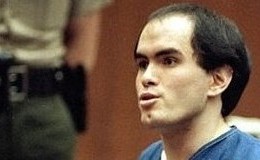
Robert John Bardo
Murderer Brian Kevin Rosenfeld
Murderer · USA · 1985
Brian Kevin Rosenfeld Brian Kevin Rosenfeld was sentenced to three concurrent l…
23 victims
Brian Kevin Rosenfeld
Murderer · USA · 1985
Brian Kevin Rosenfeld Brian Kevin Rosenfeld was sentenced to three concurrent l…
23 victims
 Yahweh ben Yahweh
Murderer · USA · 1980
Yahweh ben Yahweh was born and legally named Hulon Mitchell Jr. (October 27, 19…
23 victims
Yahweh ben Yahweh
Murderer · USA · 1980
Yahweh ben Yahweh was born and legally named Hulon Mitchell Jr. (October 27, 19…
23 victims
 Russell Ellwood
Murderer · USA · 1991
Russell Ellwood was a former taxi driver. Authorities suspected him of killing…
20 victims
Russell Ellwood
Murderer · USA · 1991
Russell Ellwood was a former taxi driver. Authorities suspected him of killing…
20 victims
 Robert Martines Perez
Murderer · USA · 1994
Name: Robert Martines Perez · Other name used in proceedings: Robert Martinez P…
15 victims
Robert Martines Perez
Murderer · USA · 1994
Name: Robert Martines Perez · Other name used in proceedings: Robert Martinez P…
15 victims
 Sean Smith
Murderer · USA · 1996
Sean Smith was convicted and sentenced to death for the murder of Grazyna Mlyna…
1 victim
Sean Smith
Murderer · USA · 1996
Sean Smith was convicted and sentenced to death for the murder of Grazyna Mlyna…
1 victim
 Ronald Mikos
Murderer · USA · 2002
Ronald Mikos was a podiatrist referred to by some as the Medicare Murderer. He…
1 victim
Ronald Mikos
Murderer · USA · 2002
Ronald Mikos was a podiatrist referred to by some as the Medicare Murderer. He…
1 victim
 Jeffrey David Matthews
Murderer · USA · 1994
Jeffrey David Matthews was executed by lethal injection in Oklahoma on January…
1 victim
Jeffrey David Matthews
Murderer · USA · 1994
Jeffrey David Matthews was executed by lethal injection in Oklahoma on January…
1 victim
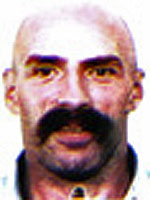 Billy Ray Hamilton
Murderer · USA · 1980
Billy Ray Hamilton died on October 22, 2007. He was convicted of murder in thre…
3 victims
Billy Ray Hamilton
Murderer · USA · 1980
Billy Ray Hamilton died on October 22, 2007. He was convicted of murder in thre…
3 victims
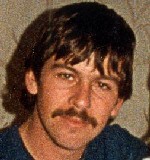 Maddison Hall
Murderer · Australia · 1987
Maddison Hall was born Noel Crompton in 1964. He was an Australian HIV-positive…
1 victim
Maddison Hall
Murderer · Australia · 1987
Maddison Hall was born Noel Crompton in 1964. He was an Australian HIV-positive…
1 victim
- Gender
- male
- Country
- USA
- Location
- Los Angeles, Los Angeles County, California, USA
- Date of birth
- January 2, 1970
- Age at first offence
- 19
- Characteristics
- stalker, abuse, drugs
- Victim profile
- A ctress Rebecca Lucile Schaeffer, 21
- Method of murder
- Shooting
- Date(s) of murder
- July 18, 1989
- Years active
- 1989
- Date of arrest
- Next day
- Status
-
Life imprisonment
Sentenced to life in prison without parole on December 20, 1991
Case record: Robert John Bardo
People
Robert John Bardo (born January 2, 1970) was an American man who was convicted in October 1991 for the murder of actress Rebecca Schaeffer on July 18, 1989.
Rebecca Schaeffer was an actress.
Marcia Clark was the prosecutor who tried and convicted Bardo.
Dino Fulgoni was the Superior Court judge who sentenced Bardo.
George Deukmejian was the Governor who signed a law that prohibited the DMV from releasing addresses.
Pam Dawber co-starred with Rebecca Schaeffer in My Sister Sam.
Richard Goldman was a neighbor who heard gunshots and screams.
Paul Bartel was a director mentioned in connection with speculation before Bardo’s arrest.
Christians? (No additional person facts beyond those named elsewhere.)
Chris Weathersbee was a prison Sgt. who commented on whether notoriety was a factor in a later attack.
Dana Schaeffer was Rebecca Schaeffer’s mother.
Edgar was Bardo’s older brother.
Richard Goldman was mentioned as living across the street.
Irene Tishkoff was a witness who encountered Bardo outside a market.
Debbie Kennedy was a witness who bumped into Bardo.
Kenneth Newell was a neighbor who saw Schaeffer’s body lying in her doorway.
Teresa Saldana was named in connection with a separate assault case.
Jonathan Norman was named in connection with a later conviction inspired by anti-stalking laws.
Steven Spielberg was named in connection with threats allegedly targeted by Jonathan Norman.
Mikhail Gorbachov was referenced in connection with Samantha Smith.
Samantha Smith was referenced as a child peace activist whom Bardo stalked before her death in a 1985 plane crash.
Daniel Vega was referenced as an escaped convict who threatened several celebrities and then stalked Donna Mills.
Donna Mills was referenced as the star of the prime-time soap Knots Landing.
John Hinckley Jr. was referenced in connection with a letter he wrote in 1980.
Jodie Foster was referenced as Hinckley Jr.’s fantasy figure.
Ronald Reagan was referenced as the President shot by Hinckley Jr.
James Brady was referenced as being critically wounded by Hinckley Jr.
Mark Chapman was referenced as having carried a copy of The Catcher in the Rye when he shot and killed John Lennon.
John Lennon was referenced in connection with Mark Chapman.
John Lennon’s death was referenced as having occurred on December 8, 1980.
Tina Marie Ledbetter was referenced in connection with a case about sending more than 5,000 letters including death threats.
Michael J. Fox was referenced as a Family Ties star.
Margaret M. Ray was referenced in connection with breaking a window and making herself and her son at home at David Letterman’s residence.
David Letterman was referenced in connection with his residence and Porsche.
Robert Kieling was referenced in connection with calling Anne Murray 263 times in six months.
Anne Murray was referenced as a pop singer.
Marilyn Robinette Marx was referenced as a psychologist.
Gavin de Becker was referenced as an L.A. security expert.
Johnny Carson was referenced in connection with the idea that one could “know” someone like Johnny Carson.
Sean Six was referenced as an actor from Portland who dated Rebecca Schaeffer last year.
Nannette Troutman was referenced as the owner of the first talent agency that Schaeffer approached.
Douglas Ashe was referenced as being at the Prestige modeling agency.
Douglas Ashe was referenced as having been a first guide for Rebecca Schaeffer.
Dyan Cannon was referenced as directing a film in which Rebecca Schaeffer had recently finished.
Michael Michele was referenced as an actress who roomed with Schaeffer.
Robert Modica was referenced as acting teacher.
Pam Dawber was referenced as co-starring opposite Rebecca Schaeffer.
Robert Modica was referenced in connection with teaching Rebecca Schaeffer.
Michael Michele was referenced in connection with West 62nd Street in New York City.
Two additional named people connected to prison attack context: two inmates were mentioned in relation to a later stabbing; one was a suspect identified as serving 82-years-to-life for second-degree murder.
Timeline
- 1985 — Samantha Smith died in a plane crash; Bardo had stalked her before her death.
- 1986 — Bardo turned his attention to Rebecca Schaeffer.
- 1989 — Bardo turned to Schaeffer; he was later convicted in October 1991 for the murder committed on July 18, 1989.
- July 17, 1989 — Bardo called Rebecca Schaeffer’s agent’s office and tried to find out where she lived.
- July 18, 1989 — Rebecca Schaeffer was shot and killed by Bardo.
- December 8, 1980 — Mark David Chapman shot and killed John Lennon.
- October 1991 — Bardo was convicted for the murder of actress Rebecca Schaeffer.
- December 20, 1991 — Bardo was sentenced to life in prison without parole by Superior Court Judge Dino Fulgoni.
- 1990 — California law prohibiting DMV from releasing addresses was passed.
- First day of 1991 — The California law became effective.
- By 1993 — All states and Canada put anti-stalking laws into effect.
- July 27, 2007 — Bardo, age 37, was stabbed 11 times on his way to breakfast in the maximum-security unit at Mule Creek State Prison in Amador County, California.
- July 28, 2007 — Prison officials and officials said Bardo had been stabbed repeatedly by another inmate.
- 2007 — The US federal government passed the Driver’s Privacy Protection Act on the date referenced as July 27, 2007 (as stated).
Background
Robert John Bardo grew up in Tucson, Arizona, the youngest of seven children, and was the son of a former Air Force non-commissioned officer and a Japanese national. Prior to targeting Rebecca Schaeffer, Bardo was fixated with pop stars Madonna, Tiffany, and Debbie Gibson.
Bardo had previously been fixated with Samantha Smith, a child peace activist who died in a 1985 plane crash. Bardo later turned his attention to Schaeffer.
Bardo was housed in a Security Housing Unit (SHU) for inmates with “sensitive needs,” including former gang members, notorious prisoners, and those convicted of sex crimes.
Bardo’s defense attorneys pleaded that he had an unstable mental condition due to childhood abuse.
The offence
Rebecca Schaeffer was killed on July 18, 1989. Bardo obtained Schaeffer’s home address via a detective agency that obtained it from the California Department of Motor Vehicles.
Bardo confronted her at her home angry at her for having starred in a sex scene in the film Scenes from the Class Struggle in Beverly Hills and thus having “lost her innocence.” He visited her at her apartment and told her he was a big fan; she asked him to leave. When he came back, he fatally shot her.
Bardo carried a copy of The Catcher in the Rye when he murdered Schaeffer.
After the shooting, police were called and officers responded. A neighbor named Richard Goldman heard two gunshots and two bloodcurdling screams and rushed to the door, where he found Schaeffer’s body in the building’s foyer. Witnesses saw a young man in a yellow shirt jogging up the Hollywood block; he turned into an alley and disappeared. Rebecca Schaeffer was rushed to Cedars-Sinai Medical Center, where she lingered for 30 minutes before she died.
Bardo confessed immediately to the murder. Arizona police faxed his photo to LA, and witnesses confirmed his identity. In court, he appeared dazed and confused.
Bardo’s statement in court was:
" I could probably tell you what I did after I killed her, how I got sick and all...but I don’t feel like it, "
Investigation
Bardo obtained Schaeffer’s address from a detective agency, which in turn had obtained it from the California Department of Motor Vehicles.
Police received calls about Bardo behaving bizarrely and disrupting traffic at a major intersection in Tucson. Tucson police faxed Bardo’s picture to LA, and Schaeffer’s neighbors identified him as the man who had been hanging around.
Witnesses described Bardo wandering the streets with a bulky manila folder, handling it gingerly, and asking passersby if they knew Schaeffer and where she lived. He was also seen talking to a cab driver outside the North Sweetzer Ave. building where Schaeffer lived.
Arrest
Bardo was extradited to California after his sister contacted the police about him.
Bardo was tried for the murder of Rebecca Schaeffer.
Trial
Bardo was tried and convicted by prosecutor Marcia Clark.
Bardo was convicted of capital murder in a non-jury courtroom.
Sentencing
Bardo was sentenced to life without parole by Superior Court Judge Dino Fulgoni on December 20, 1991.
At sentencing, Bardo told the judge:
"The idea I killed her for fame is totally ridiculous. I do realize the magnitude of what I’ve done. I don’t think it needs to be compounded by a bunch of lies because she’s an actress."
Appeals
No appeals are described in the provided material.
Outcome
Bardo was serving life in prison without parole after being convicted in October 1991 for the murder of actress Rebecca Schaeffer on July 18, 1989.
Aftermath
Anti-stalking laws and privacy protections followed from events including Bardo’s actions. Partly as a result of Bardo’s actions and his means of obtaining Schaeffer’s address, the US federal government passed the Driver’s Privacy Protection Act which prohibits state Departments of Motor Vehicles from releasing the home addresses of state residents.
Schaeffer’s murder and the Teresa Saldana assault case provoked Governor George Deukmejian to sign a law that prohibited the DMV from releasing addresses and inspired the Los Angeles Police Department to create the first Threat Management Team. The California law was passed in 1990 and became effective on the first day of 1991.
A stalker was defined in the legislation as “someone who willfully, maliciously and repeatedly follows or harasses another victim and who makes a credible threat with the intent to place the victim or victim's immediate family in fear of their safety.” The legislation required at least two incidents to constitute the crime and to show a “continuity of purpose” or credible threat.
By 1993, all states and Canada put anti-stalking laws into effect.
The law later helped convict Jonathan Norman, who was sentenced to 25 years in prison for attempting to carry out threats against director Steven Spielberg.
Bardo made an interview about a year after the slaying in which he said:
"I was a fan of hers and I may have carried it too far. But a lot of things have appeared in the press to make me out to be a monster. If I had one wish where if it was to ever come true it would be for Rebecca Schaeffer to be alive today."
Rebecca Schaeffer’s body was shipped back to her native Oregon for burial.
On July 27, 2007, Bardo, age 37, was stabbed 11 times on his way to breakfast in the maximum-security unit at Mule Creek State Prison in Amador County, California. Two inmate-made weapons were found at the scene.
Bardo was treated at the University of California, Davis Medical Center and returned to prison. A suspect in the attack was another convict serving 82-years-to-life for second-degree murder.
Prison Sgt. Chris Weathersbee said:
"We have a number of high-notoriety cases, so we cannot jump to the conclusion as to whether his notoriety was a factor in the attack,"
Dana Schaeffer told Bardo:
"Be happy in jail!"
Spotted an error, or have more information about this case?