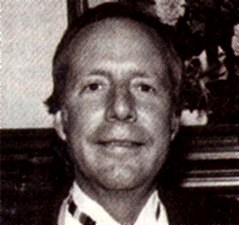
John Eleuthère DuPont
Homicide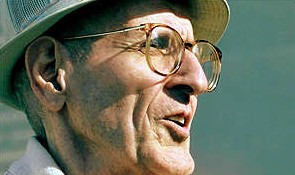 Jack Kevorkian
Homicide · USA · 1990
Jack Kevorkian (born May 26, 1928) was a controversial American pathologist. He…
130 victims
Jack Kevorkian
Homicide · USA · 1990
Jack Kevorkian (born May 26, 1928) was a controversial American pathologist. He…
130 victims
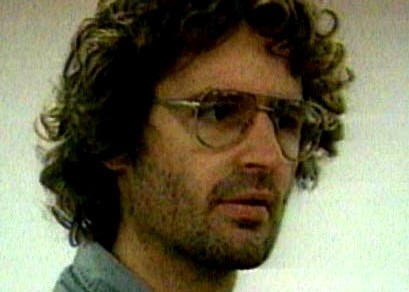 David Koresh
Homicide · USA · 1993
David Koresh (born Vernon Wayne Howell; August 17, 1959 – April 19, 1993) led t…
79 victims
David Koresh
Homicide · USA · 1993
David Koresh (born Vernon Wayne Howell; August 17, 1959 – April 19, 1993) led t…
79 victims
 Todd Hall
Homicide · USA · 1996
Todd Hall was described by neighbors as "mentally slow" and was said to have su…
9 victims
Todd Hall
Homicide · USA · 1996
Todd Hall was described by neighbors as "mentally slow" and was said to have su…
9 victims
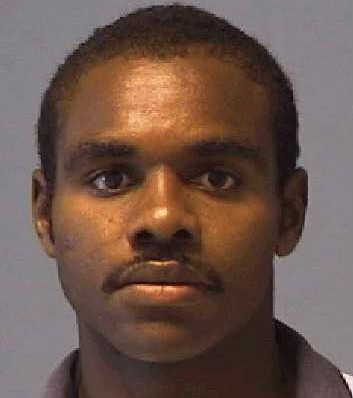 Clinton Bankston
Homicide · USA · 1987
15 August 1987 — Ann Morris (63), her sister Sally Nicholson (59), and Sally’s…
5 victims
Clinton Bankston
Homicide · USA · 1987
15 August 1987 — Ann Morris (63), her sister Sally Nicholson (59), and Sally’s…
5 victims
 Joshua Jenkins
Homicide · USA · 1996
Joshua Jenkins was a 15-year-old American killer who killed five members of his…
5 victims
Joshua Jenkins
Homicide · USA · 1996
Joshua Jenkins was a 15-year-old American killer who killed five members of his…
5 victims
 Daniel Conahan
Serial killer? · USA · 1994
April 16, 1996 — Richard Montgomery was last seen by friends; Montgomery told a…
6 victims
Daniel Conahan
Serial killer? · USA · 1994
April 16, 1996 — Richard Montgomery was last seen by friends; Montgomery told a…
6 victims
 Mark Hutt
Murderer · Canada · 2009
Mark Hutt was convicted of first-degree murder in connection with the death of…
1 victim
Mark Hutt
Murderer · Canada · 2009
Mark Hutt was convicted of first-degree murder in connection with the death of…
1 victim
 Henry Wirz
Murderer · USA · 1864
Henry Wirz (also known as Heinrich Hartmann Wirz) (November 25, 1823 – November…
11 victims
Henry Wirz
Murderer · USA · 1864
Henry Wirz (also known as Heinrich Hartmann Wirz) (November 25, 1823 – November…
11 victims
 Mark David Chapman
Murderer · USA · 1980
Mark David Chapman (born May 10, 1955, in Fort Worth, Texas) shot and killed mu…
1 victim
Mark David Chapman
Murderer · USA · 1980
Mark David Chapman (born May 10, 1955, in Fort Worth, Texas) shot and killed mu…
1 victim
 Anatoly Onoprienko
Serial killer · Ukraine · 1989
Anatoly Yuriyovych Onoprienko was born July 25, 1959, and was also known by the…
52 victims
Anatoly Onoprienko
Serial killer · Ukraine · 1989
Anatoly Yuriyovych Onoprienko was born July 25, 1959, and was also known by the…
52 victims
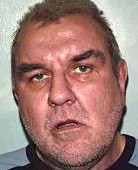 Anthony Hardy
Serial killer · United Kingdom · 2002
Anthony John Hardy (born May 31, 1951) was an English serial killer who was con…
3 victims
Anthony Hardy
Serial killer · United Kingdom · 2002
Anthony John Hardy (born May 31, 1951) was an English serial killer who was con…
3 victims
- Gender
- male
- Country
- USA
- Location
- Philadelphia, Pennsylvania, USA
- Date of birth
- November 22, 1938
- Age at first offence
- 58
- Characteristics
- abuse, history of mental illness
- Victim profile
- David Schultz (Olympic gold medalist wrestler)
- Method of murder
- Shooting
- Date(s) of murder
- January 26, 1996
- Years active
- 1996
- Date of arrest
- 2 days after
- Status
-
Died in custody
Found guilty of murder but mentally ill; sentenced to 13 to 30 years in prison on February 26, 1997; died in prison on December 9, 2010
Case record: John Eleuthère duPont
Background
John Eleuthère duPont (November 22, 1938 – December 9, 2010) was an American billionaire and member of the prominent du Pont family. He was also known as an amateur ornithologist and conchologist, philatelist, philanthropist, coach, and sports enthusiast.
He was the son of William du Pont, Jr. and Jean Liseter Austin (1897–1988). His parents’ nuptials were billed as the “Wedding of the Century” in media accounts. His parents married on January 1, 1919, in Rosemont, Pennsylvania. Jean’s father, William Liseter Austin, an executive of the Baldwin Locomotive Works, gave the couple more than 242 acres of land as a wedding gift. William duPont Sr. built Liseter Hall, a three-story Georgian mansion, for the couple on the land in 1922. Both of his parents’ families immigrated to the United States in the early 1800s.
John duPont was the youngest of four children. He had two older sisters, Jean duPont McConnell and Evelyn duPont Donaldson, and an older brother, Henry E. I. duPont. John duPont graduated from Haverford School in 1957. He attended college in Miami, Florida, studied under and was mentored by Oscar T. Owre, Ph.D., and graduated from the University of Miami in 1965 with a Bachelor of Science degree in zoology. He also held a doctorate in natural science from Villanova University, which he received in 1973.
In 1983, he married occupational therapist Gale Wenk, but emotional instability was already evident and the difficult marriage ended in a 1985 divorce. Elsewhere, it stated he married therapist Gale Wenk on September 3, 1983, and that the marriage was annulled 90 days later.
He had previously been an American ornithologist, a former coach and financial sponsor of sport wrestling, and a philanthropist. As an ornithologist, he was credited with the discovery of two dozen species of birds. He had written books on birds, including South Pacific Birds, South Sulu Archipelago Birds; an Expedition Report, Birds of Dinagat and Siargao, Philippines; and an Expedition Report, and Philippine Birds. He was the second author of Living Volutes: a Monograph of the Recent Volutidae of the World, which he co-wrote with Clifton Stokes Weaver.
He was also a philatelist. In a 1980 auction, while bidding anonymously, he paid $935,000 for one of the rarest stamps in the world, the British Guiana 1856 1c black on magenta.
John duPont founded the Delaware Museum of Natural History in 1957, which opened to the public in 1972, and he was the institution’s director for many years.
After his mother’s death, John duPont turned his 440-acre estate in Newtown Square into a wrestling facility for amateur wrestlers. His wrestling team was called “Team Foxcatcher.”
Timeline
- January 1, 1919 — John duPont’s parents married in Rosemont, Pennsylvania.
- 1965 — John duPont graduated from the University of Miami with a Bachelor of Science degree in zoology.
- 1980 — John duPont anonymously paid $935,000 during an auction for the British Guiana 1856 1c black on magenta.
- 1983 — John duPont married occupational therapist Gale Wenk.
- 1996 — After being held in Delaware County Prison, John duPont was found mentally incompetent to stand trial by Judge Patricia Jenkins; that ruling was reversed two months later after he received treatment at Norristown State Hospital.
- January 26, 1996 — John duPont shot David Schultz at the wrestling facility of du Pont’s Team Foxcatcher on du Pont’s estate in Newtown Square, Pennsylvania, outside Philadelphia.
- February 18, 1997 — Jurors began deliberations in the murder case.
- February 25, 1997 — A jury found John duPont guilty of third-degree murder but mentally ill.
- February 26, 1997 — A jury found him guilty of murder but mentally ill; he was sentenced to 13 to 30 years in prison.
- April 1999 — DuPont’s direct appeal was denied.
- June 1999 — DuPont’s attorneys launched appeals all the way to the U.S. Supreme Court, which would not hear the case.
- September 22, 2003 — DuPont was denied relief under the Post-conviction Relief Act.
- December 9, 2010 — John duPont died in prison.
The offence
On January 26, 1996, John duPont shot dead Olympic gold medalist wrestler David Schultz at the wrestling facility of du Pont’s Team Foxcatcher on du Pont’s estate in Newtown Square, Pennsylvania, outside Philadelphia. Schultz’s wife and several others witnessed the shooting. The shooting was described as without apparent provocation.
After the shooting, duPont locked himself in his mansion for two days while he negotiated with police on the telephone. Police turned off his power.
Expert psychiatric testimony described duPont as a paranoid schizophrenic who believed Schultz was part of an international conspiracy to kill him. He also believed people would break into his house and kill him, which was described as the reason he put razor wires in his attic.
Investigation
Police captured duPont when he went outside to fix his heater after their power was turned off. In the courtroom materials, the case also included discussion that the jury had asked Judge Patricia Jenkins to repeat parts of her instructions with definitions of each of the three degrees of homicide, and that they also asked for a rereading of testimony from Patrick Goodale, a du Pont security consultant who saw the killing, and from prosecution psychiatrist Park Dietz.
Goodale described the final moments before the shooting as involving “uncharacteristic spontaneity” when duPont shot Schultz. The defense cited Goodale’s statement in arguing duPont did not plan the killing but acted as his paranoia reached a climax. Prosecutors cited that duPont had taken a gun with him to Schultz’s home, violating an agreement he had made with his security firm, and asked Schultz, “You got a problem with me?” after he fired the first shot, as indicating duPont planned to kill Schultz out of anger over a deteriorating relationship with the wrestler.
In portions of Dietz’s testimony reread to the jury, the psychiatrist concluded duPont was mentally ill but his killing of Schultz was unrelated to the illness.
Arrest / custody / competence
After being held in Delaware County Prison, duPont was found mentally incompetent to stand trial by Judge Patricia Jenkins. That ruling was reversed two months later after duPont received treatment at Norristown State Hospital.
Trial
A trial in January 1997 began and lasted five weeks, followed by a week of deliberations by the jury. On February 25, 1997, the jury found duPont guilty of third-degree murder but mentally ill. On February 26, 1997, a jury found him guilty of murder but mentally ill.
Jurors deliberated since February 18 after hearing 13 days of testimony. The six men and six women had to choose among eight distinct verdicts on the charges against duPont, with even his lawyers acknowledging he killed Schultz on January 26, 1996.
Under the guilty but mentally ill verdict described in the case coverage, duPont faced a maximum of 20 to 40 years in prison and a fine of up to $50,000, and Judge Patricia Jenkins would determine whether he should spend time in a state mental institution first. The defense attorney Thomas Bergstrom was pleased with the verdict and said:
- “It could have been a lot worse. Obviously, it could have been better, but I think the jury worked very, very hard...”
- “I think they came to a result that we can live with,” Bergstrom continued. He said duPont thanked him after the verdict was announced.
District Attorney Patrick Meehan called the jury’s decision a “shallow victory” and said it was “a victory in that it held du Pont accountable for his actions, but a shallow one in that it was done ‘at the loss of a great person.’” Meehan said:
- “I think, cynically, some people thought that John du Pont, who is the wealthiest murder defendant in the United States, would use his financial resources to ensure that he never stood trial at all.”
- He called it “tragic” that the vast duPont resources were not used to help the millionaire before he shot Schultz.
- “I think, cynically, some people thought that John du Pont, who is the wealthiest murder defendant in the United States, would use his financial resources to ensure that he never stood trial at all,” Meehan said.
Schultz’s widow, Nancy Schultz, thanked the jury for “not finding du Pont above the law. He must be held accountable for David’s murder.” She filed a civil suit against the duPont estate.
The case materials also discussed that psychiatric experts for both sides testified that duPont was mentally ill, but only defense experts said he was insane. Defense experts said duPont was a paranoid schizophrenic who believed Schultz was part of an international conspiracy to kill him.
During deliberations, jurors asked Judge Jenkins to repeat part of her instructions with definitions of each of the three degrees of homicide.
Sentencing
On February 26, 1997, duPont was sentenced to 13 to 30 years in prison. It also stated he was sentenced to 30 years in prison in 1997, and that the sentencing in the case involved “guilty but mentally insane.”
His earliest release date was given as January 29, 2009; however, it was denied. The case materials also stated his maximum sentence would have ended on January 29, 2026, when he would have been 87.
Appeals
The U.S. Supreme Court upheld the verdict in 2000. In 2010, a federal habeas corpus petition was described as pending in federal court with U.S. Magistrate Judge Linda Caracappa, and the matter had initiated duPont’s federal appeals process.
It also stated that in 2000 the U.S. Supreme Court upheld the verdict, and that in 2010 the 3rd Circuit U.S. appeals court in Philadelphia rejected all but one issue raised on appeal involving duPont’s use of a Bulgarian prescription drug, scopolamine, before he fatally shot Schultz in 1996, and requested written briefs. It also stated that state-level and post-conviction relief appeals were exhausted.
Outcome
John duPont died in prison on December 9, 2010.
Other details
At the time of sentencing and imprisonment, he was described as being housed at the State Correctional Institute-Mercer, a minimum-security institution in the Pennsylvania prison system.
The trial materials and related narrative described additional people and details:
- Kurt Angle trained at Team Foxcatcher and was described as a 1996 Olympic gold medalist and current TNA wrestler. He was described as being good friends with Schultz before the murder.
- Joy Hansen Leutner, a triathlete from Hermosa Beach, California, lived for two years on the estate. She said, “with my family and friends, John gave me a new lease on life. He gave more than money; he gave himself emotionally.” She also said, “There’s no way John in his right mind would have killed Dave.”
- Newtown Township supervisor John S. Custer Jr. said, “at the time of the murder, John didn’t know what he was doing.”
- Charles King, Sr., a duPont stable hand and manager for 30 years, was quoted as saying: “I don’t think John could shoot someone unless he was pushed to or was on drugs,” and “After that guy [Goodale] starting hanging around him, my son always said Johnny changed. He was scared of everything. He was always a little off. But I never had problems with him, and my son never had problems.”
- Charles King Sr. blamed Patrick Goodale, an ex-Marine and duPont security consultant, for influencing what happened.
- Andre Metzger, a former assistant coach, filed a 1988 sexual harassment suit against duPont.
- A Delaware County court approved three trustees to manage his funds while incarcerated: his sister, Jean Ellen duPont Shehan.
- Jean Ellen duPont Shehan was described as having guarded by a son, James McConnell, and a daughter, Marian Lassen.
- Marian Lassen said, “We’re private people,” when speaking publicly.
- Estate employee King Sr. said Jean Austin duPont “would roll over in her grave—many times” if she knew what had become of her youngest child. He also said, “If she was still here, I don’t think any of this would have happened,” and “She kept the wraps on him.”
- A separate account described a tactical response, describing a 50 1/2-hour standoff and stating that officers surrounded duPont. Downingtown Police Department patrolman Andy Trautmann was quoted as saying: “He wanted the lights moved off his ‘holy ground,’” and “I thought, ‘No. we’re in charge.’” Trautmann also described the moments outside and said: “Police! Don’t move,” and “I ran after him, grabbed his shoulder with my left hand, then six or seven SWAT guys brought him down.”
- Trautmann was also quoted saying “It was all resolved without one shot being fired,” and “Gunpowder.”
- A record quoted duPont’s words at the shooting site attributed to Goodale describing duPont asking Schultz, “You got a problem with me?”
- Charles “Chuckie” King Jr. was quoted in relation to duPont’s estate paint plan: “He figures no one supported him, so he’s not going to support this area.”
- Sid Elston was quoted as saying: “He never told me that, but I surmised it,” and “We’d love to drag it out for 10 years, but that’s not possible,” and that DuPont wanted locals “to carry back a message of his normalcy.” Elston also said: “He’d shut us down right away.”
- Rouse attorney David Gifford was quoted as saying: “Some” of the 33 existing structures will be preserved and incorporated—but not the mansion, and it also described that about 67 percent of the acreage would remain open.
- Custer and Elston were quoted describing the estate and open-space intentions, including Custer’s statement: “The Du Pont property was always one we could count on [for open space]. We thought it would always be there because it was owned by the Du Ponts.”
- A 2010 discussion of his legal challenges included descriptions that duPont challenged the constitutionality of state mental health statutes and his sentence of “guilty but mentally insane,” and that issues included prosecutor misconduct and evidence regarding duPont’s questionable behavior in the closing arguments.
- It stated that in 2009 duPont will be 70, and it provided an assertion that if he left the state he would violate parole.
Interests and supported institutions included:
- A new basketball arena at Villanova University opened in 1986 and was described as originally being called duPont Pavilion, with his name removed after his conviction. The building was later described as called The Pavilion.
- Foxcatcher Farm changes after his legal issues were described, including the fall of 1996 sale of his mother’s dairy herd of nearly 70 Guernseys, and a sale of the dairy farm by the Delaware Museum of Natural History in January 1998 to G&W Land Company for $15.3 million.
- The material described possible future development plans for Foxcatcher Farm including building Ashford, after a purchase in February 2005 by Rouse Group Development Company, and it described a reduced number of housing units from 650 to 460, preservation plans, demolition of Schultz’s home, and a walking-biking trail along Route 252 and a 40-acre “passive nature park” parcel.
Sports and athletic details included:
- He was described as an accomplished athlete before his arrest and as a coach in wrestling, swimming, triathlon, track, and modern pentathlon.
- In 1966, he brought triathlon competition to the United States.
- He wrestled in world championships in 1992 in Cali, Colombia; 1993 in Toronto, Canada; 1994 in Rome, Italy; and 1995 in Sophia, Bulgaria, and he never placed lower than fourth place.
- He was described as a two-time wrestling world champion.
Mentions of other related communities and disputes included:
- The material described an estate court arrangement and that a federal habeas corpus petition was pending at the time of a 2010 discussion.
- The materials included discussion of civil suits filed by Schultz’s widow and estate-related litigation regarding control of his assets.

Spotted an error, or have more information about this case?