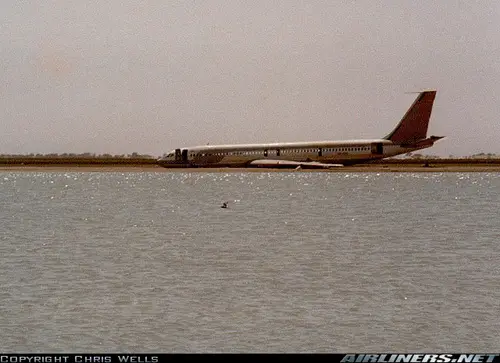
Seiji Katagiri
Mass murderer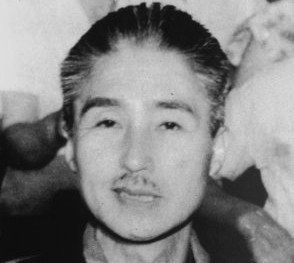 Sadamichi Hirasawa
Mass murderer · Japan · 1948
Sadamichi Hirasawa was a Japanese painter. He was also known as a tempera paint…
12 victims
Sadamichi Hirasawa
Mass murderer · Japan · 1948
Sadamichi Hirasawa was a Japanese painter. He was also known as a tempera paint…
12 victims
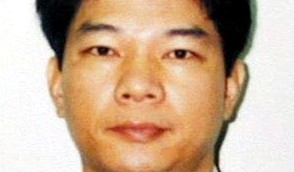 Mamoru Takuma
Mass murderer · Japan · 2001
Mamoru Takuma (宅間 守; November 23, 1963 – September 14, 2004) was a Japanese jan…
8 victims
Mamoru Takuma
Mass murderer · Japan · 2001
Mamoru Takuma (宅間 守; November 23, 1963 – September 14, 2004) was a Japanese jan…
8 victims
 Tomohiro Kato
Mass murderer · Japan · 2008
Tomohiro Katō was held in custody and was in prison awaiting trial. Tomohiro Ka…
7 victims
Tomohiro Kato
Mass murderer · Japan · 2008
Tomohiro Katō was held in custody and was in prison awaiting trial. Tomohiro Ka…
7 victims
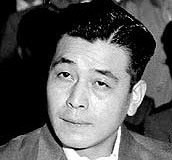 Masaru Okunishi
Mass murderer · Japan · 1961
Masaru Okunishi was a farmer from Kuzuo, a remote mountain village in Nabari ci…
5 victims
Masaru Okunishi
Mass murderer · Japan · 1961
Masaru Okunishi was a farmer from Kuzuo, a remote mountain village in Nabari ci…
5 victims
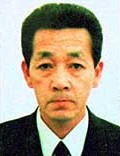 Mitsuhiro Kobayashi
Mass murderer · Japan · 2001
Mitsuhiro Kobayashi was a former taxi driver. During the trial, he admitted set…
5 victims
Mitsuhiro Kobayashi
Mass murderer · Japan · 2001
Mitsuhiro Kobayashi was a former taxi driver. During the trial, he admitted set…
5 victims
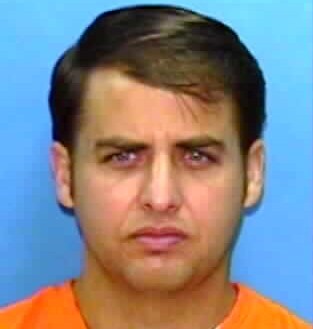 Anthony Braden Bryan
Murderer · USA · 1983
Anthony Braden Bryan was the petitioner and appellant in multiple proceedings,…
1 victim
Anthony Braden Bryan
Murderer · USA · 1983
Anthony Braden Bryan was the petitioner and appellant in multiple proceedings,…
1 victim
 Gwendolyn Graham
Serial killer · USA · 1987
Gwendolyn Graham worked as a nurse’s aide at the Alpine Manor Nursing Home in W…
5 victims
Gwendolyn Graham
Serial killer · USA · 1987
Gwendolyn Graham worked as a nurse’s aide at the Alpine Manor Nursing Home in W…
5 victims
 Lawrence Dalton
Serial killer · USA · 1977
Lawrence Dalton was the subject of a search announced by FBI spokesmen on April…
4 victims
Lawrence Dalton
Serial killer · USA · 1977
Lawrence Dalton was the subject of a search announced by FBI spokesmen on April…
4 victims
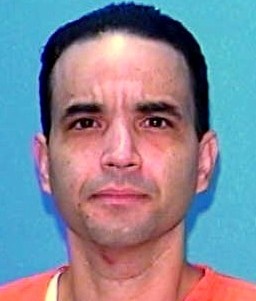 Marbel Mendoza
Murderer · USA · 1992
Marbel Mendoza (date of birth: 09/23/66) was sentenced to death on 08/02/94 in…
1 victim
Marbel Mendoza
Murderer · USA · 1992
Marbel Mendoza (date of birth: 09/23/66) was sentenced to death on 08/02/94 in…
1 victim
 Andrew Cantu
Murderer · USA · 1990
Andrew Cantu was convicted for the capital offense of murdering Mandell Eugene…
3 victims
Andrew Cantu
Murderer · USA · 1990
Andrew Cantu was convicted for the capital offense of murdering Mandell Eugene…
3 victims
 Marilyn Edge
Murderer · USA · 2013
Marilyn Edge was a mother from Scottsdale, Arizona, accused of poisoning and ki…
2 victims
Marilyn Edge
Murderer · USA · 2013
Marilyn Edge was a mother from Scottsdale, Arizona, accused of poisoning and ki…
2 victims
- Gender
- male
- Country
- Japan
- Location
- Tokyo Bay, Japan
- Date of birth
- 1946
- Age at first offence
- 36
- Characteristics
- mentally ill, police officer, attempted rape
- Victim profile
- Aircraft passengers
- Method of murder
- T hrew two of the four engines into reverse, causing the plane to plunge into Tokyo Bay
- Date(s) of murder
- February 9, 1982
- Years active
- 1982
- Date of arrest
- Same day
- Status
-
Imprisoned
Found not guilty by reason of insanity; Seiji Katagiri was not indicted after being arrested on suspicion of professional negligence resulting in deaths.
Case record: Seiji Katagiri
Background
Seiji Katagiri (片桐 清二 Katagiri Seiji) served as Captain of Japan Airlines Flight 350. The crew consisted of 35-year-old Captain Seiji Katagiri, 33-year-old First Officer Yoshifumi Ishikawa, and 48-year-old flight engineer Yoshimi Ozaki. The aircraft was a McDonnell Douglas DC-8-61 with aircraft registration JA-8061, operating a domestic scheduled passenger flight from Fukuoka, Japan, to Tokyo.
The cause of the crash was traced to Katagiri’s deliberate engaging of the number 2 and 3 engine thrust-reversers in flight in an attempted suicide. The captain was later found to be suffering from a mental illness prior to the incident, resulting in a decision that he was not guilty by reason of insanity.
The revelations that appeared in Japanese press painted a portrait of a pilot with a troubled psyche. Claims said Seiji Katagiri had been suffering from hallucinations and feelings of depression. He once summoned police to his two-story house near Tokyo because he was convinced it was bugged, but a thorough search turned up no eavesdropping devices. On three occasions, his employers had urged him to see a psychiatrist. Ever since he was granted one month’s leave in November 1980 for a “psychosomatic disorder,” his wife worried about his neurotic behavior, and those fears were described as tragically prophetic.
Katagiri’s wife was described as worrying about his neurotic behavior. There were also claims that Katagiri may face criminal indictment for abandoning his passengers and plane so quickly, and he could receive a five-year jail term if convicted under Article 75 of Japan’s civil aviation law, which requires a pilot to do his best to minimize casualties and property damage in a plane crash.
Japan Airlines apologized for allowing Katagiri to fly, admitting that he was reinstated as captain even though he had not fulfilled the JAL rule that pilots log at least 25 hr. of flying time a month.
The offence
On approach to Tokyo Haneda Airport in Tokyo Bay, Katagiri engaged the number 2 and 3 engine thrust-reversers in flight in an attempted suicide. The First Officer and Flight Engineer worked to restrain him and regain control, but the DC-8’s descent could not be completely checked.
The airplane touched down in shallow water 300 meters (980 ft) short of the runway. Among the 166 passengers and 8 crew, 24 passengers were killed, with no losses among the crew. Another part of the narrative described 24 people dying among 174 passengers and crew aboard the Japan Air Lines DC-8 bound from Fukuoka.
Investigation
Investigators into the crash reported that there was a struggle in the cockpit only moments before the jetliner fell into Tokyo Bay 300 yards short of the main runway at Haneda Airport. Police pointed to pilot error as the cause of the accident and said that one of the airliner's four jet engines was put into reverse thrust just before the crash, causing the plane to lose altitude sharply.
Kyodo News Agency said that the flight engineer, Yoshimi Ozaki, “stood up to seize the captain.” The police said that the co-pilot, Yoshfumi Ishikawa, tried to pull back on the controls to bring the plane out of a nose-dive but was unable to do so, and they did not say why.
The police initially said that the pilot died in the crash, but later it was learned that he had been taken, without being identified, to a nearby hotel for treatment for an injured back and internal injuries. A statement from a source familiar with the investigation said: “What exactly happened during the several hours before he was located is not known and may remain a mystery.”
The Japanese press suggested that the pilot lost his senses. The Japan Times said a voice recording showed that “Captain Katagiri was in an abnormal state, crying out loud in the cockpit” on the approach as the plane was still some distance from the airport.
The Japanese press interpretation that Katagiri went berserk at the controls was described as not being rebutted by the police or the airline.
A Japan Broadcasting Corporation one-hour news analysis program devoted to the crash implied that the pilot was temporarily of unsound mind, and the television program reported the copilot’s despairing cry on a voice recorder in the cockpit: “Captain, what are you doing?”
Arrest
Following the accident, Katagiri was arrested on suspicion of professional negligence resulting in deaths, but he was not indicted because of his insanity.
Following the accident, Katagiri was described as one of the first people to take a rescue boat and reportedly claimed to rescuers that he was an office worker to avoid detection.
Police also claimed that Katagiri told them he felt ill the morning of the flight, and he was quoted as saying: “After I switched from auto to manual operation just before landing, I felt nausea, then an inexplicable feeling of terror, and completely lost consciousness.”
Trial
Katagiri was found not guilty by reason of insanity, and he was not indicted due to his insanity.
Sentencing
No sentence was imposed in the provided narrative because Katagiri was found not guilty by reason of insanity.
Appeals
No appeal information was included in the provided narrative.
Outcome
Katagiri was found not guilty by reason of insanity.
Aftermath
After the accident, accounts described Katagiri’s attempt to avoid detection and later depictions of him after the crash. Pictures later showed the captain, with a bland expression and wearing a cardigan, aboard a bus after he had reportedly told officials he was an office worker.
A stewardess seated in the raft beside him was described as having blood running down her face and appearing to be in intense distress. A photograph of Katagiri on a rubber life raft was published, and he was described as seated, tieless and coatless but in a cardigan and not immediately identifiable as a Japan Air Lines crew member.
Japan Air Lines said Katagiri became ill in November 1980 and rested for three weeks after a hospital examination. Katagiri took a copilot’s test in late December 1980, passed, and resumed work at the end of the month.
JAL President Yasumoto Takagi said: “It’s unbelievable that he was among the first to take the rescue boat.”
Geoffrey Tudor, a spokesman for the airline, said Japan Air Lines had no further comment, and he declined to answer questions on press speculation that the pilot might have deliberately crashed the jetliner.
Names and roles
- Seiji Katagiri — Captain
- Yoshifumi Ishikawa — First Officer / co-pilot
- Yoshimi Ozaki — Flight engineer
- Yasumoto Takagi — Japan Air Lines President
- Geoffrey Tudor — Japan Air Lines spokesman
- Nichole Edwards — (no role stated in the provided narrative)
- “a source familiar with the investigation” — gave the statement: “What exactly happened during the several hours before he was located is not known and may remain a mystery.”

Spotted an error, or have more information about this case?