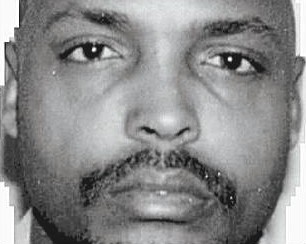
Carl Chichester
Murderer Brian Kevin Rosenfeld
Murderer · USA · 1985
Brian Kevin Rosenfeld Brian Kevin Rosenfeld was sentenced to three concurrent l…
23 victims
Brian Kevin Rosenfeld
Murderer · USA · 1985
Brian Kevin Rosenfeld Brian Kevin Rosenfeld was sentenced to three concurrent l…
23 victims
 Russell Ellwood
Murderer · USA · 1991
Russell Ellwood was a former taxi driver. Authorities suspected him of killing…
20 victims
Russell Ellwood
Murderer · USA · 1991
Russell Ellwood was a former taxi driver. Authorities suspected him of killing…
20 victims
 Robert Martines Perez
Murderer · USA · 1994
Name: Robert Martines Perez · Other name used in proceedings: Robert Martinez P…
15 victims
Robert Martines Perez
Murderer · USA · 1994
Name: Robert Martines Perez · Other name used in proceedings: Robert Martinez P…
15 victims
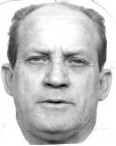 Billy Frank Vickers
Murderer · USA · 1993
Billy Frank Vickers Vickers was executed by lethal injection in Texas on Januar…
14 victims
Billy Frank Vickers
Murderer · USA · 1993
Billy Frank Vickers Vickers was executed by lethal injection in Texas on Januar…
14 victims
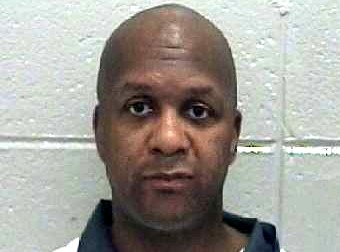 Kenneth Dan Bright
Murderer · USA · 1989
Kenneth Dan Bright, 36, was sentenced to death in Muscogee County for the Octob…
2 victims
Kenneth Dan Bright
Murderer · USA · 1989
Kenneth Dan Bright, 36, was sentenced to death in Muscogee County for the Octob…
2 victims
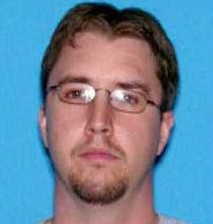 Timothy Dawson
Murderer · USA · 2004
Timothy Dawson — husband of Julia Dawson; defendant. · Julia Dawson — wife of T…
1 victim
Timothy Dawson
Murderer · USA · 2004
Timothy Dawson — husband of Julia Dawson; defendant. · Julia Dawson — wife of T…
1 victim
 Glennon Engleman
Serial killer · USA · 1954
Glennon Engleman was a dentist who was sentenced to life in prison and died in…
7 victims
Glennon Engleman
Serial killer · USA · 1954
Glennon Engleman was a dentist who was sentenced to life in prison and died in…
7 victims
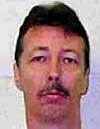 Michael Ronning
Murderer · USA · 1986
Michael Ronning was an inmate in Arkansas serving life in prison without parole…
7 victims
Michael Ronning
Murderer · USA · 1986
Michael Ronning was an inmate in Arkansas serving life in prison without parole…
7 victims
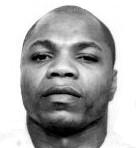 Timothy Cockrell
Murderer · 1992
Timothy Cockrell was convicted of the murder of Sandra Deptawa and sentenced to…
1 victim
Timothy Cockrell
Murderer · 1992
Timothy Cockrell was convicted of the murder of Sandra Deptawa and sentenced to…
1 victim
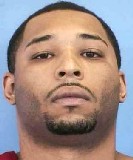 Marlon Howell
Murderer · USA · 2000
Name: Marlon Howell Status: Sentenced to death on March 30, 2001 · May 15, 2000…
1 victim
Marlon Howell
Murderer · USA · 2000
Name: Marlon Howell Status: Sentenced to death on March 30, 2001 · May 15, 2000…
1 victim
- Gender
- male
- Country
- USA
- Location
- Manassas, Virginia, USA
- Date of birth
- 1962
- Age at first offence
- 29
- Characteristics
- robbery
- Victim profile
- Timothy Rigney, 30 ( pizza shop manager )
- Method of murder
- Shooting
- Date(s) of murder
- August 16, 1991
- Years active
- 1991
- Date of arrest
- —
- Status
-
Executed
Executed by lethal injection in Virginia on April 13, 1999; clemency petition rejected by Gov. Jim Gilmore; Supreme Court denied a final appeal
Case name
Carl Chichester
People
- Carl Hamilton Chichester — defendant; was convicted of capital murder, robbery, and firearms charges; executed by lethal injection.
- Timothy Rigney — victim; 30-year-old Little Caesars pizza shop manager; was shot in the chest and died.
- Sheldon Maurice McDowell — accomplice; was convicted of the slaying and sentenced to 71 years in prison.
- Jack Burdette — witness; told police he saw two men running from the direction of the restaurant; later identified one of the two men as Chichester.
- Denise Matney — witness; an employee.
- Robert Harris — witness; a customer.
- Patricia Eckert — witness; Harris's girlfriend.
- William Fruit — witness; a 16-year-old employee; was unavailable to testify at trial; gave a pretrial statement to police.
- Vivian Chichester — Chichester’s mother; testified she pencilled Chichester in on her schedule to work the evening of the murder.
- Vivian Pina — Chichester’s sister; testified she was scheduled to work and frequently worked with Chichester on weekends.
- Alan M. Dershowitz — Harvard University law professor; submitted an affidavit to the governor.
- John M. Copacino — director of the Criminal Justice Clinic at Georgetown University; wrote to the governor.
- Larry Traylor — Department of Corrections spokesman.
- Gov. Jim Gilmore — governor; rejected clemency.
- Robert E. Payne — District Judge; dismissed the petition for writ of habeas corpus.
- WILKINSON — Chief Judge.
- LUTTIG — Circuit Judge.
- MOTZ — Circuit Judge.
- John Paul Stevens — Supreme Court Justice; dissented.
- Ruth Bader Ginsburg — Supreme Court Justice; dissented.
- William Fruit — 16-year-old employee; gave police statement.
- Julian Mason — Commonwealth ballistics expert.
- Dr. Frances Field — Commonwealth medical examiner.
- Sharia Chichester — Chichester’s cousin; attended a candlelight vigil.
- Sheletta Jackson — longtime friend of Chichester; attended a candlelight vigil and later spoke about a telephone call with Chichester.
Background
Chichester murdered Timothy Rigney, 30, a Little Caesars pizza shop manager on Aug. 16, 1991, in Manassas, Virginia. Rigney was shot in the chest after he failed to open a cash register promptly.
Chichester’s accomplice Sheldon Maurice McDowell also was convicted of the slaying and sentenced to 71 years in prison.
Chichester later filed a clemency petition and pursued appeals including a final appeal to the Supreme Court.
The offence
At approximately 10:30 p.m. on August 16, 1991, two black men entered a Little Caesars pizza restaurant in Manassas, Virginia, wearing dark clothing, masks, and gloves, and carrying semi-automatic pistols.
One man was about three inches taller than the other. The shorter man jumped over the counter, took money from one of the two cash registers, and demanded that Timothy Rigney (the restaurant manager) open the second register. The taller man remained on the customer side of the counter.
Rigney attempted to open the register but was unable to do so. When Rigney indicated he could not open the register, one of the two men shot and killed him. The two men then fled the scene on foot.
Because both men were masked, none of the four eyewitnesses to the murder could identify either of them.
Joe’s Pizza robbery evidence introduced at trial
On August 7, 1991, nine days before the Little Caesars robbery, two black men entered Joe’s Pizza in Manassas, wearing dark clothing, masks, and gloves, and carrying semiautomatic pistols. One man was noticeably taller than the other.
The shorter man proceeded immediately to the cash register. The taller man held his gun to the head of one of the employees and fired, but “somehow missed.” The two men then fled the scene on foot.
Investigation
Eyewitness accounts and identifications
Jack Burdette told police on the night of the murder that he had seen two men wearing dark clothing running from the direction of the restaurant. On February 18, 1993, Burdette told police he had recognized one of the two men as appellant Carl Hamilton Chichester. Burdette later testified that he had not named Chichester on the night of the murder because he was concerned about the safety of his family.
At trial, the three eyewitnesses who testified described uncertainty and identification regarding which man was the shooter:
- Denise Matney originally told police she was unsure which man was the shooter, but testified at trial it was the man on the customer side of the counter.
- Robert Harris testified that the man on the customer side of the counter was the shooter.
- Patricia Eckert, Harris’s girlfriend, originally told police she thought the man on the employee side was the shooter, but testified she was unsure of the identity of the shooter because she had buried her face in Harris’s chest in fright.
- William Fruit, a 16-year-old employee, was unavailable to testify at trial, but originally told police he thought the man on the employee side of the counter was the shooter.
- A fourth witness was described as unsure which man was the shooter.
Forensic and circumstantial evidence described
Prosecution introduced substantial circumstantial and forensic evidence implicating Chichester and his alleged accomplice, including:
- a shoeprint left on the counter at Little Caesars that matched that of a shoe found in the home of Chichester’s alleged accomplice; and
- evidence that Chichester told a friend that he needed to dispose of a pistol because "he had a body on the gun."
Defense alibi evidence described
The defense introduced evidence suggesting Chichester was in Washington at his job in the family janitorial business on the evening of the murder:
- Chichester’s mother Vivian Chichester testified she had pencilled in Chichester on her schedule to work that evening.
- Chichester’s sister Vivian Pina testified she frequently worked with Chichester on weekends.
- The mother and sister had no independent recollection that Chichester actually worked on the evening of the murder.
Arrest
Chichester was identified as the gunman months later as 28-year-old Carl Hamilton Chichester, a Washington, D.C. resident staying at the Red Roof Inn in Manassas.
Trial
Conviction and charges
Chichester was found guilty of capital murder, robbery, and firearms charges on September 20, 1993.
Sentencing
On December 2, the trial judge imposed a sentence of death, based on the jury’s findings of:
- aggravating factor of future dangerousness; and
- no mitigating circumstances.
State supreme court affirmance and certiorari denial
The Virginia Supreme Court affirmed the sentence on September 16, 1994 (Chichester v. Commonwealth, 248 Va. 311 (1994)). The United States Supreme Court denied Chichester’s petition for writ of certiorari on February 21, 1995 (Chichester v. Virginia, 513 U.S. 1166 (1995)).
Appeals
Federal habeas corpus timeline and dismissal
Chichester filed:
- On August 30, 1995, a petition for writ of habeas corpus in the Virginia Supreme Court.
- On November 19, 1996, the petition was dismissed.
- On January 10, 1997, Chichester’s petition for rehearing was denied.
- On June 19, 1997, a petition for writ of habeas corpus in the United States District Court for the Eastern District of Virginia.
- The district court dismissed the petition on April 7, 1998.
- Chichester appealed from that dismissal.
Fourth Circuit decision (per curiam)
Chichester appealed the district court’s dismissal of his petition for writ of habeas corpus challenging his Virginia state court conviction for capital murder.
In a decision dated January 6, 1999, the appellate panel denied Chichester’s motion for a certificate of appealability and dismissed the appeal.
The appellate panel was composed of WILKINSON, Chief Judge, and LUTTIG and MOTZ, Circuit Judges, and issued an “OPINION PER CURIAM.”
Ineffective assistance of counsel claims
Chichester raised two types of ineffective assistance claims:
- trial counsel was ineffective for failing to investigate and present evidence allegedly suggesting the man on the customer side of the counter was not the “triggerman” and therefore not guilty of capital murder under Virginia law;
- trial counsel was ineffective for failing to impeach the testimony of Jack Burdette, described as the only witness to place Chichester at the scene.
He also argued the district court incorrectly denied his request for appointment of experts to assist in developing prejudice resulting from trial counsel’s actions.
The appellate panel concluded trial counsel’s decisions were not unreasonable under Strickland v. Washington, 466 U.S. 668 (1984).
Actual innocence gateway claim
Chichester argued procedurally defaulted claims should be considered because Fruit’s pretrial statement that the man on the employee side was the shooter constituted “new evidence” supporting an actual innocence “gateway” claim under Schlup v. Delo, 513 U.S. 298 (1995).
The appellate panel held Chichester failed to meet the Schlup standard, concluding it was not more likely than not that no reasonable juror would have convicted him in light of the new evidence.
Evidentiary claim regarding Joe’s Pizza robbery
Chichester asserted the district court improperly admitted evidence of the Joe’s Pizza robbery in violation of constitutional rights, and argued the evidence violated the Commonwealth rule barring prior crimes to show propensity.
The appellate panel declined to consider whether Virginia evidence rules were applied erroneously because federal habeas relief does not lie for errors of state law, and concluded the Grundler standard was not met.
Certificate of appealability
After the dismissal of his federal habeas corpus petition, Chichester filed a motion for a certificate of appealability. The appellate panel denied the motion, concluding Chichester failed to make a “substantial showing of the denial of a constitutional right.”
Supreme Court final appeal and clemency
The Supreme Court rejected Chichester’s final appeal 7-2, with Justices John Paul Stevens and Ruth Bader Ginsburg dissenting.
Less than two hours before the execution, Gov. Jim Gilmore denied clemency, noting the verdict and sentence had been upheld on multiple appeals.
Timeline
- August 7, 1991 — Two black men robbed Joe’s Pizza in Manassas; the taller man fired after holding a gun to an employee’s head but missed; the two men fled on foot.
- August 16, 1991 — Two masked men entered Little Caesars in Manassas; they demanded cash from Timothy Rigney; Rigney was shot in the chest and killed; the men fled on foot.
- February 18, 1993 — Jack Burdette told police he recognized one of the men as Carl Hamilton Chichester.
- September 20, 1993 — Chichester was found guilty of capital murder, robbery, and firearms charges.
- December 2, 1993 — The trial judge imposed a sentence of death based on future dangerousness and no mitigating circumstances.
- September 16, 1994 — The Virginia Supreme Court affirmed the sentence.
- February 21, 1995 — The United States Supreme Court denied Chichester’s petition for writ of certiorari.
- August 30, 1995 — Chichester filed a petition for writ of habeas corpus in the Virginia Supreme Court.
- November 19, 1996 — The Virginia Supreme Court dismissed the petition.
- January 10, 1997 — The petition for rehearing was denied.
- June 19, 1997 — Chichester filed a petition for writ of habeas corpus in the United States District Court for the Eastern District of Virginia.
- April 7, 1998 — The district court dismissed the petition.
- October 28, 1998 — The appeal was argued in the United States Court of Appeals for the Fourth Circuit.
- January 6, 1999 — The Fourth Circuit denied a certificate of appealability and dismissed the appeal.
- April 13, 1999 — Chichester was executed by lethal injection in Virginia.
Sentencing
The trial judge imposed a sentence of death on December 2 (after the September 20, 1993 guilty verdict), based on:
- the aggravating factor of future dangerousness; and
- no mitigating circumstances.
Outcome
Chichester’s federal habeas petition was dismissed by the district court on April 7, 1998. The Fourth Circuit decision on January 6, 1999 denied his motion for a certificate of appealability and dismissed his appeal.
The Supreme Court rejected his final appeal 7-2 with John Paul Stevens and Ruth Bader Ginsburg dissenting, and Gov. Jim Gilmore rejected clemency. Chichester was executed by lethal injection.
Aftermath
Execution details
Chichester was put to death by injection at the Greensville Correctional Center. He was pronounced dead at 9:05 p.m. His execution was scheduled for 9 p.m. and occurred on April 13, 1999.
When asked for a final statement, Chichester said: "I love my wife and my children,''.
Department of Corrections spokesman Larry Traylor said Chichester was muttering "4-letter words" as he was led into the death chamber.
Traylor also said that after the tubes that would carry deadly chemicals into his body were inserted in his arms, "he actually thanked the (execution) team," Traylor said.
No relatives of the victim witnessed the execution.
Post-execution statements and vigils
Sheletta Jackson described her view of Chichester:
- "The papers said he was a killer, but I look at him as a person with a kind heart," said Jackson.
- "Now he's gone," Jackson said.
- "Who's going to be our best friend now?" Jackson said.
At the vigil, Pastor Jeff Carter of Manassas Church of the Brethren said he attended "to support the victim as well as those that are executed, to let it be known that vengeance is not a way of solving things."
Jackson later said she spoke with Carl Chichester by telephone and described him as feeling "happy" and "high-spirited."
Sharia Chichester declined to comment other than to say: "It's going to be OK."
Jeff Haydon said: "We aren't vigiling alone," and "We have friends and neighbors across the state in Jarratt and in Richmond.... Unfortunately we're gathering a week from now and the week after that. We'll still gather as long as the state puts people to death."
Haydon also said: "We back each other up and we show our candles to the world," and "I don't believe man has the right to take another's life," followed by: "That's up to God....The state does not kill this person in my name is what I'm stating. I do not believe that's the state's right."
Jeff Haydon described that the group prayed for 9minutes, then turned toward the street.
Sharon Haydon said: "We really have progressively been growing," and "I'm starting to feel more positive." She said the vigils helped humanize those being executed and said: "They're made out to be really, really horrible people," and "When you put it all together and realize they're just like everybody else, you put a face to a name and it's a different story."
Julie Dawes said: "I can't live in a state where I think injustice is prevailing without protesting it," "I find it hard to live with so I'm hoping we won't have to. I'm hoping we'll make a difference. I'm hoping politicians will start to realize not everyone is so blood-thirsty that they want to see people executed. It's a killing machine."
Patty Lapihuska said: "For me it's personal," and "It's something I can do to protest the death penalty and hopefully to get people to think about what the state is doing."
Execution count context stated
Chichester was the 5th condemned inmate to be put to death in Virginia that year, and the 64th overall since Virginia resumed capital punishment on August 10, 1982. Only Texas had put to death more inmates (173) than Virginia.
Spotted an error, or have more information about this case?