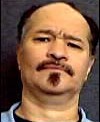
Ernest Lotches
Murderer Brian Kevin Rosenfeld
Murderer · USA · 1985
Brian Kevin Rosenfeld Brian Kevin Rosenfeld was sentenced to three concurrent l…
23 victims
Brian Kevin Rosenfeld
Murderer · USA · 1985
Brian Kevin Rosenfeld Brian Kevin Rosenfeld was sentenced to three concurrent l…
23 victims
 Russell Ellwood
Murderer · USA · 1991
Russell Ellwood was a former taxi driver. Authorities suspected him of killing…
20 victims
Russell Ellwood
Murderer · USA · 1991
Russell Ellwood was a former taxi driver. Authorities suspected him of killing…
20 victims
 Robert Martines Perez
Murderer · USA · 1994
Name: Robert Martines Perez · Other name used in proceedings: Robert Martinez P…
15 victims
Robert Martines Perez
Murderer · USA · 1994
Name: Robert Martines Perez · Other name used in proceedings: Robert Martinez P…
15 victims
 Billy Frank Vickers
Murderer · USA · 1993
Billy Frank Vickers Vickers was executed by lethal injection in Texas on Januar…
14 victims
Billy Frank Vickers
Murderer · USA · 1993
Billy Frank Vickers Vickers was executed by lethal injection in Texas on Januar…
14 victims
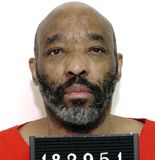 Sherman Noble
Murderer · USA · 1985
Sherman Noble was a death row inmate in Kentucky. He died in prison on October…
4 victims
Sherman Noble
Murderer · USA · 1985
Sherman Noble was a death row inmate in Kentucky. He died in prison on October…
4 victims
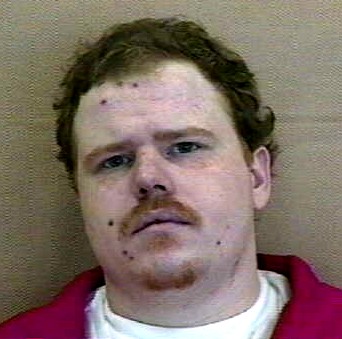 Frank Ray Chandler
Murderer · USA · 1992
Frank Ray Chandler was executed by lethal injection in North Carolina on Novemb…
1 victim
Frank Ray Chandler
Murderer · USA · 1992
Frank Ray Chandler was executed by lethal injection in North Carolina on Novemb…
1 victim
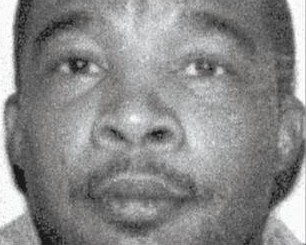 Ronald Watkins
Murderer · USA · 1988
Ronald Watkins was convicted of capital murder and robbery for the killing of W…
1 victim
Ronald Watkins
Murderer · USA · 1988
Ronald Watkins was convicted of capital murder and robbery for the killing of W…
1 victim
 Lem Tuggle
Murderer · USA · 1971
Lem Tuggle was executed by lethal injection in Virginia on December 12, 1996. L…
2 victims
Lem Tuggle
Murderer · USA · 1971
Lem Tuggle was executed by lethal injection in Virginia on December 12, 1996. L…
2 victims
- Gender
- male
- Country
- USA
- Location
- Multnomah County, Oregon, USA
- Date of birth
- August 2, 1954
- Age at first offence
- 38
- Characteristics
- to avoid arrest, robbery, kidnapping, rape?
- Victim profile
- William G. Hall, 33 (security guard)
- Method of murder
- Shooting
- Date(s) of murder
- August 22, 1992
- Years active
- 1992
- Date of arrest
- Same day
- Status
-
Sentenced to death
Sentenced to death on July 23, 1993; judgments of conviction for aggravated murder on counts 1 and 2 were reversed; judgment of conviction for aggravated murder on count 3 and the sentence of death were affirmed; case was remanded to the circuit court for further proceedings with respect to counts 1 and 2.
Case identification
Ernest Noland Lotches was tried in Oregon for conduct connected to events in Portland.
The case reached the Oregon Supreme Court for automatic and direct review from convictions for aggravated murder and a sentence of death.
Timeline
- August 22, 1992 — At about 2:30 in the afternoon, defendant approached Hedges in O'Bryant Square near downtown Portland, pretended to be a police officer, frisked Hedges, slapped the back of Hedges’s motorcycle helmet, shouted obscenities, and was followed by Portland Guides including Cramer, Edwards, Calderon, and Riley.
- August 22, 1992 — William Hall, an armed EID officer, approached defendant; defendant ran north toward Alder Street; shots were fired; Hall and defendant exchanged gunfire; defendant shot at Edwards; Hall engaged defendant in an exchange of gunfire; defendant fled down Fourth Avenue with Hall in pursuit.
- August 22, 1992 — Defendant approached Keaton in a car with her 9-year-old grandson; pointed a gun at her head through a half-open window and said something to the effect that “You are going to take me somewhere.” Keaton responded “No way” and the car stalled; defendant aimed at Hall; Hall pulled Keaton’s grandson to safety; defendant shot Hall twice, one shot entered and exited Hall’s wrist and the other fatal shot entered Hall’s arm, traversed his lungs, and penetrated his heart.
- August 22, 1992 — Defendant fled down Stark Street, hid his gun behind his back, then approached a pickup truck at a traffic light on Washington Street, pointed a gun at the driver’s head, and ordered the occupants out; he drove off heading the wrong direction down Third Avenue, swerved to avoid oncoming cars, drove over Burnside Bridge, turned onto Martin Luther King Boulevard, and attempted to turn onto Southeast Ankeny but was unable to negotiate the turn, causing the truck to jump the curb, hit a parked car, and stop after crashing into other parked cars in an adjacent used-car lot.
- August 22, 1992 — A customer who saw the crash went to aid defendant; defendant forced open the driver-side door and answered no when asked if he was hurt; defendant replied, “Hell, yes, I got to get out of here.”
- August 22, 1992 — Marked police cars arrived; Officer Elliot pulled up after being flagged down; after Elliot stopped, defendant pulled out his gun, aimed at Elliot, began walking toward him, assumed a combat stance with the gun in front of him with two hands, and fired at Elliot as Elliot backed up; a second shot narrowly missed Elliot and struck the driver’s seat of the police car; defendant began running toward the corner of Ankeny and Grand Avenue, attempted unsuccessfully to commandeer one vehicle, then got into a second apparently abandoned vehicle.
- August 22, 1992 — Elliot, now armed with a shotgun, approached defendant and ordered him to drop his gun; surrounded by other officers, defendant threw down his gun and surrendered; after custody defendant agreed to give blood and urine samples; experts later extrapolated a blood-alcohol content of approximately .17 percent at the time of the crimes.
- March 6, 2000 — Argued and submitted before the Oregon Supreme Court.
- July 23, 1993 — Defendant was sentenced to death.
- 1997 — Former ORS 163.150(1)(g) was referenced.
- 1999 — OR Laws 1999, chapter 1055, section 1 repealed former ORS 163.150(1)(g).
- 2000 — The Oregon Supreme Court reversed the aggravated murder convictions on counts 1 and 2 and affirmed the aggravated murder conviction on count 3 and the sentence of death; the case was remanded for further proceedings with respect to counts 1 and 2.
Background
Defendant was tried following events occurring in Portland.
After a jury trial, the trial court entered a judgment finding defendant guilty of three counts of aggravated murder, one count of attempted aggravated murder, one count of attempted murder, one count of assault in the first degree with a firearm, one count of robbery in the first degree, and one count of felon in possession of a firearm, and imposed a sentence of death.
Defendant pled not guilty to all charges.
After the jury trial, the jury acquitted defendant of one count of attempted murder and convicted on all the other counts.
After a penalty-phase proceeding, defendant was sentenced to death.
Defendant requested a new trial and assigned 20 claims of error, all relating to the guilt phase of his trial.
The offence
Charges in the ten-count indictment
Defendant was charged in a ten-count indictment for conduct connected to the events involving Hall, Elliot, Edwards, Riley, and the driver of the truck.
Aggravated murder counts (intentionally killing William Hall)
Counts 1 through 3 charged aggravated murder for intentionally killing Hall, as follows:
- Count 1: aggravated murder for intentionally killing Hall “during the course of and in the furtherance of and in immediate flight from said crime” of attempted robbery in the first degree.
- Count 2: aggravated murder for intentionally killing Hall “in the course of and in the furtherance of and in immediate flight from said crime” of attempted second-degree kidnaping.
- Count 3: aggravated murder for intentionally killing Hall “in an effort to conceal the identity of the perpetrator of the crime of Attempted Murder.”
Other charges
The other seven charges concerned defendant’s conduct with respect to Elliot, Edwards, Riley, and the driver of the truck.
Events leading to the charges (summary of facts)
At about 2:30 in the afternoon on August 22, 1992, defendant approached Hedges in O'Bryant Square near downtown Portland.
While bantering back and forth with Hedges, defendant pretended to be a police officer and frisked Hedges. While Hedges was bending over, defendant slapped Hedges on the back of the motorcycle helmet. The slap was unprovoked.
Hedges stood up and asked defendant what he was doing. Defendant then began shouting obscenities at Hedges.
Hedges made an effort to calm defendant; defendant joined a friend sitting on a nearby retaining wall. Hedges kept an eye on defendant and, when defendant and his friend walked away, Hedges followed him.
After a few blocks, Hedges saw a Portland Guide, Cramer, and told Cramer that he wanted to file a complaint against defendant. Cramer radioed to the Portland Guides headquarters and to other nearby guides that a man had been assaulted by an individual who was then near Pioneer Square. Cramer described defendant and asked for an officer to respond.
Two other unarmed Portland Guides, Edwards and Calderon, spotted defendant walking down the street and began to follow him at a distance of about half a block. They signaled to Riley, another unarmed Portland Guide who happened to be nearby, and Riley too began to follow defendant.
Defendant appeared to notice that he was being followed and increased his pace.
William Hall, an armed EID officer, approached defendant from the direction in which defendant was walking. Riley also converged on defendant. Hall called out to defendant, stating that he would like to have a word with him.
Defendant then threw his hand up toward Riley in an apparent effort to strike him. Riley blocked defendant’s swing. Defendant ran north toward Alder Street. Hall, Riley, Edwards, and Calderon began running in pursuit.
There was some dispute about precisely what happened next, but, by all accounts, defendant slowed down and Hall began yelling, “He's got a gun. Get down.”
Shots were fired. Most witnesses to the episode could not say who shot first or even where Hall was when the first shot was fired. Riley testified that he saw defendant pull a gun out of a paper bag and that no shots had been fired before that moment. A bystander, Gates, testified that she heard a shot and then saw defendant pull a gun out of the back of his pants.
During the incident, defendant raised his gun, aimed it directly at Edwards, and shot at her. Bullets hit her in the left breast and in the right arm, fracturing a bone and requiring surgery and the insertion of a metal plate.
Riley dragged the wounded Edwards into a nearby shop and ran for cover in the back of the store.
Hall engaged defendant in an exchange of gunfire; two bullets fired from Hall’s gun later were recovered from inside the shop.
Defendant fled down Fourth Avenue with Hall in pursuit.
Defendant ran up to a car stopped at a traffic light in which Keaton and her 9-year-old grandson were riding. Defendant came up from behind Keaton, pointed a gun at her head through the half-open window, and said something to the effect that “You are going to take me somewhere.”
Keaton responded, “No way,” and stepped on the accelerator. The car stalled and Keaton immediately began trying to unfasten her grandson's seatbelt and shove him out the car door.
While Keaton was fumbling with the seatbelts, she looked up and saw Hall standing in front of a pillar along the street on the opposite side of her car, yelling at defendant, directing him to get away from the car and “leave the innocent alone.”
According to Keaton, defendant then ceased his efforts to get into her car and directed his attention to Hall.
Meanwhile, the grandson unlocked the car door, got out, and ran toward where Hall had been standing.
Keaton took the keys out of the ignition and threw them down a sewer grate, then closed her eyes and waited.
Defendant began shooting in Hall’s direction. Hall left the cover provided by the pillar and pulled Keaton’s grandson to safety.
Hall also shot out two of the tires on Keaton’s car and pushed two transients out of the line of fire.
In the skirmish, defendant shot Hall twice. One shot entered and exited Hall’s wrist. The other fatal shot entered Hall’s arm, traversed his lungs, and penetrated his heart.
Defendant, himself uninjured, then fled down Stark Street, hiding his gun behind his back.
Defendant approached a pickup truck stopped at a traffic light on Washington Street. Reaching through the window of the truck, he pointed his gun at the driver’s head and ordered the occupants out of the vehicle. They complied.
Defendant then drove off, heading the wrong direction down Third Avenue, a one-way street. He sped down that street, swerving to avoid oncoming cars. He then drove over Burnside Bridge and turned onto Martin Luther King Boulevard.
Defendant next attempted to turn onto Southeast Ankeny, but he was driving too fast and was unable to negotiate the turn. The truck jumped the curb, hit a parked car, and ultimately came to a stop after crashing into some other parked cars in an adjacent used-car lot.
A customer at the car lot who saw the crash went to aid defendant. He forced open the driver-side door of the truck and asked defendant if he was hurt.
Defendant answered no and made an effort to get out of the truck from the passenger side. The customer asked defendant if he was going to run, and defendant replied, “Hell, yes, I got to get out of here.”
The customer stepped aside, and defendant slid back to the driver's side to get out. By that time, several marked police cars had arrived at the scene.
One of them, driven by Officer Elliot, pulled up in the vicinity of the truck after having been flagged down by an individual in front of the car lot.
After Elliot stopped, defendant reached back into the truck and pulled out his gun. Defendant turned and aimed the gun in Elliot’s direction and began walking toward him.
Defendant stopped, assumed a combat stance in which he squared off and held the gun in front of him with two hands.
When Elliot realized what was happening, he leaned away from defendant and put his car in reverse.
Defendant fired at Elliot as he was backing up.
Defendant then aimed and fired a second shot at Elliott that narrowly missed him and struck the driver's seat of the police car.
After shooting at Elliot, defendant began running toward the corner of Ankeny and Grand Avenue.
He attempted unsuccessfully to commandeer one vehicle, and then succeeded in getting into a second one, which someone apparently had abandoned in the middle of the street.
While defendant tried to start that car, Elliot, now armed with a shotgun, approached defendant and ordered him to drop his gun.
Defendant briefly appeared to consider fleeing, but by that time he was surrounded by other officers.
He threw down his gun and surrendered.
After he was taken into custody, defendant agreed to give blood and urine samples. Experts later extrapolated from those samples that defendant probably had a blood-alcohol content of approximately .17 percent at the time of the crimes.
Investigation and arrest
After defendant’s arrest, he agreed to give blood and urine samples.
Experts later extrapolated that defendant probably had a blood-alcohol content of approximately .17 percent at the time of the crimes.
Trial
Jury trial and verdicts
Defendant was charged in a ten-count indictment.
The first three counts discussed below charged defendant with aggravated murder for intentionally killing Hall:
- Count 1: intentionally killing Hall during the course of and in the furtherance of and in immediate flight from attempted robbery in the first degree.
- Count 2: intentionally killing Hall during the course of and in the furtherance of and in immediate flight from attempted second-degree kidnaping.
- Count 3: intentionally killing Hall in an effort to conceal his identity as perpetrator of an attempted murder.
After a jury trial, defendant was acquitted of one count of attempted murder and convicted on all other counts.
Penalty phase
Appeals
Oregon Supreme Court: automatic and direct review
The Oregon Supreme Court reviewed the judgments of conviction and the sentence of death imposed by the Multnomah County Circuit Court.
Judgment dispositions:
- The judgments of conviction for aggravated murder on counts 1 and 2 were reversed.
- The judgment of conviction for aggravated murder on count 3 and the sentence of death were affirmed.
- The case was remanded to the circuit court for further proceedings with respect to counts 1 and 2.
- Kulongoski, J. did not participate in the consideration or decision of this case.
Sufficiency and clarity of the indictment; jury unanimity instructions
Defendant argued that the first three counts of the indictment for aggravated murder were impermissibly vague.
The decision addressed jury instructions under State v. Boots, concluding that the aggravated murder instructions were not adequate because they failed to ensure jury unanimity concerning the identity of the victim of the alleged underlying felony and other attendant circumstances applicable to each count.
The court held:
- Trial court error occurred in failing to instruct the jury fully regarding the three counts of aggravated murder.
- The error was not harmless with respect to counts 1 and 2.
- The error was harmless with respect to count 3.
The convictions for aggravated murder on counts 1 and 2 were reversed and remanded for further proceedings.
Jury selection issues
Defendant raised three assignments of error about jury selection.
- Rejection of defendant’s for-cause challenge to one juror, Nunez, who had expressed personal views in favor of the death penalty. The court found no error.
- Excusal for cause of two prospective jurors, Warren and Robotham, who expressed personal opposition to the death penalty. The court found no error.
- Improper vouching by the prosecutor during voir dire by stating he “anticipated” defendant would be found guilty and there would be a penalty phase. The court did not consider the claim because it was not preserved and because it rejected that precise claim in State v. Nefstad.
The decision included verbatim statements from the voir dire of Warren and Robotham, and quoted jury-related exchanges including:
- Warren: “I wouldn't think I could make a decision if someone should die or not. I feel that's God's decision. If it should be, it should be. But I don't think I could ever condemn somebody to death. I don't think I could.”
- Warren quoted court ruling language: “I am going to grant the state's motion despite the answer to the last question. It is pretty apparent to me that Ms. Warren's beliefs have changed since she did fill out the questionnaire. Her beliefs are such that they would substantially interfere with her ability to decide the questions that will be put to her in the penalty phase of the case.”
- Robotham: “[a]side from the fact that an innocent person could be convicted, I am basically opposed to the State taking a life.”
- Robotham: “Well, I guess all I could say is I make an effort to follow the law. I think a completely open mind is a myth. * * * * * "But that's all -- I would make an effort to give an impartial judgment.”
- Robotham: “Q. [I]f you felt the State had proven beyond a reasonable doubt on all four questions yes, could you vote yes on all four questions based upon evidence and the instructions? "A. Well, again, I think I could.”
- Robotham: “Q. You would try your hardest? "A. Again, I don't feel comfortable to say yes or no. I think I could. ”
- Robotham: “Q. So basically you are saying, given everything we discussed, all the questions [the prosecutor] asked you and I asked you and the judge told you, do you think you can be fair to both sides in this case given the issues of the death penalty? "A. Yes.”
Right to testify
The decision addressed defendant’s claim that the trial court denied his constitutional right to testify.
The Oregon Supreme Court concluded the trial court was entitled to conclude defendant waived his right to testify at the close of the defense case.
The decision stated:
- Defendant remained silent at critical moments while defense counsel and the court discussed resting the defense case.
- The trial court did not deny defendant the right to testify.
Evidentiary matters
The decision addressed multiple evidentiary arguments, including:
Exclusion of an audiotape: The trial court excluded an audiotape of Gates’s interview with a defense investigator. The Supreme Court concluded any error was harmless beyond a reasonable doubt. The record included testimony that “Oh, he's got a gun” preceded the first shot.
Exclusion of testimony as to victim’s character: The trial court excluded Hancock’s testimony about specific instances of Hall’s past conduct when Hancock had been Hall’s supervisor when Hall worked as a police officer for the City of Boardman. The Supreme Court agreed with exclusion.
Limiting testimony regarding insanity defense: The trial court limited Jurdem’s testimony to his opinion about the doctors who were called. The Supreme Court held the proffered bias evidence of non witnesses was not relevant and excluded letters as hearsay under OEC 801(3).
Admission of Hall’s last words: Calderon testified that after Hall had been shot and before dying Hall said:
“I don't want to die. * * * I love my kids. I love my family, and I really love my wife. I don't want to die.”
The Supreme Court concluded the statement was not hearsay as defined in OEC 801(3) because the matter asserted was not at issue as truth of the matter asserted; it was offered for a purpose other than establishing truth.
- Admission of documents: The trial court admitted documents including:
- a list of books and pamphlets on weapons, combat tactics, terrorist activities, and false identification that defendant wanted to purchase;
- an order of post-prison supervision forbidding defendant from carrying weapons;
- a letter written by defendant to prison officials in early 1992 and a response letter stating the reason for ineligibility was failure to complete a drug and alcohol treatment program.
The Supreme Court rejected arguments on harmlessness.
Prosecutorial conduct; mistrial
The Supreme Court addressed defendant’s motion for mistrial after psychiatrist Dr. Plazak testified that one of the prosecutors made gestures indicating disbelief such as head-shaking, scoffing, and laughing toward a juror.
The trial court denied the motion for mistrial. The Supreme Court found no abuse of discretion.
Duress instruction
Defendant argued jury instructions concerning duress applied to aggravated murder counts based on robbery and attempted kidnaping. The Supreme Court did not consider those assignments because convictions on those counts were reversed.
Sufficiency of evidence
The Supreme Court addressed sufficiency arguments.
- It held there was sufficient evidence to support convictions on counts 5, 6, and 8.
- It did not consider sufficiency for counts 1 and 2 because those convictions were reversed.
- It reviewed count 3 and held sufficient evidence supported conviction on count 3, stating that the jury could infer defendant killed Hall to avoid capture and conceal his identity as perpetrator of attempted murder.
Remaining assignments of error
The Supreme Court considered all remaining assignments and arguments and held no error occurred as claimed in any of the remaining assignments not discussed in the opinion.
Other details
Trial court proceedings and described legal arguments
Defendant challenged:
- the sufficiency/vagueness of aggravated murder indictment counts;
- the adequacy of jury instructions under State v. Boots;
- jury selection decisions for cause;
- denial of the right to testify;
- evidentiary rulings including tape evidence, testimony about Hall’s character, limits on insanity-related bias evidence, admission of Hall’s last words, admission of documents;
- denial of mistrial regarding alleged prosecutorial gestures;
- jury instructions concerning duress (not reached for reversed counts);
- sufficiency of evidence.
Defendant’s age referenced in narrative
A narrative described defendant as “38 years old” in connection with the gunfire opening in the downtown business district.
Spotted an error, or have more information about this case?