Stephen Richards
Murderer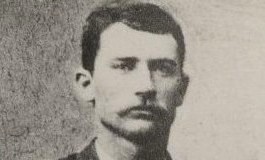 Henry Newton Brown
Murderer · USA · 1870
Henry Newton Brown — 19th century gunman; orphan; raised by relatives in Rolla,…
6 victims
Henry Newton Brown
Murderer · USA · 1870
Henry Newton Brown — 19th century gunman; orphan; raised by relatives in Rolla,…
6 victims
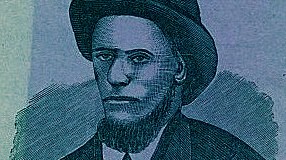 Joseph LaPage
Murderer · USA · 1874
Joseph LaPage was described as a French-Canadian trapper who donned a bearskin…
2 victims
Joseph LaPage
Murderer · USA · 1874
Joseph LaPage was described as a French-Canadian trapper who donned a bearskin…
2 victims
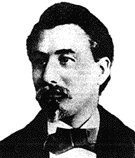 Louis Wagner
Murderer · USA · 1873
Louis Wagner had lived on Smuttynose Island with six Norwegian immigrants: Mare…
2 victims
Louis Wagner
Murderer · USA · 1873
Louis Wagner had lived on Smuttynose Island with six Norwegian immigrants: Mare…
2 victims
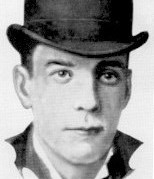 Marion Hedgepeth
Murderer · USA · 1870
Name: Marion Hedgepeth · Also known as: “Handsome Bandit,” “Debonair Bandit,” “…
2 victims
Marion Hedgepeth
Murderer · USA · 1870
Name: Marion Hedgepeth · Also known as: “Handsome Bandit,” “Debonair Bandit,” “…
2 victims
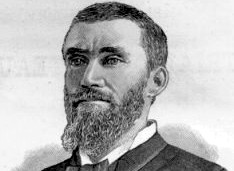 Charles Guiteau
Murderer · USA · 1881
Charles Julius Guiteau (September 8, 1841 – June 30, 1882) was an American lawy…
1 victim
Charles Guiteau
Murderer · USA · 1881
Charles Julius Guiteau (September 8, 1841 – June 30, 1882) was an American lawy…
1 victim
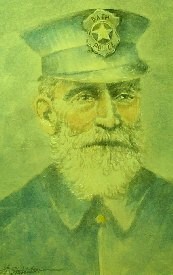 Daniel Wilkinson
Murderer · USA · 1883
Daniel Wilkinson (c. 1845 – November 21, 1885) was the last person to be execut…
1 victim
Daniel Wilkinson
Murderer · USA · 1883
Daniel Wilkinson (c. 1845 – November 21, 1885) was the last person to be execut…
1 victim
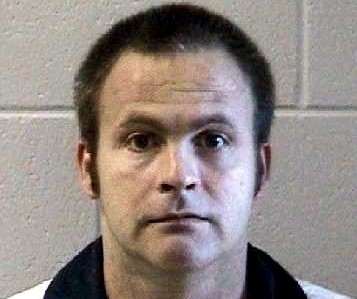 William Lipham
Murderer · USA · 1985
Name: William Anthony Lipham Age: 33 Lipham was sentenced to death on February…
1 victim
William Lipham
Murderer · USA · 1985
Name: William Anthony Lipham Age: 33 Lipham was sentenced to death on February…
1 victim
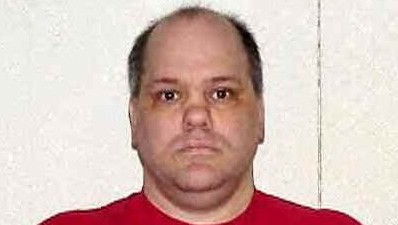 Brian Keith Moore
Murderer · USA · 1979
Brian Keith Moore was sentenced to death on November 29, 1984 in Jefferson Coun…
1 victim
Brian Keith Moore
Murderer · USA · 1979
Brian Keith Moore was sentenced to death on November 29, 1984 in Jefferson Coun…
1 victim
 Shayd Robinson
Murderer · New Zealand · 2012
Shayd Robinson was convicted of murder for stabbing Aaron Hadfield during an al…
1 victim
Shayd Robinson
Murderer · New Zealand · 2012
Shayd Robinson was convicted of murder for stabbing Aaron Hadfield during an al…
1 victim
 Fiona Donnison
Murderer · United Kingdom · 2010
Fiona Donnison was 45 years old at the time she showed up in front of local aut…
2 victims
Fiona Donnison
Murderer · United Kingdom · 2010
Fiona Donnison was 45 years old at the time she showed up in front of local aut…
2 victims
- Gender
- male
- Country
- USA
- Location
- Kansas/ Nebr aska, USA
- Date of birth
- March 1836
- Age at first offence
- 42
- Characteristics
- —
- Victim profile
- Men, women and children
- Method of murder
- Beating with axe and flatiron - St abbing with knife
- Date(s) of murder
- 1878
- Years active
- 1878
- Date of arrest
- —
- Status
-
Executed
Executed by hanging in Nebraska on January 15, 1879
Case record: Stephen Richards
Overview
Stephen Richards was executed by hanging in Nebraska on January 15, 1879.
Background
Stephen D. Richards was described as the self-confessed murderer of six persons. A Herald reporter obtained an “inside facts” assurance and accompanied law officers during the transport west. During the conversation on the train, Richards remarked that he had already given full particulars to other papers and did not wish to say anything further.
Richards gave an outline of his life. He said he was born in Wheeling, West Virginia, in March 1836. He said his father removed when Richards was about two years old. He said they later removed to Monroe, Noble County, Ohio, and lived there two or three years during the principal part of the war. He said they later removed to Jefferson County, where he remained until about three years ago, when he came west. He said his mother died Sept. 10, 1871. He said his father was a farmer and that he did not attend school very regularly.
Richards described schooling at Warren when he was between 10 and 11, and later at Oak Grove after moving to the neighborhood of M. Pleasant. He named teachers: Jesse Lloyd, John Cubby, Richard Roberts, and Johnny Burrass. He said he was stopping with Milton Peltis and fed stock for one or two winters. He said his last term was after his mother died, at Kenworthy Hoges, when he was from 16 to 18 years old.
Richards said he believed he had the same of being a quiet, preachable man and had no trouble with any one. He said he was well raised, stood in good society, went in good company, never drank, never played cards, and was never accused of any offenses of any kind. He said he worked as a carpenter with George Walker the last winter he was there and helped him build a barn.
Richards said that for the past two years he had had “no regard for anything,” that he jumped at anything that came in his way “no matter where it was or who it was.” He said he had an abject and that he “went at those things as deliberately as if I had been in a herd of stock.” He said all his crimes were done when he was “perfectly cool,” not through angry passion.
Richards said that when he was employed as an attendant in the Insane Asylum at Mt. Pleasant for nearly a year, he was an attendant for one of the most violent wards in the house. He said that affected his feeling and sympathy for mankind; he said he could stand by a man and see him die with no more feeling than he would have for a hog. He said that when he left there two years ago he didn’t care for anything and had no respect for human nature.
Richards described travel. He said that when he first struck the western prairies, the only companion he wanted was a good pair of six shooters. He said he passed through Nebraska about the last of March 1877, was five or six weeks in the State, stopped two days and a night in Omaha, and went to Denver through Colorado and back through Kansas. He said he was alone with the exception of occasional company for a day or two. He said he remained in Kansas until October 1877 and traveled through Missouri, Iowa, Minnesota, Northern Illinois, and Michigan, stopping briefly at different points.
Richards discussed arrest at Kearney. He said he was twice arrested on false charges at Kearney, but the property in the second case was found with him. He said he declined to make any explanation and was sentenced to thirty days in the county jail and costs. He said he had a further undertaking in this and effected it and made some money out of it, never regretted it. He said he was never guilty of any mean offences like stealing and was never sentenced except at Kearney Junction. He said people in Kearney Junction thought he was a pretty hard pill but that he was no small offender.
Richards said he had feared lynching. He said: “I never expected anything else for some time.” He said he did not want to be lynched until his will was made and he had given his body to “that cheeky Columbus, Ohio, doctor, who asked me for it when I was at Steubenville.” He said he expected an attempt at lynching at Kearney and that he never expected to get out of the State alive when he started. He said he traveled openly and under his own name. He said: “There were no telegrams sent down the Baltimore and Ohio R. R., and I could have gone right through to Baltimore before any telegram would have headed me off.” He said he thought it was unlikely Cap. Anderson would follow him because Anderson knew him and knew that if Anderson could get the drop on him he would have to shoot him to get him and take his chances on Richards getting the drop on Anderson. He said he would never have been taken alive with his arms.
Richards said: “When I came to Wheeling I left my weapons, as I wanted to make some calls and they would have thought I was a bad man.” He said his weapons in making calls would be in his way. He said he never expected to live to stand before the law, and he said he would never have made a statement “if I had been in the country.” He said he knew this western country and thought he knew the people well enough to be sure he would never live to get beyond Chicago. He supposed a gang would meet him at least as far east as that and string him up.
Richards denied killing from anger or quarrels. He said: “All my crimes were done when I was perfectly cool, and not through angry passion.” He said he had no grudges and never killed a man because he had a grudge against him. He said that if he had a quarrel and happened to get whipped, he would be friendly to the man the next day. He said: “I calculated that when anything serious came up I was fully able to protect myself.”
The offence (as described by Richards)
Richards gave dates and circumstances for killings he said he committed.
Killing of Peter Anderson
Richards said: “I Killed Peter Anderson, Dec. 9.” He said the incident occurred in the neighborhood “of Kearney” and that he and the victim had traveled together two or three weeks. Richards said the victim was from Hastings, Iowa, the son of a farmer near there, and that the victim’s uncle with the same name as the nephew was a small lawyer and land agent of the B. & M. R. R. He said the victim was going under an assumed name and that when the victim left Lincoln he said he was not going by his own name.
Richards said the victim wrote to his uncle for assistance but got no answer. Richards said the victim was a fellow without good education and a poor writer. Richards said he wrote several letters for the victim and that this was the furthest west the victim had been. Richards described the victim as having some religious interests and sometimes using rough language in ordinary conversation.
Richards said that they went from Hastings to Grand Island and intended to take the train there for Kearney, but that something scared Richards’ suspicions and they crossed the river and started west on the south trail. Richards said they expected to strike the B. & M. railcar near Lowell and take the train to Kearney, but found they got too far west and did not have time to get to Lowell before the train passed, so they started for Kearney. Richards said they camped that night south of the river, not far from the B. & M. Railroad.
Richards described sleeping arrangements with the victim: a buffalo robe, a couple of blankets, and a satchel each, plus other clothing the victim had. Richards said in the morning they woke up in good reason and that when they had not put on their boots, Richards made a careless remark about a trifling matter. Richards said the victim replied: “That's a d___d lie.” Richards said he told the victim: “It's a good thing you don't mean all you say,” and the victim said: “But I do mean it,” and picked up his revolver and said: “Here is something that backs all that I say,” cocked it. Richards said he looked at the victim and thought: “The fool acts as if he means to shoot,” then “skipping out my little 33 I plugged him one in the head.” Richards said the victim was about 20 years old.
Richards said he pulled the buffalo out from under the victim’s head, took the satchel, buffalo, and blankets, and started for Kearney. Richards said they arrived as the U. P. train got in and he went in with the crowd from the train. Richards said he went to the Commercial House and registered “F. A. Hoge, Denver.” He said he dressed as a herder with a big slouch hat, told the hotel man he had been through Colorado and recently came from the Pacific coast, and that he made it a point not to register the place he had come from. Richards said at that time he was thoroughly armed: he said he had his 33 and a pair of six-shooters.
Richards said that for most of the time for the last two years he had had a 32-5 shot and a pair of six-shooters and that he never carried less than a pair of six-shooters.
Killing of Mrs. Harelson and her children
Richards said: “Mrs. Harelson and her family Sunday morning, Nov. 3.” He said: “I Killed Peter Anderson, Dec. 9, Mrs. 3.” Richards said the killing of the young man in the Sand Hills was not certain and that it was “the middle of March—about the time of the Kearney races—of a Tuesday morning.”
Richards described meeting Mrs. Harelson at Kearney last summer under peculiar circumstances. He said her man had got out of jail and she seemed to give him credit for it. He said she asked a lot of them down to see her. Richards said he began a correspondence with her under one of his assumed names and that he did not want to give the name because it would bring other parties into the matter. He said Mrs. Harelson talked about letting him have the farm at different times and that it was not of much value.
Richards said he met Mrs. Harelson later at Grand Island where she was canvassing for books and chromos. He said he got the money there and was to call in September to complete the arrangement. Richards said he sent another fellow to talk with her and that he came over to the place in October. He said he had calculated to take the place October 1, but was unable to get over until the middle of the month. Richards said Mrs. Harelson was supposed to make her living by canvassing, but did not begin to do it; he said the money he paid her from time to time kept her along.
Richards said he thought best to postpone the transfer until November 1. Richards said he was over the next week and fixed things up, arranging that she was to leave the following Monday. He said she could not get her things ready to go then and that the plans were put off until the next Friday or Saturday.
Richards said Mrs. Harelson was going to Illinois to visit friends through the winter and then was coming back to the place. Richards said she was the kind of woman that “it was not necessary for her husband to have a marriage certificate.” He said he did not know if she was ever married to Harelson and said she gave him to understand she was not. He said: “I was living with her as Harelson had been.”
Richards said he first thought of killing them “Eight or nine days before I did it.” He said he had selected his companion for life and expected to bring her to the farm for a while. He said he saw that the arrangement was not going to be satisfactory and that it struck him that it would be just as well for everybody if the whole family were “of the world.” Richards said he thought about disposing of the bodies, chances of discovery, and the scheme. He said that if he was discovered to this, he would be liable to be discovered in old matters.
Richards said the neighbors thought Mrs. Harelson was going to leave the country and would not know but that she had gone as expected. Richards said they stayed up all night Thursday, October 31st, preparing to go, with Mrs. Harelson making clothes for the children. Richards said he was to take them to Hastings where they would take the train. Richards said they stayed up nearly all night Friday night and Saturday night until 3 or 4 o’clock Sunday morning.
Richards said he decided to dig a place for their remains “as close to the straw stack as I could get” and watched for a chance to prepare it. Richards said he expected they would use straw from that side and scatter it over the spot. He said he had a watch but it was not running and they had no time piece. Richards said between 3 and 4 o’clock he went out to feed the mules, took a common railroad shovel, and started digging. Richards said he had a hole about 2 by 6 and three or four feet deep in half an hour. Richards said the place had been ploughed for three crops.
Richards said he agreed to call Mrs. Harelson at half past 5 or 6. He said he went into the house, found them sleeping soundly, got the axe, and “went at the job.” Richards denied a specific claim about the baby. He said: “The statement that I dashed the baby's brains out on the floor, breaking one leg is not true.” Richards said: “I killed them all as they were sleeping.” He said Mrs. Harelson and the two oldest girls were in bed together and the baby was in the crib. Richards said he killed Mrs. Harelson first, then the second child, then the oldest one, and the baby last. He said: “There wasn't one woke and there was not a sound made.”
Richards said he only got blood on one blanket and on the pillow shams. He said he took these bedding items out with the bodies and threw them into the hole. He said he carried Mrs. Harelson’s body out first, then the two girls at one trip, and carried the baby last. Richards said if the baby’s leg was broken by him, it was when he threw the baby into the hole. Richards said he hauled in the dirt without being particular to put “the yellow under dirt at the bottom,” where it had come from. He said he presumed this led to discovery of the bodies when the neighbors searched.
Richards said he examined the house carefully and found he left no spots of blood anywhere and that the ax was clean. Richards said if any hair was found on a flat iron it was not human hair. Richards said he straightened things up, cooked and ate breakfast, and started for Hastings with his grain.
Richards described the house as a sod house about 22 or 24 by some 10 feet, with one room, and with a place left for a partition intended to be put in. He said Mrs. Harelson was to pay expenses for fixing it up. Richards said he had two breech loading guns and three six shooters, 33 loads in all.
Richards described his finances during this period. He said: “I had about $1,200 when I went down to live with her.” He said he destroyed a good deal of this when he burned papers at Mt. Pleasant, but had still the papers to the place. Richards said he thought he was dead beat when he got down to $50. He said he had been as much as $2,500. He said he played cards a good deal and did not back down for any of them, and said he made money out of cowboys and greenhorns. He said he generally had a good roll of bills, carried them to his pocket, took them all out when he wanted to pay, and felt able to care for them.
Killing of the young man in the Sand Hills
Richards said he was not so sure about killing the young man at the Sand Hills. He said it was “the middle of March—about the time of the Kearney races—of a Tuesday morning.” He said he compared ages on his birthday, which came on March 18, and that he was a few weeks the eldest. Richards said: “It was the next morning I killed him.”
Killing of Anderson (as described by Richards)
Richards said he never thought of killing old Anderson until it was done. Richards said he never poisoned or tried to poison him and that it was “not my style of takin life.” He said he heard Anderson was telling neighbors and did not feel pleasant about it. He said that when he met Anderson on the 9th of December Anderson was ugly and started calling him offensive names and accused him of trying to kill him. Richards said he slapped Anderson’s face, and that Anderson started to get a big knife laid on the table back of him. Richards said he seized a hammer which stood on the window sill and “brained him.”
Investigation, transport, and interviews
Richards was transported from Omaha west by Sheriffs Martin and Anderson, along with Richards. A Herald reporter traveled with them for “inside facts.”
During the train travel, Richards was described as affable and, in conversation, stated he had already given full particulars to other papers. As the train approached Fremont, the Herald reporter sat beside Richards. Richards said the Tribune reporter was a gentleman, and said the Times reporter was a man of no sense. Richards said: “To my answers,” said Richards, “he would say, 'Are you sure that is so' 'wasn't it this way,' or 'wasn't it that way" and I finally told him he knew so much more about these murders that the man who did them that he must have been there, and he might go ahead and write it up as he wished. I would tell him nothing more. I told him not to come too near the cell door or I would drag him through the bars and break him in two.”
Richards said he had thought that if he got into Kearney jail he would write up a full account of his life with exact dates. He said the Herald reporter should come and see him at Kearney the next day when there was not such a crowd around. Richards said: “I am not such a fool as that letter in the Chicago Times would make you think.” He said: “It was written in a hurry and in a bad light, and they tore it all to pieces, left out shame, and fixed it up to suit themselves.”
A tall, fine-looking man with iron gray hair and whiskers stood in the aisle beside the reporter during Richards’ conversation. The man asked: “Did you have no remorse after killing that woman and those little children?” Richards replied: “No, sir. They were nothing more to me than so many jack rabbits.” The man asked: “You seem to put no more value on your own life than you have on that of others. Do you feel that way?” Richards responded: “It's a thing that has to come sooner or later. I don't care when. If a nickel would set me free and I didn't have it, I wouldn't ask any friend for it.” The man then walked back to a Pullman car. The bystanders put him down as a clergyman, but it was Col. Moseby, leader of Confederate guerillas during the war.
At Silver Creek, Richards received a full seat, fixed a pillow of his overcoat, and slept “like a log” until he was awakened two miles east of Kearney to leave the train and take passage in a wagon for the rest of the route. Richards advised the Sheriff to go on, saying a big mob had gathered at Kearney and it would not be safe to take him there. Richards was safely lodged in Captain Anderson’s stone palace.
The Herald reporter was informed that Richards requested that when the reporter came, he be allowed to enter and talk with him. The Herald reporter visited the jail with Mr. John H. Roe, U. P. Land Agent at Kearney, at 11:30 p.m. Richards was behind iron bars. The conversation continued until nearly 5 o’clock.
An interview took place when the visitors were seated. The Herald reporter asked: “Well, Richards, now that you are safe in Kearney jail, are there any other crimes you want to confess or any further revelations you desire to make public?” Richards responded:
"I will try to give you exact dates of the killing of the different parties. I don't want to give anything more away at present on any parties. I think I can help others by using my information in another way. The information must come from me, for I burned up all my letters and valuable papers back at Mt. Pleasant before the eyes of the men who arrested me there. If they had been good officers or had any sand, I had letters which would have taken them straight to several parties the officers are very anxious to find. There was a large amount of correspondence with different parties, some of whom left here last spring. I had among the bundle, too, papers on a bank in Cheyenne, which I received from other parties, and which were no good for me to present as any one. I had a big acquaintance and no extensive correspondence, both in the Southwest and Northwest with parties who got my name somehow and wrote me. I know where Underwood and Harelson are, who escaped from jail here last spring, and if the Ohio officers had been smarter they could have had those men here as soon as I was here. I don't want to make outside parties any trouble, and I don't want to make Cap. (Sheriff Anderson) any. I could have reached some of my friends out here, and have had an attempt made to cut me loose, but I knew the result would be only a bloody battle with doubtful results. I could have got help to fight almost anywhere. Parties came into Steubenville, O., while I was under arrest, talked with me and offered to send telegrams for me. I could, if I wanted to, give away a good many men. I came here a year ago for a particular purpose. After the parties got out of jail I expected to be arrested for doing it."
The reporter asked: “Was it your work?” Richards replied:
"I was more interested in the matter than anybody else. I looked at the jail and found out what the chances were. I won't tell you how it was done. I have expected my arrest almost any day for the last two years. Every time I struck the railroad I expected to be arrested. I saw detectives that are known all over the country at times when I felt pretty sure they were looking for me. I saw men that I had seen in Kansas, and in the Indian Territory. I met one detective I knew here last spring. He was not certain of me, but entered into conversation with me, and finally asked me where I had traveled. I told him he seemed inquisitive, and must be in a d___d hurry to get acquainted. I have been spotted many and many a time, but I didn't hide myself or try to keep out of the way. I changed my beard, moustache, and side whiskers more or less, occasionally and changed my dress. I never layed down to sleep at night without thinking that I might be awakened by an officer with a warrant. I never expected to live to stand before the law, or I should never have made a statement. I knew this western country, and I thought I knew the people well enough so that I could be sure I would never live to get beyond Chicago. I supposed a gang would at least meet me as far east as that, and string me up. Well, it's only a matter of time, and one arrangement will suit me as well as another."
The reporter asked: “Will you have any counsel?” Richards replied:
"What good would counsel do me? I shall tell the same story in court that I tell outside. Judge Goslin was down to see me this morning about the preliminary examination. Of course I can demand on if I wish, which must take place in Kearney County, but for some reason the officers don't seem to think it's very safe to take me there. I told Judge Goslin if I had $100,000 I would not turn a nickel to clear myself. I told him, too, I didn't think it was worth while to plead anything but guilty, and he seemed to agree with me. I told him he could do as he pleased about a preliminary examination; I didn't care for any and wouldn't ask any. He told me then there would be none, and this is the arrangement. I have had the name all my life of being perfectly truthful and have never made any but a truthful statement of facts. You will find that what I have told regarding these matters is true. I have not since I came West allowed any man seriously to call me a liar. There are some epitaphs too, I won't allow a man to call me. I never had any grudges, and never killed a man because I had a grudge against him. If I had a quarrel with a man and happened to get whipped by him I was just as friendly to him the next day. I calculated that when anything serious came up I was fully able to protect myself. When I was traveling in Kansas a year and a half ago a couple of men met me one night and after parleying a little one; drew a revolver on me, and ordered me to hand over my money. I said, "I suppose that means a man may as well shove down his hand and get it" and in a second I had the drop on him and the other man rode away. The first man, as near as I can remember, stayed about where he was for some time. The boys always thought in those days that I was a good man to "tie to," but I didn't court the company of rough men. I sometimes used to stand by and see fair play, sometimes took a little part myself, and they all knew I was a good shot and able to care for myself. I had some "el?'n tips," close calls, but which didn't amount to anything. Two years ago next spring I got that big scar on my head, that you can feel running along the right side for a couple of inches. I was traveling with some Texas boys from the southwest when I received that blow. We were 75 miles northwest of Cheyenne. None of us knew where it came from. When Captain Anderson searches my trunk he will find an old hat with four bullet holes in it. There were six of us traveling in south-easter Colorado together when that happened. We got into trouble, and I "bucked" against the rest of the crowd. I tell you there was a cloud of smoke around me for a minute. I have known several of the U. P. train robbers, and know the whereabouts of some now."
On assumed names, the reporter asked: “What names have you passed under out here?” Richards replied:
"I took the name of F. A. Hoge first because I had a lady friend married, who was living near Kearney, and whom I didn't want to see. I was commonly known by the name of "Dick" and also "Dee," from my second initial. I registered at different times under the names, George Gallagher, D. J. Roberts, and Wm. Hudson, not all in Nebraska. I received a great deal of correspondence under the name D. J. Roberts, and afterward under the names of J. Littleton and W. A. Littleton. I have a good many letters in my trunk received under these assumed names, of which the envelopes are burned."
On the requested murder dates, the reporter asked for dates of the murders of Peter Anderson, Mrs. Harelson and her children, and the young man in the Sand Hills. Richards said: “I can after looking at a calendar.” He then said: “I Killed Peter Anderson, Dec. 9, Mrs. 3.” He said the young man at the Sand Hills was “middle of March” and “next morning.”
The reporter asked: “Tell me the circumstances about this first murder in the neighborhood?” Richards answered with the account of the young man. The reporter then asked: “Did his people know where he was?” Richards replied: “I think not.”
When asked about killing Mrs. Harelson’s family, the reporter asked: “Will you give the details of the Harleson Murder?” Richards described correspondence, arrangements, the trip plan to Hastings, the preparations, and the killing while sleeping, and also denied claims about the baby’s brains being dashed on the floor. Richards said he killed the family as they were sleeping and described what he had left behind.
On Anderson, when asked: “How did you kill Anderson?” Richards responded with the hammer killing account.
The narrative included additional incidents. Richards said that when traveling in Kansas a year and a half ago two men met him, drew a revolver, ordered him to hand over his money, and he replied: “I suppose that means a man may as well shove down his hand and get it,” then he had the drop on them.
The narrative described Richards’ physical details and conduct during conversation. It stated that Richards was described as “a cool, deliberating, scheming murderer,” and described his appearance and mannerisms, including a constant smile that changed to a hunted look. It also noted that Richards had large hands and feet and that his wrists required a larger handcuff than any man the sheriff had in custody before.
Arrest and transport to Kearney jail
Stephen D. Richards was safely jailed at 9:45 p.m. on December 28 in Kearney, Nebraska. Sheriffs Anderson and Martin received dispatches indicating all quiet in Kearney and later that a crowd was gathering. Sheriff Anderson arranged for a boy to meet him with a wagon two miles east of Kearney Junction.
The deputy sheriff, Lew Johnson, met the party at Buds station four miles east of Kearney and reported a crowd of upwards of two hundred. Conductor Kelley stopped the train at a point two miles east and Richards was taken off, still securely shackled and handcuffed and placed in a wagon. Sheriff Martin and Deputy Johnson accompanied.
Sheriff Anderson went to Kearney and responded to questions by stating that Martin stopped off with Richards at Grand Island and that Martin would arrive the next day. Much disappointment was shown by the crowd. Sheriff Martin landed Richards safely in jail. Richards manifested indifference and said he had as soon died one way as another.
Col. Mosby was on the train and interviewed Richards at some length about his indifference. Richards talked continuously from Omaha to Central City, answering questions, and he slept soundly from Silver Creek until awakened to leave the train.
Outcome and status
Richards was executed by hanging in Nebraska on January 15, 1879.


Spotted an error, or have more information about this case?