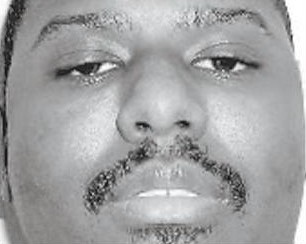
Christopher Goins
Mass murderer Gameel Al-Batouti
Mass murderer · USA · 1999
Gameel Al-Batouti (also rendered “Gamil ElBatouty” or “El Batouty” in U.S. offi…
216 victims
Gameel Al-Batouti
Mass murderer · USA · 1999
Gameel Al-Batouti (also rendered “Gamil ElBatouty” or “El Batouty” in U.S. offi…
216 victims
 Timothy McVeigh
Mass murderer · USA · 1995
Timothy James McVeigh (April 23, 1968 – June 11, 2001) was a United States Army…
168 victims
Timothy McVeigh
Mass murderer · USA · 1995
Timothy James McVeigh (April 23, 1968 – June 11, 2001) was a United States Army…
168 victims
 Julio Gonzalez
Mass murderer · USA · 1990
Julio Gonzalez was sentenced to 174 twenty-five-year sentences (a total of 4,35…
87 victims
Julio Gonzalez
Mass murderer · USA · 1990
Julio Gonzalez was sentenced to 174 twenty-five-year sentences (a total of 4,35…
87 victims
 David Burke
Mass murderer · USA · 1987
David Augustus Burke (May 18, 1952–December 7, 1987) was an employee of USAir,…
43 victims
David Burke
Mass murderer · USA · 1987
David Augustus Burke (May 18, 1952–December 7, 1987) was an employee of USAir,…
43 victims
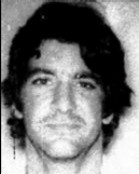 George Jo Hennard
Mass murderer · USA · 1991
George Jo Hennard carried out a mass killing at a Luby’s Cafeteria in Killeen,…
23 victims
George Jo Hennard
Mass murderer · USA · 1991
George Jo Hennard carried out a mass killing at a Luby’s Cafeteria in Killeen,…
23 victims
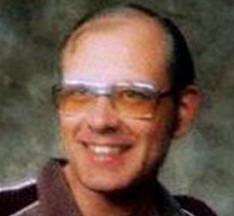 James Huberty
Mass murderer · USA · 1984
James Oliver Huberty was a 41-year-old unemployed security guard. He was born i…
21 victims
James Huberty
Mass murderer · USA · 1984
James Oliver Huberty was a 41-year-old unemployed security guard. He was born i…
21 victims
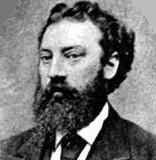 Henry Wainwright
Murderer · United Kingdom · 1874
Henry Wainwright was executed by hanging outside Newgate on 21st December 1875.…
1 victim
Henry Wainwright
Murderer · United Kingdom · 1874
Henry Wainwright was executed by hanging outside Newgate on 21st December 1875.…
1 victim
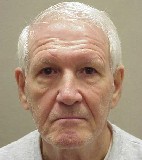 Robert Reldan
Murderer · USA · 1974
Name: Robert Reldan Robert Reldan was sentenced to life in prison on two counts…
8 victims
Robert Reldan
Murderer · USA · 1974
Name: Robert Reldan Robert Reldan was sentenced to life in prison on two counts…
8 victims
 Perry Samuel
Murderer · United Kingdom · 2006
Perry Samuel was sentenced to life in prison (minimum 35 years) on March 8, 200…
2 victims
Perry Samuel
Murderer · United Kingdom · 2006
Perry Samuel was sentenced to life in prison (minimum 35 years) on March 8, 200…
2 victims
 Emma Wilson
Murderer · United Kingdom · 2011
Emma Wilson was 25 when she was sentenced to life in prison with a minimum of 1…
1 victim
Emma Wilson
Murderer · United Kingdom · 2011
Emma Wilson was 25 when she was sentenced to life in prison with a minimum of 1…
1 victim
 Jeffrey Hutchinson
Mass murderer · USA · 1998
Jeffrey Hutchinson was born on 11/06/62. On May 24, 1999, Hutchinson was diagno…
4 victims
Jeffrey Hutchinson
Mass murderer · USA · 1998
Jeffrey Hutchinson was born on 11/06/62. On May 24, 1999, Hutchinson was diagno…
4 victims
- Gender
- male
- Country
- USA
- Location
- Richmond, Virginia, USA
- Date of birth
- November 5, 1973
- Age at first offence
- 21
- Characteristics
- serial rapist, drug dealer, mentally ill
- Victim profile
- James Nathaniel Randolph Jr., 35; Daphne Jones, 29; and 3 of Jones' children - Nicole, 9; David, 4; and Robert, 3
- Method of murder
- Shooting ( .45-caliber Glock pistol)
- Date(s) of murder
- October 4, 1994
- Years active
- 1994
- Date of arrest
- November 17, 1994
- Status
-
Executed
Executed by lethal injection in Virginia on December 6, 2000
Case name and identification
Christopher Goins
Timeline
- October 14, 1994 — Christopher Goins and his friend Barry Scott arrived at the home of Tamika Jones, where Tamika and the members of her family were present; shots were fired and multiple family members were killed or wounded.
- November 18, 1994 — New York City police officers arrested Christopher C. Goins, 20, and Monique Michelle Littlejohn without resistance in Flatbush, Brooklyn; Virginia authorities sought extradition.
- July 20, 1995 — Christopher Goins was on death row.
- June 13, 1995 — A jury in the Circuit Court of the City of Richmond convicted Christopher C. Goins on one count of capital murder for the killing of Robert Jones, four counts of first degree murder, two charges of malicious wounding, and seven counts of illegal use of a firearm.
- July 1995 — Christopher C. Goins was sentenced to death for the capital murder of Robert Jones.
- April 19, 1996 — The Supreme Court of Virginia affirmed his convictions by published opinion.
- October 7, 1996 — The Supreme Court denied his petition for a writ of certiorari.
- December 6, 1996 — Goins, through newly appointed counsel, filed a petition for a writ of habeas corpus in the Supreme Court of Virginia.
- December 26, 1996 — Goins filed an amended petition to comply with a fifty-page limit.
- May 5, 1997 — The Supreme Court of Virginia dismissed the amended petition.
- September 5, 1997 — Goins filed a motion in the Eastern District of Virginia seeking a stay of execution and appointment of counsel for a federal habeas corpus petition.
- September 11, 1997 — The district court stayed his execution and granted the motion for appointment of counsel.
- January 7, 1998 — Goins filed a motion seeking appointment of experts and an investigator; the district court denied it without prejudice.
- February 17, 1998 — Goins filed his application for a writ of habeas corpus in the district court, asserting thirty-six separate grounds for relief.
- 1999 — The district court rejected the claims and denied habeas corpus relief.
- August 24, 1999 — The district court denied a certificate of appeal-ability.
- August 31, 2000 — The 4th U.S. Circuit Court of Appeals rejected Goins’s appeal and denied a certificate of appealability and dismissed the appeal.
- December 6, 2000 — A dec. 6 execution date was set; Christopher Goins was executed by lethal injection in Virginia; he was pronounced dead at 9:04 p.m.
Background
Tamika Jones was 14 years old when she was seven months pregnant with Christopher Goins’ child. Goins was 20 at the time of the crime.
Goins was raised by his mother, who frequently used drugs in the presence of Goins. During his childhood, Goins had virtually no positive adult role models in his family. His mother and aunt were drug abusers, another aunt died of AIDS contracted through intervenous drug use, and he had an uncle who served time in prison. Because his mother abused him, at the age of 12 Goins was forced to move to New York to live with his grandmother.
Mitigating evidence was presented by Goins’s mother’s sister, Paulette Goins Dickerson, who testified that:
"Goins' mother never held, hugged, or nurtured any of her children. According to Dickerson [his aunt], Goins was devastated when his grandmother died, because she was the only person who had shown him any love."
Goins’s cousin, Leah Butler, testified that she had lived briefly in the same household with Goins and had observed his mother use drugs and neglect her children. Butler also testified that Goins was a caring, "giving" man. Butler’s son, Phillip, age six, testified that he liked Goins, and that Goins would often play games with him and bring him candy.
During the penalty phase, the Commonwealth offered testimony from Detective John J. Riani of the Henrico County Police Department regarding an encounter in February 1994 when Riani found 55.35 grams of crack cocaine in a bag inside Goins’s coat pocket. Riani testified that the cocaine had a street value of approximately $5,500. Riani arrested Goins for possession of cocaine with intent to distribute and testified that Goins told him he was addicted to crack cocaine. A capias was issued after Goins never appeared for trial, and the cocaine charge and capias remained outstanding at the time of the present offenses.
The offence
On the morning of October 14, 1994, Christopher Goins and his friend Barry Scott arrived at the home of Tamika Jones. Tamika and six other members of her family were present. Tamika was seven months pregnant with Goins’ child and had recently returned from the hospital after receiving treatment for complications related to the pregnancy. When Scott attempted to show Goins an ultrasound photograph of the fetus, Goins refused to look and became angry.
Tamika saw Goins in the living room and was in her bedroom when she later heard him participating in a conversation in the kitchen. The conversation was interrupted by the sound of gunfire. Tamika stated that the shots were fired rapidly, followed by screams, crying, and the sound of a single set of footsteps in the hall. Tamika stated she heard more shots and saw "flashes in the hall."
Goins appeared in the doorway of Tamika’s bedroom and shot her nine times. He also shot her 21-month-old sister, Kenya, whom Tamika had attempted to shield with her body. When Tamika believed that Goins had left the apartment, she telephoned "911" for emergency assistance. Tamika told the operator, "Yes. He shot them too." The operator asked if anyone was with her, and Tamika responded: "Yes. He shot them too." City of Richmond police arrived and determined that all the members of the Jones family had been shot; only Tamika and Kenya survived.
In the kitchen, police found the body of Tamika’s four-year-old brother, David, as well as the bodies of Tamika’s parents, Daphne Jones and James Randolph, Jr. In one of the bedrooms, police found the bodies of Nicole Jones, Tamika’s nine-year-old sister, and Robert Jones, Tamika’s three-year-old brother.
Victims and injuries
The record described these victims as:
- James Randolph, Jr.
- Daphne Jones
- Nicole Jones
- David Jones
- Robert Jones
- Tamika Jones
- Kenya (Tamika’s 21-month-old sister)
Daphne Jones was shot four times: twice in the head, once in the left wrist, and once in the right leg. The two gunshot wounds to her head were lethal, and one showed evidence of "stippling," consisting of burned and unburned gun powder, indicating that the gun was fired within a few feet of her head.
James Randolph, Jr. was shot nine times: twice in the head, three times in the left arm and chest, once in the abdomen, once in the right arm, once in the left leg, and once on the chin. Four wounds were lethal. The evidence showed that some shots were fired from less than "arm's length" and other shots were fired after Randolph had fallen to the ground.
David died as a result of a lethal gunshot wound to the head, which also showed evidence of stippling.
Nicole suffered two lethal gunshot wounds: one bullet passed through her heart and a lung, and the other was fired into her head at close range.
Robert sustained two lethal gunshot wounds to his head.
Kenya sustained a wound, measuring between two and three inches long, through her left wrist.
Tamika was shot three times in the abdomen, three times in her thighs, once in her right hand, once in the neck, and once in her left shoulder. Her obstetrician performed a hysterectomy after the shootings because multiple bullets had perforated her uterus and her right ovary and fallopian tube. When removed from the uterus, the fetus had sustained a gunshot wound to its face and was dead.
Gunshot and forensic evidence
Police retrieved from the kitchen seven .45 caliber cartridge casings, various bullets, and bullet jacket fragments. In the bedroom where Nicole and Robert were shot, police found two .45 caliber cartridge casings, two bullets, a bullet jacket, and a lead fragment. In the bedroom where Tamika and Kenya were shot, police recovered six .45 caliber cartridge casings and two bullets. No weapon was found.
Dr. Jack Daniel, Assistant Chief Medical Examiner for the Commonwealth, testified that James Randolph, Jr., Nicole Jones, and Robert Jones all suffered multiple lethal gunshot wounds. Dr. Daniel testified that one of Nicole’s lethal wounds occurred while she was lying face down, and that dried blood on Robert’s face indicated Robert had not moved after he was shot the first time.
Firearms identification experts testified that the bullets used were hollow point bullets designed to explode on impact with the target and that Pickelman examined rifling characteristics and concluded they were ".45 auto caliber." Pickelman testified that bullet jackets were ejected from a firearm constructed by a manufacturer who uses polygonal rifling and stated that Glock, Inc. was the major manufacturer which uses this type rifling.
Ann D. Jones testified that all cartridge casings were fired from the same .45 caliber Glock pistol and that .45 caliber Glock pistols produce an elliptical shape firing pin impression unique to that brand and type. Jones also testified that she compared markings on one cartridge casing found at the crime scene with markings on an unfired .45 caliber cartridge found in Monique Littlejohn’s home and concluded that both items had been in the same weapon.
On two occasions, police searched Littlejohn’s apartment. In addition to the unfired .45 caliber cartridge, they found an instruction manual for Glock pistols lying on the floor near some men’s clothing. In Littlejohn’s automobile, police found a Sam’s Club identification card with Goins’s photograph but issued in the name of Derrick Reardon. Two other identification cards were also found in Littlejohn’s car, both issued in the name of Derrick Reardon but displaying Goins’s picture. Investigators also found a high school equivalency diploma issued in the name of Derrick Lydell Reardon in Littlejohn’s vehicle, as well as a business card of a taxicab driver, Parrish Davis.
Investigation
Tamika Jones implicated Goins during a 911 call by telling the operator, "Yes. He shot them too." When the City of Richmond police arrived, they determined all members of the Jones family had been shot, with Tamika and Kenya surviving.
Police retrieved cartridge casings, bullets, and bullet jacket fragments from multiple locations in the apartment and used firearms identification to connect the casings to a .45 caliber Glock pistol and to a cartridge found in Monique Littlejohn’s home.
Arrest
Approximately one month after the shootings, Goins was apprehended in New York with Monique Littlejohn. At the time of his arrest, Goins had shaved his head. New York City police officers arrested Christopher C. Goins, 20, and Monique Michelle Littlejohn without resistance at an apartment building in the Flatbush section of Brooklyn by members of the Special Weapons and Tactics unit. Virginia authorities sought extradition. Littlejohn was charged with forgery and unlawful flight to avoid prosecution, and was to be arraigned in Manhattan Criminal Court.
Trial
Charges and conviction
On June 13, 1995, a jury in the Circuit Court of the City of Richmond convicted Christopher C. Goins on:
- one count of capital murder for the killing of Robert Jones,
- four counts of first degree murder,
- two charges of malicious wounding, and
- seven counts of illegal use of a firearm.
The convictions included the capital murder conviction for Robert Jones.
Evidence at trial
Tamika testified she heard Goins talking to her mother shortly before the shooting and then heard a series of shots in two rooms before Goins appeared at her door and shot her nine times. Tamika testified she also saw Goins shoot Kenya in the arm as she tried to shield her sister.
Parrish Davis testified that he had known Goins for several months before the shootings and had been aware of Goins riding in his taxicab approximately once or twice each week. Davis testified that Goins was living with Littlejohn at her apartment. Davis testified that about one week before the shootings, he had a conversation with Goins in which Goins stated he was upset that Tamika was pregnant by him and that he "wanted to do away with her and her family." Davis testified that after the shootings, Goins asked Davis to drive him out of town in the trunk of a friend’s car; Davis refused.
Defense witnesses included Mildred S. Plumber, an employee of the taxicab company, who testified that company records for October 1994 indicated Davis had reported no fares to or from the address at which Littlejohn and Goins lived, while conceding Davis might have provided service there without reporting fares.
Goins presented testimony from Jason Lamont Williams, who stated that he "might have" ridden with Goins in a taxicab driven by Davis during the week before the killings. Williams stated Goins never said anything in his presence about guns or "doing away" with Tamika Jones or her family.
After the Commonwealth rested, the trial court permitted cross-examination questions addressed to Williams; the trial court sustained objections to some of the questions.
Jury selection and related disputes
Goins contested the Commonwealth’s admission into evidence videotape of the crime scene. He felt the tape provided no new evidence because the identity of the victims was not contested. He argued the tape would bias the jury more than it would help enlighten the case. Both the trial court and the appellate court disagreed with Goins and found that the tape could be admitted because it displayed motive and intent.
Goins argued he should have been able to view the results of the polygraph test given to Barry Scott. The record described the Commonwealth’s position that it would have revealed information indicating innocence. The trial court and appellate court ruled it was not necessary for Goins to view the polygraph results.
Goins appealed the playing of the 911 call made by Tamika. Goins argued it was hearsay and thus inadmissible. Because Tamika was in a state of excited utterance, the trial court and the appellate court ruled the taped was admissible.
Sentencing
At sentencing, the jury found two statutory aggravating factors to be present:
- that Goins’s conduct was "outrageously or wantonly vile, horrible, or inhuman;"
- that he represented "a continuing serious threat to society."
Based on these findings, the jury fixed Goins’s punishment at death for the capital murder of Robert Jones.
For the noncapital offenses, the jury sentenced Goins to four life terms plus seventy-eight years in prison. After a sentencing hearing, the trial court imposed the death penalty in accordance with the jury’s verdicts.
Appeals
Direct appeal and state post-conviction
Goins appealed to the Supreme Court of Virginia, which affirmed by published opinion issued on April 19, 1996. On October 7, 1996, the Supreme Court denied his petition for a writ of certiorari.
Goins filed state habeas proceedings, including:
- a petition for a writ of habeas corpus in the Supreme Court of Virginia filed on December 6, 1996,
- an amended petition filed on December 26, 1996,
- dismissal of the amended petition on May 5, 1997.
Federal habeas appeal
Goins appealed the dismissal of his petition for a writ of habeas corpus. The 4th U.S. Circuit Court of Appeals described the case as Christopher C. Goins, Petitioner-Appellant, v. Ronald Angelone, Director, Virginia Department of Corrections, Respondent-Appellee (No. 99-13). The court denied a certificate of appealability and dismissed the appeal.
The federal claims included:
- errors in the jury selection process during the guilt phase,
- the prosecution’s failure to produce results of a polygraph examination in violation of Brady v. Maryland,
- exclusion of evidence of his parole eligibility,
- ineffective assistance of counsel,
- impermissible exclusion from critical stages of his trial, and
- errors in denying motions for discovery and an evidentiary hearing.
The appeals court discussed voir dire requests, including two race-related inquiries that Goins requested: "Have you ever experienced fear of a person of another race? If so, what were the circumstances?" and "Do you think that African Americans are more likely to commit crimes than whites? If so, why?" The trial court declined these inquiries; the Supreme Court of Virginia rejected Goins’s contention on the merits.
The federal court addressed the polygraph claim regarding Barry Scott. It discussed Brady standards and concluded there was no basis on the record to conclude the polygraph results were favorable or material to guilt or punishment. The court also addressed parole-related claims, noting Simmons v. South Carolina and stating that Simmons does not require a jury instruction about parole timing for a parole-eligible defendant in the manner Goins sought.
The federal court addressed ineffective assistance of counsel claims and concluded Goins failed to establish constitutionally deficient performance and prejudice. It also addressed the exclusion from bench conferences as procedurally defaulted under Slayton v. Parrigan, affirming dismissal of that claim.
Clemency and execution proceedings
A Virginia Governor Gilmore press release narrative stated:
"Upon a thorough review of the Petition for Clemency, the numerous court decisions regarding this case, and the circumstances of this matter, I decline to intervene."
The narrative further described that a dec. 6 execution date was set and that the U.S. Supreme Court and Gov. James S. Gilmore III declined to intervene shortly before the execution.
Outcome
Christopher Goins was executed by lethal injection in Virginia on December 6, 2000. He was pronounced dead at 9:04 p.m. Corrections Department spokesman Larry Traylor stated that he was pronounced dead at 9:04 p.m.
Goins said as he was brought into the death chamber:
"Look, we've got an audience."
In his final statement, Goins said:
"There's no God but Allah."
Other details
The record described Goins as having threatened to kill Tamika Jones and her family because he was upset that she was pregnant by him. Tamika Jones survived shootings in 1994, and Jones lost her unborn baby.
The record described that a cartridge from the same .45-caliber Glock pistol was found in Monique Littlejohn’s apartment and that forensics experts testified that all bullets and cartridge casings came from the same firearm.
A figure described as Greensville Correctional Center was where Goins was put to death by injection, and about fifteen death penalty opponents protested in a field near the prison.
Detective C.T. Woody was described as the lead investigator in the case, and Richmond Commonwealth's Attorney David Hicks was described as a prosecutor.
Spotted an error, or have more information about this case?