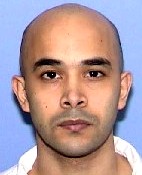
Joe Luna
Murderer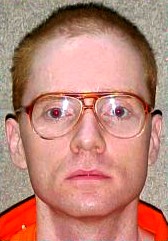 Robert Glen Jones
Murderer · USA · 1996
Defendant: Robert Glenn Jones (ADC#070566) · Co-defendant: Scott Nordstrom (ADC…
7 victims
Robert Glen Jones
Murderer · USA · 1996
Defendant: Robert Glenn Jones (ADC#070566) · Co-defendant: Scott Nordstrom (ADC…
7 victims
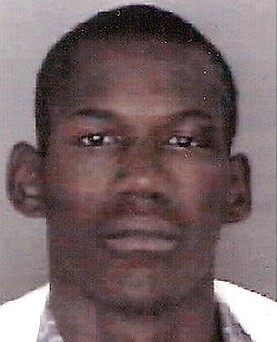 Joshua Wayne Andrews
Murderer · USA · 2000
Joshua Wayne Andrews was a serial killer accused of killing several people in V…
5 victims
Joshua Wayne Andrews
Murderer · USA · 2000
Joshua Wayne Andrews was a serial killer accused of killing several people in V…
5 victims
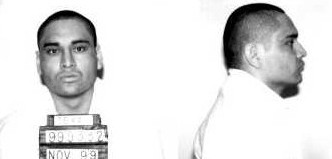 Juan Carlos Alvarez
Murderer · USA · 1998
Juan Carlos Alvarez, born on March 9, 1977, in San Luis, Mexico, was a Hispanic…
5 victims
Juan Carlos Alvarez
Murderer · USA · 1998
Juan Carlos Alvarez, born on March 9, 1977, in San Luis, Mexico, was a Hispanic…
5 victims
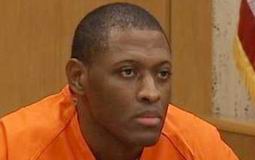 Leon Davis Jr.
Murderer · USA · 2007
Leon Davis Jr. was sentenced to death on April 29, 2011, for the execution-styl…
5 victims
Leon Davis Jr.
Murderer · USA · 2007
Leon Davis Jr. was sentenced to death on April 29, 2011, for the execution-styl…
5 victims
 Amanda Logue
Murderer · USA · 2010
Amanda Logue (30), known in adult entertainment as “Sunny Dae,” pleaded guilty…
1 victim
Amanda Logue
Murderer · USA · 2010
Amanda Logue (30), known in adult entertainment as “Sunny Dae,” pleaded guilty…
1 victim
 Mark Aaron Brown
Murderer · USA · 1994
Mark Aaron Brown (also referred to as Mark A. Brown) was born on November 13, 1…
2 victims
Mark Aaron Brown
Murderer · USA · 1994
Mark Aaron Brown (also referred to as Mark A. Brown) was born on November 13, 1…
2 victims
 Erin Caffey
Homicide · USA · 2008
Erin Caffey (juvenile daughter of Terry Caffey and Penny Caffey; charged in con…
3 victims
Erin Caffey
Homicide · USA · 2008
Erin Caffey (juvenile daughter of Terry Caffey and Penny Caffey; charged in con…
3 victims
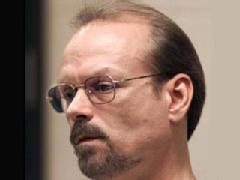 Philip Ray Workman
Murderer · USA · 1981
Name: Philip Ray Workman · Status: Executed by lethal injection in Tennessee on…
1 victim
Philip Ray Workman
Murderer · USA · 1981
Name: Philip Ray Workman · Status: Executed by lethal injection in Tennessee on…
1 victim
 Dana Ewell
Murderer · USA · 1992
Dana Ewell (born January 28, 1971, Fresno, California) — American convicted tri…
3 victims
Dana Ewell
Murderer · USA · 1992
Dana Ewell (born January 28, 1971, Fresno, California) — American convicted tri…
3 victims
- Gender
- male
- Country
- USA
- Location
- Bexar County, Texas, USA
- Date of birth
- October 26, 1979
- Age at first offence
- 26
- Characteristics
- arson, burglary, robbery, murder for hire
- Victim profile
- Michael Paul Andrade, 21
- Method of murder
- Strangulation
- Date(s) of murder
- February 17, 2005
- Years active
- 2005
- Date of arrest
- —
- Status
-
Sentenced to death
Sentenced to death on April 25, 2006
Name and identifiers
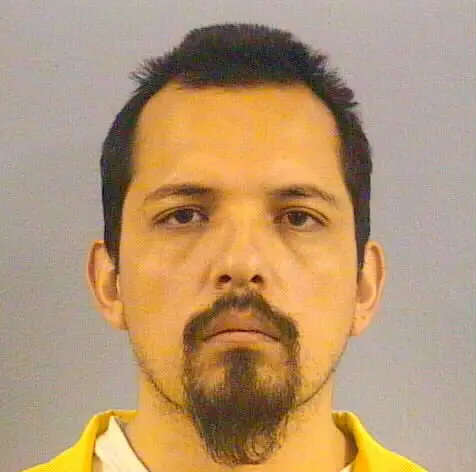
Joe Luna was a Hispanic male.
- Name: Joe Luna
- TDCJ Number: 999509
- Date of Birth: 10/26/1979
- Date Received: 02/17/2005
- Age (when received): 25
- Education Level: 04/25/2006
- Race: Hispanic
- Gender: Male
- Hair Color: Brown
- Height: 5 ft 11 in
- Weight: 178
- Eye Color: Brown
- Native County: Bexar
- Native State: Texas
- Prior Occupation: Laborer
- Prior Prison Record: TDCJ #858472 on two five-year sentences for assault on a public servant with bodily injury and burglary of a habitation by force.
Timeline
- 02/17/2005 — In Bexar County, Texas, Luna burglarized the home of a 21-year-old Hispanic male; he choked the victim, resulting in death; he later returned and burned the victim’s residence.
- 04/25/2006 — Luna received a death sentence.
- 10/29/2008 — The Court of Criminal Appeals of Texas affirmed the trial court’s judgment and sentence of death.
The offence
On February 17, 2005 in Bexar County, Texas, Joe Luna burglarized the home of a 21-year-old Hispanic male (Michael Paul Andrade). Luna choked the victim with a deadly weapon, namely: a ligature and an object unknown to the grand jurors, and caused the victim’s death.
The indictment contained alternative theories of committing the same capital murder offense within a single count:
- COUNT I PARAGRAPH A: On or about the 17th Day of February, 2005, Luna did intentionally cause the death of MICHAEL PAUL ANDRADE by STRANGLING MICHAEL PAUL ANDRADE WITH A DEADLY WEAPON, namely: A LIGATURE AND AN OBJECT UNKNOWN TO THE GRAND JURORS, capable of causing death and serious bodily injury, while Luna was in the course of committing and attempting to commit BURGLARY upon MICHAEL PAUL ANDRADE.
- COUNT I PARAGRAPH B: On or about the 17th Day of February, 2005, Luna did intentionally cause the death of MICHAEL PAUL ANDRADE by STRANGLING MICHAEL PAUL ANDRADE WITH A DEADLY WEAPON, namely: A LIGATURE AND AN OBJECT UNKNOWN TO THE GRAND JURORS, capable of causing death and serious bodily injury, while Luna was in the course of committing and attempting to commit ROBBERY upon MICHAEL PAUL ANDRADE.
- COUNT I PARAGRAPH C: On or about the 17th Day of February, 2005, Luna did intentionally cause the death of MICHAEL PAUL ANDRADE by STRANGLING MICHAEL PAUL ANDRADE WITH A DEADLY WEAPON, namely: A LIGATURE AND AN OBJECT UNKNOWN TO THE GRAND JURORS, capable of causing death and serious bodily injury, while Luna was in the course of committing and attempting to commit ARSON upon MICHAEL PAUL ANDRADE.
After choking the victim, Luna later returned and burned the victim’s residence.
Investigation
A Crime Stoppers tip named Luna as a suspect. The caller indicated that Luna had used his girlfriend Maria’s apartment to access the victim’s apartment through their shared attic crawl space. The caller stated that Luna could be found at Maria’s apartment or at his sister’s residence.
Detective April Titus spoke to a maintenance man at the victim’s apartment complex and showed him a photograph of Luna, whom he recognized as a person who had been “coming and going” from apartment 1002. Titus learned that apartment 1002 was leased to Maria Solis.
Two other officers went to Solis’s place of employment to see if she would willingly talk to them and give a statement. Solis later went to Titus’s office and signed a written consent form for police to search her apartment.
Solis stated that Luna had spent the previous night at her apartment and that he was still there. She stated that Luna told her he had entered the victim’s apartment through the crawl space and intended to steal from the victim. She also stated that he explained: “he did what he had to do” to keep police from coming after Solis and taking her child away. Solis stated that Luna had some clothing and other items at her apartment. Titus asked whether Luna lived with Solis and whether he kept a toothbrush at Solis’s apartment; Solis answered both questions “no.” Solis said Luna stayed with her “on and off” and that Solis had both sets of keys to her apartment.
Titus testified that Luna later told her that he was living at his sister’s home. When Luna completed a “statement information supplement” form, he provided his sister’s name and address in the section asking for information on his nearest relative, but he wrote down a different location as his home address. Luna was not listed on the lease for Solis’s apartment.
Trial
Luna pleaded guilty in front of the jury.
Jury proceedings and special issues
At the commencement of the trial on the merits, the trial court read the indictment and Luna pleaded guilty in the presence of the jury. The trial court excused the jury and admonished Luna of the consequences of his plea. The parties discussed how to proceed, concluding as follows:
THE COURT: [W]hat I plan to do is bring the jury back in, instruct them that you have entered a plea of guilty to the offense of capital murder. I will then move into the punishment phase of the trial. I guess it's a combination of punishment slash guilt-innocence. There will not be a jury charge until we conclude this phase. Upon the conclusion of all the evidence, I will give them a charge that instructs them to find you guilty. And that charge will also include the special issues that they will be required to answer. So this phase of the trial will include evidence from both the indicted case and any extraneous matters. Anything else?
[PROSECUTOR]: Your Honor, may the record reflect that we have conferred with counsel outside -- well, with the Court as to the procedure in reference to the submission of the charge, of the direction of the verdict of guilty, as well as the questions to be asked, to be done in a unified fashion in one verdict form, and one charging instrument, and that is agreeable to the parties?
THE COURT: Okay.
[DEFENSE COUNSEL]: It is agreeable, Judge.
THE COURT: All right. Anything else before we get started? I propose we bring the jury in and I'll instruct them that he has entered a plea of guilty and we'll move right into the evidence.
The trial court recalled the jury and reiterated that Luna had pleaded guilty to the indictment. The trial court explained that the parties would present evidence on both guilt and punishment and then the jury would receive a “charge that instructs you what to do as it relates to both phases of the trial.”
After the parties presented evidence, the trial court first read the jury charge on guilt/innocence. The jurors deliberated on guilt/innocence and returned a verdict finding Luna guilty of capital murder as charged in the indictment.
The trial court then read the punishment charge, and the parties made closing arguments. The jurors deliberated on punishment, and the trial court sentenced Luna to death based on their answers to the special issues on the verdict form.
Competency inquiry
The trial court conducted an “informal inquiry” into Luna’s competency several times during the proceedings. The trial court asked defense counsel questions regarding Luna’s rational and factual understanding, ability to assist in preparation of defenses, mental competency to waive rights and enter a guilty plea, and mental competency to waive Fifth Amendment rights and testify.
Defense counsel later questioned Luna’s decision to testify after advice. Luna testified at trial, against defense counsel’s advice.
Before closing arguments, the trial court questioned defense counsel and Luna regarding Luna’s rational and factual understanding and mental competency:
THE COURT: [Defense counsel], are you confident that your client -- I've asked this before, but as to this issue -- has a rational and factual understanding of the issues we're dealing with this morning?
[DEFENSE COUNSEL]: He does. There's no doubt about that. I think Doctor Skop has testified, also, as to his mental condition.
THE COURT: And in your opinion is he mentally competent at this time to be able to make that type of a decision?
[DEFENSE COUNSEL]: Yes, he is. * * *
THE COURT: Right. [Appellant], do you understand everything we've done up here?
[APPELLANT]: I understand.
THE COURT: Do you have any questions about anything we've gone over?
[APPELLANT]: No.
THE COURT: Were you able to effectively communicate with your attorney this morning regarding not only the issue of the lawyer -- or the juror's being ill this morning, but the issues related to the alternate and her feelings on the death penalty?
[APPELLANT]: I did.
THE COURT: Do you have any questions?
Luna complained that the trial court’s informal inquiry into his competency had been “inadequate,” and he argued that it should have ordered a psychiatric examination and sought information about his current mental-health status from jailers or others who knew him.
The trial court overruled the competency challenge.
A defense witness, Dr. Brian Perry Skop, evaluated Luna and testified regarding future dangerousness. When defense counsel asked Dr. Skop why he thought Luna was requesting the death penalty, Dr. Skop replied:
Well, I met with him before my testimony today to discuss that. Because it was a change in his defense strategy since I met with him back in January, at least what he expressed to me. And basically . . . it doesn't appear that he's suffering from a major depression or anything, or he's suicidal. It's basically a decision that he's made that he would rather receive the death penalty than be in prison for the rest of his life, or the majority of his life.
Luna explained during trial that he wanted to “turn my life over to God,” “to set it straight” for the victim’s family, and “to give them justice for what I did.” He said, “I don't see myself spending the rest of my life in prison,” and that if he were sentenced to death then he “would be able to focus [his] attention on getting strengthened spiritually and not be sidetracked.” He testified that he made his decision “quite a while back” and that it “isn't a spur of the moment thing that I'm doing.”
The alternate juror was never actually seated on the jury; the juror she was going to replace was feeling ill but was able to continue jury service.
Motion to suppress evidence from Solis’s apartment
Luna argued for suppression of items found during a search of the apartment where he was an overnight guest, asserting police had no warrant, no consent from Luna, and no other valid exception to the Fourth Amendment.
Detective April Titus testified that Solis signed a written consent form to search her apartment. The trial court ruled that Luna had no standing to challenge the legality of the search, finding “based on the uncontroverted testimony” that Luna had no standing. The trial court further found that, even if Luna had standing, Maria Solis was the resident of the apartment and provided lawful consent to search it. The trial court concluded that evidence seized was admissible.
The trial court stated:
Okay. The ruling on this issue is looking at both of the exhibits that have been introduced, specifically Exhibit Number 1, deals with the issue of standing. Exhibit Number A[ (18) ] deals with the issue of whether or not there was lawful consent to enter the premises. I'm going to find, based on the uncontroverted testimony, that the defendant had no standing, looking at State's Exhibit B[ (19) ] and the addresses he has listed in the exhibit, to challenge the legality of the search at that apartment. However, I'm also going to find, in the event that there is some disagreement at the appellate court level on this matter, that even if they find the defendant had standing, clearly Maria Solis was the resident of that apartment. She provided lawful consent to search the apartment pursuant to State's Exhibit A, and all the testimony that this officer has offered. And she was the person on the lease. She had the keys. So she had the authority to allow law enforcement to enter that residence and search it. So any evidence that was seized as a result of that at this point is admissible.
Extraneous offence victim impact testimony
Luna argued that the trial court erred in admitting extraneous offense victim impact testimony of Phillip Settles and Michael McGloughlin.
The State presented evidence that Luna broke into Settles’s apartment in July 1998 in the middle of the night. The prosecutor asked Settles, “Did that scare you?” and Settles replied:
“Ma'am, I feel very lucky today. Very lucky indeed that none of my family got hurt.”
The trial court overruled a defense objection. Defense counsel later clarified that he had been objecting to the victim impact statement part of Settles’s testimony, and the trial court responded that the clarification would be “noted for the record.”
Separately, the State presented evidence that Luna and others broke into McLoughlin’s home in the early morning hours in June 2004. The prosecutor asked McLoughlin what he felt like that night. Defense counsel made a timely objection to “extraneous victim impact evidence,” which the trial court overruled. McLoughlin testified that he was afraid that the assailants would kidnap his young daughter or would hurt or kill him or his family.
Identification testimony and photo array suppression
Luna moved to suppress identification testimony by Candido Tovar, arguing that Tovar’s in-court identification was tainted by an impermissibly suggestive pretrial photo array.
At the pretrial suppression hearing, Tovar testified that he first attempted to make a possible suspect identification “the next day.” Tovar said he “knew exactly” what his assailant looked like and that he had “described him completely.” He said that the “biggest thing” he remembered was the tattoo on the back of the assailant’s head. He met with Detective Richard Leonard of the San Antonio Police Department, who told him to look through pictures of people “that committed these kind of crimes before.” Tovar viewed “quite a few” pictures on a computer, with “multiple pictures” on each page, and could zoom in to view them one by one. He was unable to identify anyone then. He returned about a week later and viewed multiple photographs on a computer screen and on paper. The first meeting included an error about whether the tattoo was on the back of the assailant’s neck; Tovar clarified it was on the back of the assailant’s head. Tovar denied that Leonard said anything suggestive before he viewed the photographs.
Leonard appeared “startled” when he showed the paper array containing Luna’s photograph, because Tovar “pointed him out right away,” “before he even put the paper down.” After Tovar identified Luna in the paper array, Leonard showed him a photo of the tattoo on the back of Luna’s head, and Tovar recognized it. Tovar testified that Leonard called him the next day and said that he had identified “the right guy.”
Leonard’s testimony varied slightly. Leonard testified that he showed Tovar “nearly 900 photographs” in a computerized “mug book” on two occasions, and Tovar failed to identify anyone. On a third meeting, Leonard showed a paper array of six photos, and Tovar identified Luna.
At the suppression hearing, the prosecutor questioned Leonard about instructions he gave Tovar. Leonard testified:
“I -- I sat it down in front of him and I told him, Okay, there's a suspect in this lineup. I can't tell you who it is. Let me know if there's anybody that looks familiar to you.”
“We have -- we have a suspect and we've placed him in the lineup, and let me know if there's anybody that looks suspicious to you. I'm sorry. Excuse me. That looks familiar to you.”
“As I was laying it down, he pointed it to him and said, That's him.”
Leonard testified that the paper array was State’s Exhibit 162-A and that Tovar picked photo number 6, which showed Luna. Leonard acknowledged that his report entry dated August 11th of 04, 15:17 hours did not state that he told Tovar there was a suspect, and Leonard explained he did not specifically remember saying that and that he used a script.
The trial court denied the motion to suppress, and Tovar made an in-court identification of Luna.
At trial, Tovar testified that Luna was the person who carjacked him on the night of March 23, 2004. Tovar testified that Luna forced his way into Tovar’s truck at gunpoint, then made Tovar drive to another location, bound him with duct tape, left him, and then took off in his truck. Tovar was eventually able to free himself and went to a gas station where he called police.
Tovar testified that he spent time with Luna face-to-face while driving and that Luna did not have anything covering his face. Tovar said that Luna had a moustache and goatee and was wearing [a] cap, and that Tovar could tell Luna was trying to cover the tattoo on the back. Tovar testified that he saw a tattoo on the back of Luna’s head and described it as:
“[i]t's [sic] covers the -- the whole back side of his head. And like thorns, or fire, or flames, or something like that.”
Tovar testified that he described the tattoo to the police officer who arrived that night.
The trial court admitted the identification testimony.
Arguments on closing and mitigation
Luna argued that the trial court erred by refusing to allow defense counsel to close the arguments on mitigation. He acknowledged prior decisions rejecting this type of claim. The appellate court declined to revisit the issue.
Motion to preclude the death penalty
Luna sought to preclude the death penalty as a sentencing option. He argued Article 37.071 violated equal protection due to lack of uniform statewide standards to guide Texas prosecutors in deciding when to seek death, and he argued the grand jury did not consider punishment special issues when deciding whether to indict him, citing Blakely, Ring, and Apprendi.
He also challenged the constitutionality of Article 37.071, including:
- Burden shifting to the defendant,
- The “10-12 Rule”,
- Undefined terms in Article 37.071 (probability, criminal acts of violence, continuing threat to society, personal moral culpability, and moral blameworthiness),
- The indefinite term “probability,” arguing the jury could apply any definition,
- Requirement for “comparative proportionality review,”
- Meaningful appellate review of jury response to mitigation special issue,
- Failure to provide the jury with the option to sentence him to life without parole.
The appellate court rejected these arguments.
Jury instruction on mitigation and special issues
Luna argued that the trial court’s punishment charge violated his rights because it “strayed” from Article 37.071, § 2(d)(1), and “conflated” the future dangerousness and mitigation special issues, making a death sentence more likely.
The trial court instructed the jury:
In deliberating upon the special issues, you shall consider all evidence admitted in this case, including evidence of the defendant's background or character or the circumstances of the offense that militates for or mitigates against the imposition of the death penalty.
Appeals
Direct appeal: legal arguments and disposition
Luna appealed to the Court of Criminal Appeals of Texas, citing twenty-five points of error. The appellate court:
- Affirmed the trial court’s judgment and sentence of death after finding the points of error to be without merit.
- Held that the appellant’s challenges to the trial proceedings and jury procedure were overruled across the listed points of error.
The Court of Criminal Appeals of Texas issued its opinion on October 29, 2008.
Key appellate issues addressed
- Luna argued the trial court erred by conducting an unauthorized ad hoc proceeding that failed to provide a separate sentencing process as required by statute; he also argued errors in bifurcation under the Eighth and Fourteenth Amendments. The court declined to hold bifurcated proceedings were statutorily or constitutionally mandated and overruled points of error one and two.
- Luna argued trial court denied due process by failing to conduct an adequate competency inquiry; the appellate court overruled points of error three, four, five, and six.
- Luna argued the jury charge allowed conviction on less than unanimous verdict; the appellate court overruled points of error seven, eight, nine, and ten.
- Luna challenged suppression rulings, victim-impact testimony, identification evidence, and mitigation closing; the appellate court overruled point of error eleven through fourteen and others.
- The appellate court overruled challenges to the death penalty scheme and jury instruction on mitigation (including point of error twenty-five) and affirmed the death sentence.
Outcome
The appellate court affirmed Luna’s conviction and sentence of death. The trial judge sentenced Luna to death based on the jury’s answers to the special issues.
Other details
- Court panel: The opinion was delivered by PRICE, J. A concurring opinion was filed by Hervey, J., joined by Womack and Johnson, JJ.
- The Court of Criminal Appeals of Texas noted that direct appeal was automatic.
- Luna pleaded guilty to capital murder and the jury returned a general verdict of “guilty of capital murder as charged in the indictment.”
- The victim was Michael Paul Andrade, a Hispanic male aged 21.
Spotted an error, or have more information about this case?