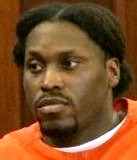
Mark Aaron Brown
Murderer Brian Kevin Rosenfeld
Murderer · USA · 1985
Brian Kevin Rosenfeld Brian Kevin Rosenfeld was sentenced to three concurrent l…
23 victims
Brian Kevin Rosenfeld
Murderer · USA · 1985
Brian Kevin Rosenfeld Brian Kevin Rosenfeld was sentenced to three concurrent l…
23 victims
 Russell Ellwood
Murderer · USA · 1991
Russell Ellwood was a former taxi driver. Authorities suspected him of killing…
20 victims
Russell Ellwood
Murderer · USA · 1991
Russell Ellwood was a former taxi driver. Authorities suspected him of killing…
20 victims
 Robert Martines Perez
Murderer · USA · 1994
Name: Robert Martines Perez · Other name used in proceedings: Robert Martinez P…
15 victims
Robert Martines Perez
Murderer · USA · 1994
Name: Robert Martines Perez · Other name used in proceedings: Robert Martinez P…
15 victims
 Billy Frank Vickers
Murderer · USA · 1993
Billy Frank Vickers Vickers was executed by lethal injection in Texas on Januar…
14 victims
Billy Frank Vickers
Murderer · USA · 1993
Billy Frank Vickers Vickers was executed by lethal injection in Texas on Januar…
14 victims
 Joseph Danks
Spree killer · USA · 1987
Joseph Martin Danks was convicted in California. He was sentenced to death in 1…
7 victims
Joseph Danks
Spree killer · USA · 1987
Joseph Martin Danks was convicted in California. He was sentenced to death in 1…
7 victims
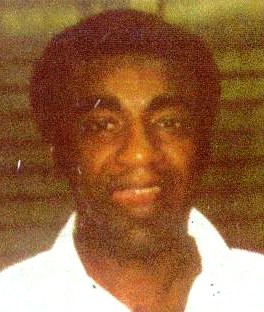 Cornelius Singleton
Murderer · USA · 1977
Cornelius Singleton was executed by electrocution in Alabama on November 20, 19…
1 victim
Cornelius Singleton
Murderer · USA · 1977
Cornelius Singleton was executed by electrocution in Alabama on November 20, 19…
1 victim
 David Birnie
Serial killer · Australia · 1986
David John Birnie (16 February 1951 – 7 October 2005) was an Australian serial…
4 victims
David Birnie
Serial killer · Australia · 1986
David John Birnie (16 February 1951 – 7 October 2005) was an Australian serial…
4 victims
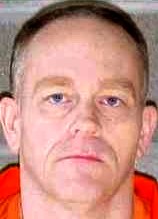 Steven Craig James
Murderer · USA · 1981
Steven Craig James was sentenced to death on November 23, 1982. Juan Maya picke…
1 victim
Steven Craig James
Murderer · USA · 1981
Steven Craig James was sentenced to death on November 23, 1982. Juan Maya picke…
1 victim
 Trupti Patel
Justice miscarriage · United Kingdom · 1997
Trupti Patel was a qualified pharmacist from Berkshire, England. She was born i…
0 victims
Trupti Patel
Justice miscarriage · United Kingdom · 1997
Trupti Patel was a qualified pharmacist from Berkshire, England. She was born i…
0 victims
- Gender
- male
- Country
- USA
- Location
- Mahoning County, Ohio, USA
- Date of birth
- November 13, 1972
- Age at first offence
- 22
- Characteristics
- robbery, alcohol, drug addict, armed robbery
- Victim profile
- Isam Salman (son store owner) and Hayder Al-Turk (employee)
- Method of murder
- Shooting (9 mm handgun)
- Date(s) of murder
- January 28, 1994
- Years active
- 1994
- Date of arrest
- February 3, 1994
- Status
-
Executed
Executed by lethal injection on February 4, 2010
Background
Mark Aaron Brown (also referred to as Mark A. Brown) was born on November 13, 1972. He was incarcerated under Inmate#: OSP #A320-827. His institution was the Southern Ohio Correctional Facility. He was transported from the Ohio State Penitentiary in Youngstown to the Southern Ohio Correctional Facility in Lucasville on Wednesday morning before his execution. He had a juvenile accomplice and associate in the events leading to the killings.
Brown’s execution witnesses included Chester Phillips, spiritual adviser for Brown, and Atty. Rachel Troutman. Chester Phillips and Rachel Troutman witnessed the execution “on Brown’s behalf.” Seven members of Salman’s family were at the prison for the execution; three witnessed his death: Terri Rasul (his sister), Walid Salman (his brother), and one son, Majdy Salman. Terri Rasul held a photograph of the murder victims in the death chamber and later declined to say whether it was her late brother.
Brown requested that his body be cremated, with his ashes turned over to his sister.
The offence
During the evening of January 28, 1994, Mark A. Brown was walking in the Kimmelbrook housing projects in Youngstown, Ohio. Gary Thomas and his nephew Allen Thomas drove by. Allen Thomas, identified as a friend of Brown’s, had Gary Thomas stop the car and pick up Brown. The three proceeded to a drive-through store at the corner of Albert and Victor Streets, where they purchased beer and wine. After leaving the store, the three drove to the residence of Lisa Dotson, a relative of Allen Thomas. On the way to the Dotson residence, they stopped at a convenience store at the corner of Elm and New York Avenues called the Midway Market to buy “blunt” cigars.
Brown and Allen Thomas emptied “blunt” cigars of tobacco and refilled them with marijuana. They later played cards at the Dotson residence. A number of juveniles were at the house including Myzelle Arrington, Marcus Clark, and Antwaine McMeans. While playing cards, Brown stated to Allen Thomas that he wanted to do what the characters in “Menace to Society” had done. Brown and Allen Thomas drank Thunderbird wine into which valium had been dissolved, and Brown smoked “blunt” cigars containing marijuana. Gary Thomas testified he noticed that Brown had a gun on him while they were playing cards.
According to testimony, after several hours the three men left the house and returned to Kimmelbrooks to purchase more marijuana. They then returned to the Midway Market to purchase more “blunt” cigars. At about the same time, juveniles at the Dotson residence began walking to the store, including Marcus Clark and Myzelle Arrington. The Salman family had owned and operated the Midway Market as a family business for over twenty years.
On duty at the Midway Market on January 28, 1994 were Isam Salman and Hayder Al-Turk. Salman was a store owner’s son and the father of seven children. Hayder Al-Turk had been an employee at the store for approximately a year. Because a family member was working on the night in question, the video surveillance cameras inside the store were not turned on.
Gary Thomas stayed in the car listening to music while Allen Thomas and Brown went inside. Allen Thomas and Brown returned to the vehicle, but Brown then stated that he had forgotten to do something and went back inside the store. Witnesses testified that Brown reentered wearing a mask or bandanna. Marcus Clark testified that he saw Brown put on a mask before re-entering the store but that Allen Thomas remained in the vehicle. Myzelle Arrington testified that both Brown and Allen Thomas re-entered the store. Gary Thomas testified that Allen Thomas did re-enter the store with Brown but came back out immediately.
Clark, Arrington, and Gary Thomas testified that while Brown was in the store they heard gunshots being fired. When Brown returned to the vehicle and was questioned by Gary Thomas about the gunshots, Brown responded that it had just been some firecrackers exploding. After that, the three men left the scene and returned to the Dotson residence where Brown was observed wiping off his gun. Gary Thomas testified to seeing blood on Brown’s hands and clothing.
At about 9:55 p.m., the Youngstown Police Department responded to a call concerning the Midway Market. Officers found the bodies of Salman and Al-Turk behind the counter inside the store. Al-Turk was found laying on the floor and Salman was found kneeling underneath the counter. Both victims died from multiple gunshot wounds. Dr. Anil Nalluri, Chief Deputy Coroner of Mahoning County, performed autopsies and determined that the victims died of hemorrhage and shock as a result of gunshot wounds to the head.
During the events at trial, Brown admitted shooting one victim but denied shooting the other. Brown also denied stealing any money from the store.
Investigation
Lieutenant David McKnight interviewed several witnesses and, on January 31, 1994, secured a warrant for Brown’s arrest. On February 3, 1994, Brown was arrested in Warren, Ohio, and transported back to Youngstown. After advising Brown of his Miranda rights, which he waived in writing, police began questioning him.
During questioning, Brown admitted being at the Midway Market but claimed Boonie was the shooter. Police knew that video cameras in the store were not operating during the murders. The lieutenant asked Brown whether he knew there were video cameras in the store, and Brown said he had not noticed. Police told him there were two video cameras in the store. Brown replied, “Well, I guess you know what happened there then.” When police answered “yes,” Brown stated, “Well, you’ve got me.” He also said, “Then you know I did it.”
Brown then admitted to shooting one of the victims but stated he did not recall shooting the second victim. Brown claimed he got the gun from Steven Dotson and had “just flipped out.” Brown expressed regret and explained, “It’s the Valliums [sic]. They make you go off.”
At the time of Brown’s arrest, police recovered a 9 mm handgun underneath some cushions on a couch. Police recovered a 9-mm handgun nearby at the time of Brown’s arrest. Shell casings found at the store were found to have been fired from the recovered handgun.
When Brown was apprehended, police retrieved a 9-mm Glock semiautomatic firearm under the couch cushion in the front room. The firearm was later identified by Steve Jones, who said Brown had robbed him of his Glock 9-mm gun at gunpoint on December 15, 1993, and that Jones’s Glock was in the car’s trunk at the time.
Michael Roberts, a forensic scientist in the BCI firearms department, examined the Glock firearm, nine cartridge casings recovered from the crime scene, and four bullets retrieved from the victims. He concluded that all nine cartridges were fired from the Glock firearm. He further concluded that the bullets recovered from the victims indicated that they were fired from a Glock weapon, but he could not confirm or eliminate the Glock retrieved from Brown as the weapon from which they were fired.
Arrest
Brown was arrested on February 3, 1994 at an apartment in Warren, Ohio. Police recovered a 9 mm handgun underneath some cushions on a couch at the arrest location. Brown was transported to the Youngstown Police Department where he was questioned by Detectives Maietta and McKnight.
Trial
Brown was indicted by the Mahoning County Grand Jury on March 4, 1994. The indictment charged four counts of aggravated murder for the deaths of Isam Salman and Hayder Al Turk. Counts one and two alleged that Brown purposely and with prior calculation and design caused the deaths of Salman and Al Turk. Each of these counts carried death penalty specifications alleging that the murders were committed as a course of conduct involving the purposeful killing or attempt to kill two or more persons and occurred while the offender was committing aggravated robbery. The counts also carried gun specifications. Counts three and four alleged that Brown committed aggravated murder while committing aggravated robbery, and contained the same death penalty and firearm specifications. Brown was also indicted in count 5 for aggravated robbery and in count 6 for having a weapon under disability.
At trial, Brown took the stand in his own defense. He admitted shooting one victim but not the other. He testified that Allen Thomas (identified as Boonie) was with him at the time of the shooting and that Boonie took the gun from him after the first victim was shot. Brown testified that he did not steal any money from the store. Brown testified that while he told police he got the gun from Steven Dotson, he actually got it from a different friend, Mike Austin. Brown testified that he was “messed up” when police interviewed him and that he requested an attorney two or three times, but that this request was denied.
The jury convicted Brown of two counts of aggravated murder committed with prior calculation and design. The jury found him guilty of the firearm specifications attached to these counts and the death penalty specification that the murders occurred in the course of killing two people. The jury acquitted him of the specifications that the murders were committed while committing aggravated robbery. The jury returned not guilty verdicts as to counts three, four, and five, which charged aggravated murder while committing aggravated robbery and aggravated robbery itself. The jury recommended death for the aggravated murder of Salman and life imprisonment for the aggravated murder of Al Turk.
Pretrial issue: voluntariness of confession
In proposition of law V, Brown argued that the confession made to police on February 4, 1994 was involuntary and that the trial court erred in refusing to suppress the confession.
The appellate court concluded Brown made a knowing, voluntary, and intelligent waiver of constitutional rights and that his confession was voluntarily made. The appellate court addressed Brown’s claims of intoxication and drugs, his age and lack of experience, and his claim that police ignored his request for an attorney during questioning.
At the suppression hearing, evidence included testimony from Detective McKnight and Detective Gerald Maietta describing Brown as cooperative and alert and exhibiting no signs of being intoxicated or on drugs.
Regarding counsel invocation, Detective McKnight had no recollection that Brown requested a lawyer. The appellate court assumed Brown’s testimony but concluded his statement was ambiguous: “Before he asked me to understand my rights, he asked me do I have any questions, and I asked him, don’t I supposed to have a lawyer present; and neither one of them answered.” The appellate court concluded this was not a clear invocation and overruled proposition of law V.
Trial issues: other acts evidence; prior convictions; supplemental penalty instruction arguments; juror polling
Brown argued in proposition of law III that the trial court erred by allowing the prosecution to introduce “other acts” evidence, including Steve Jones’s testimony that Brown robbed him of the Glock 9-mm gun used in the murders, and testimony from Brown’s mother that Brown was a member of a gang and belonged to the “Baby Crips” when he was a child living in California.
The appellate court stated the trial court instructed the jury that the Jones testimony “may be considered for the purpose of determining the proof of the identity of the defendant” and “may not be considered as proof that the defendant committed the robbery of Steve Jones or of the character of the defendant.” The appellate court found this did not constitute abuse of discretion as it was used for identity and helped link Brown to the gun found in his possession when he was arrested. The appellate court found it was improper to allow the gang testimony from Brown’s mother, but concluded it was harmless error.
Brown argued in proposition of law IV that the trial court erred in allowing the state to use prior drug-offense convictions for impeachment purposes. The appellate court recited that the trial court initially granted a motion in limine but later modified its ruling to allow questioning about prior felony convictions if Brown decided to take the witness stand. Brown testified on direct that he had gone to jail for a previous drug conviction, and on cross-examination admitted to two prior drug-offense convictions. The appellate court overruled proposition of law IV.
In proposition of law I, Brown argued the trial court erred in failing to give the correct supplemental instruction to a deadlocked jury in the penalty phase and that it should have declared a mistrial and sentenced him to life imprisonment. The appellate court described penalty deliberations and the deadlock, including that the jury began deliberating at 12:10 p.m. on February 22, 1996 and retired at 6:35 p.m., resumed at 9:05 a.m. the next day, and at 2:20 p.m. informed the court it had “come to an agreement on one recommendation. We cannot agree on the other; we’re deadlocked * * *.”
The court issued a supplemental Howard charge. The instruction as quoted in the appellate decision stated:
“It is your duty to decide the case, if you can conscientiously do so. You should listen to one another's arguments with the disposition to be persuaded. Do not hesitate to reexamine your views and change your position if you are convinced that it is erroneous. If there is disagreement, all jurors should reexamine their positions, given that a unanimous verdict has not been reached. Jurors for life should consider whether their doubt is reasonable, considering that it is not shared by others, equally honest to have heard the same evidence, with the same desire to arrive at the truth, and under the same oath. Likewise, jurors for death should ask themselves whether they might not reasonably doubt the correctness of a judgment not concurred in by all other jurors.”
Defense counsel objected to the Howard charge and requested an instruction from State v. Martens about the possibility of reaching a verdict. The court refused to give the Martens instruction. Defense counsel moved for a mistrial nearly four hours after the Howard charge. The trial court overruled the motion. The jury continued deliberating until 9:08 p.m.
On February 24, 1996, after the jury reconvened at 10:30 a.m., defense counsel requested instructions or a Martens charge; the court refused. At 4:35 p.m., the jury announced its verdict. The jury recommended death for the murder of Isam Salman and life imprisonment with parole eligibility after 30 years for the murder of Hayder Al Turk. When the jury was polled, Juror York stated: “Your Honor, I compromise with the other eleven jurors [sic].” The court asked, “Are these your verdicts?” Juror York answered, “No, they're not.” The court repeated, “These are not your verdicts?” Juror York answered, “I compromised, Your Honor, with the other jurors.”
The court sent the jurors back into the jury room. Defense counsel moved for a mistrial or, in the alternative, for a Martens charge. The judge declined but reread the penalty instructions in their entirety without the Howard charge. Approximately two and one-half hours later, the jury reached a unanimous verdict; when polled, all jurors, including York, stated without reservation that it was their verdict. The appellate court overruled proposition of law I.
In proposition of law II, Brown argued the trial court should have declared a mistrial based on the juror’s compromise statement. The appellate court concluded the trial court did not abuse its discretion in how it handled Juror York.
In proposition of law VI, Brown contended the trial court erred in readmitting trial exhibits during the mitigation phase. The appellate court held that the trial court may properly allow reintroduction of exhibits from trial phase into mitigation phase under R.C. 2929.03(D)(1) and overruled proposition of law VI. In proposition of law VII, Brown argued cumulative error denied a fair trial; the appellate court ruled cumulative error did not apply.
Sentencing
The trial court sentenced Brown to death and to life imprisonment with parole eligibility after 30 years for the respective aggravated murders, with the sentences to run consecutively, and three years of actual incarceration on the firearm specification for each of the two counts, served consecutively.
The record of convictions also described Count 1 as Aggravated Murder (Death with 3 years for firearm specification), and Count 2 (Aggravated Murder) as Life With Parole Eligibility after 30 years with 3 years for firearm specification, to run consecutively.
Appeals
Brown’s direct appeal resulted in affirmance of his convictions and death sentence. The appellate court affirmed on the issues raised, including: the voluntariness of Brown’s confession; other-acts evidence and harmless error regarding the gang testimony; and sentencing supplemental instruction and juror polling issues.
The appellate decision referenced: State v. Brown, 100 Ohio St.3d 51, 796 N.E.2d 506 (Ohio App. 2003) (Direct Appeal); and State v. Brown, Not Reported in N.E.2d, 2003 WL 21518723 (Ohio App. 2003) (PCR).
In Brown v. Bradshaw, 531 F.3d 433 (6th Cir. 2008) (Habeas), Brown appealed the denial of his petition for habeas corpus. A certificate of appealability was granted for one claim about whether clearly established Federal law was violated when the trial court gave a penalty-phase instruction that allegedly coerced jurors to recommend a death sentence. The Sixth Circuit affirmed denial of the petition because neither the Howard charge nor post-verdict polling violated clearly established Federal law.
The Sixth Circuit described that Brown’s jury was instructed to decide which sentence to recommend for each aggravated murder; it reached death for Salman and life imprisonment for Al Turk. Juror York indicated she had been compromised. The trial court reread penalty instructions minus the Howard charge and sent the jury back, which returned with the same verdicts. Upon polling, all jurors said it was their verdict.
The Sixth Circuit held that the Howard charge did not violate clearly established Federal law. It also held that post-verdict polling did not violate clearly established Federal law, and that Brown’s argument about taking the case from the jury was governed by state law, not a basis for federal habeas relief. The Sixth Circuit also addressed procedural default for a Mills v. Maryland argument and denied discovery and an evidentiary hearing due to Ohio Evidence Rule 606(B).
Brown v. Bradshaw also described that Brown submitted an affidavit from juror York alleging intimidation and bullying after the court’s new charge, but ruled it inadmissable under Ohio R. Evid. 606(B). The Sixth Circuit concluded discovery and an evidentiary hearing would be futile.
Outcome
Brown’s executions schedule and execution details were described as follows. Brown was executed on Thursday, February 4, 2010. Officials pronounced Brown dead at 10:49 a.m. Brown was transported from the Ohio State Penitentiary in Youngstown to the Southern Ohio Correctional Facility in Lucasville on Wednesday morning. He spent most of the afternoon and night talking on the phone with friends, his sister, his attorney, and two of the mothers of his children. One call stretched from 2:14 a.m. until 4:49 a.m. He had contact visits with his brother, his spiritual adviser, and his attorney for several hours Wednesday evening, and the atmosphere turned emotional at about 7 p.m. when he received word that Gov. Ted Strickland denied his request for clemency.
Throughout the evening, Brown ate a special meal that included a bacon double cheeseburger, onion rings, orange soda and ice cream. He did not eat breakfast Thursday morning and did not touch the T-bone steak cooked well done that he requested. He slept from just before 5 a.m. until 6:20 a.m., showered, and had cell-front visits with his spiritual adviser and two attorneys. He completed those visits after 8:30 a.m. and turned over his personal belongings to his legal counsel. The U.S. Supreme Court turned down Brown’s appeals just after 9 a.m., delaying the execution by about 20 minutes.
During the execution, IV tubes were hooked to both arms. The process used thiopental sodium and took less than 10 minutes to complete. Prison staff inserted shunts into veins in both of Brown’s arms. Brown made the final 17-step walk from his holding cell to the death chamber. Brown was described as staring silently at the ceiling, then yawned, and became motionless. Brown offered no final statement and stared at the ceiling as he was executed. When asked if he had any last words, Brown offered only a quiet “No,” and he did not make eye contact with family members of his victim or his attorney or clergy who witnessed the execution. ClarkProsecutor.org listed final words as none.
The execution was described as the third executed under the state’s new single-drug execution protocol, which used a single sedative in a larger lethal dose. A backup plan called for intramuscular injection of two drugs in cases where suitable veins were not accessible. The description contrasted this with prior three-drug combinations.
Aftermath
After the execution, Brown’s body was removed from the Death House and taken by hearse. Brown requested that his body be cremated, and his ashes were to be turned over to his sister. The coverage noted Ohio scheduled executions each month through September. One witness Terri Rasul responded to reporters with a statement that included: “As sad as this may be, justice has been served.” She said she hoped it would serve as a lesson for young children not to do what Mark Aaron Brown did to her brother. Another quoted statement attributed to Rasul was: “I just hope that this is a lesson for the young children today that they will not do what Mark [Aaron] Brown did to my brother.” Prosecutor and staff statements included Julie Walburn saying the execution was carried out “professionally and in accordance with the laws of the state of Ohio,” and that “It went as well as we expected it to go.”
Spotted an error, or have more information about this case?