
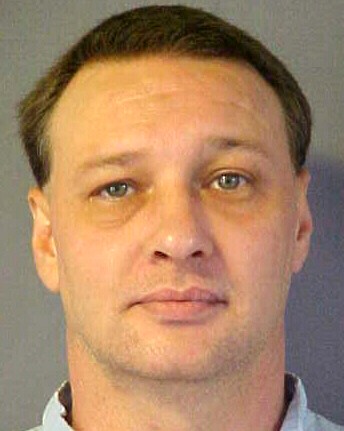
Philip Ray Workman
Murderer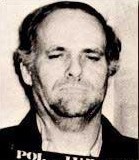 Ervil LeBaron
Murderer · USA · 1972
Ervil Morrell LeBaron (1925 to August 16, 1981) was the leader of a polygamous…
35 victims
Ervil LeBaron
Murderer · USA · 1972
Ervil Morrell LeBaron (1925 to August 16, 1981) was the leader of a polygamous…
35 victims
 Brian Kevin Rosenfeld
Murderer · USA · 1985
Brian Kevin Rosenfeld Brian Kevin Rosenfeld was sentenced to three concurrent l…
23 victims
Brian Kevin Rosenfeld
Murderer · USA · 1985
Brian Kevin Rosenfeld Brian Kevin Rosenfeld was sentenced to three concurrent l…
23 victims
 Marvin Gray
Murderer · USA · 1975
Marvin Gray was convicted killer who claimed responsibility for 23 slayings and…
23 victims
Marvin Gray
Murderer · USA · 1975
Marvin Gray was convicted killer who claimed responsibility for 23 slayings and…
23 victims
 Yahweh ben Yahweh
Murderer · USA · 1980
Yahweh ben Yahweh was born and legally named Hulon Mitchell Jr. (October 27, 19…
23 victims
Yahweh ben Yahweh
Murderer · USA · 1980
Yahweh ben Yahweh was born and legally named Hulon Mitchell Jr. (October 27, 19…
23 victims
 Russell Ellwood
Murderer · USA · 1991
Russell Ellwood was a former taxi driver. Authorities suspected him of killing…
20 victims
Russell Ellwood
Murderer · USA · 1991
Russell Ellwood was a former taxi driver. Authorities suspected him of killing…
20 victims
 Elliot Rodger
Mass murderer · USA · 2014
Elliot Rodger (July 24, 1991 – May 23, 2014) perpetrated a killing spree in Isl…
6 victims
Elliot Rodger
Mass murderer · USA · 2014
Elliot Rodger (July 24, 1991 – May 23, 2014) perpetrated a killing spree in Isl…
6 victims
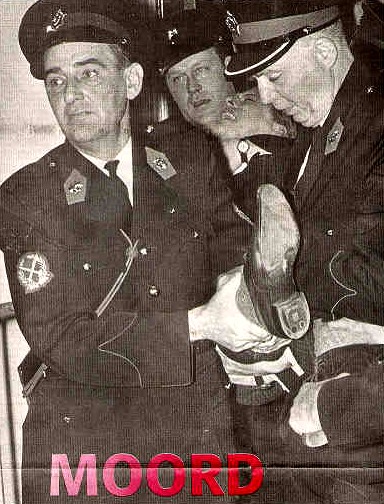 Hans Van Zon
Serial killer · Netherlands · 1964
Hans van Zon was born in Utrecht, Holland, in April 1942. He was described as a…
5 victims
Hans Van Zon
Serial killer · Netherlands · 1964
Hans van Zon was born in Utrecht, Holland, in April 1942. He was described as a…
5 victims
 Travis Baumgartner
Murderer · Canada · 2012
Sentenced to life in prison with no chance of parole for 40 years on September…
3 victims
Travis Baumgartner
Murderer · Canada · 2012
Sentenced to life in prison with no chance of parole for 40 years on September…
3 victims
 Carl Drew
Murderer · USA · 1979
Carl Drew was sentenced to life in prison without parole in 1981. · Carl Drew (…
3 victims
Carl Drew
Murderer · USA · 1979
Carl Drew was sentenced to life in prison without parole in 1981. · Carl Drew (…
3 victims
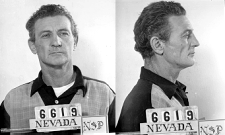 Frank Pedrini
Murderer · USA · 1953
July 15, 1954 — Frank A. Pedrini and Leroy L. Linden were executed together at…
1 victim
Frank Pedrini
Murderer · USA · 1953
July 15, 1954 — Frank A. Pedrini and Leroy L. Linden were executed together at…
1 victim
- Gender
- male
- Country
- USA
- Location
- Shelby County, Tennessee, USA
- Date of birth
- 1953
- Age at first offence
- 28
- Characteristics
- armed robbery, drug addict, convicted rapist
- Victim profile
- Ronald Oliver, 43 ( Memphis Police Lieutenant )
- Method of murder
- Shooting ( .45 caliber handgun)
- Date(s) of murder
- August 5, 1981
- Years active
- 1981
- Date of arrest
- —
- Status
-
Executed
Executed by lethal injection in Tennessee on May 9, 2007
Case information
- Name: Philip Ray Workman
- Status: Executed by lethal injection in Tennessee on May 9, 2007
- Final words:
- “I've prayed to the Lord Jesus Christ not to lay charge of my death to any man."
- “I commend my spirit into your hands Lord Jesus Christ.”
Timeline
- August 5, 1981 — Philip Workman robbed a Wendy’s restaurant and fatally shot Memphis police Lt. Ronald Oliver during a subsequent shootout; Officer Aubrey Stoddard was wounded and Workman was shot.
- 1982 — A Shelby County jury convicted Workman of first-degree murder in the perpetration of a robbery and imposed a death sentence.
- May 9, 2007 — Tennessee executed Philip Workman by lethal injection.
The offence
On August 5, 1981, Philip Workman entered a Wendy's restaurant in Frayser. An employee had triggered a silent alarm during the robbery. Memphis Police Lieutenant Ronald Oliver responded while Workman was leaving the restaurant after the robbery, and an encounter followed.
Workman broke away from Oliver when Oliver ordered him to stop. Oliver and Officer Aubrey Stoddard then grabbed Workman. Workman broke free again and shot:
- Lt. Ronald Oliver once in the chest, and Oliver died as a result of the chest wound.
- Officer Aubrey Stoddard in the arm.
After the shooting, Workman was found hiding in bushes nearby with a .45 caliber murder weapon. Workman also wounded another officer and was shot himself.
Investigation
During the response to the holdup alarm, officers sealed off the area behind Wendy's and an auto parts store. Police searched the area using attack dogs and found Workman hiding in the underbrush with his .45 calibre pistol nearby.
Workman was taken from the scene to a hospital for treatment of cuts and scratches on his face and body, dog bites, and wounds to his buttocks.
Arrest / custody
Workman was in custody after being captured. After being advised of his Miranda rights, he gave officers a statement about the robbery and claimed he had robbed Wendy’s because he needed money to leave town. He also gave a false name and address, later explaining that he wanted to avoid embarrassment to his family.
After the event, employees of Wendy’s who had been locked in the manager’s office identified Workman in a lineup, and each employee identified him as the robber.
Trial
A Shelby County jury convicted Workman of murder in the first degree in the perpetration of a robbery. Workman testified at trial and admitted both the robbery and the killing, but claimed he was under the influence of drugs and said he was trying to give up when he was “hit or grabbed” by officers, after which he shot Stoddard and Oliver. He also testified he could only remember “bits” and “pieces” of the events.
Sentencing findings (aggravating circumstances)
The jury imposed the death sentence and found five statutory aggravating circumstances:
- The defendant knowingly created a great risk of death to two (2) or more persons, other than the victim murdered, during the act of murder (Tenn. Code Ann. § 39-2-203(i)(3)).
- The murder was committed for the purpose of avoiding, interfering with, or preventing a lawful arrest or prosecution of the defendant or another (Tenn. Code Ann. § 39-2-203(i)(6)).
- The murder was committed while the defendant was engaged in committing, or was an accomplice in the commission of, or was attempting to commit, or was fleeing after committing or attempting to commit, the offense of robbery (Tenn. Code Ann. § 39-2-203(i)(7)).
- The murder was committed by the defendant while in lawful custody or in a place of lawful confinement or during the defendant's escape from lawful custody or from a lawful place of confinement (Tenn. Code Ann. § 39-2-203(i)(8)).
- The murder was committed against any law enforcement officer, corrections official, corrections employee or firefighter, who was engaged in the performance of official duties, and the defendant knew or reasonably should have known that such victim was a law enforcement officer, corrections official, corrections employee or firefighter engaged in the performance of official duties (Tenn. Code Ann. § 39-2-203(i)(9)).
Testimony and evidence addressed on appeal
Workman’s appeals and related proceedings repeatedly addressed claims that:
- He did not intend to kill Oliver and that he had been using cocaine that day.
- Oliver could have been shot by another officer during the shootout.
- Workman admitted during his trial that he fired the shot that killed Oliver.
- Workman argued that Oliver could have been shot by another policeman during the shootout.
- Workman claimed the bullet that killed Oliver may not have come from the .45 caliber pistol he admitted he was carrying and fired at least once.
Appeals / post-conviction
The case had multiple rounds of appeals and post-conviction and habeas proceedings including the following cited matters:
- State v. Workman, 667 S.W.2d 44 (Tenn. 1984) (Direct Appeal)
- Workman v. State, 868 S.W.2d 705 (Tenn. Crim. App. 1993) (PCR)
- State v. Workman, 111 S.W.3d 10 (Tenn. Crim. App. 2002) (Newly Discovered Evidence)
- Workman v. Bell, 245 F.3d 849 (6th Cir. 2001) (Habeas)
- Workman v. Bell, 178 F.3d 759 (6th Cir. 1998) (Habeas)
Direct appeal (outcome)
In State v. Workman, the Tennessee Supreme Court affirmed Workman’s conviction and the death sentence. The court concluded there was no reversible error and that the verdict and sentence were sustained by the evidence.
Post-conviction and later proceedings (outcomes)
In Workman v. State, the Court of Criminal Appeals affirmed the dismissal of post-conviction relief. In State v. Workman (newly discovered evidence), the Court of Criminal Appeals addressed claims based on newly discovered evidence and affirmed. In Workman v. Bell (federal habeas proceedings), the Sixth Circuit denied relief and denied motions related to reopening and a special master.
Related federal and state execution-day litigation
On the execution date, Workman sought to delay his execution. A federal court order delayed execution for a time, but later rulings lifted the restraining order. Workman’s arguments included claims regarding lethal-injection protocols and that there was insufficient time to challenge revised procedures. The Tennessee Supreme Court denied the appeal.
Workman also asked for release of his body to his brother immediately after death and sought to prevent an autopsy. A judge later issued a temporary injunction ordering the state not to autopsy Workman’s body at least until a hearing on May 14.
Sentencing
Workman received the death sentence following the sentencing hearing, after the jury found the five statutory aggravating circumstances listed above.
Outcome
Workman exhausted legal avenues and was executed.
- Pronounced dead: 1:38 a.m. on May 9, 2007
- Method: lethal injection
- Location mentioned: Riverbend Maximum Security Institution; Riverbend Correctional Facility in Nashville, Tennessee
- Person overseeing execution mentioned: Warden Ricky Bell
Workman had been on “death watch” multiple times and had previously come within hours of execution before being granted stays.
Aftermath / last meal / last hours
Last meal request (vegetarian pizza for a homeless person)
Workman asked that a vegetarian pizza be purchased and donated to a homeless person for his last meal, but prison officials refused and Workman decided to skip dinner on the eve of his execution.
Death watch log / final hours
A log book at Riverbend Maximum Security Institution documented Workman’s Death Watch isolation period about 50 feet from the execution chamber. The log included entries such as:
- He had non-contact visits with his brother, a sister, and another woman at mid-day Tuesday in a visitation gallery.
- At 4:50 p.m. he refused his food tray.
- At 8:09 p.m. a prison nurse gave him Tylenol.
- At 9:15 p.m., religious adviser Joe Ingle visited him; the two talked and read the Bible.
- Workman asked for and received grape juice at 9:40 p.m.
- At 12:47 a.m., Workman was praying; 13 minutes later Warden Ricky Bell arrived to tell him it was time.
- Guards secured him to a gurney.
- At 1:05 a.m., Bell, guards, and Workman departed from his cell.
- The final entry read: “Log closed.”
- Workman was pronounced dead at 1:38 a.m.
Last words (verbatim)
Workman’s execution proceeded with a 17-minute process described in reporting, and prison officials later declared Workman dead after Workman’s final statements.
Court appearances / interactions referenced
Workman met with family, friends, and a spiritual advisor before execution, and he had a planned brother visit before the execution day. Workman’s family was not present during the execution; his brother had planned to attend but backed out.
Witnesses and statements mentioned
- Oliver’s family members, including his widow and his step children, watched through a glass window as witnesses.
- Valerie Craig, a victim’s rights advocate with the group “You Have the Power,” addressed reporters after the execution, stating: “Though a sentence has finally been carried out, nothing will happen that will ever provide them closure,”
- Dorinda Carter, spokeswoman for the Tennessee Department of Correction, gave details about the last meal refusal, stating: “He instructed that it be given to a homeless person but we’re not able to do that," and also: “He could have had food from the cafeteria that the other inmates were having tonight,”
Protest and public comment mentioned
Outside the prison, protestors gathered for a vigil. Alonzo Fortune said: “My spirit has hope but my worldly mind says there's not much hope,” and Jay Gilchrist said: “I wish our governor would wake up and realize that it just doesn't work,” and “The death penalty doesn't deter crime. It doesn't save taxpayer money. That's for sure. And it's not a civilized thing to do.”
Spotted an error, or have more information about this case?